








Why Does Coffee Taste Sour After It Cools?
A freshly brewed pour-over tastes round and aromatic, but after half an hour the same cup turns sour, astringent, and off. The main cause is sensory: near body temperature the palate reads sweetness more strongly, and as the coffee cools that sweetness fades while sourness is amplified. Aroma loss as volatiles escape adds to the change.
Chemical reactions matter too. Oil oxidation, oxidative polymerization of pigments, and condensation all shift the flavor profile once the liquid sits. Tasting usually covers three stages, hot, warm, and cool, and a solid coffee can hold up across them, but a fully cooled cup sits outside normal tasting range. Questions about why are some coffee beans oily or why does coffee make me feel drunk point to different issues than cooling.
A freshly brewed pour-over coffee is full of aroma and smooth on the palate, but if you leave it for half an hour and then drink it, it turns sour, astringent, and acquires off-flavors. What is going on? In fact, coffee inherently presents different flavors at different temperatures, and when tasting, we often evaluate it in three stages: hot, warm, and cool. A good cup of coffee can usually withstand the test of these three temperatures, but once it has completely cooled, its flavor falls outside the normal tasting range. From Front Street's perspective, this article analyzes the root causes of coffee turning sour and developing astringent, off-flavors after cooling, including differences in human sensory perception of sweetness, sourness, and bitterness, the impact of aroma volatilization, and the three key mechanisms of oil oxidation, pigment oxidative polymerization, and condensation. It also tells you the most suitable temperature for drinking coffee, helping you better capture the best flavor of every cup.
I wonder if any of you have encountered this situation: you have just brewed a cup of pour-over coffee, take a sip while it is hot, and it is full of aroma with a round mouthfeel. But because something comes up, you only remember to take a second sip more than half an hour later, and as soon as it hits your mouth, something feels off—"How has the taste changed? It's sour and astringent, with some off-flavors mixed in."
Could someone have swapped the coffee? Of course not. Those who have studied coffee tasting probably know that when tasting coffee, people distinguish three different stages—hot, warm, and cool—to sense the flavor. In other words, coffee flavor changing with temperature is no secret. Usually, a cup of coffee with solid quality can withstand the test of these three temperatures, but once it has completely cooled, its flavor is already outside the scope of normal tasting discussion.
Why does coffee turn sour after it cools?
The primary reason lies in differences in how sensitive human senses are to coffee's sourness, sweetness, and bitterness at different temperatures. When coffee is close to human body temperature, we are more sensitive to sweetness; after the temperature drops, the sweetness is no longer prominent, while sourness is amplified instead, which makes us feel that the coffee has become sour.
Another reason is that coffee's sweetness comes largely from aroma. After coffee cools, aroma volatilization decreases, so naturally sweetness is no longer perceived, and sourness therefore becomes more prominent.
Then why does coffee develop astringent and off-flavors when it becomes cool?
There are three main factors that cause these unpleasant tastes after coffee cools: "oil oxidation," "pigment oxidative polymerization," and "condensation."
These three terms sound a bit unfamiliar, but they are easy to understand after Front Street explains them.
-Oil oxidation-
Today we use pour-over filter paper to filter out coffee grounds, making the coffee liquid cleaner, but filter paper can only intercept most of the oils and fine particles; a small portion of oils still enters the coffee liquid (coffee's smooth mouthfeel comes precisely from these oils). However, after cooling, the oils coagulate into lumps, forming an oil film on the surface of the coffee liquid. This layer of oil is directly in contact with air (oxygen), is highly prone to deterioration, and produces a strong, irritating rancid sourness. It is also the source of the oily stale smell.
-Pigment oxidative polymerization-
This phenomenon is relatively easy to observe: after brewing coffee, if you do not clean the filter paper in time and leave it for a while, the color at the edge of the filter paper will turn dark brown. This ring of dark brown is "pigment oxidative polymerization."
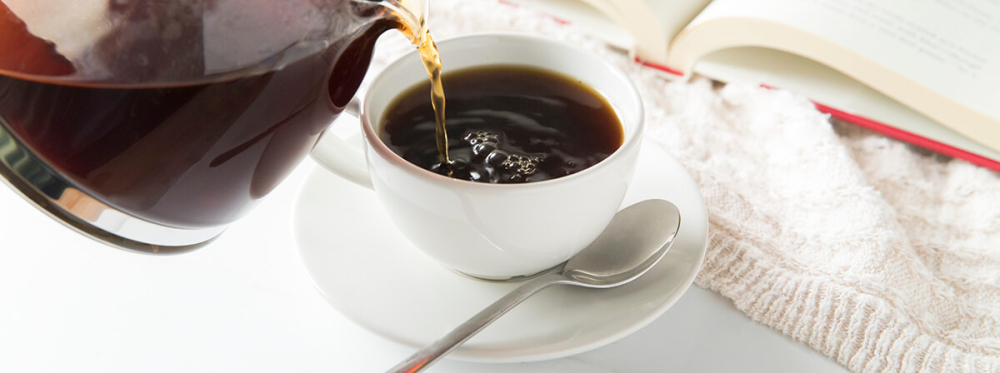
During roasting, coffee beans produce "brown pigments" (through the caramelization reaction), which mainly provide coffee with caramel, chocolate, and similar flavors. But if oxidative deterioration occurs over time, the flavor will gradually shift toward burnt bitterness, resulting in bitter and off-flavors.
-Condensation-
If a cup of coffee has a clear, bright liquid when hot, but becomes cloudy and unclear after cooling, this is the condensation phenomenon. It affects the coffee's mouthfeel, making it rough and sandy in texture.
Therefore, good coffee should be drunk while hot, so that you can better appreciate its rich flavor and mouthfeel.
The above content is compiled by CoffeeHunters, a coffee news website.


