







Search Results for: Coffee Strength (TDS)
What Exactly Does Coffee Extraction Mean? An In-Depth Analysis of Extraction Principles and Eight Key Brewing Parameters
Coffee extraction, simply put, is the process of using water to dissolve the flavorful essence from coffee beans. It seems like something that can be summed up in a single sentence, but behind it lies a whole series of precise variables: extraction yield, total dissolved solids, water quality, grind size, temperature, time, and more. Roasted coffee beans are about 30% soluble, and what we aim for is extracting 18-22% of that—the optimal range. We don't want under-extraction, which leads to sharp acidity and a thin, bland cup, nor over-extraction, which brings bitterness and off-flavors. This article will start from the basic definition of extraction and break down, one by one, the nine core factors that affect extraction, helping you build a systematic framework for understanding brewing so that every cup consistently delivers the ideal flavor. [more…]
The Grinding Logic and Bean Selection Guide for Low-Temperature Cold Brew Coffee: From Extraction Principles to Specialty Drink Concentration Control
Cold brew coffee is extracted in a low-temperature, still environment, and many people habitually assume that grinding the coffee finer will increase its strength—but is that actually true? Through comparative experiments, Front Street Coffee found that a coarser grind actually yields a higher TDS reading in cold brew. Starting from the underlying logic of water temperature and particle movement, this article will explain why the "finer grind equals stronger coffee" theory that applies to high-temperature pour-over does not hold for cold brew. It also offers coffee bean recommendations suitable for cold brew, suggested coffee-to-water ratios, and points to note on grind selection for beans of different roast levels, helping you make a specialty cold brew with just the right strength and an aroma that isn't masked by added ingredients. [more…]
How to determine the coffee-to-water ratio for pour-over coffee? The Golden Cup extraction yield and strength calculation and practical methods to avoid over-extraction
Many coffee enthusiasts have encountered this confusion: for the same beans, why does the taste always differ between what you brew yourself and what a Front Street barista brews? In fact, this involves two core concepts—extraction yield and concentration. This article, based on the daily experience of Front Street Coffee (FrontStreet Coffee), systematically explains what coffee extraction yield is, how to measure extraction yield using a TDS concentration meter, and the conversion relationships in the SCAA Golden Cup standard among 18%–22% extraction yield, 1.15%–1.35% concentration, and a 1:12–1:15 coffee-to-water ratio. The article also reviews the historical origins of the Golden Cup theory and, using Front Street's brewing of Panama Elida Natural Typica as an example, provides complete staged pouring parameters and the extraction yield calculation process, helping you brew a cup of pour-over coffee at home that is not over-extracted and has a pleasing flavor. [more…]
How Fine Should Cold Brew Coffee Grounds Be? An Analysis of How Coarse and Fine Grinds Affect Extraction Strength
When making cold brew coffee, should the grind size be coarse or fine? Many enthusiasts habitually assume that grinding finer will increase the concentration, but in a low-temperature, still-steeping extraction environment, this logic does not necessarily hold. Through practical experiments, Front Street used the same Yirgacheffe beans, the same coffee-to-water ratio, and the same steeping time to make cold brew with fine and coarse grinds respectively, testing the concentration and tasting the flavor differences. The results showed that the coarse grind actually had a slightly higher TDS, and its flavor performance was also brighter and sweeter. This article will explain this phenomenon from the perspectives of water temperature and particle movement, and provide grinding recommendations and applicable conditions for making cold brew coffee, helping you make a cup of cold brew with excellent concentration and flavor. [more…]
How Is the Golden Cup Extraction Yield for Pour-Over Coffee Calculated? A Detailed Explanation from Concentration Measurement to Front Street Coffee Practical Cases
How exactly should the extraction yield and strength of pour-over coffee be calculated? The golden cup extraction yield range defined by the SCAA is 18% to 22%, corresponding to a TDS strength of about 1.15% to 1.35%, while the coffee-to-water ratio falls within the range of 1:12 to 1:15. This theory originates from Dr. Lockhart's scientific experiments in the 1950s, in which he quantified coffee flavor and laid the foundation for the golden cup standard. This article starts from the daily brewing at Front Street Coffee, explains the definitions of extraction yield and strength, the conversion formulas, and how to use a refractometer, and, using beans from Panama's Elida Estate as an example, fully demonstrates the parameter settings, pouring rhythm, and extraction yield calculation process of a staged pour-over, helping coffee enthusiasts understand the practical application and reference value of the golden cup theory. [more…]

How Are the Gold Cup Extraction Yield and Strength Calculated for Pour-Over Coffee? Recommended Coffee-to-Water Ratios and an Analysis of the Evolution of SCA Standards
Many coffee enthusiasts have heard of the Golden Cup extraction theory: ideal concentration 1.15%-1.35%, ideal extraction yield 18%-22%. But this standard actually comes from the SCAA, not the SCA; the European and American coffee associations each have their own positions on ideal concentration. After the SCAA and SCAE merged in 2017, the UC Davis Coffee Center made slight adjustments to the old brewing control chart, loosening the upper concentration limit and the brew ratio range. This article will start with the history of the Golden Cup theory, sort out the differences between the old and new control charts, explain why high concentration with low extraction can highlight acidity while low concentration with high extraction can bring out floral and chocolate notes, and, combined with product information from Front Street Coffee, help you understand how concentration and extraction yield should be judged together, rather than fixating on a single number. [more…]

Home-brewed coffee never tastes as good as in the café? An in-depth analysis of the causes and adjustment methods for sourness, bitterness, strength, astringency, muddiness, and burnt notes in pour-over coffee
Many coffee enthusiasts, after tasting an outstanding pour-over in a café, will buy the same roasted beans to try to replicate it at home, only to find the results often disappointing—either too sour or too bitter, too strong or too weak, sometimes even astringent, with off-flavors or a burnt taste. The reasons behind this are no mystery; they mainly involve consistency across batches of coffee beans, as well as differences in key parameters such as water quality, grind size, water temperature, coffee-to-water ratio, and brewing technique. Based on Front Street Coffee's brewing experience, this article breaks down these variables one by one to help you pinpoint the problem and brew coffee at home that is closer to café quality. [more…]

Cold Brew Coffee Extraction Rate | How to Increase Cold Brew Coffee Concentration? What Is the Brewing Ratio for Cold Brew Coffee? Cold Brew Coffee Bean Recommendations for Specialty Coffee Drinks
Before writing this article, Front Street asked several coffee professionals/enthusiasts: "Under normal circumstances, when making cold brew coffee, if you use the same water, coffee beans, amount of coffee grounds, brewing container, and brewing time, how would you increase the extraction concentration of the coffee?" I believe everyone, like the interviewees, would [more…]
Pour-Over Coffee Water Guide: Brewing Results with Nongfu Spring and Water TDS Analysis
When brewing a pour-over coffee, water accounts for up to 98.7%, making its importance no less than that of the coffee beans and grinder. In this article, Front Street Coffee analyzes how water quality affects flavor, the mechanism by which calcium and magnesium ions in water act, and the recommended TDS range. It also uses examples to explain how, when coffee develops off-flavors or negative mouthfeel, you can troubleshoot the problem by switching water sources such as Nongfu Spring, helping enthusiasts on a limited budget spend their money where it matters most. [more…]

Coffee Strength | Will Extending Extraction Time Increase the Strength of Espresso? How to Boost Coffee Strength During Brewing?
"Boss, please extract the coffee a bit longer—I want a stronger cup." Front Street Coffee believes this is a scenario many friends working in coffee shops often encounter. Some customers, wanting a more intense cup of coffee, occasionally make this request to the shop. It's not hard to understand, because in most [more…]
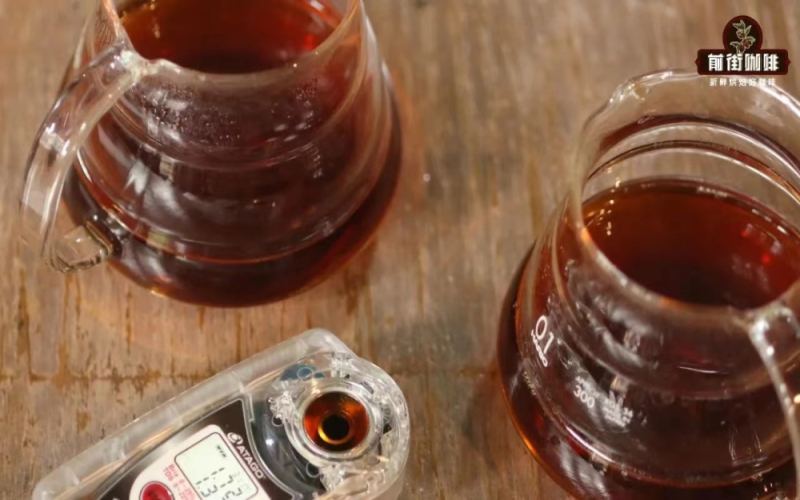
By-Pass Technique in Coffee Brewing: Principles, Applications, and Key Control Factors Explained
In the field of coffee brewing, By Pass is a concept that is practiced far more often than it is discussed in theory. Many enthusiasts simply equate it with adding water to dilute brewed coffee, but is this understanding accurate? Starting from the literal meaning of By Pass, this article will systematically explain the underlying logic of the bypass technique in conjunction with the relationship between extraction yield and strength in the Golden Cup standard. It also introduces Kanazawa-style brewing as a reference, analyzing how to use a 1:13 coffee-to-water ratio together with bypass water equal to twice the coffee dose to optimize the acidity and cleanliness of light-roasted coffee, and explores the room for adjusting parameters such as grind size and water temperature. [more…]
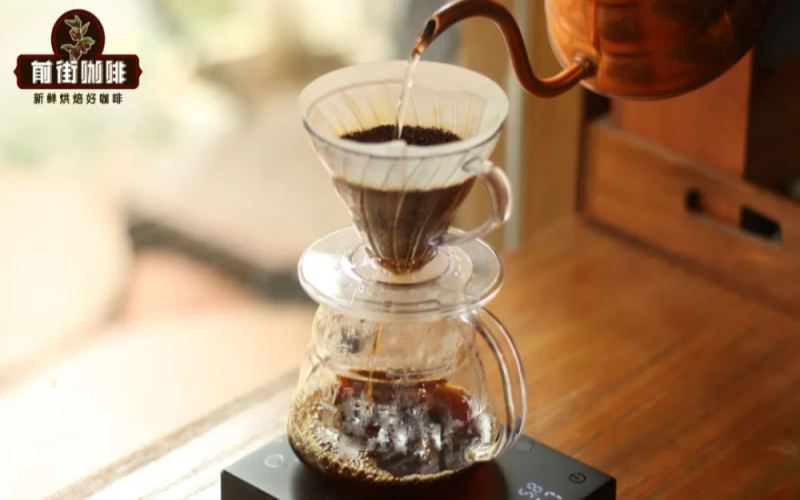
The Origin and Calculation Method of the Golden Cup Extraction Standard: How Extraction Yield and Strength Define a Good Cup of Coffee
The Golden Cup extraction is a widely circulated concept in the coffee world, defining an extraction range that most people find acceptable. This concept originated from a large-scale preference survey in the United States in the 20th century, promoted by the Brewing Committee established by the American Coffee Association in collaboration with Dr. Lockhart of the Massachusetts Institute of Technology. The survey found that about 30% of coffee beans are soluble substances, while the remaining 70% are insoluble fibers. After two rounds of testing with ordinary people and coffee experts, the Golden Cup range was ultimately determined as an extraction yield of 18% to 22% and a concentration of 1.15% to 1.35%. This article will sort out the origins and development of the Golden Cup standard, the calculation methods for extraction yield and concentration, and explain why the Golden Cup range can only serve as a reference rather than an absolute standard, helping you view coffee extraction more rationally. [more…]

How is the extraction yield of immersion brewing calculated? Concentration measurement and practical demonstration under the Golden Cup theory
In the Golden Cup extraction theory, extraction yield and concentration are the two core metrics for assessing the flavor state of coffee. However, coffee that falls within the ideal range is not necessarily delicious, and coffee outside the range is not necessarily undrinkable—the key lies in how to use these two values to help adjust the brewing plan. From the perspective of Front Street, this article first clarifies the basic definitions and ideal ranges of extraction yield and concentration, then explains in detail how to use two sets of concentration measuring tools, and finally uses the Santa Vini anaerobic natural beans as an example to fully demonstrate the entire process from weighing the liquid weight to plugging it into the formula to calculate the extraction yield. [more…]

How to Use an Espresso Machine | Which Espresso Blends Are Suitable for Semi-Automatic Espresso Machines? Espresso Bean Origins, Varieties, Prices, and Espresso Extraction Ratio Plans
Espresso was invented by MR. Gaggia in 1946. Gaggia further improved the piston pressure system—using spring pressure instead of manual pressing, so that the brewed coffee is topped with a layer of golden coffee crema (Crema), which is Crem [more…]
Espresso Extraction Principles and Tasting Guide: From Americano Differences to Front Street Coffee Blend Bean Production Process
Espresso is the foundation of the Italian beverage system, and Americano, latte, cappuccino, flat white, and mocha are all derived from it. This article centers on the extraction principles of espresso, sorts out its historical origins and flavor differences with Americano, and introduces in detail the positioning and characteristics of four espresso blend beans from FrontStreet Coffee. At the same time, the article also compiles reference standards for Italian-style extraction such as dose, liquid weight, and time, explains TDS measurement and the calculation method for extraction yield, and finally includes the seven-step espresso-making process and extraction scheme used in FrontStreet stores, for coffee enthusiasts to systematically understand the making and tasting of espresso. [more…]
A Detailed Guide to Espresso Extraction Parameters and Brew Ratio: Espresso-Making Workflow and Extraction Principles
Espresso is the foundation of various Italian-style beverages such as Americano, latte, and cappuccino. It is extracted by forcing approximately 92°C hot water under high pressure through a finely ground and compacted layer of coffee powder using an espresso machine. This article focuses on the extraction standards for espresso, covering the coffee-to-water ratio, extraction time, TDS measurement, and the calculation method for extraction percentage, and outlines the complete operational steps from wiping the portafilter basket to cleaning the group head. It also introduces the recipe concepts and flavor characteristics of Front Street Coffee's four espresso blend beans, as well as the espresso extraction protocol used in Front Street Coffee shops, providing a systematic reference for coffee enthusiasts. [more…]
The Complete Guide to Espresso Extraction: Brewing Process, Americano Differences, and Blended Bean Flavor Guide
The world of espresso is built on the foundation of espresso, from which Americano, latte, cappuccino, flat white, and mocha are all derived. Espresso is made by forcing hot water at about 92 degrees through a finely ground and compacted layer of coffee under high pressure, extracting a liquid rich in flavor and relatively high in caffeine per unit. Americano originated during World War II, when American officers diluted espresso with water to mimic the taste of drip coffee, a practice that also carried a hint of European mockery. Front Street Coffee uses a hot Americano water-to-liquid ratio of about 1:4.5, and an iced Americano ratio close to 1:9, and offers four espresso blend beans to meet different needs. This article will also explain in detail the extraction standards, the effects of grinding and time on flavor, TDS measurement, as well as the seven-step espresso-making process and in-store extraction solutions, helping enthusiasts understand the logic behind a cup of espresso. [more…]
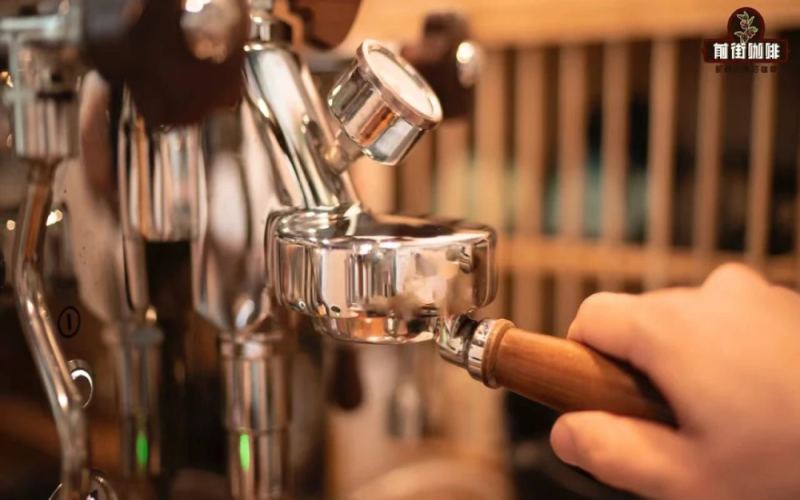
Semi-Automatic Espresso Machine Tutorial | How Should Beginners Choose Espresso Beans? Recommended Medium-Roast Coffee Beans for Espresso Machines
Compared to other coffee-making methods, espresso machines are much more demanding when it comes to coffee beans. To allow the coffee to release quickly, we need to grind the beans very fine and use high-temperature and high-pressure extraction conditions, which makes the coffee taste extremely intense—and one wrong move can turn the espresso into something utterly undrinkable. If you want to improve your espresso [more…]
Espresso Base Preparation Methods | How Many Coffee Types Can Espresso Make? Americano, Latte Coffee Flavor Characteristics, Preparation Ratios, and Extraction Parameters Introduction
Although most people come to Front Street Coffee to drink pour-over coffee, there are also quite a few who are willing to drink espresso. As is well known, espresso is the foundation of various Italian-style drinks—including Americano, latte, cappuccino, flat white, mocha, and more. According to Front Street Coffee, espresso is called "espresso" by foreigners, [more…]

Espresso Extraction Standards Reference | What is the brewing principle of Espresso coffee? Which espresso blend coffee beans are suitable for café service?
Although most people come to Front Street Coffee for pour-over coffee, quite a few are also willing to drink espresso-based coffee. As we all know, espresso is the foundation of various Italian-style drinks—including Americano, latte, cappuccino, flat white, mocha, and so on. According to Front Street Coffee, espresso is called "espresso" by foreigners, [more…]