







How does the by-pass technique change coffee brewing?
By-pass in coffee brewing means adding water that skips the coffee bed and goes straight into the finished cup. It is not just dilution for a flawed brew; it is a way to steer the balance between extraction yield and strength. Adding bypass water can lift acidity and cleanliness in light roasts without pushing the grounds further.
A practical example uses a 1:15 ratio with 15 grams of coffee, yielding 1.58% strength and 21.76% extraction, then adding bypass water equal to twice the coffee dose at a 1:13 ratio. Grind size and water temperature stay adjustable, and Kanazawa-style brewing is one reference for this approach.
In the world of coffee brewing, By Pass is a concept that is practiced far more often than it is discussed in theory. Many enthusiasts simply equate it with adding water to dilute a finished brew, but is this understanding accurate? This article will start from the literal meaning of By Pass, combine it with the relationship between extraction yield and strength in the Golden Cup standard, and systematically explain the underlying logic of the bypass technique. It will also introduce Kanazawa-style brewing as a reference, analyzing how to use a 1:13 coffee-to-water ratio together with bypass water equal to twice the coffee dose to optimize the acidity and cleanliness of light-roasted coffee, and explore the room for adjusting parameters such as grind size and water temperature.
The term By Pass is not particularly common in everyday coffee circles, but its practical use is quite widespread. Many times, people simply understand it as adding some clear water to brewed coffee to adjust the mouthfeel. However, is it really that straightforward? In this installment of Barista Development Diary, let's take a proper look at By Pass.
What exactly does By Pass mean?
Literally, By Pass can be understood as "going around," and in Chinese it is also often called [bypass]. ( It does have a bit of an unorthodox feel, haha ) In the context of coffee brewing, the process of water passing through the coffee bed and dissolving flavor substances can be regarded as the "main path"—that is, the standard extraction path we assume by default. By Pass, on the other hand, skips the coffee grounds and injects water directly into the already extracted coffee liquid, which corresponds to the term "bypass."
How is By Pass used in practice?
One view holds that adding water after pour-over brewing is finished is basically admitting that the cup was not brewed well and needs dilution to mask its flaws. First of all, By Pass does indeed have this kind of "remedial" use, and there is no need to deny that, but its premise is that it must be operated around the relationship between extraction yield and strength (that is, the Golden Cup standard).
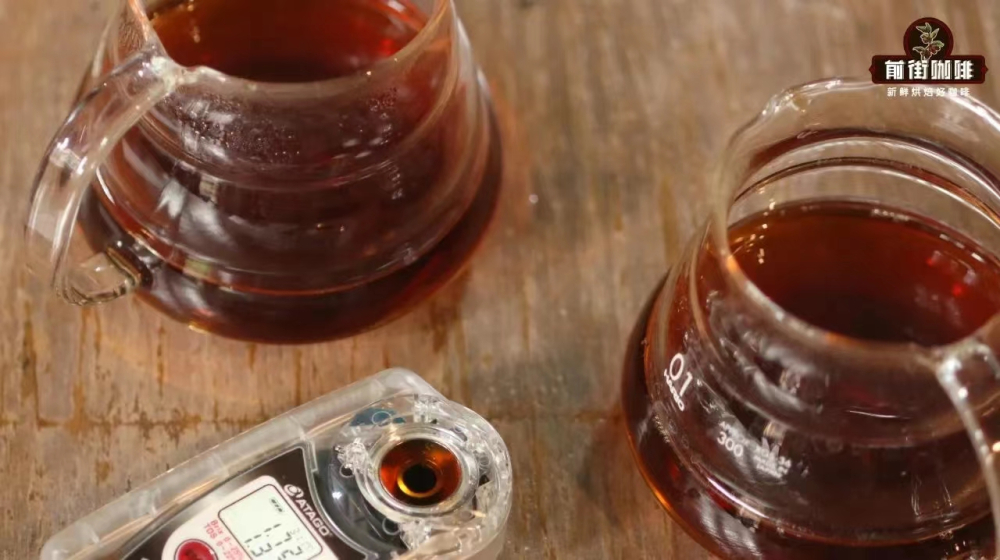
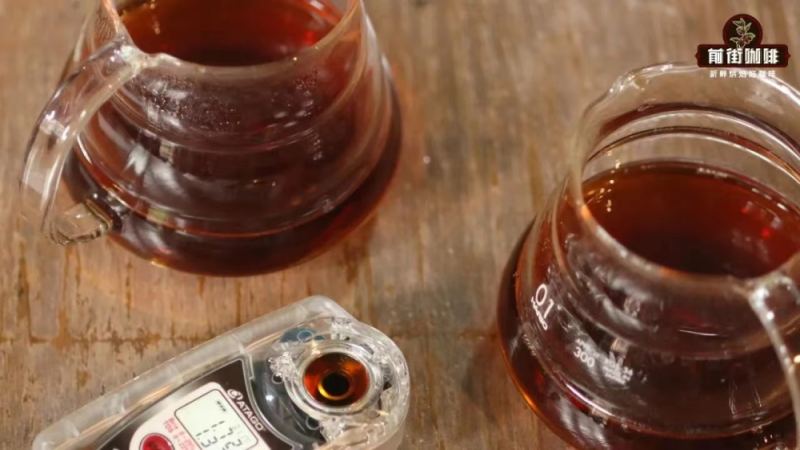
For example, take 15 grams of coffee grounds, brew at a 1:15 coffee-to-water ratio, and the resulting coffee liquid has a strength of 1.58% and an extraction yield of 21.76%. (Extraction yield reflects the proportion of dissolved substances from the coffee grounds relative to the total amount of coffee grounds, with the coffee grounds as the subject of focus; strength is the proportion of dissolved substances in the coffee liquid relative to the coffee liquid, with the coffee liquid as the subject of focus.)
In terms of extraction yield, the Golden Cup range defined by the SCA is 18% to 22%, which is considered an ideal range for flavor expression, so this cup does not constitute "over-extraction" in the Golden Cup sense. But when the strength is too high, the flavor may be too concentrated and can even taste harsh. At this point, By Pass can be used—add an appropriate amount of pure water to this "high-strength" coffee liquid to bring the strength down to a range most people find comfortable (the SCA recommended range is 1.15% to 1.35%).
Of course, if a cup of coffee itself has obvious undesirable flavors, or tastes sour, astringent, or prominently bitter, then the [bypass] technique cannot fundamentally solve the problem. This is because those undesirable flavor substances are already present in the coffee liquid, and adding water can only weaken their presence, not eliminate them. Moreover, if too much water is added, the cup will ultimately just become "water with coffee flavor."
The theoretical basis of By Pass is: first use a smaller amount of water to extract a cup of coffee liquid with higher strength, and then dilute it with pure water at 0 TDS to a level that is more sensorially comfortable.
A similar approach is Kanazawa-style brewing advocated by Mr. Masayuki Kanazawa. He emphasizes extracting only the high-quality flavors of the early stage, retaining the small-molecule portion of the coffee's soluble substances, and stopping extraction before the release of large molecules, late-extracting tannins and plant enzymes, and other off-flavors with burnt, bitter, and astringent notes, leaving only the essence of the coffee liquid. This method of taking only the first one-third of the extraction amount produces what is called [coffee essence], after which twice the amount of water is added for blending.
For this reason, By Pass theory is also often used to design brewing recipes. Based on the rule that small-molecule flavor substances in coffee are extracted relatively quickly while large-molecule bitter substances are extracted more slowly, we can, while keeping other parameters unchanged, use a 1:13 coffee-to-water ratio and then additionally add [bypass water] equal to twice the coffee dose, bringing the total coffee-to-water ratio to 1:15. Since that final 30 grams of water does not flow through the coffee bed but goes directly into the coffee liquid, the strength of the final cup will be lower than in conventional brewing, and correspondingly, the proportion of late-stage bitter substances will also be reduced. Brewing light-roasted coffee this way makes the acidity brighter and the mouthfeel cleaner.
In addition, By Pass also adds a lot of playability to coffee brewing. For example, we can try a finer grind size or a higher water temperature, and through parameter adjustments explore coffee expressions with very different flavors.
By this point, I believe everyone has a fairly clear understanding of By Pass. Next time you see this term, do not simply treat it as "adding water to coffee."
The above content is compiled by CoffeeHunters, a coffee news website.


