







Search Results for: Arabica cultivation
The Origins and Global Map of Robusta Coffee: An In-Depth Analysis of Its Birthplace and Major Producing Countries
In the global coffee landscape, Robusta holds its own against Arabica with roughly a forty percent market share. It originated in the Congo Basin of Africa and, thanks to advantages such as high yield, disease resistance, and drought tolerance, is widely cultivated in countries like Brazil, Vietnam, and Indonesia. Vietnam has leveraged this to leapfrog into becoming the world's second-largest coffee-producing country. This article will trace the history of Robusta's discovery, analyze its varietal characteristics, and examine the cultivation history and current status of major producing countries one by one. Whether you are a coffee enthusiast or a industry professional, you will gain a complete understanding of Robusta from this piece. Front Street Coffee will also recommend Robusta products worth paying attention to in this article. [more…]
Arabica Coffee Bean Buying Guide: Major Origin Brand Recommendations and the Deep Reasons Why Prices Are Higher Than Robusta
Why are Arabica coffee beans generally more expensive than Robusta? Which Arabica origins around the world are worth paying attention to? Starting from plant taxonomy, this article systematically sorts out Arabica's flavor advantages and cultivation shortcomings, and introduces one by one the variety characteristics, processing methods, and grading standards of core producing regions such as Brazil, Colombia, Panama, Guatemala, Costa Rica, Jamaica, Ethiopia, Kenya, and Indonesia. At the same time, drawing on the store selection experience of Front Street Coffee, it provides coffee lovers with a complete cognitive framework from producing region to cup, helping you find the one that suits your taste among a dazzling array of bean lists. [more…]
Why Are Arabica Coffee Bean Prices Staying So High? A Full Analysis of Specialty Bean Flavors and Grading Across Origins
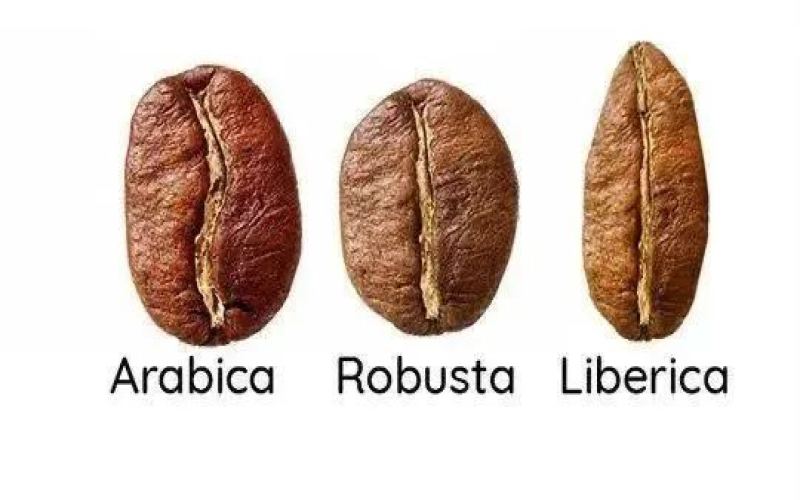
Why are Arabica coffee beans priced higher? This article approaches the topic from plant taxonomy, analyzing the differences among the three major cultivated species—Arabica, Robusta, and Liberica—explaining why Arabica has superior flavor but weak disease resistance and is suited to high-altitude cultivation, and introducing one by one the varieties grown, processing methods, and grading standards of well-known origins such as Brazil, Colombia, Panama, Guatemala, Costa Rica, Jamaica, Ethiopia, Kenya, and Indonesia. At the same time, combined with Front Street Coffee's stores and bean list recommendations, it helps coffee enthusiasts understand the pricing logic of Arabica and how to choose. [more…]
Complete Guide to Arabica Coffee: Origins, Variety Characteristics, and Processing Method Flavor Guide
Coffee belongs to the Rubiaceae family, with over a hundred known species, but commercial cultivation is dominated by three major types: Arabica, Robusta, and Liberica. Among them, Arabica, with its outstanding aroma and flavor, accounts for over seventy percent of global production and is the core raw material for single-origin and specialty coffee. This article will systematically review the varietal characteristics, advantages and disadvantages, and sub-varieties of Arabica, and introduce one by one the cultivated varieties, processing methods, grading standards, and flavor profiles of representative producing countries such as Brazil, Colombia, Panama, Guatemala, Costa Rica, Jamaica, Ethiopia, Kenya, and Indonesia. It will also incorporate Front Street Coffee's sourcing experience and recommendations to help coffee enthusiasts build a complete framework for understanding origins. [more…]
Tracing the History of Yunnan Coffee Cultivation and a Comprehensive Analysis of the Flavor Characteristics of Yunnan Arabica Coffee Beans
Yunnan, as China's largest coffee-growing region, has a coffee history that can be traced back over a century to when French missionaries introduced the crop to Zhukula Village. From Baoshan, Dehong, and Lincang to Pu'er, Yunnan's unique geographical and climatic conditions have nurtured small-bean coffee that is rich yet not bitter, aromatic yet not harsh, with a slight fruity note. In this article, Front Street Coffee will take you through the origin story of Yunnan coffee, outline the distribution of its main growing regions, analyze the characteristics of varieties such as Typica, Bourbon, and Catimor, and share the flavor differences between washed and natural processing methods along with brewing suggestions, for a comprehensive understanding of Yunnan coffee's past and present. [more…]
What grade does Arabica coffee belong to? A comprehensive analysis of major global origins and representative brands
Coffee belongs to the Rubiaceae family, with about eighty known species, of which three main categories are used for drinking: Arabica, Robusta, and Liberica. Arabica, with its balanced flavor and aroma, has become the mainstay of single-origin and specialty coffee, accounting for more than seventy percent of global production. From the nutty-chocolate notes of Brazil, to the citrus and dark cocoa of Colombia, and on to Panama Geisha, Jamaica Blue Mountain, and Ethiopia Yirgacheffe, each origin has its own distinctive flavor. Front Street Coffee stores carry coffee beans from more than fifty origins, and this article examines Arabica's grade positioning and the flavors of well-known origins around the world one by one. [more…]
A Comprehensive Analysis of Coffee Bean Varieties: Arabica Variety Classification and Representative Beans from Major Global Origins
Coffee, as a plant of the Rubiaceae family, has over a hundred known species, but only three cultivated varieties are actually used for drinking: Arabica, Robusta, and Liberica. Among them, Arabica occupies about seventy percent of global production with its exceptional flavor and aroma, making it the top choice for single-origin and specialty coffee. From Ethiopia's native Typica and Bourbon to the Geisha that has swept the market today, Arabica subspecies are rich and diverse, each with its own characteristics. At the same time, origins such as Brazil, Colombia, Panama, Guatemala, Costa Rica, Jamaica, Ethiopia, Kenya, and Indonesia, by virtue of their unique terroir and processing methods, shape distinctly different coffee flavors. Front Street Coffee offers more than 50 different regional coffee beans in its stores, meeting diverse taste needs. This article will systematically sort out coffee variety classification, the advantages and disadvantages of Arabica, and representative global origins, taking you to gain a deeper understanding of the rich landscape of the coffee world. [more…]
A Century of Yunnan Arabica Cultivation and Typica Flavor Analysis: Front Street 2013 vs. Yunnan Arabica Comparison
The core production region for coffee cultivation in China is Yunnan, and the story of Yunnan coffee begins over a hundred years ago. From the first coffee tree planted by a French missionary in Zhukula, to the large-scale replacement of Typica by Catimor, and then to Front Street Coffee establishing its own estate in Lincang to select and breed Typica and launch "Front Street 2013," Yunnan coffee has undergone variety turnover and industrial upgrading. This article will trace the historical development of Yunnan coffee and the characteristics of its main production regions, explain in detail the differences among the three major varieties—Typica, Bourbon, and Catimor—and introduce the effects of two processing methods, washed and natural, on flavor. It also includes the V60 brewing parameters and flavor descriptions for Front Street 2013 and Yunnan Arabica coffee, helping coffee enthusiasts gain a comprehensive understanding of the current state and charm of Yunnan coffee. [more…]
Arabica Coffee Bean Buying Guide: Variety Characteristics, Reasons for Higher Prices, and Analysis of Representative Global Producing Regions
Why has Arabica coffee bean become synonymous with specialty coffee, and why is its price consistently higher than Robusta? Starting from plant taxonomy, this article systematically reviews Arabica's flavor advantages and cultivation limitations, and one by one explains the varietal characteristics, processing methods, and grading standards of representative producing regions around the world such as Brazil, Colombia, Panama, and Ethiopia. The article also combines Front Street Coffee's store selection and recommended bean list to provide coffee enthusiasts with a reference that is both informative and practical. [more…]

How are Coffea canephora Robusta coffee beans roasted? What coffee beans does Starbucks use?
In the world of coffee, the two major species, Arabica and Robusta, underpin the flavors in most people's cups. Robusta, also known as Coffea canephora, originated in the Congo Basin of Africa. It is widely cultivated because it tolerates low altitudes, resists pests and diseases, and yields high harvests, and it often appears in instant coffee and espresso blends. Its caffeine content is about twice that of Arabica, its chlorogenic acid is higher, and its flavor tends toward the full-bodied and deep, with notes of walnut, peanut, and grain. This article from Front Street Coffee sorts out Robusta's origins, botanical classification, advantages, and shortcomings, and retains the information on the Vietnamese Robusta beans used in Front Street's commercial blends, helping coffee enthusiasts understand this bean more clearly for what it really is. [more…]
The Origins and Varietal Analysis of Yunnan Arabica Coffee: A Century of Evolution from Typica to Catimor
Yunnan, as the core production region for coffee cultivation in China, has seen its small-bean coffee development span more than a century. From its introduction to the mainland in 1892 to now accounting for seventy percent of the national planting area and over eighty percent of production, Yunnan coffee has undergone multiple transformations in variety replacement, processing method evolution, and market positioning. This article systematically reviews the historical trajectory, main production area distribution, variety characteristics, and processing methods of Yunnan small-bean coffee. At the same time, combining Front Street Coffee's cultivation practices in Baoshan and Lincang, it analyzes the effects of washed and natural processing on flavor, and provides reference parameter suggestions for daily brewing, helping coffee enthusiasts gain a more comprehensive understanding of the current status and potential of Yunnan coffee. [more…]

Arabica Coffee Beans in Detail: Grade Positioning, Characteristics of Major Cultivated Varieties, Origin Sources, and Flavor Performance
Arabica coffee accounts for about 70% of global coffee production. It is the bean variety most commonly used by specialty coffee shops and the foundation of all Front Street Coffee products. It is not a single variety, but a vast family that includes numerous subcategories such as Typica, Bourbon, Caturra, and Catuai. From Front Street's perspective, this article reviews the growing altitude and growth conditions of Arabica coffee, introduces one by one the varietal origins, plant characteristics, and cup flavor differences of Typica, Red Bourbon, Yellow Bourbon, Pink Bourbon, Caturra, and Catuai, and briefly compares Robusta and Liberica, the two other major native coffee species, to help coffee lovers build a complete understanding of the Arabica coffee system. [more…]
A Beginner's Guide to Coffee Varieties: Arabica Coffee's Characteristics, Sub-varieties, and Major Global Producing Regions
In the world of coffee, Arabica and Robusta are the two most frequently mentioned varieties, and the former almost represents the mainstream direction of specialty coffee. This article starts from plant taxonomy to sort out Arabica's varietal characteristics, flavor advantages, and disease-resistance weaknesses, and introduces one by one the planting varieties, processing methods, and grading standards of representative origins such as Brazil, Colombia, Panama, Guatemala, Costa Rica, Jamaica, Ethiopia, Kenya, and Indonesia. At the same time, it combines Front Street Coffee's store selection and recommended bean list to help readers build a complete cognitive framework from variety to origin. [more…]
Arabica Coffee | What Is Arabica Coffee? 8 Recommended High-Value Specialty Pour-Over Coffee Beans with Subtle Acidity and a Sweet Aftertaste
Is Arabica a coffee brand from some country? Arabica is the name of a coffee variety, and it is a very common coffee variety name. "Made with 100% Arabica coffee beans," "selected Arabica coffee beans"... In our daily lives, when we buy all kinds of coffee products, the packaging always says " [more…]
The Complete Guide to Arabica Coffee: From Variety Origins to Front Street Coffee's Recommended Bean List — Essential Pour-Over Basics
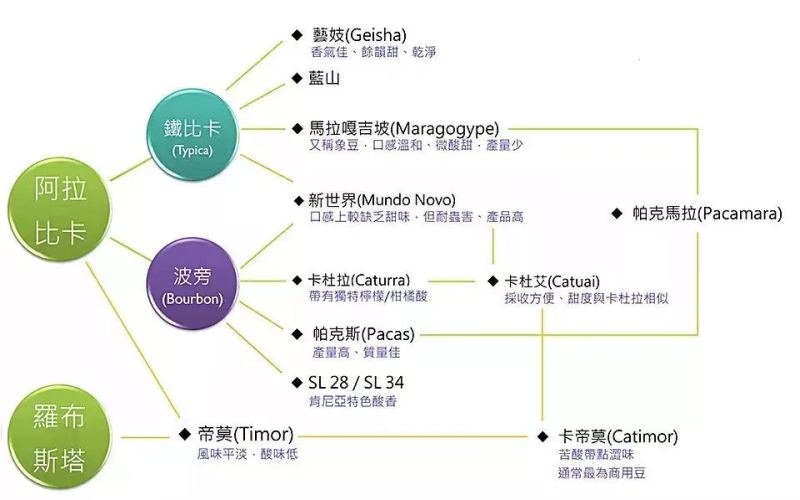
When buying coffee, what exactly does the word "Arabica" that frequently appears on packaging represent? It is not a country or a brand, but the most important species in the coffee world. This article will start from biological classification to clarify the differences between Arabica, Robusta, and Liberica, and then take a deeper look at the characteristics and flavor tendencies of mainstream varieties such as Typica, Bourbon, Caturra, Catuai, SL28/SL34, Geisha, Ethiopian heirloom varieties, and Catimor. At the same time, by combining several representative bean lists from Front Street Coffee, it helps coffee enthusiasts establish a clear understanding of the relationship between varieties and flavors at the beginner stage of pour-over coffee. [more…]
What Conditions Are Needed for Growing Coffee Trees? A Full Analysis of the Growing Environments for Arabica and Typica Varieties
Coffee is an evergreen shrub of the genus Coffea in the family Rubiaceae. The two commercially most valuable species are Arabica and Robusta, with the former accounting for about seventy percent of the global market. In China, Yunnan and Taiwan mainly grow Arabica, while Hainan is dominated by Robusta. So what kind of growing conditions does Arabica actually require? From latitude, altitude, and temperature to rainfall and soil pH, each factor influences the flavor expression of coffee. Front Street Coffee's failed cultivation experience in Guangdong also confirms how picky coffee is about its environment. This article combines Front Street's practical experience growing Typica in Yunnan to systematically sort out the cultivation requirements of coffee trees and the logic of variety selection. [more…]

A Comprehensive Analysis of Robusta Coffee Beans: Flavor Differences from Arabica, Cultivation Characteristics, and a Comparison of Their Respective Advantages and Disadvantages
In the world of coffee, Arabica and Robusta are the two major commercially cultivated varieties; the former occupies about seventy percent of the market, while the latter is often overlooked. Why exactly is Robusta so unpopular? What are the substantive differences between it and Arabica in terms of flavor, growing conditions, and cost? Starting from Front Street Coffee's espresso blending practice, this article combines the two varieties' chemical composition, adaptability, and market positioning to systematically sort out their advantages and disadvantages. Whether you want to understand Robusta's true value or want to find coffee beans suited to your own taste, this article can provide a clear reference. [more…]
Tracing the History of Coffee Cultivation in Yunnan and a Full Analysis of the Flavor Characteristics of Arabica Coffee
Yunnan, as China's largest coffee-producing region, has a cultivation history spanning over a century, with its output accounting for more than 98% of the national total. From 1902, when a French missionary planted the first coffee tree in Zhukula Village, Binchuan County, to today's thriving development of four major producing regions—Baoshan, Pu'er, Dehong, and Lincang—Yunnan arabica coffee has won recognition both domestically and internationally for its unique flavor profile: rich yet not bitter, aromatic yet not harsh. This article will guide you through the historical development of Yunnan coffee, explore the characteristic differences between the two major varieties Typica and Catimor, and provide an in-depth analysis of the flavor characteristics of Baoshan arabica coffee. Front Street Coffee has selected two everyday beans—Baoshan Catimor and Lincang Typica from Yunnan—allowing entry-level enthusiasts to experience the nutty sweetness and black tea aftertaste of Yunnan coffee at an accessible price, along with practical brewing suggestions to help you easily brew a delicious cup of Yunnan coffee. [more…]
An In-Depth Analysis of Robusta Coffee Beans: Differences from Arabica, Espresso and Single-Origin Applications, and Key Identification Points
Robusta and Arabica are currently the two most widely commercially cultivated coffee varieties. The former is known for its intense, bitter, and steady flavor, with a caffeine content about twice that of Arabica. It has strong stress resistance, high yield, and low cost, and is often used in dark-roasted espresso blends or instant coffee. Its high chlorogenic acid content brings a rich, deep bitterness along with nutty and grainy notes, and if improperly processed, it may also develop earthy or rubbery flavors. Dark-roasted Robusta can give espresso a thick, rich crema, and Italians often blend it into their recipes to enhance the "coffee taste." Indian Royal Robusta proves that with careful cultivation, Robusta can also present a clean flavor. This article focuses on the characteristics of the variety, how to distinguish it from Arabica, the difference between espresso and single-origin, and combines this with the formula and flavor performance of Front Street Coffee's commercial blend coffee beans. [more…]
Roasting Applications of Coffea canephora Robusta and Analysis of Starbucks' Bean Selection
In the world of coffee, Arabica and Robusta are the two most frequently mentioned varieties. Arabica dominates the specialty market with its delicate flavors, while Robusta, with its formidable vitality and rich, full-bodied taste, plays an irreplaceable role in commercial blends and instant coffee. Why is it called Congensis? What are its cultivation advantages and flavor drawbacks? And how does Front Street Coffee incorporate it into classic blends? This article will guide you through a systematic understanding of Robusta's origins, characteristics, pros and cons, and explain why commercial brands like Starbucks favor it. [more…]