







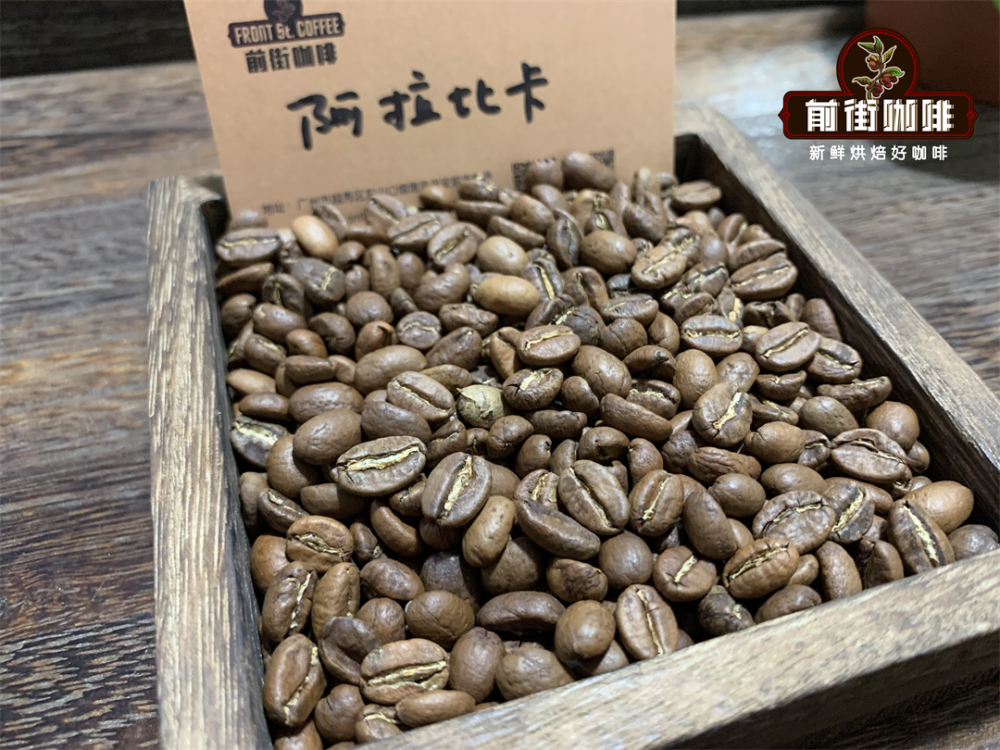
Coffee belongs to the Rubiaceae family, with over a hundred known species. Commercial cultivation is dominated by three main species: Arabica, Robusta, and Liberica. Among them, Arabica, with its outstanding aroma and flavor, accounts for more than 70% of global production and is the core raw material for single-origin and specialty coffee. This article will systematically review Arabica's varietal characteristics, advantages and disadvantages, and its sub-varieties, and introduce one by one the cultivated varieties, processing methods, grading standards, and flavor profiles of representative producing countries such as Brazil, Colombia, Panama, Guatemala, Costa Rica, Jamaica, Ethiopia, Kenya, and Indonesia. It will also incorporate Front Street Coffee's selection experience and recommendations to help coffee lovers build a complete framework for understanding origins.
From the perspective of plant taxonomy, coffee belongs to the Rubiaceae family, which contains at least over a hundred species, and about eighty coffee tree varieties have been confirmed so far. Among them, the main cultivated varieties specifically used for beverage production fall into three categories: Arabica, Robusta, and Liberica.
Generally, Arabica is mostly used to make single-origin or specialty coffee, while Robusta is commonly found in instant coffee production. Although Arabica is habitually regarded as high-quality coffee and Robusta as inferior, this division is not absolute; a more reasonable approach is to judge based on personal taste preference. In terms of consumer preference, the American and Japanese markets favor the refreshing style brewed from Arabica, while Europe prefers espresso made from a blend of Arabica and Robusta.
Arabica Advantages: High-quality coffee beans with outstanding flavor and aroma
Arabica originated in Ethiopia and is a representative variety of that country. It is also grown in southern Africa, other parts of Africa, and Asian countries, accounting for about 70% to 75% of total global coffee production. Arabica has relatively weak resistance to pests and diseases, so it is more suitable for cultivation at high altitudes, especially Arabica coffee beans produced above 1,500 meters, which are considered to have the best quality.
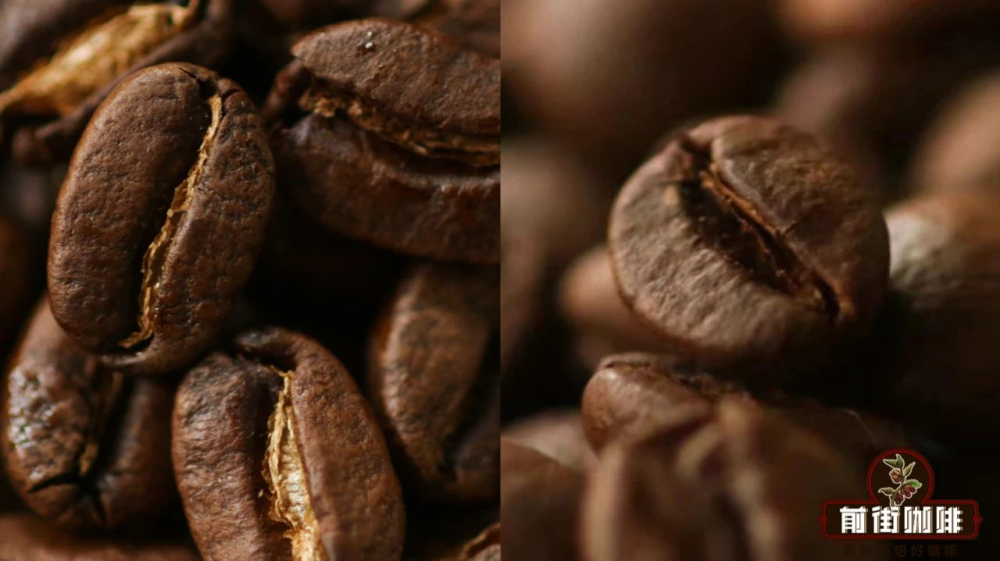
The excellent quality obtained through careful cultivation is expressed as balanced flavor, body, and aroma, and can therefore be recognized as premium coffee beans, mainly used for single-origin or specialty coffee. The world-famous three major coffee beans—Hawaiian Kona, Jamaican Blue Mountain, and Yemeni Mocha—all belong to the Arabica variety. Arabica green beans are dark and elongated in appearance and are praised as the highest-quality highland Arabica, characterized by a rich layering of taste that combines sweetness, acidity, and aroma.
In terms of flavor, Arabica is considered the best-performing coffee bean and has always dominated the specialty coffee consumer market since the rise of the specialty coffee concept. For example, the Typica sub-variety under Arabica has excellent acidity and scores highly in cupping; as the oldest coffee variety, its genetics are outstanding. Geisha coffee beans, now widely known in the specialty coffee world, have conquered the taste buds of many coffee lovers with their fresh floral aroma and pleasant acidity.
Arabica Disadvantages
Arabica accounts for about 70% of total coffee production, but its resistance to pests and diseases is weak, so many varieties with stronger disease resistance were later developed. In addition, Arabica also has many sub-varieties formed by mutation or hybridization, such as Typica, Bourbon, and Geisha. At Front Street Coffee stores, Arabica sub-variety coffee beans are very abundant. For single-origin and specialty coffee, more than 50 kinds of coffee beans from different producing regions are listed, which can meet diverse taste needs; in addition, Front Street Coffee stores also stock more bean categories not yet listed for tasting.
Famous Arabica Producing Regions
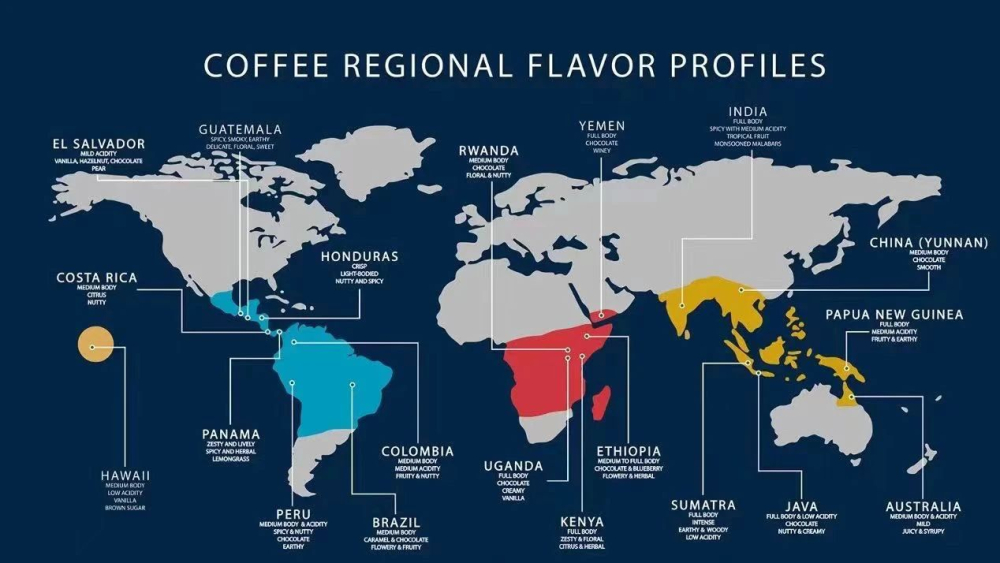
The rise of specialty coffee has not only drawn more attention to coffee's individuality but also aroused widespread interest in cultivation and processing conditions in producing regions. Next, Front Street Coffee will introduce the current situation of these high-profile origins.
Brazil
Brazil has the largest coffee planting area and production in the world. In recent years, its domestic coffee consumption has also gradually risen, making it the world's second-largest consumer after the United States. Brazil began producing coffee in 1727. Thanks to a climate suitable for coffee tree growth and vast fertile soil, the southeastern states of Minas Gerais, São Paulo, and Paraná became major producing regions. However, in recent years the southern region has suffered frost damage, and cultivation has gradually moved northward. At present, large estates in the Cerrado region of Minas Gerais are actively introducing irrigation facilities and mechanized equipment, and coffee trees are also grown in diversified ways. In addition to Arabica varieties such as Bourbon, disease-resistant Conilon is also planted.
Brazilian coffee usually has low acidity, harmonizes with sweet-bitter notes, is extremely smooth on the palate, and carries a faint grassy aroma. It is fragrant with a slight bitterness, smooth and pleasant, with a comforting aftertaste. Front Street Coffee selected a Bourbon coffee from Fazenda Rainha as a representative of Brazil. This coffee has obvious nut and chocolate flavors, medium caramel sweetness, a smooth body, and overall balance.
Cultivated Varieties
Arabica varieties such as Bourbon, Mundo Novo, and Catuai, as well as Conilon.
Processing
Mainly natural process, with some coffee beans using honey process.
Grading Method
Grades are distinguished from "No. 2" to "No. 6" based on screen size and number of defects. Screen sizes range from S17 (6.75 mm) to S18 (7 mm). In a 300-gram sample, those with a defect score below 11 are rated as the highest grade "No. 2" (or Type 2).
Colombia
The Andes have an average altitude of more than 4,000 meters, and the small estates on steep slopes at about 1,000 to 2,000 meters in the foothills are Colombia's coffee-producing areas. Colombia is currently the world's third-largest coffee producer, after Brazil and Vietnam. Supporting Colombia's coffee industry is the National Federation of Coffee Growers of Colombia, which manages everything from coffee production to distribution and actively promotes specialty coffee. They choose to plant shade trees, hand-pick coffee cherries, introduce the latest equipment suitable for small estates to reduce water use, and, unlike neighboring Brazil, produce distinctive high-quality coffee beans in a different way. Located on the equator, Colombia has two harvest periods each year.
Specialty-grade Colombian coffee (washed process) often has citrus notes, nuts, and dark cocoa. It is smooth and rich overall, with dark cocoa being one of its major characteristics. At the same time, it has the delicate acidity conferred by high altitude, making it a rare high-quality coffee-producing country, perhaps the most representative coffee-producing country in the Americas.
Cultivated Varieties
Caturra, Castillo, Colombian Typica.
Processing
It can be harvested twice a year, from October to January and from April to June. Washed process is dominant.
Grading Method
Grades are distinguished by screen size. Coffee beans with a screen size of S17 (6.75 mm) or above are "Supremo"; those from S14 (5.5 mm) to S16 (6.5 mm) are graded "Excelso".
Panama
Panama can be said to be the most popular specialty coffee-producing country at present, with estates everywhere in the country, including the famous Hacienda La Esmeralda, Finca Deborah, and Ninety Plus estates. Coffee varieties grown in Panama include Geisha, Caturra, and Catuai, but the most Panamanian variety is mainly Geisha. Among the many estates, Front Street Coffee believes that the Geisha coffee produced by Hacienda La Esmeralda is the most representative.
Cultivated Varieties
Mostly Caturra and Catuai, and the planted quantity of Geisha is also continuously increasing. In addition, traditional farming methods are used to grow Typica, which is rare in Central America and has not undergone variety improvement.
Processing
The harvest period is from September to March. Washed process is dominant, with sun-drying or mechanical drying.
Grading Method
Graded by altitude of origin. From high to low altitude, they are rated "Strictly Hard Bean" (SHB) and "Hard Bean" (HB).
Guatemala
Guatemala is a very typical volcanic country. Its famous Antigua region is surrounded by three volcanoes, and the volcanic ash soil provides abundant nutrients for coffee tree growth. Including Antigua, Guatemala has several coffee-producing regions, each with different growing environments and conditions, thus forming different regional flavors. But Front Street Coffee believes that the most representative region of Guatemala may be Antigua.
Among the many coffee beans in the Antigua region, Front Street Coffee selected a La Flor coffee bean. La Flor is a coffee bean under La Minita. La Minita is known for excellent cultivation and processing techniques and extremely strict quality control. With such standards, they entrusted the largest local washed-processing plant in Antigua, Las Pastores, to process the green beans and named the coffee beans La Flor. In addition to retaining the original regional flavor, the dry aroma carries strong floral and tea notes. After entering the mouth, there is the acidity of lime and berry flavors, which then turn into a honey finish. Excellent cleanliness and rich layering are the characteristics of this La Flor.
Cultivated Varieties
Bourbon, Caturra, Catuai, etc.
Processing
The harvest period is from September to April. Washed process is dominant, with sun-drying or mechanical drying.
Grading Method
Although graded by altitude of origin, grade is also often determined by flavor. Origins above 1,300 meters are rated "Strictly Hard Bean" (SHB); 1,200 to 1,300 meters are rated "Hard Bean" (HB); 900 to 1,050 meters are rated "Extra Prime Washed" (EPW).
Costa Rica
Costa Rica has been growing coffee for more than two hundred years, and its coffee industry is very mature. It is also one of the few countries in the world that prohibits the cultivation of Robusta coffee beans (even the Catimor variety is not allowed), so it can be said to be a country that attaches great importance to coffee quality. The characteristics of Costa Rican coffee beans come from its unique honey process—retaining part of the mucilage during drying, giving Costa Rica the cleanliness of washed coffee while also carrying a slight sweetness of natural coffee. Nuts form the main基调, with refreshing acidity mixed in, and it is full-bodied while having a sugary sweetness.
Cultivated Varieties
Caturra, Catuai, etc. Costa Rican law prohibits the cultivation of Robusta.
Processing
The harvest period is from November to March. Honey process is dominant, using a method in which the pulp is removed together with the parchment.
Grading Method
Graded by altitude of origin. From high to low altitude, they are rated "Strictly Hard Bean" (SHB), "Good Hard Bean" (GHB), and "Hard Bean" (HB).
Jamaica
In addition to Brazil, Jamaica's Blue Mountain coffee is also a very balanced coffee. The Blue Mountain range is located in the eastern part of Jamaica. Because the mountains are surrounded by the Caribbean Sea, on clear days when sunlight falls directly on the azure sea, the peaks reflect the brilliant blue glow of the seawater, hence the name.
For many years, Blue Mountain coffee has been subject to strict export controls, and for a long time only washed Typica was exported to countries such as Japan. But until last year, Front Street Coffee also began to taste natural Typica in addition to washed Typica, and even Geisha coffee produced in Blue Mountain. However, Front Street Coffee has always believed that the taste of Blue Mountain coffee is still best represented by washed Typica. Washed Blue Mountain coffee has citrus acidity, but the overall balance is strong, with nuts and dark cocoa in the mid-palate, a lasting finish, and a full body.
Cultivated Varieties
Although Caturra production is gradually increasing on the surrounding islands, the vast majority in Jamaica is Typica.
Processing
The harvest period begins in October, mainly using the washed process.
Grading Method
Blue Mountain has its own grading standard, distinguishing grades by screen size and number of defects. By bean size, they are classified in order as "No. 1," "No. 2," and "No. 3." Other coffee beans are graded by altitude or screen size, etc.
Ethiopia
Ethiopia can be said to be one of the most popular coffee-producing countries. As the birthplace of coffee, Ethiopia has an enormous number of coffee varieties and can be called a treasure trove of coffee varieties. However, variety identification is time-consuming and labor-intensive, and most are grown by smallholders. After harvest, mixed processing makes it difficult to细分 varieties, so Ethiopian coffee beans for export are mostly collectively called "heirloom."
The most representative Ethiopian coffee bean is undoubtedly the washed coffee bean produced in Yirgacheffe. Ethiopia mainly uses natural processing, but the common natural processing method is often crude and produces defective flavors. Therefore, in the last century, the Yirgacheffe region introduced washed processing from the Americas, which made coffee produced in the Yirgacheffe region famous.
There are indeed quite a few Ethiopian coffees on Front Street Coffee's bean list, such as Red Cherry Coffee, Huakui Coffee, Kochere, and many other recommended coffees. These coffees carry Yirgacheffe's classic citrus-lemon acidity, gentle white floral aroma, fruit, and tea-like finish.
Mainly Typica is grown, and there are also many unique Ethiopian varieties.
Processing
Although traditional natural processing is often used, the proportion of washed processing is also gradually increasing.
Grading Method
Grades are distinguished by the number of defects. From fewest to most defects, there are eight grades from "Grade 1" to "Grade 8." Only those between Grade 1 and Grade 5 are allowed to be exported.
Kenya
Kenya is another of Africa's most representative coffee-producing countries, with a highly recognizable berry profile reminiscent of fruits such as grapefruit, blackberry, and sour plum. Its extremely high acidity makes Kenyan coffee one of the most popular iced coffees in summer. Kenya's flavor基调 mostly comes from its SL28 & SL34 varieties and mature washed processing techniques.
Cultivated Varieties
Mainly SL28 and SL34, selected and bred varieties of Bourbon. SL is the abbreviation of "Scott Laboratory," a coffee research institution in Nairobi.
Processing
It can be harvested twice a year, from September to December and from May to July. Washed process is dominant.
Grading Method
Grades are distinguished by screen size. Coffee beans with a screen size of S18 (7 mm) or above are rated "AA," those from S15 (6 mm) to S17 (6.75 mm) are rated "AB." Peaberry is rated "PB."
Indonesia
Composed of about 17,000 islands large and small, Java is the main coffee-producing region. Indonesia has a long history of coffee cultivation, but in the 1980s an outbreak of coffee leaf disease almost destroyed Arabica, after which it shifted to cultivating disease- and pest-resistant Robusta of the Conilon type. It has now become the world's fourth-largest coffee producer.
Mandheling can be said to be synonymous with Indonesian coffee. It is mainly grown in the Aceh Special Region of Sumatra. Arabica from Sumatra is generally called Mandheling, and it is also well received in the specialty coffee world. Others, such as Toraja from Sulawesi, are also coffees loved by many. In addition, Indonesia has a unique production method known as the Sumatra semi-washed process, characterized by drying in the green bean state.
On Front Street Coffee's bean list, a Golden Mandheling is recommended. Compared with ordinary Mandheling, Golden Mandheling undergoes multiple hand-sortings, reducing many defective beans and poor-looking beans. Therefore, Golden Mandheling coffee, in addition to the classic herbal spice flavor, tastes cleaner and has a very smooth body.
Cultivated Varieties
Catimor, Typica, Robusta, etc.
Processing
The harvest period can be divided into two periods: April to September and November to March. Although natural processing is dominant, some coffee beans are still processed by the washed method.
Grading Method
Grades are distinguished by screen size and number of defects. By bean size, they are divided into "Large" and "Small." In addition, according to the number of defective beans, they are divided into five grades, rated from fewest to most as "Grade 1" to "Grade 5."
The above content is compiled by CoffeeHunters, a coffee news website.


