







Why Is the Arabica Coffee Bean Priced Higher?
The arabica coffee bean comes from Coffea arabica, one of three species grown for drinking coffee, alongside Robusta and Liberica. It originated in Ethiopia and now accounts for roughly 70 to 75 percent of world coffee production. Its flavor and aroma are finer and more balanced than Robusta, which is why it is used for single-origin and specialty coffee while Robusta usually goes into instant coffee.
The plant is vulnerable to pests and disease, so it grows well at high altitude, and beans from above 1,500 meters are considered top quality. Intensive cultivation at those elevations raises the price. Brazil, Colombia, Panama and Ethiopia each bring distinct varieties, processing methods and grading rules, and Hawaiian Kona, Jamaican Blue Mountain and Yemeni Mocha are all Arabica.
Why has Arabica coffee bean become synonymous with specialty coffee, and why is its price always higher than Robusta? Starting from plant taxonomy, this article systematically sorts out Arabica's flavor advantages and cultivation limitations, and interprets one by one the varietal characteristics, processing methods, and grading standards of representative global producing regions such as Brazil, Colombia, Panama, and Ethiopia. The article also combines Front Street Coffee's store selection and recommended bean list to provide coffee enthusiasts with a reference that is both informative and practical.
From the perspective of plant taxonomy, coffee belongs to the genus Coffea in the family Rubiaceae, which includes at least over one hundred species, and about eighty coffee tree varieties have been confirmed so far. Among them, there are mainly three varieties cultivated specifically for making drinkable coffee, namely Arabica, Robusta, and Liberica.
Generally, Arabica is mostly used to make single-origin coffee or specialty coffee, while Robusta is often processed into instant coffee. Although Arabica is habitually regarded as high-quality coffee and Robusta as inferior, this division is not absolute, and a more reasonable approach is to choose based on personally preferred flavors. In terms of taste orientation, consumers in the United States and Japan more often drink the light coffee brewed from Arabica, while Europeans prefer espresso made from a blend of Arabica and Robusta.
The advantage of Arabica is that it is a high-grade coffee bean with superior flavor and aroma.
Arabica originated in Ethiopia and is a representative variety of that country. It is also grown in South Africa, other African countries, and Asia, and its output accounts for about 70% to 75% of total global coffee production. Because Arabica has relatively weak resistance to pests and diseases, it is more suitable for cultivation in high-altitude areas, especially Arabica coffee beans produced above 1,500 meters, which are of the best quality.
It is precisely this high quality obtained through intensive cultivation that gives it a balanced flavor, mouthfeel, and aroma, enabling it to be recognized as a high-grade coffee bean, mainly used for single-origin coffee or specialty coffee. The three well-known coffee beans—Hawaiian Kona, Jamaican Blue Mountain, and Yemeni Mocha—all belong to the Arabica variety. Arabica green beans appear dark and narrow and long, and are praised as the highest-quality highland Arabica variety, characterized by rich layers of taste combining sweetness, acidity, and aroma.
In terms of flavor performance, Arabica coffee beans are recognized as the best-flavored coffee beans and have occupied the specialty coffee consumer market since the rise of the specialty coffee concept. For example, Typica, a subspecies of Arabica, has high-quality acidity and a high cupping score. As the oldest coffee variety, its genes are excellent. Geisha coffee beans, now famous in the specialty coffee market, have conquered the taste buds of many coffee lovers with their fresh floral fragrance and pleasant acidity.
The shortcomings of Arabica
Arabica accounts for about 70% of total coffee production, but its resistance to pests and diseases is relatively weak, so many varieties with stronger disease resistance were later developed. In addition, Arabica also has a large number of sub-varieties formed through mutation or hybridization, such as Typica, Bourbon, and Geisha. In Front Street stores, coffee beans of Arabica sub-varieties are not uncommon. For single-origin and specialty coffee, more than 50 kinds of coffee beans from different producing regions have been listed, which can meet the needs of different tastes. In addition, Front Street stores also have more bean categories not yet listed for customers to learn about.
Famous origin coffees of Arabica
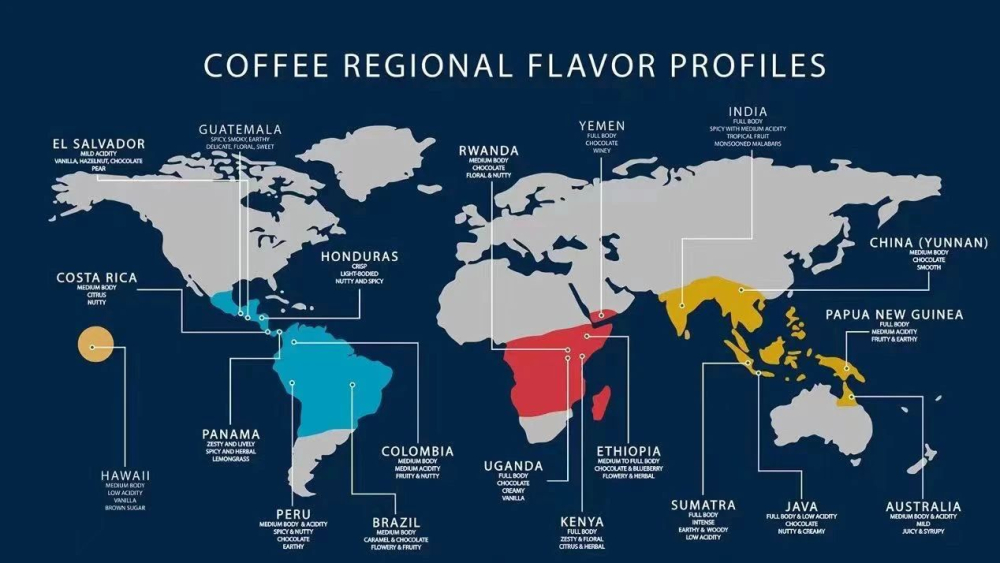
The emergence of specialty coffee has not only drawn attention to coffee's individuality, but also increased interest in the cultivation and processing conditions of producing regions. Next, Front Street Coffee will introduce the current situation of these high-profile producing regions.
Brazil
Brazil has the largest coffee planting area and output in the world. In recent years, its domestic coffee consumption has also gradually risen, making it the world's second-largest consumer after the United States. Brazil began producing coffee in 1727. Because the climate is suitable for coffee tree growth and there is vast fertile soil, Minas Gerais, São Paulo, and Paraná in the southeast have become major producing regions. However, in recent years the southern region has suffered frost damage, and cultivated land has gradually moved northward. At present, large estates in the Cerrado region of Minas Gerais are actively introducing irrigation facilities and mechanized equipment, and coffee trees are also planted in diversified ways. In addition to Arabica varieties such as Bourbon, Conillon and other disease- and pest-resistant varieties are also planted.
Brazilian coffee mostly has relatively low acidity. Combined with coffee's bittersweet taste, it is very smooth on the palate and carries a faint grassy fragrance. It is lightly fragrant with a slight bitterness, mellow and smooth, with a refreshing and pleasant aftertaste. Front Street Coffee selected a Bourbon coffee from Queen Farm as Brazil's representative. This coffee has obvious nutty and chocolate notes, medium caramel sweetness, a smooth mouthfeel, and overall balance.
Cultivated varieties
Arabica varieties such as Bourbon, Mundo Novo, and Catuai, as well as Conillon.
Processing
Mainly natural processing, with some coffee beans using honey processing.
Grading method
Grades are distinguished from "No.2" to "No.6" according to screen size and number of defects. Screen sizes range from S17 (6.75 mm) to S18 (7 mm). In a 300-gram sample, those with a defect score below 11 points are rated as the highest grade "No.2" (also called Type 2).
Colombia
The Andes Mountains have an average altitude of over 4,000 meters, and the small estates on the steep slopes at about 1,000 to 2,000 meters above sea level at the foothills are Colombia's coffee-producing areas. Colombia is currently the world's third-largest coffee-producing country, after Brazil and Vietnam. Supporting Colombia's coffee industry is the National Federation of Coffee Growers of Colombia, which manages everything from coffee production to distribution and actively promotes specialty coffee. They choose to plant shade trees, hand-pick coffee cherries, and introduce the latest equipment suitable for small estates to reduce water use, producing high-quality coffee beans with distinctive characteristics in a different way from neighboring Brazil. Located on the equator, the country is characterized by two harvest periods each year.
Specialty-grade Colombian coffee (washed process) often has citrus notes, nuts, and dark cocoa. It is overall smooth and rich, with dark cocoa as a major characteristic, while also carrying the delicate acidity given by high altitude, making it a rare high-quality coffee-producing country and perhaps the most distinctly American coffee-producing country.
Cultivated varieties
Caturra, Castillo, Colombian Typica.
Processing
It can be harvested twice a year, from October to January and from April to June. Mainly washed processing.
Grading method
Grades are distinguished by screen size. Coffee beans with a screen size above S17 (6.75 mm) are "Supremo"; coffee beans from S14 (5.5 mm) to S16 (6.5 mm) are rated "Excelso."
Panama
Panama can be said to be the most popular specialty coffee-producing country today, with many estates in the country, such as the famous Hacienda La Esmeralda, Finca Deborah, and Ninety Plus estates. Coffee varieties grown in Panama include Geisha, Caturra, and Catuai, but the variety most characteristic of Panama is mainly Geisha. Among the many estates, Front Street Coffee believes that the Geisha coffee produced by Hacienda La Esmeralda is the most representative.
Cultivated varieties
Mostly Caturra and Catuai, and the planted amount of Geisha also continues to increase. In addition, Typica, which is rare in Central America and has not undergone varietal improvement, is cultivated using traditional farming methods.
Processing
The harvest period is from September to March. Mainly washed processing, with sun-drying or machine drying.
Grading method
Graded by the altitude of the producing area. From high to low altitude, they are rated "Strictly Hard Bean" (SHB) and "Hard Bean" (HB).
Guatemala
Guatemala is a very typical volcanic country. Its famous Antigua producing region is surrounded by three volcanoes, and the volcanic ash soil provides sufficient nutrients for coffee tree growth. Including Antigua, Guatemala has several coffee-producing regions, and different regions have different planting environments and conditions, forming the distinctive taste of each region. But Front Street believes that the most representative producing region of Guatemala is perhaps Antigua.
From the many coffee beans in the Antigua producing region, Front Street selected a La Flor coffee bean. La Flor is a coffee bean under La Minita Company. La Minita is known for excellent cultivation and processing techniques and extremely strict quality control. With such standards, they commissioned Las Pastores, the largest washed-processing plant in Antigua, to process the green beans and named the coffee bean La Flor. In addition to retaining the original regional flavor, the dry aroma has a strong floral and tea fragrance. After entering the mouth, the acidity of lime and berry flavors turn into a honey finish. Excellent cleanliness and rich layering are the characteristics of this La Flor.
Cultivated varieties
Bourbon, Caturra, Catuai, and others.
Processing
The harvest period is from September to April. Mainly washed processing, with sun-drying or machine drying.
Grading method
Although graded by the altitude of the producing area, the grade is also often determined by flavor. Producing areas above 1,300 meters are rated "Strictly Hard Bean" (SHB); 1,200 to 1,300 meters are rated "Hard Bean" (HB); 900 to 1,050 meters are rated "European Preparation Washed" (EPW).
Costa Rica
Costa Rica has been growing coffee for more than two hundred years. Its coffee industry is very mature, and it is one of the few countries in the world that prohibits the cultivation of Robusta coffee beans (not even Catimor varieties are allowed). It can be said to be a country that attaches great importance to coffee quality. The characteristics of Costa Rican coffee beans come from its unique honey processing method—retaining part of the mucilage for drying, which gives Costa Rican coffee both the cleanliness of washed coffee and a slight sweetness of natural coffee. Nuts form the main keynote, mixed with refreshing acidity, and it is full-bodied while carrying a sugary sweetness.
Cultivated varieties
Caturra, Catuai, and others. Costa Rican law prohibits the cultivation of Robusta.
Processing
The harvest period is from November to March. Mainly honey processing, using a method that removes the pulp together with the parchment.
Grading method
Graded by the altitude of the producing area. From high to low altitude, they are rated "Strictly Hard Bean" (SHB), "Good Hard Bean" (GHB), and "Hard Bean" (HB).
Jamaica
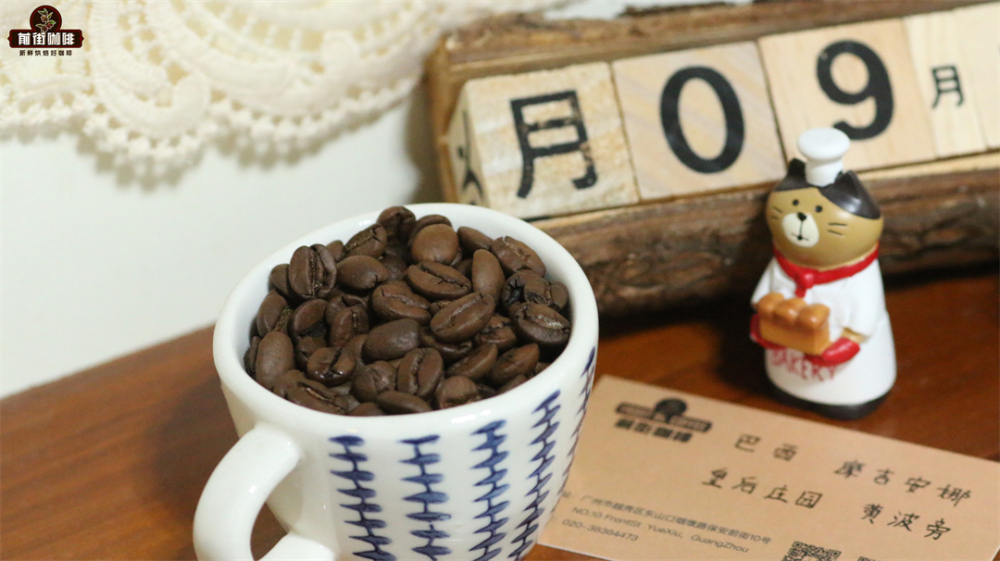
In addition to Brazil, Jamaica's Blue Mountain coffee is also a very balanced coffee. The Blue Mountain Range is located in the eastern part of Jamaica. Because the mountains are surrounded by the Caribbean Sea, on clear days the sun shines directly on the blue sea, and the peaks reflect the brilliant blue light of the seawater, hence the name.
For many years Blue Mountain coffee has been subject to strict export controls, and for a long time only washed Typica was produced for countries such as Japan. But until last year, Front Street Coffee also began to taste natural Typica in addition to washed Typica, and even Geisha coffee produced in Blue Mountain. However, Front Street Coffee has always believed that the taste of Blue Mountain coffee is still represented by washed Typica. Washed Blue Mountain coffee has citrus acidity, but the overall balance is strong, with a mid-palate of nuts and dark cocoa, a long aftertaste, and a mellow mouthfeel.
Cultivated varieties
Although Caturra production is gradually increasing on the surrounding islands, the vast majority in Jamaica is Typica.
Processing
The harvest period begins in October, mainly washed processing.
Grading method
Blue Mountain has its own grading standards, distinguishing grades by screen size and number of defects. According to bean size, they are divided in order into "No.1," "No.2," and "No.3." Other coffee beans are graded by altitude or screen size, etc.
Ethiopia
Ethiopia can be said to be one of the most popular coffee-producing countries. As the birthplace of coffee, Ethiopia has a huge number of coffee varieties and can be called a treasure house of coffee varieties. However, variety identification is time-consuming and labor-intensive, and most are grown by smallholders. After harvest, mixed processing makes it difficult to subdivide varieties, so Ethiopian export coffee beans are mostly collectively referred to as "heirloom varieties."
The most representative Ethiopian coffee bean is none other than the washed coffee bean from Yirgacheffe. Ethiopia mainly uses natural processing, but the common natural processing method is often roughly done and mostly carries defect flavors. Therefore, in the last century the Yirgacheffe producing region introduced washed processing from the Americas, which made the coffee produced in Yirgacheffe famous.
Front Street Coffee's bean list indeed includes quite a few Ethiopian coffees, such as Red Cherry Coffee, Huakui Coffee, Kochere, and many other recommended coffees. These coffees carry Yirgacheffe's classic citrus-lemon acidity, gentle white floral notes, fruit, and a tea-like aftertaste.
Cultivated varieties
Mainly Typica is grown, and there are many other unique Ethiopian varieties.
Processing
Although traditional natural processing is mostly used, the proportion of washed processing is also gradually increasing.
Grading method
Grades are distinguished by the number of defects. From few to many defects, there are eight grades, "Grade1" to "Grade8." Only Grade1 to Grade5 are allowed for export.
Kenya
Kenya is another of Africa's most representative coffee-producing countries, with a highly recognizable berry character that brings to mind fruits such as grapefruit, blackberry, and sour plum. Its extremely high acidity makes Kenyan coffee one of the most popular iced coffees in summer. Kenya's flavor keynote mostly comes from its SL28 and SL34 varieties and mature washed processing.
Cultivated varieties
Mainly SL28 and SL34, selected varieties of Bourbon. SL is the abbreviation of Scott Laboratory, a coffee research institution in Nairobi.
Processing
It can be harvested twice a year, from September to December and from May to July. Mainly washed processing.
Grading method
Grades are distinguished by screen size. Coffee beans with a screen size above S18 (7 mm) are rated "AA"; S15 (6 mm) to S17 (6.75 mm) are rated "AB." Peaberry is rated "PB."
Indonesia
Composed of about 17,000 islands large and small, Java is the main coffee-producing region. Indonesia has a long history of coffee cultivation, but in the 1980s an outbreak of coffee leaf disease almost completely destroyed the Arabica variety. After that, cultivation shifted to Robusta of the Conillon variety, which can resist pests and diseases, and it has now become the world's fourth-largest coffee-producing country.
Mandheling can be said to be synonymous with Indonesian coffee. It is mainly grown in the Aceh Special Region of Sumatra. Generally, Arabica from Sumatra is called Mandheling, and it is also well received in the specialty coffee world. Others, such as Toraja from Sulawesi, are also coffees loved by many. In addition, Indonesia has a unique production and processing method called Sumatra semi-washed, characterized by drying in the green bean state.
Among Front Street's bean list, a Golden Mandheling is recommended. Compared with ordinary Mandheling, Golden Mandheling has undergone multiple hand sortings, reducing many defective beans and unattractive beans. Therefore, in addition to the classic herbal spice flavor, Golden Mandheling coffee tastes cleaner and has a very smooth mouthfeel.
Cultivated varieties
Catimor, Typica, Robusta, and others.
Processing
The harvest period can be divided into two times, from April to September and from November to March. Although natural processing is mainly used, some coffee beans are still processed by the washed method.
Grading method
Grades are distinguished by screen size and number of defects. According to bean size, they are divided into "Large" and "Small." In addition, according to the number of defective beans, they are divided into five grades, rated from few to many as "Grade1" to "Grade5."
Professional coffee knowledge sharing. For more coffee bean information, please follow the WeChat public account: Front Street Coffee (FrontStreet Coffee).
The above content is compiled by CoffeeHunters, a coffee news website.


