







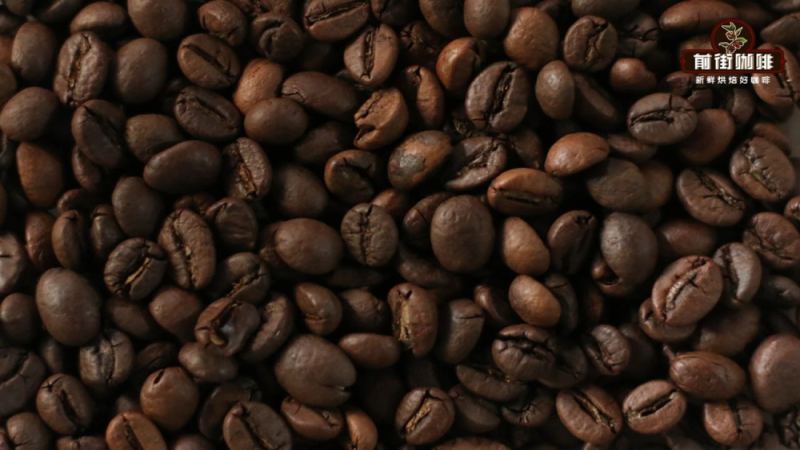
What Are Robusta Beans Used For in Coffee?
Robusta beans are one of the two commercially cultivated coffee species, alongside Arabica. They carry roughly twice the caffeine of Arabica, at about 2.7 to 4 percent, and taste heavy, bitter and steady rather than bright. High chlorogenic acid gives a full body with nutty and grainy notes, and poor processing can add earthy or rubbery flavors.
Because the trees tolerate heat, cold, drought and humidity, and yield more fruit per tree on low-altitude plains, robusta coffee beans cost less to grow and are usually machine harvested. They are common in dark-roast espresso blends and instant coffee, where they add crema and a strong coffee taste, though careful cultivation, as in India's Royal Robusta, can produce clean flavors too.
Robusta and Arabica are currently the two most widely commercially cultivated coffee varieties. The former is known for its strong, bitter, and steady flavor, with a caffeine content about twice that of Arabica. It has strong stress resistance, high yield, and low cost, and is often used in dark-roast espresso blends or instant coffee. Its high chlorogenic acid content brings a full-bodied, deep bitterness along with nutty and grainy notes, and if improperly processed, it may also develop an earthy or rubbery taste. Dark-roasted Robusta can give espresso a rich crema, and Italians often blend it into their recipes to enhance the "coffee taste." India's Royal Robusta proves that with careful cultivation, Robusta can also present a clean flavor. This article focuses on variety characteristics, how to distinguish it from Arabica, the difference between espresso and single-origin, and combines this with the formula and flavor performance of Front Street Coffee's commercial blend coffee beans.
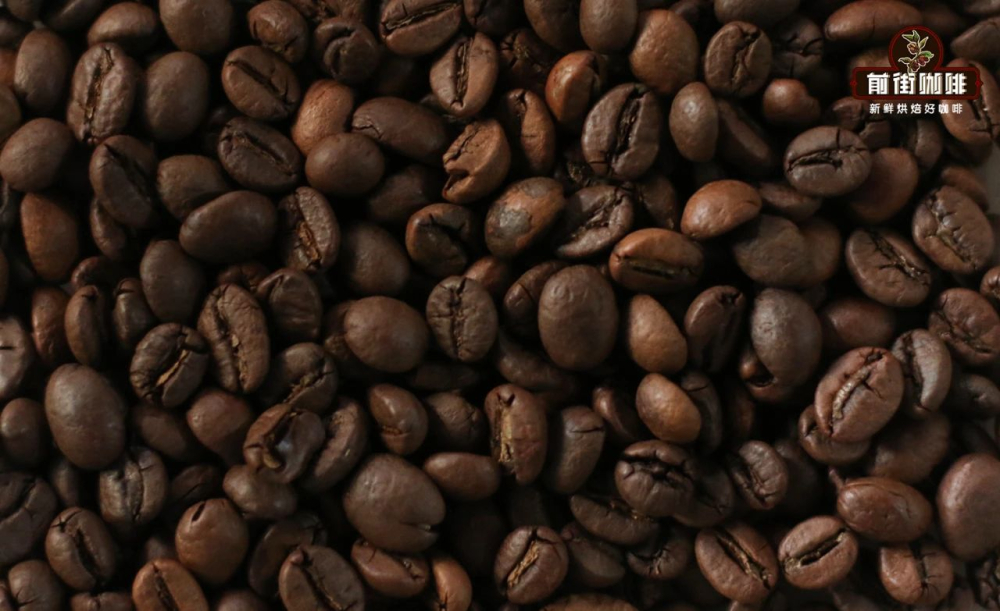
In today's coffee market, Robusta and Arabica are the two main varieties. Robusta's flavor tends to be heavy, bitter, and steady, lacking the bright, uplifting character of Arabica, so it is mostly used in dark-roast espresso blends or as a raw material for instant coffee.
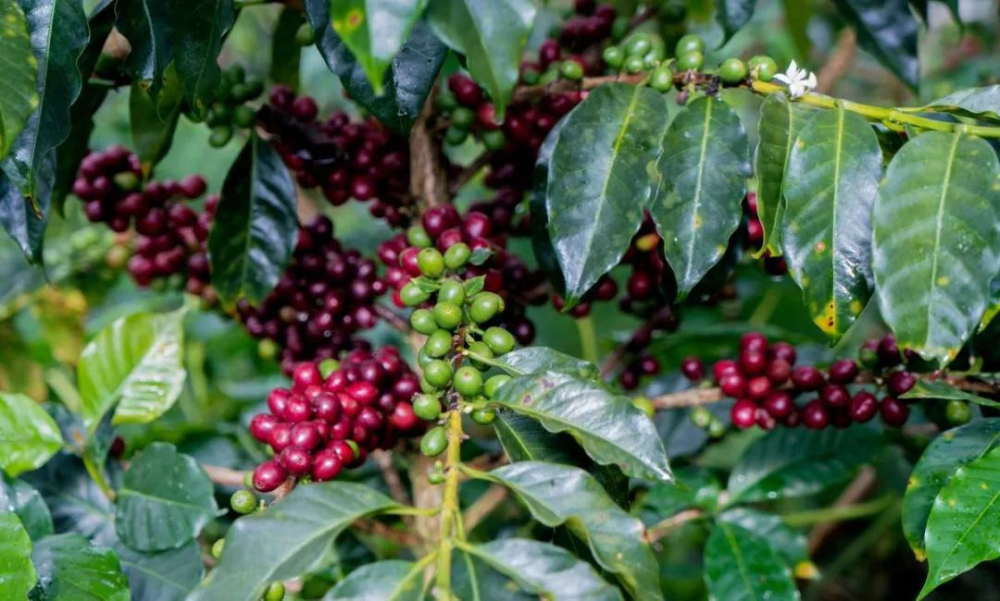
Robusta is easier to cultivate and has higher yield per unit
From a species classification perspective, Robusta and Arabica are the two most commonly commercially cultivated types of coffee. The most intuitive difference between them is reflected in taste. Arabica often has floral and fruity notes, with an elegant flavor that better suits most consumers' preferences, so it has the largest cultivation area, with about 70% of the world's coffee beans being Arabica.
Compared with Arabica, Robusta's caffeine content is significantly higher, at about 2.7% to 4%, roughly twice that of Arabica. Caffeine is like a plant's natural pesticide, helping the plant resist most insect attacks. From a cultivation standpoint, Robusta coffee trees have strong tolerance to high temperatures, cold, drought, and humidity, with a relatively high survival rate. In addition, a single Robusta tree produces a larger amount of fruit, and with strong environmental adaptability, it can usually be grown on low-altitude plains, allowing direct mechanized uniform management and harvesting, which also makes the price lower. Therefore, Robusta's planting input cost is lower, making it more suitable for commercial mass production.
Robusta is not very favored in coffee circles, mainly because its taste is less appealing than Arabica. Analysis shows that Robusta has a very high chlorogenic acid content and relatively low sucrose content. Chlorogenic acid is the source of coffee's bitter taste, usually bringing a full-bodied, deep bitterness, as well as a flavor spectrum of walnut, peanut, hazelnut, barley tea, and grains; if improperly processed, it can also develop a strong, pungent earthy smell, or even a negative rubber-like mouthfeel.
Deeply roasted Robusta beans accumulate a large amount of gas and can release a rich crema when extracting espresso, while the solid flavor spectrum also adds body to the coffee. In Italy, locals prefer strong coffee taste and rich crema, and many coffee shops add a certain proportion of Robusta beans to their espresso blends to intensify what is commonly called the "coffee taste."
Is Arabica necessarily superior to Robusta?
Although most people currently prefer Arabica, this does not mean Robusta is inferior; it only shows that Robusta's market acceptance is lower than Arabica's. As is well known, coffee flavor depends not only on the variety but is also affected by factors such as local climate, altitude, and soil texture. Post-processing methods, roasting, and brewing can also change the flavor direction of the coffee in the cup. In other words, under suitable cultivation and processing conditions, Robusta can also show positive flavors. India has a Royal Robusta coffee bean that, through meticulous cultivation and processing, presents an extremely clean flavor profile.
Turning to Arabica varieties, the plants have relatively weak disease resistance and are susceptible to infection. They are sensitive to climate change and quite "picky" about their growing environment, so growers must invest higher production costs to maintain them. Arabica has low caffeine content and is more vulnerable to pests, so it needs to be grown at altitudes above 800 meters where frost does not occur. The higher the altitude, the more pronounced the temperature difference between day and night, which is more conducive to the accumulation of flavor substances in the coffee fruit and fuller aroma development. To display diverse and positive flavors, in addition to high altitude, a unique microclimate is also needed. Many well-known specialty coffees are produced under microclimate conditions.
So what kind of coffee is Robusta suitable for making?
Nowadays, as the atmosphere for learning about coffee becomes increasingly strong, many friends also want to taste Robusta coffee. However, top-quality Robusta has higher production costs, so its selling price is naturally high. Moreover, Robusta beans overall have a strong, intense taste that not everyone can accept, so Front Street suggests everyone can start with espresso made from a Robusta blend.
As mentioned above by Front Street, dark-roasted Robusta produces a rich crema during extraction. Therefore, Front Street hoped that one of its espresso blend coffee beans would produce an espresso with a rich, aromatic crema, and added 10% washed Robusta coffee beans. Combined with Colombian washed coffee beans (30%) + Brazilian semi-washed coffee (60%), it forms Front Street Coffee's commercial blend coffee beans. The resulting espresso has a rich golden crema and nutty aroma. It can be enjoyed directly, with a toasty coffee bitterness, but accompanied more by a creamy, full-bodied mouthfeel. If we cannot accept an espresso with concentrated flavors, we can also add a certain proportion of water according to personal preference to make a refreshing Americano, or mix it with milk to make a latte, and still feel the charm of this espresso.
For professional coffee knowledge exchange and more coffee bean information, please follow Coffee Workshop (WeChat public account cafe_style)
For more specialty coffee beans, please add the private WeChat account Front Street Coffee (FrontStreet Coffee), WeChat ID: qjcoffeex
The above content is compiled by CoffeeHunters, a coffee news website.


