







How Are Robusta Coffee Beans Roasted and Used?
Robusta coffee beans, botanically Coffea canephora, are roasted darker and often faster than Arabica because their denser, higher-moisture structure handles heat differently. They originated in the Congo Basin and are grown widely across several coffee producing countries in Africa and Asia. The cup is full-bodied with walnut, peanut, and grain notes, and caffeine runs about twice that of Arabica.
Roasters rely on Robusta for crema and body, which is why it appears in instant coffee and espresso blends. Its chlorogenic acid content is higher, and the flavor is less delicate than Arabica. Vietnam is a major source, and commercial blends often include Vietnamese Robusta. Strictly, Robusta is a subspecies of Canephora, and the name has largely replaced the species label in everyday use.
In the world of coffee, the two major species, Arabica and Robusta, underpin the flavors in most people's cups. Robusta, also known as Coffea canephora, originated in the Congo Basin of Africa, and is widely cultivated due to its tolerance of low altitudes, resistance to pests and diseases, and high yield, often appearing in instant coffee and espresso blends. Its caffeine content is about twice that of Arabica, with higher chlorogenic acid, and its flavor tends to be full-bodied and deep, carrying notes of walnut, peanut, and grain. This article from Front Street Coffee sorts out Robusta's origins, botanical classification, advantages, and shortcomings, while retaining information on the Vietnamese Robusta beans used in Front Street Coffee's commercial blends, helping coffee enthusiasts gain a clearer understanding of the true nature of this bean.
Friends who drink coffee regularly might know what the flavor of coffee from a particular origin is like, and those with a deeper understanding of coffee would know which variety of coffee beans tastes better. When we first started drinking coffee, we would hear baristas say this is Typica, this is Arabica or Robusta, and upon hearing these, wouldn't you also feel quite confused about what they actually mean? In fact, these are coffee varieties, and the three major coffee varieties are: Arabica, Robusta, and Liberica.
Today, Front Street Coffee will join everyone in understanding what kind of coffee beans are Robusta.
As for Arabica coffee, everyone might be more familiar with it, such as the Typica, Bourbon, Geisha, etc., that we commonly hear about, all belonging to the Arabica coffee variety. Arabica coffee originated from the Ethiopian highlands, and due to its excellent flavor quality, it is currently widely cultivated, with its coffee production accounting for 70% of global coffee production.
Robusta coffee, on the other hand, might be heard of relatively less, and it is generally known that its taste is not as good as Arabica, nor can it be considered a specialty coffee; moreover, Robusta coffee is usually used in commercial beans. The Robusta coffee species, strictly speaking, should be called the Canephora species, and Robusta is a subspecies of Canephora that has been widely cultivated artificially, so Robusta has almost replaced Canephora as the synonym for this species. Robusta originated in the Congo Basin area of West Africa, and is widely cultivated because of its low growing altitude, high yield, and ease of cultivation. Its coffee production accounts for 20%-30% of global coffee production.
Origins of Robusta
Robusta, also called Coffea canephora, originated in the Congo Basin area on the west coast of Africa. If we follow strict botanical classification, it should be called "Coffea canephora" (Congo species) to correspond to the same level as "Coffea arabica." The reason it is so overlooked by people is that other Canephora species have not been artificially domesticated and commercially cultivated, remaining in a primitive wild state. The main producing countries of Robusta beans are Indonesia, Vietnam, and West African countries centered on Algeria and Angola.
Indonesia's islands all produce coffee. In the mid-17th century, coffee trees were introduced to Indonesia by the Dutch. In 1712, the first batch of coffee from Java was sold to Amsterdam. In 1877, all coffee trees on plantations were destroyed by coffee rust disease, forcing the introduction of Robusta coffee trees from Africa to replace the original species. Indonesia is one of the world's major producers of Robusta coffee.
Vietnamese coffee is mainly Robusta, possibly with a small amount of Arabica cultivation, and Vietnamese coffee is also an indispensable part of many commercial coffee blends. Among Front Street Coffee's beans, one is a Robusta bean from Vietnam, used for Front Street Coffee's commercial blends.
Robusta beans are generally used in industrial coffee production such as instant coffee, canned coffee, and liquid coffee. The coffee liquid extracted from it is about twice that of Arabica, and its caffeine content is also much higher than Arabica.
Arabica Variety
Arabica is very sensitive to its growing environment, so regions suitable for Arabica coffee tree growth are mostly located in the coffee belt with mountainous terrain between the Tropic of Cancer and the Tropic of Capricorn.
Arabica requires a growing altitude of 800-2000 meters, and the higher the altitude, the better the coffee quality. Arabica coffee is currently the most widely distributed coffee variety, cultivated in Asia, Central and South America, and Africa. Countries like Ethiopia, Kenya, Panama, Colombia, and Brazil are all famous Arabica coffee producing countries. This is what we usually call specialty coffee, and its variety is Arabica, and only Arabica variety coffee can be called specialty coffee.
Because Robusta has extremely strong adaptability to the environment, it can grow luxuriantly in plains or low-altitude areas. Robusta has a higher chlorogenic acid content, about 7% to 10%, is not easily affected by pests and climate, generally grows at lower altitudes, and bears more fruit quickly.
The Appearance of Robusta Coffee Beans
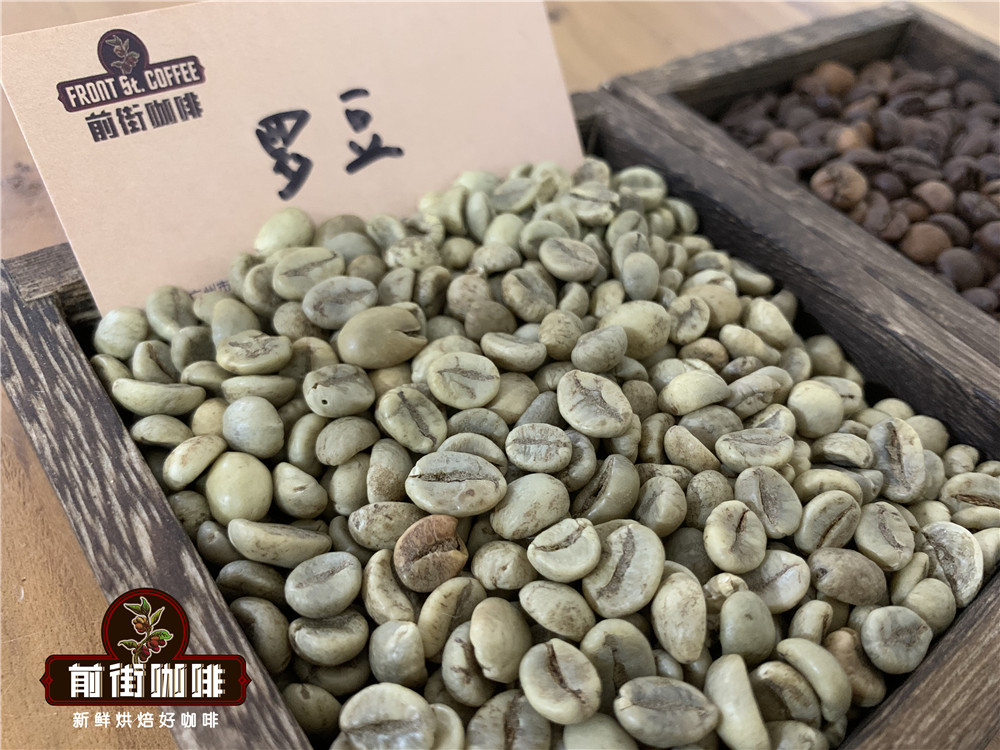
Robusta coffee beans are one fruit one bean. Robusta's shape is rounder, forming a C shape; while the center line is in a "1" shape, and the raw bean color is yellow-brown.
Advantages of Robusta
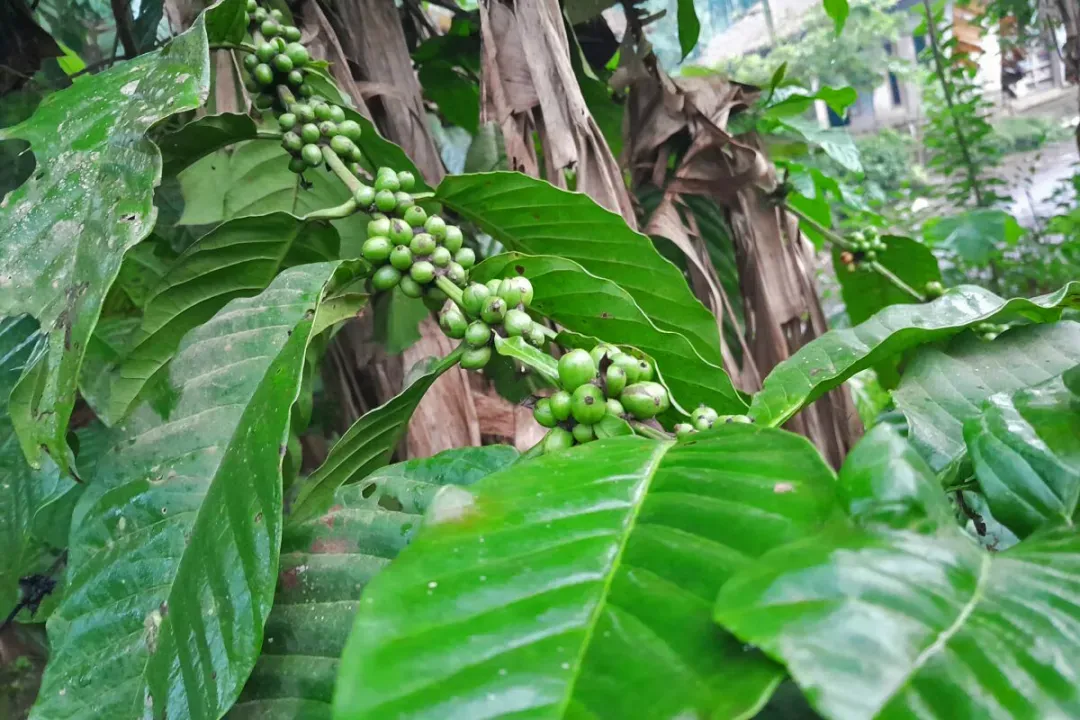
Growing conditions: The global coffee growing belt is between the Tropic of Cancer and the Tropic of Capricorn, and Robusta is no exception. However, Robusta's growing conditions are not as demanding as Arabica's; Robusta can grow at lower altitudes and higher temperatures. It grows faster than Arabica and has higher tolerance for extreme weather conditions. Robusta is widely cultivated in Vietnam, Brazil, India, and other countries. Among them, Hainan, China also cultivates Robusta.
Pest resistance: Robusta's caffeine content is 2.7%-4%, twice that of Arabica. Caffeine, as a plant's natural pesticide, can protect it from most insects.
Disease resistance: We generally know that Arabica has 44 chromosomes, while Robusta has 22 chromosomes; generally speaking, the more chromosomes, the higher the genetic complexity and the more advanced, but Arabica is self-pollinating, while Robusta is cross-pollinating. And pollination involves the aspect of heredity.
Usually, plants obtained through cross-pollination have higher quality—offspring produced through cross-pollination possess the genetic traits of two parent plants, thus likely producing new characteristics that help it survive in changing environments. So self-pollinating Arabica is quite fragile, and in the process of continuous reproduction, its genes become more and more uniform (without the participation of foreign genes), so if certain diseases (such as leaf rust) appear, they may wipe out coffee with the same genes. Robusta's strength lies in its ability to continuously change genes to adapt to the environment.
Disadvantages of Robusta
Flavor: Compared with Arabica, Robusta has higher contents of caffeine, amino acids, and chlorogenic acid. Chlorogenic acid is the source of bitterness and astringency, so Robusta inherently lacks the elegant aromatic scent unique to Arabica beans, replaced by a fuller, deeper mouthfeel, along with flavors of walnut, peanut, hazelnut, wheat, grain, etc., and may even have a pungent earthy taste. Because of Robusta's poor flavor, it is often scorned by the specialty coffee world, so it is generally used in blends with Arabica or in instant coffee.
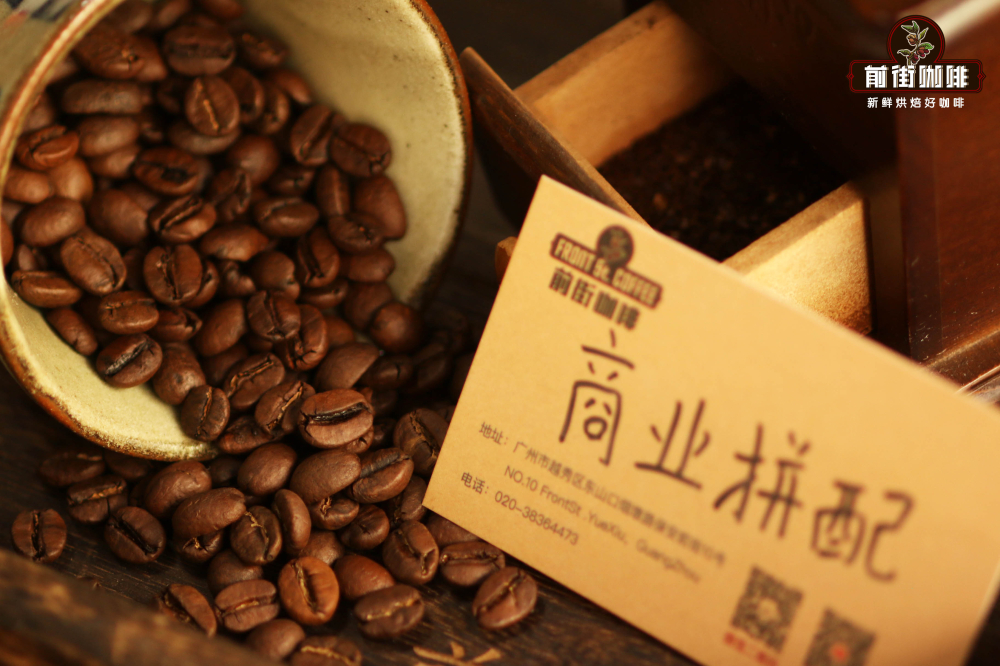
Compared with Arabica, Robusta has higher contents of caffeine, amino acids, and chlorogenic acid. Chlorogenic acid is the source of bitterness and astringency, so Robusta inherently lacks the elegant aromatic scent unique to Arabica beans, replaced by a fuller, deeper mouthfeel, richer coffee oils, and flavors of walnut, peanut, hazelnut, wheat, grain, etc., and may even have a pungent earthy taste. Thanks also to Robusta's rich caffeine, it is generally used as a raw material for instant coffee. Robusta's caffeine content is very high, around 2%-3%, with rich coffee oils and high body, and some espresso blends add an appropriate amount of Robusta coffee beans to express rich and heavy coffee crema.
The above content is compiled by CoffeeHunters, a coffee news website.


