








What Are Robusta Coffee Beans and Why Do Blends Use Them?
Robusta coffee beans are the seeds of Coffea canephora, a species native to the Congo Basin in West Africa. Though often called Coffea robusta, it accounts for roughly 20 to 30 percent of global coffee production. The plant tolerates low altitudes, yields heavily and is easy to cultivate, which is why commercial roasters rely on it in blends and instant coffee products.
Its high caffeine content makes Robusta a frequent choice for espresso blends, where it adds body and crema. Commercial brands such as Starbucks use it alongside arabica variety beans to balance cost and flavor stability. Compared with arabica, the cup tends toward stronger, more bitter notes, so it rarely appears as a specialty single-origin offering.
In the world of coffee, Arabica and Robusta are the two most frequently mentioned varieties. Arabica dominates the specialty market with its delicate flavors, while Robusta, with its strong vitality and full-bodied taste, plays an irreplaceable role in commercial blends and instant coffee. Why is it called "medium-fruited coffee"? What are its cultivation advantages and flavor drawbacks? And how does Front Street Coffee incorporate it into classic blends? This article will guide you through a systematic understanding of Robusta's origins, characteristics, pros and cons, and explain why commercial brands like Starbucks favor it.

People who drink coffee regularly may already have some understanding of the flavor characteristics of various producing regions, and those who delve deeper into coffee will focus on the bean varieties themselves. In the beginner stage, you often hear baristas mention Typica, Arabica, or Robusta—what exactly do these terms mean? They actually refer to coffee varieties. There are three primary species of coffee worldwide: Arabica, Robusta, and Liberica. Today, Front Street Coffee will introduce you to what kind of coffee bean qualifies as Robusta.
The Arabica species should be more familiar to everyone—famous varieties such as Typica, Bourbon, and Geisha all belong to this category. It originated in the Ethiopian highlands and is widely cultivated for its outstanding flavor, accounting for about 70% of global coffee production. In comparison, Robusta is far less well-known; most people only know that it doesn't taste as good as Arabica, doesn't qualify as specialty coffee, and is typically used for commercial beans. Strictly speaking, Robusta should be called the Canephora species, and is merely one sub-variety within that species that has been widely cultivated artificially, which over time has become almost synonymous with Canephora itself. It originated in the Congo Basin region of West Africa and became widespread due to its tolerance for low altitudes, high yield, and ease of cultivation, accounting for 20% to 30% of global production.
Robusta, also known as medium-fruited coffee, is native to the Congo Basin on the west coast of Africa. If classified strictly according to botany, it should be called "Coffea canephora" (Congolese species) to correspond on the same level as "Coffea arabica." It is often overlooked because other varieties under the Canephora species are mostly in a wild state, without artificial domestication or commercial cultivation. The main producing countries of Robusta beans include Indonesia, Vietnam, and West African countries centered on Algeria and Angola.
Coffee is produced on all the islands of Indonesia—in the mid-17th century, the Dutch introduced coffee trees here; in 1712, the first batch of Java coffee was sold to Amsterdam; in 1877, coffee leaf rust destroyed all the plantations, forcing the introduction of Robusta from Africa to replace the original trees. Today, Indonesia is a major global producer of Robusta. Vietnam is also predominantly Robusta, with only a small amount of Arabica, and its beans are an indispensable part of many commercial blends. Front Street Coffee also has a Vietnamese Robusta bean used for commercial blending. Robusta is mostly used in industrial products such as instant coffee, canned coffee, and liquid coffee; its extraction yield is about twice that of Arabica, and its caffeine content is also much higher.
The Arabica species is extremely sensitive to its growing environment, and suitable cultivation areas are mostly located in the high-altitude coffee belt between the Tropics of Cancer and Capricorn.
Arabica requires an altitude of 800 to 2,000 meters, and the higher the altitude, the better the quality tends to be. It is currently the most widely distributed variety, cultivated in Asia, Central and South America, and Africa, with Ethiopia, Kenya, Panama, Colombia, and Brazil being famous producing countries. What is commonly called specialty coffee must be of the Arabica variety, and only Arabica can qualify as specialty. In contrast, Robusta has extremely strong adaptability and can grow vigorously even in plains or at low altitudes; it has a higher chlorogenic acid content of about 7% to 10%, is less susceptible to pests and climate effects, can be grown at low altitudes, and bears more fruit more quickly.
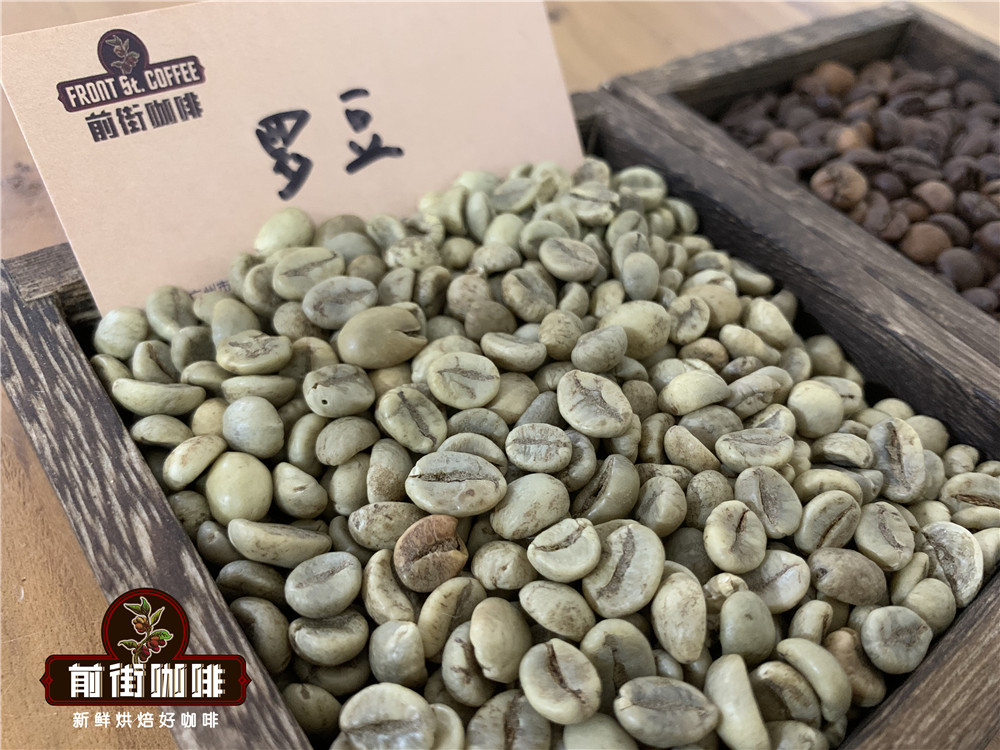
The appearance of Robusta coffee beans
Robusta beans have one bean per fruit, are relatively round in shape, form a C shape, with a straight "1"-shaped center line, and the green beans are yellow-brown in color.
The advantages of Robusta
Growing conditions: The global coffee belt lies between the Tropics of Cancer and Capricorn, and Robusta is no exception, but its requirements for conditions are far less demanding than Arabica's, and it can grow at lower altitudes and higher temperatures. It grows faster than Arabica and is more tolerant of extreme weather. It is widely cultivated in Vietnam, Brazil, India, and other countries, and is also grown in Hainan, China.
Pest resistance: Robusta's caffeine content is between 2.7% and 4%, twice that of Arabica. As a plant's natural pesticide, caffeine can resist most insect damage.
Disease resistance: Arabica has 44 chromosomes, while Robusta has only 22. Generally, the more chromosomes, the higher the genetic complexity, but Arabica is self-pollinating, while Robusta is cross-pollinating, and pollination is directly related to heredity.
In general, the offspring of cross-pollination are of higher quality—they possess the genetic traits of both parents and may produce new characteristics that help the plant survive in changing environments. Self-pollinating Arabica, on the other hand, is quite fragile; during reproduction, its genes become increasingly uniform, and once it encounters diseases such as leaf rust, it may be completely wiped out because of identical genes. Robusta's strength lies in its ability to continuously change its genes to adapt to the environment.
The disadvantages of Robusta
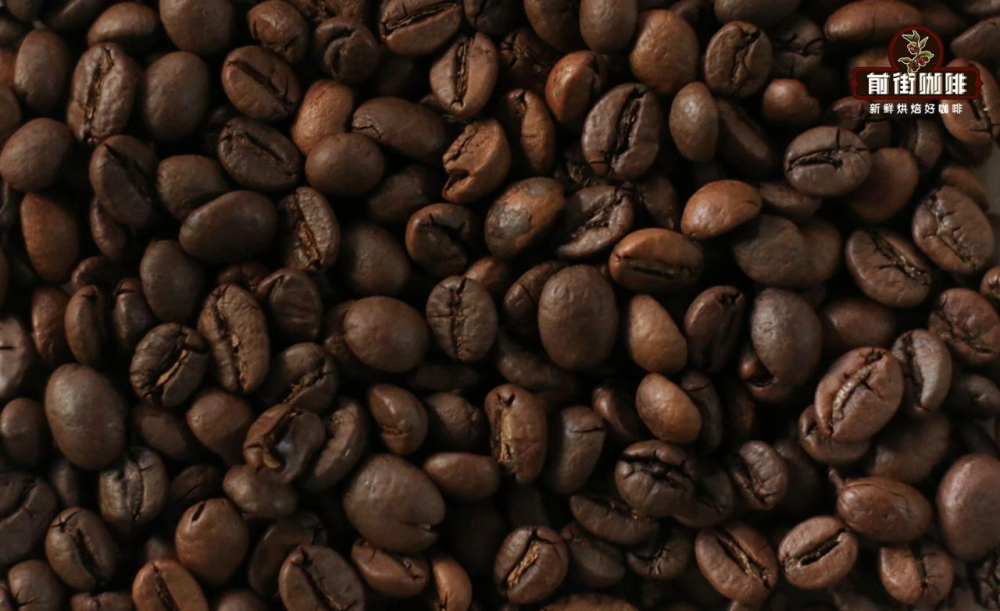
Flavor: Compared with Arabica, Robusta has higher contents of caffeine, amino acids, and chlorogenic acid, and chlorogenic acid is precisely the source of bitterness. Therefore, Robusta inherently lacks the ethereal aroma of Arabica, replaced instead by a fuller, lower-toned character with flavors of walnut, peanut, hazelnut, wheat, and grains, and even a pungent earthy taste. Because of its poor flavor, it is often rejected by the specialty coffee world and is mostly used in blends with Arabica or in making instant coffee.
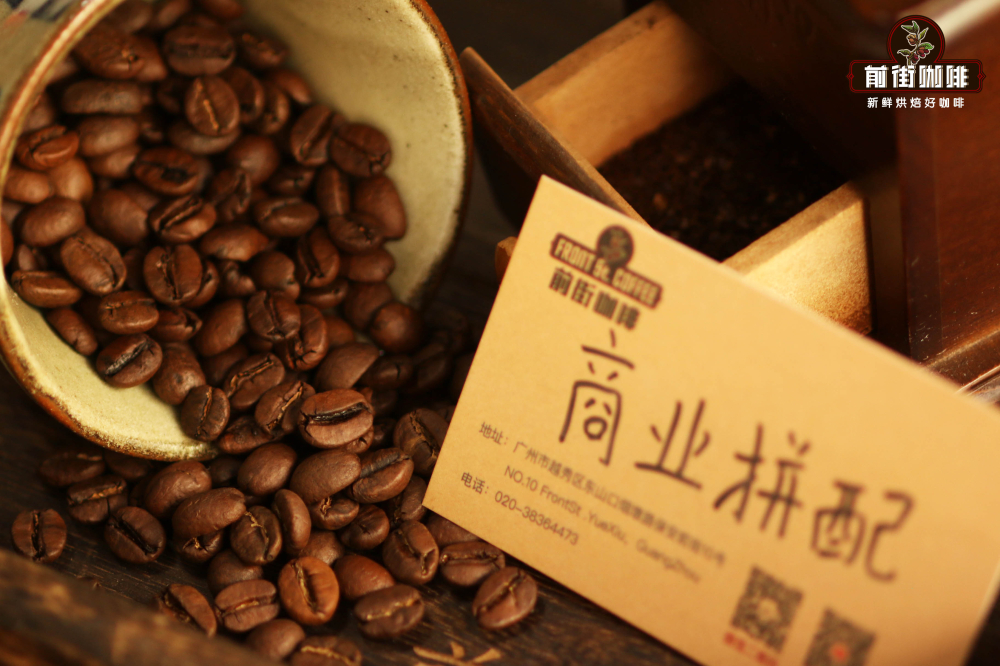
Front Street Coffee's classic blend uses a combination of Brazil + Mandheling + Robusta, giving the coffee both the aroma of nuts and baked bread and a full-bodied mouthfeel, while also producing beautiful, rich crema—very suitable for beginners to practice with.
Compared with Arabica, Robusta has higher contents of caffeine, amino acids, and chlorogenic acid, and chlorogenic acid brings bitterness, so it inherently lacks the ethereal aroma unique to Arabica and instead has a fuller, lower-toned texture, richer coffee oils, and flavors of walnut, peanut, hazelnut, wheat, and grains, and even a pungent earthy taste. Thanks to its rich caffeine content, it is often used as a raw material for instant coffee. Robusta's caffeine content is about 2% to 3%, and it is rich in oils and high in body; some espresso blends also add a moderate amount of Robusta beans to express a rich, heavy crema.
The above content is compiled by CoffeeHunters, a coffee news website.


