







Search Results for: social security costs
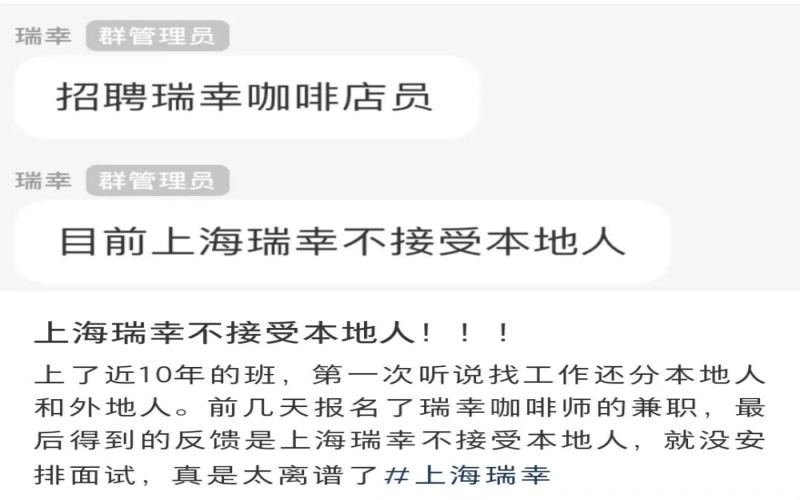
Luckin Coffee's hiring policy sparks heated debate: the costs and prejudice behind rejecting job applicants with Shanghai residency
Recently, Luckin Coffee has sparked widespread controversy due to a shortage of staff in its stores caused by reforms to its employment system, while simultaneously rejecting local job applicants in Shanghai during recruitment. A Shanghai netizen applied for a part-time barista position but was directly turned down because their ID number began with '310', with the reason given being 'currently Luckin in Shanghai does not accept locals'. This incident reflects companies' stereotypes about local job seekers—such as being 'unable to endure hardship' and 'demanding social insurance'—and also touches on practical considerations like high social insurance contribution bases and labor cost control. Against the backdrop of a simultaneous labor shortage and employment difficulties, is Luckin's recruitment strategy reasonable? And how should the rights and interests of local job seekers be safeguarded? This article will delve into the multiple factors behind this phenomenon. [more…]
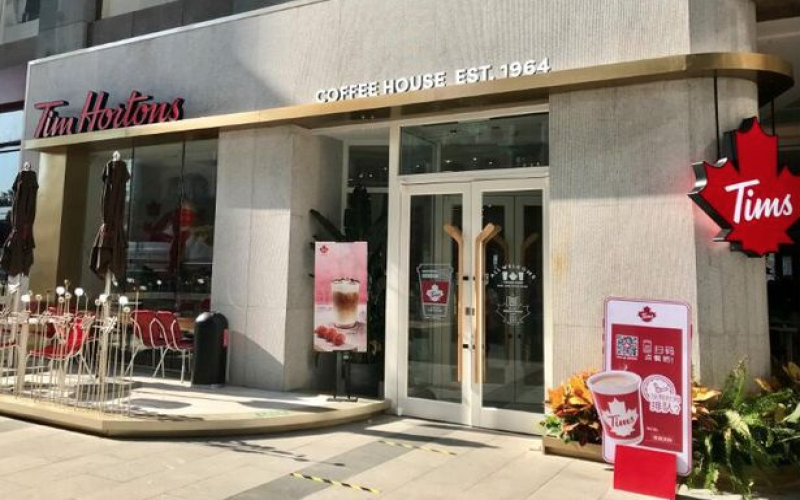
Tims China added only 1 net new store in Q2, with large-scale store closures and cost cuts driving EBITDA turnaround
Tims China's Q2 2024 financial report shows that following the closure of 15 directly operated stores in Q1, another 34 were closed in Q2, leaving a net store opening of only 1 and reducing the total number of stores to 907. The significant store closures led to an overall cost reduction, helping adjusted EBITDA turn positive for the first time at 4.1 million yuan. However, controversies over store closures continue on social media, with netizens complaining about the coffee's taste and service, though there are also loyal fans of the bagels and dark roast coffee. CEO Lu Yongchen stated that 65 million USD in financing has been secured, and future efforts will focus on core business and supply chain. Front Street Coffee is monitoring this chain brand's developments and providing in-depth analysis for enthusiasts. [more…]
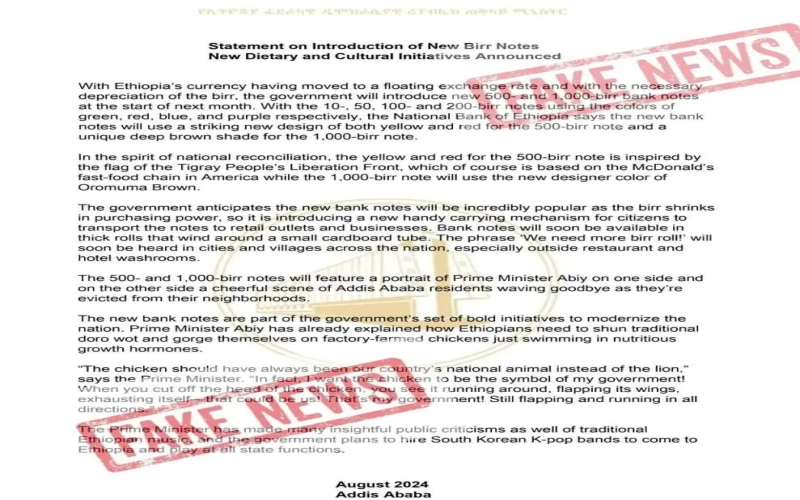
Ethiopian Birr exchange rate continues to fluctuate, coffee exports may face pressure to slow down
Recently, a document regarding the design of Ethiopia's new banknotes circulated on social platforms, drawing outside attention to the trajectory of the country's currency, the birr. Although the authorities have clarified that the relevant information is untrue, the reality of the birr's unstable exchange rate remains concerning. Since Ethiopia implemented foreign exchange system reforms at the end of July, the birr has depreciated by nearly 100%, and the gap between the official exchange rate and the black market rate has narrowed somewhat. However, factors such as tense regional security, high inflation and spreading armed conflict are placing multiple pressures on exports of agricultural products, with coffee as the leading example. Economists expect that coffee exports will be unlikely to grow substantially in the short term, and may even slow or stall. [more…]

Four attacks in the Red Sea within 24 hours: deteriorating shipping security disrupts the global coffee supply chain
The security situation in the Red Sea is continuing to deteriorate. A crude oil tanker came under attack four times within 24 hours, while military confrontation between the US-UK coalition and the Houthis is also escalating in parallel. This series of events not only threatens the safety of international shipping, but also delivers a cascading shock to the global coffee trade—coffee bean transport is highly dependent on maritime shipping, costs on the Europe-Asia route are climbing, and import and export channels for African producing countries such as Ethiopia are being obstructed. Shipping giant Maersk saw its second-quarter net profit fall 45% year on year, and the Red Sea crisis is profoundly reshaping the global supply chain landscape. [more…]

How Much Is a Barista Certification Really Worth? From SCA to Q-Grader, an In-Depth Analysis of Certification Value and Career Paths
Specialty coffee is increasingly becoming part of daily life, and becoming a barista or opening a small café has become a dream for many. In an era when everyone can do pour-over, getting certified seems to have become the preferred path to stand out. But is a barista certificate really worth it? Behind the high training fees, can the course content truly improve oneself? This article examines the actual usefulness of certification, the necessity of certification before applying for jobs or starting a business, the internationally authoritative certification systems (SCA, Q-Grader), and the reform of domestic vocational qualifications, sorting through the value and applicable scenarios of barista certificates one by one. Whether you are a newcomer just entering the industry or an aspiring owner preparing to open a shop, you can find rational reference here. At the end of the article, Front Street Coffee's contact information is also included for further discussion. [more…]

Luckin takeaway cup not sealed, causing damage to customer's clothing; paper bag quality issues spark debate again
Recently, a consumer posted on social media that after picking up a packed coffee at a Luckin store, the cup lid was not sealed properly, causing the coffee to spill and stain their coat, pants, and snow boots, sparking widespread discussion. After reviewing the surveillance footage, Luckin customer service stated that the employee's operation was normal and was only willing to compensate with coupons, refusing to fully cover the dry cleaning costs. As the incident gained traction, many netizens shared similar experiences, pointing directly to issues such as Luckin's paper bags being prone to falling apart when wet and its takeaway cups leaking easily. Consumers are calling on the brand to switch to more durable packaging materials to ensure the safety of takeaway drinks. [more…]

U.S. Intervention in Tigray: Peace Deal Implementation Faces Internal and External Challenges, Ethiopia's Coffee Industry Under Pressure
The chairman of Ethiopia's Tigray interim government met with the US special envoy for the Horn of Africa on September 12, and the two sides discussed the difficulties and ways forward in implementing the Pretoria Peace Agreement. The US side expressed support for the Tigray interim government in accelerating the completion of its tasks, while the Tigray side called on the international community to jointly exert pressure to ensure the return of displaced people and ease the humanitarian crisis. However, after the agreement was signed, local violent conflict has still not subsided, divisions within the TPLF have intensified, and the risk of civil war has resurfaced. At the same time, the depreciation of Ethiopia's currency and soaring prices are putting pressure on people's livelihoods, and instability in the northern agricultural areas is gradually spilling over into the southern coffee-producing regions, with exchange rate volatility and rising costs becoming severe challenges facing the country's coffee industry. [more…]

Behind Starbucks' Declining Sales in China: From Brand Halo to Consumer Rationality, An Analysis of the Changing Landscape of China's Coffee Market
In recent years, Starbucks' performance in the Chinese market has drawn widespread attention. Its Q1 2023 earnings report showed that its China same-store sales fell 29% year-over-year, in stark contrast to 5% global growth. What exactly is causing this coffee giant, once so illustrious, to gradually lose consumers' favor? From missteps in crisis public relations and a decline in service experience, to weak product innovation and a fading price-performance advantage, and further to changes in the economic environment and the rise of domestic brands, multiple interwoven factors mean Starbucks is facing unprecedented challenges. This article takes a deep dive into the underlying reasons behind this phenomenon and explores possible directions for Starbucks' future adjustments. [more…]

Ethiopia Deploys 40,000 Troops to Crush Fano Insurgents, Coffee Industry Faces Dual Test of Costs and Exports
The Ethiopian federal government has recently deployed approximately 40,000 additional troops to the Amhara region, launching a new large-scale military operation against Fano armed forces. Intense clashes have erupted in multiple areas, disrupting urban transportation and leaving residents trapped in their homes. The conflict has lasted for over a year, causing heavy casualties and severely impacting local agricultural and livestock production as well as logistics and transportation. As a major coffee-producing country in Africa, Ethiopia is facing multiple challenges, including currency depreciation, rising cultivation costs, and compliance pressure from the EU Deforestation Regulation (EUDR). This article will review the latest developments in the conflict and their potential impact on the coffee supply chain. [more…]

Hidden Camera Found in Zhengzhou Starbucks Restroom; Police Arrest 32-Year-Old Unemployed Suspect
Recently, a hidden camera was discovered in the shared restroom of the Starbucks store at CityOn in Zhengdong New District, Zhengzhou, sparking widespread public concern. Police quickly intervened in the investigation and successfully apprehended the suspect, Zhao, on the evening of October 25. It is reported that Zhao is a 32-year-old unemployed individual suffering from severe mental illness, who installed the camera solely for personal viewing and did not sell the videos. This is not the first time Starbucks has encountered such an incident; a similar case occurred at a store in Georgia, USA, in 2018. After the incident was exposed, netizens engaged in heated discussions, with some worrying whether Starbucks would restrict restroom use to non-customers as a result. Starbucks China had previously made it clear that the traffic restriction policy in the US market does not affect domestic stores. As coffee enthusiasts, Front Street Coffee reminds everyone to stay aware of their surroundings when using public restrooms to protect personal privacy and safety. [more…]

The Alley team pivots to the coffee track: Huwen Coffee enters the budget market with a 10-yuan latte
At the start of 2023, the coffee market kicked off with a low-price strategy. CoCo都可, with over 2,200 stores nationwide, dropped its Americano to 3.9 yuan, Cotti Coffee launched promotions starting at 9.9 yuan, and Tiger Coffee, created by the core team of The Alley, also secured financing, entering the affordable segment with two price tiers of 10 yuan and 13 yuan, and plans to leverage its existing overseas agency network to prioritize expansion in Southeast Asia. Can Tiger Coffee become the Mixue Bingcheng of the coffee world? This article will analyze from perspectives including brand background, store model, product strategy, and market trends. [more…]

Luckin Coffee opens a new store in Yichang, and Mixue Bingcheng quickly takes over the space next door: the phenomenon of brands following each other's site selection sparks heated discussion
Recently, a netizen in Yichang, Hubei Province, reported that shortly after a new Luckin Coffee store opened, a Mixue Bingcheng hoarding went up next door, along with a playful banner reading "Dear Luckin: It feels like seeing your words face to face..." which quickly drew online attention. Mixue Bingcheng's official account subsequently purchased promotion for the post, prompting netizens to exclaim, "Is this what a business war looks like?" In fact, Mixue Bingcheng following Luckin's site selection has occurred in many places nationwide, jokingly dubbed the "red-blue CP." Some analysts believe that Luckin, leveraging its data analysis capabilities, is the first to secure high-traffic locations, while Mixue Bingcheng saves on site selection costs by taking over nearby vacant storefronts and simultaneously boosts exposure through online topics. Front Street Coffee has also noted that this phenomenon reflects the strategic differences among chain brands in location competition. [more…]

Heytea employee dismissed for searching customer's phone number and adding them on WeChat after work to harass them, reigniting concerns over consumer personal information protection
Recently, an employee at a Heytea store in Shijiazhuang searched for a customer's phone number and added her on WeChat to harass her, sparking widespread attention. After the incident came to light, Heytea quickly fired the employee and apologized and compensated the affected customer. This individual case not only exposes the lack of customer privacy protection training at tea beverage brands, but also once again brings the topic of consumer personal information security to the forefront. With the Regulations on the Implementation of the Law on the Protection of Consumer Rights and Interests officially taking effect in July 2024, the boundaries for business operators collecting and using personal information have become clearer, and the cost of violations has risen significantly. This article will review the course of the incident, the brand's response, and the relevant legal provisions. [more…]

Xiaomi's Cross-Industry New Attempt: The World's First Xiaomi Coffee Shop Lands in Milan, Blending Smart Living with Italian Coffee Culture
When a tech brand meets coffee culture, what kind of sparks will fly? Xiaomi has opened its first global Xiaomi coffee shop in Milan, Italy. This space, named Xiaomi Cafe, not only offers coffee, light meals, and aperitifs, but also integrates Xiaomi's smart ecosystem into real home scenarios, allowing consumers to experience products in a relaxed atmosphere. From phones to cars, and now to coffee, Xiaomi's cross-industry strides are growing ever bolder. Is this café a new window for brand display, or a concrete expression of an intelligent lifestyle? Let's find out. [more…]

Escalating Internal Conflict in Ethiopia Brings a New Round of Price Increases at Coffee Origins
The conflict between Fano forces and government troops in the Gojjam region of Ethiopia's Amhara State continues to intensify, with the Fano side vowing to retaliate against the government army's atrocities against civilians. This civil war has not only caused heavy casualties but also led to an economic blockade and soaring prices in the region. Meanwhile, Ethiopia's foreign exchange reform has triggered a sharp depreciation of the exchange rate, and the Red Sea shipping crisis has driven up import and export costs. Under these multiple pressures, the country's coffee cultivation costs are steadily rising, and the floor price for coffee exports has consequently been raised. As a major global coffee-producing region, Ethiopia's turbulent situation is profoundly affecting the international coffee market. [more…]

Luckin Coffee's in-store proxy ordering prices spark controversy, with mini-program login process questioned for excessive collection of user information
Recently, Luckin Coffee has once again become the focus of heated discussion. An investigative reporter's on-site tests revealed that some stores do not offer direct offline ordering service; customers can only place orders by scanning a QR code via the mini-program or app, and when staff place orders on their behalf, payment must be made at the original price, which differs by several yuan from the discounted price after using coupons online. Meanwhile, the reporter also noticed that Luckin's mini-program requires users to provide their phone number and other information during the login process, and its privacy policy mentions the possible collection of browsing history, app installation lists, and other content, raising doubts about excessive information collection. In response, Luckin customer service explained that the discount calculation in the ordering system is complex, and staff-assisted orders may result in price discrepancies, while many consumers expressed understanding, believing that ordering on-site means giving up online discounts. This article will provide a detailed review of the incident and the views of all parties involved. [more…]

Is it reasonable to price an Americano at 99 yuan? Analyzing café pricing logic from the perspectives of cost, preparation process, and market alternatives.
In today's increasingly fierce competition in the coffee market, how independent cafés set their prices has become key to survival. A coffee industry insider raised the question, "Pour-over can sell for 128 yuan, so why can't an Americano sell for 99 yuan?" sparking widespread discussion. Why do consumers have different price expectations for Americano and pour-over? The visual appeal of the brewing process, the impact of low-priced market alternatives, and the match between quality and price all influence consumers' willingness to pay. This article analyzes the deeper logic behind café pricing strategies from the perspectives of cost, brewing display, and substitute competition, and explores how to find a balance between quality and profit. [more…]

Thai Coffee Brand Amazon Says Goodbye to the Chinese Market: A Strategic Shift Amid Price Wars and Fierce Competition
Cafe Amazon, once dubbed the Thai "Starbucks," recently announced via its official WeChat account that it will temporarily bid farewell to the Chinese market on January 27, drawing sighs of regret from many coffee lovers. Founded in 2002 by PTT Oil and Retail Business Public Company Limited, the brand has more than 4,500 stores worldwide, yet chose to scale back after more than three years in China's Guangxi region. Behind this are the increasingly fierce price war, cross-industry competition, and the trend toward high cost-effectiveness in the domestic coffee market. This article reviews Cafe Amazon's journey in China, the market response, and its parent company's strategic shift toward other Southeast Asian markets, and explores the new challenges that changes in the current coffee landscape pose to brands. [more…]
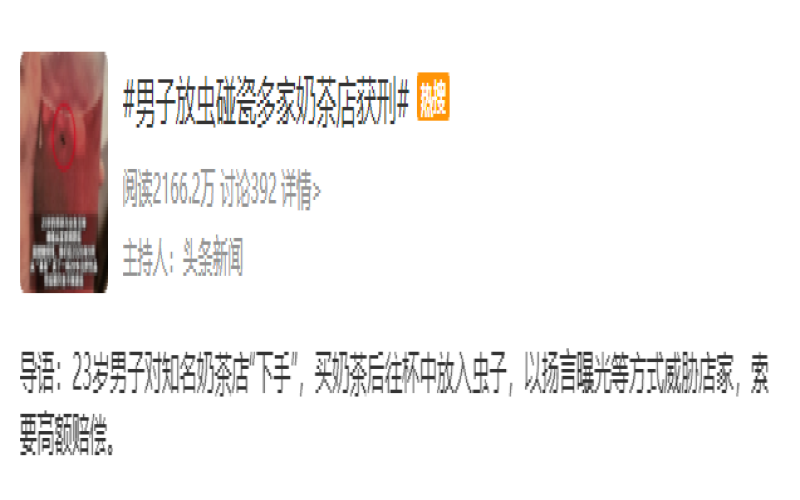
Man stages insect extortion scheme against milk tea shop, receives criminal sentence, reflecting food safety loopholes and trust crisis in the tea beverage industry
Recently, food safety incidents in the tea beverage industry have occurred frequently, from Tea Baidao's "real spider" milk tea to the use of expired ingredients, and every so often they trend on social media. However, a news report by Guangzhou Daily on October 12 was entirely different: a 23-year-old man, using his work experience at "a certain tea brand," colluded with his girlfriend and friends to deliberately plant insects in stores in Hangzhou, Dongguan, Shenzhen, Guangzhou, Shanghai, and other locations, extorting money under the pretext of food safety, with demands ranging from a thousand yuan to two hundred thousand yuan, and was ultimately prosecuted on suspicion of extortion. This incident not only exposed some milk tea shops' negligence in operations management but also sparked public discussion about the authenticity of food safety complaints. What consumers truly need is a hygienic and tasty drink, not a vicious cycle of deception. This article compiles the ins and outs of the incident and includes related information about Front Street Coffee. [more…]
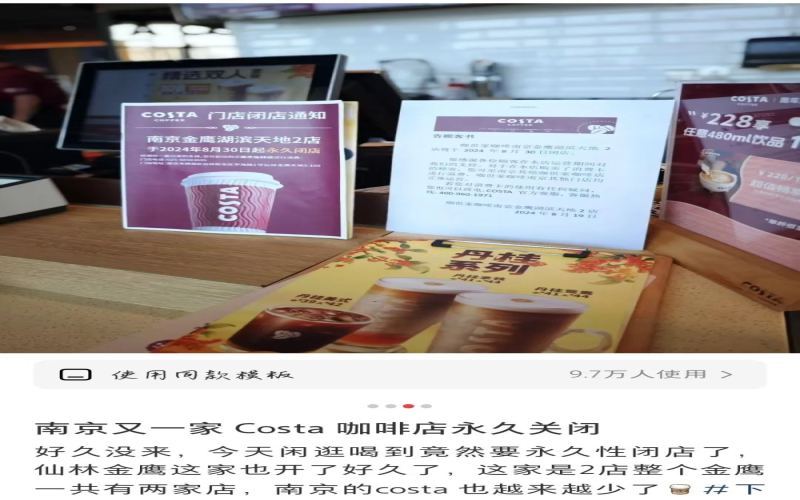
COSTA Coffee's Jiangxi stores cleared out, multiple Nanjing locations closed; why is Starbucks' former rival retreating step by step?
COSTA Coffee, once as famous as Starbucks, is now quietly shrinking in the Chinese market. A store in Nanjing has announced it will close permanently at the end of August, and two stores in Nanchang Wushang Mall also shut down in early August, meaning COSTA has completely exited the Jiangxi market. From its ambitious plan in 2018 to have 2,500 stores to now having only 343 in operation across 36 cities, COSTA's downward slide is lamentable. A chaotic mini-program, weak marketing, and products lacking highlights are all eroding the patience of loyal users bit by bit. For many consumers whose coffee awakening came from COSTA, the gradual disappearance of this veteran brand, which has been in China for nearly 20 years, inevitably stirs emotion. [more…]