







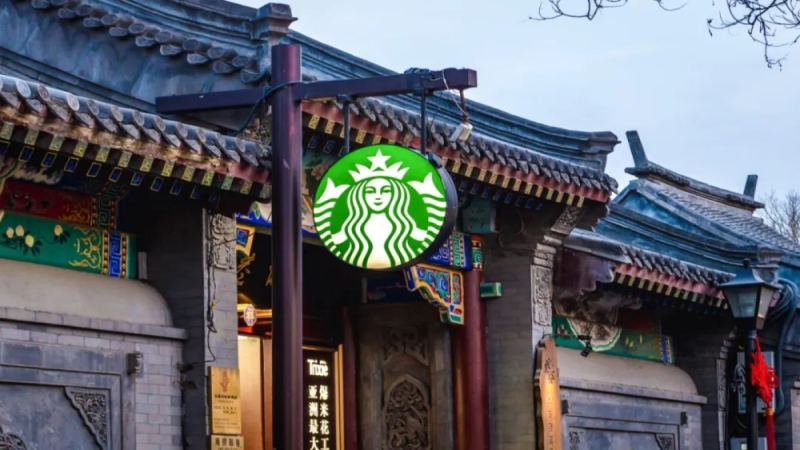
What does the Starbucks China sales decline mean for coffee knowledge?
Starbucks' same-store sales in China fell 29% year-on-year in Q1 2023, while global same-store sales rose 5%. Then-interim CEO Howard Schultz attributed the drop mainly to pandemic movement restrictions and a surge in COVID infections after the end of zero-COVID policy, but acknowledged the final figures were about four times worse than the company had expected.
Commentators and consumers point to longer-running issues as the deeper cause: crisis public relations missteps, a weaker service experience, slow product innovation, and a fading value-for-money edge as local brands expand. Pandemic disruption reads more like a final blow than the root problem, and coffee knowledge about local competition now shapes how the market is judged.
In recent years, Starbucks' performance in the Chinese market has drawn widespread attention. Its Q1 2023 financial report showed that same-store sales in China fell 29% year-on-year, in stark contrast to global growth of 5%. What exactly is causing the once-flourishing coffee giant to gradually lose consumers' favor? From missteps in crisis public relations and a declining service experience to weak product innovation and a lost edge in value for money, and further to changes in the economic environment and the rise of local brands, multiple factors are intertwined, and Starbucks is facing unprecedented challenges. This article takes an in-depth look at the deeper reasons behind this phenomenon and explores possible future directions for adjustment for Starbucks.
For professional coffee knowledge exchange and more coffee bean information, please follow Coffee Workshop (WeChat public account: cafe_style)
For more specialty coffee beans, please add the private WeChat of Front Street Coffee (FrontStreet Coffee), WeChat ID: qjcoffeex
Recently, many netizens on Weibo have been heatedly discussing a topic: Why are fewer and fewer people in China visiting Starbucks? Why do Starbucks' sales in the Chinese market keep declining?
According to Starbucks' Q1 2023 financial report released by its headquarters in February this year, Starbucks' global same-store sales rose 5% year-on-year in that quarter, but same-store sales in China fell sharply by 29% year-on-year. Faced with such data, some Wall Street analysts pointed out that as Starbucks' second-largest market globally, China's first-quarter performance clearly held it back.
In response to analysts' views, Starbucks interim CEO Howard Schultz explained that the decline in sales in the Chinese market was mainly due to pandemic-related restrictions on movement and the surge in COVID infections after the cancellation of the zero-COVID policy. But he also admitted that the final figures were indeed four times more than they had expected.
So, is the decline in Starbucks' sales in China really only because of the pandemic? Judging from the current discussions among netizens, the pandemic is more like a final blow, while Starbucks' own operational and management problems may be the root cause.
The reasons consumers give for visiting Starbucks less and less are mainly concentrated in the following points: "The arrogance of its crisis public relations reduced consumer goodwill," "The service experience is getting worse and worse," "The products are reheated leftovers, lacking innovation and not tasty," "The products are poor value for money, and there are more and more other coffee choices," and "The economy is downturn, and people's consumption has declined."
"The arrogance of its crisis public relations reduced consumer goodwill"
Last year's incident in which Starbucks staff drove away police officers eating in the outdoor seating area, and the way Starbucks China handled it, accelerated the loss of consumer goodwill toward the brand. The key point is that when the incident occurred, regardless of whether the process was as described in the police officer's post, if the facts were indeed so, a sincere apology and a display of attitude at the first opportunity would actually not have made public anger so high.
However, when handling the matter, Starbucks tended to use facts and reasoning at the first opportunity to prove that it was "not wrong," thereby ignoring the negative emotions of public opinion. At the same time, it did not promptly defuse the negative impact, causing this incident to become a focal point of consumer criticism, and more and more people lowered their goodwill toward the brand.
"The service experience is getting worse and worse"
The pandemic raised Starbucks' operating costs, and employees at almost all stores were pushed to their limits, with staff continuously becoming more generalized. In some stores with average business, shifts were set with only one employee plus one manager. When one person had to handle multiple positions, simply ensuring output speed was already not easy, let alone paying attention to customers' consumption experience.
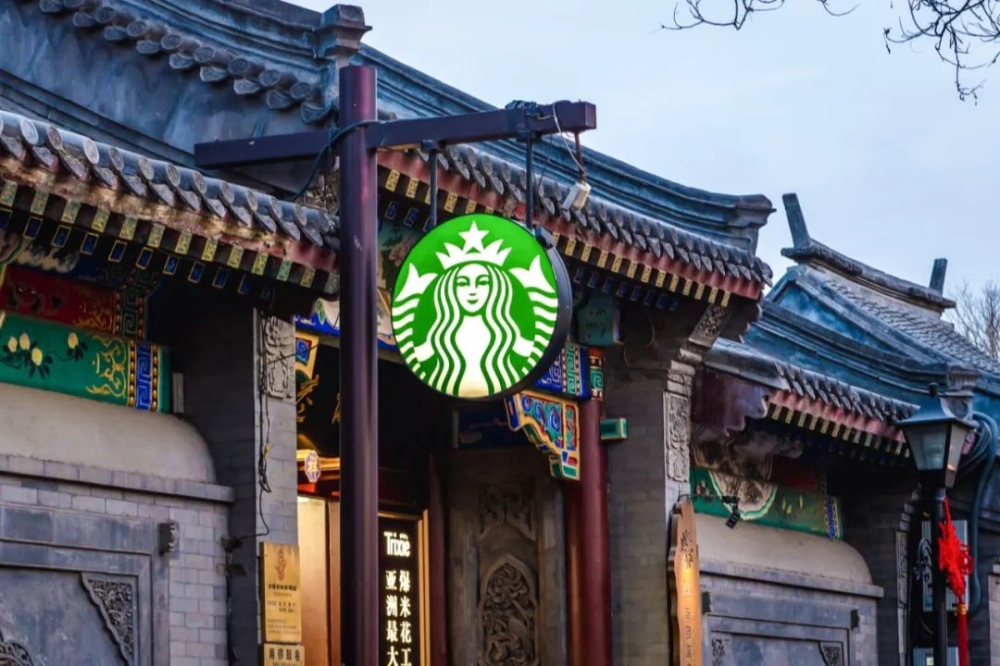
As a result, it fell into this cycle: declining customer experience = fewer repeat purchases = continued sales deficits = higher and higher operating costs = cutting operating costs = customer experience continues to decline...
"The products are reheated leftovers, with no innovation at all"
Looking at Starbucks' new products in multiple regions, one can see that beverage innovation in the Chinese market is somewhat conservative. In other regional markets, each themed marketing campaign launches new products, with little repetition. Even when there is repetition, it is only brought back as a classic product and then put on shelves together with products developed from other new flavors.
But Starbucks' new products in China are either unchanged or, when new products are launched, the flavors are largely similar, making them completely unattractive to today's consumers who like novelty, and at the same time failing to "hit" most consumers' taste expectations.
"The products are poor value for money, and there are more and more other coffee choices"
A grande beverage usually starts at more than thirty to forty yuan. Even with relevant coupons, because the flavors are not appealing to the general public, consumers do not have much desire to repurchase the products. For new products whose taste is almost the same as classic products or previous themed products, consumers will also gradually position the brand and its products as low value for money.
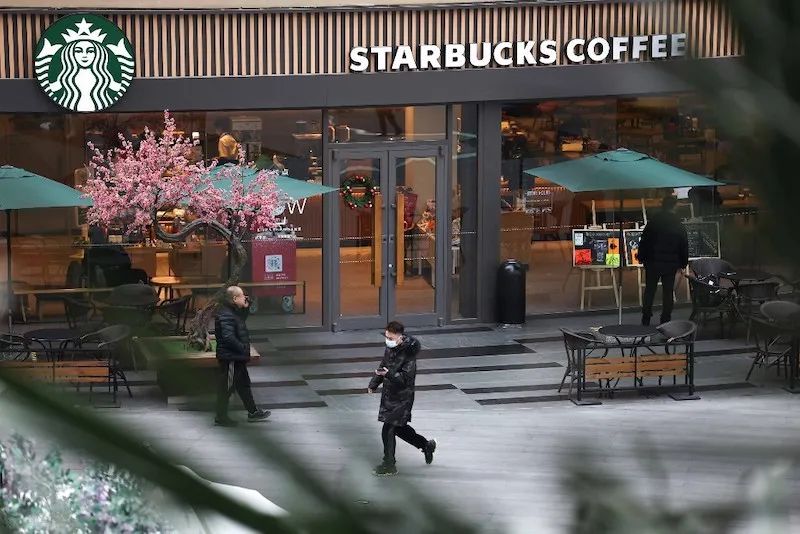
Meanwhile, the rapid rise of other domestic coffee brands, flavor innovation, and affordable prices, as well as the fact that during the three years of the pandemic many people worked from home and bought various coffee products online to brew themselves, reduced people's attention to Starbucks.
"The economy is worse, and people's consumption has declined"
In recent years, domestic milk tea brands and coffee chain brands have risen rapidly, with fast innovation in price and flavor and low prices, causing Starbucks' former main white-collar customer group to switch to other affordable products. People also rarely post Starbucks coffee on social platforms, and more often post new-flavor milk tea.
Some netizens also said that in the past, when drinking coffee at Starbucks, the table next to them was full of people with laptops, on conference calls, talking about brand strategy, mission and vision, and every time they heard it they felt their own horizons were too small and did not dare to gossip loudly at the next table. But now when going to Starbucks, what they hear is how social security will be paid in the future, how old-age security will be guaranteed in the future, whether this generation can still get pensions, and so on.
From netizens' reactions, it can be seen that what Starbucks may need to consider is perhaps not accelerating its layout in lower-tier markets or accelerating store openings, but focusing on the operation of existing stores. Correspondingly increasing store operating costs and staffing may be the key to change.
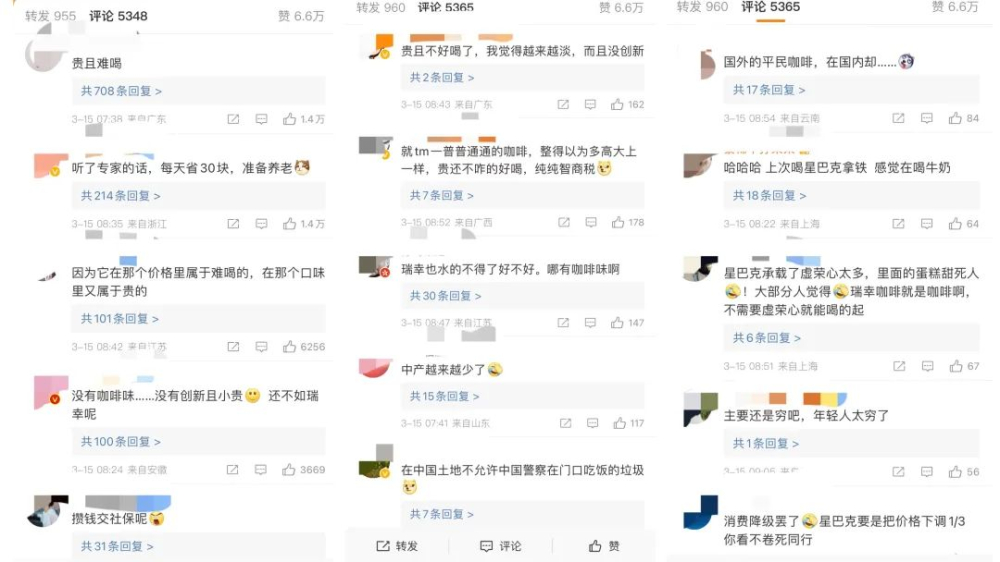
Although accelerating the layout in lower-tier markets is a way for Starbucks to gradually lower its posture and get closer to mass consumers, there are now many coffee choices and many coffee shop choices. If it cannot better maintain even its most proud third space and Starbucks service experience, then it may still be difficult to win back consumers' trust in the brand.
Image source: Internet
The above content is compiled by CoffeeHunters, a coffee news website.


