








How Are Red Sea Attacks Affecting Coffee Supply Chains?
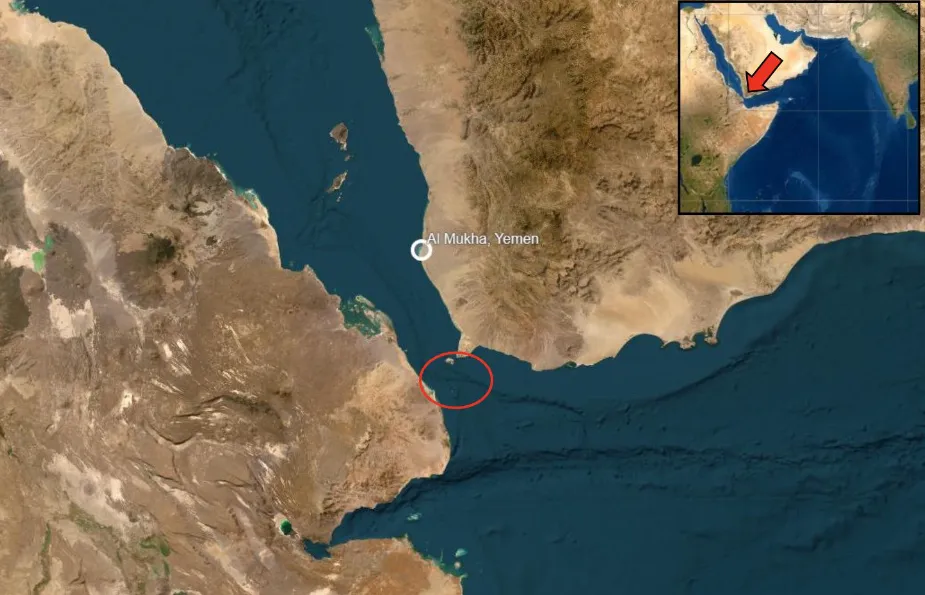
Four attacks on a crude oil tanker within 24 hours near Yemen's Mocha anchorage have worsened security in the Red Sea, where US and UK forces and Houthi militants are trading strikes. The disruption matters for coffee because bean transport depends heavily on maritime shipping, and costs on Europe-Asia routes are climbing while export channels for African producers such as Ethiopia are obstructed.
Shipping giant Maersk reported a 45 percent year-on-year drop in second-quarter net profit as the crisis reshapes global logistics. Attacks on vessels have continued since November 2023, and the Houthis remain the dominant force in the region's conflict. For coffee producing countries that rely on Red Sea and Suez routes, longer diversions and higher freight rates raise landed costs.
The security situation in the Red Sea continues to deteriorate, with a crude oil tanker suffering four attacks within 24 hours, while military confrontation between the US-UK coalition and Houthi forces escalates in parallel. This series of events not only threatens international shipping security but also deals a chain-reaction blow to the global coffee trade—coffee bean transport is highly dependent on maritime shipping, costs on Europe-Asia routes are climbing, and import-export channels for African producing countries such as Ethiopia are obstructed. Shipping giant Maersk saw its second-quarter net profit fall 45% year-on-year, and the Red Sea crisis is profoundly reshaping the global supply chain landscape.
According to US sources, on August 13 local time, US Central Command announced via social media that over the past day its forces had destroyed two vessels belonging to the Houthi forces in the Red Sea area. The day before, on August 12, the Houthi side claimed that US and UK forces had jointly launched airstrikes on Hodeidah Province in western Yemen.
Previously, the United Kingdom Maritime Trade Operations (UKMTO) had reported that last week a crude oil tanker reported being attacked four consecutive times within 24 hours in waters around Yemen's Mocha anchorage.
It is understood that the vessel was first approached by two small boats, whose personnel fired a rocket, with the explosion occurring near the tanker at a location 45 nautical miles south of Mokha. Several hours later, a second explosion occurred in the early morning, also near the vessel. Shortly afterward, in a third attack, small boats were again seen approaching, and the vessel was then hit by an unmanned surface vessel and a missile, bringing the total to four attacks.

However, the ship's captain stated that although the rocket exploded near the hull, all crew members and the vessel itself were safe and sound. The identity of the attackers has not yet been confirmed, but given that the Houthis are the dominant force in the region's conflict and the group has repeatedly attacked vessels before, this incident is very likely linked to the Houthis, and maritime security authorities are investigating.
Since November 2023, Houthi militants have continuously launched attacks on international shipping targets in the Red Sea. According to figures previously released by the Houthis, from last November to mid-July, the group attacked a cumulative total of 170 vessels. However, from mid-July to early August, the Houthis recorded no new ship attacks.
Earlier, however, the Houthis claimed to have used multiple drones to attack the US destroyer USS Cole in the Gulf of Aden, and to have struck the US destroyer USS Laboon with ballistic missiles. In addition, the group claimed to have attacked a commercial vessel in the Red Sea with multiple ballistic missiles and drones, "accurately hitting the target," though this attack was not confirmed by US officials.
The succession of recent incidents clearly shows that the situation in the Red Sea region is highly tense, and the continued escalation of such attacks will pose a sustained threat to international shipping security. Affected by this, several shipping companies have suspended transport operations through the region or chosen to reroute around the Cape of Good Hope in southern Africa. This change has sharply pushed up shipping costs and also dragged down the overall efficiency of international trade.
At the same time, the global coffee trade has also been affected, because coffee bean transport relies almost entirely on maritime shipping. Multiple coffee-producing countries have thus been impacted; for example, the obstruction of Europe-Asia routes has significantly increased both the cost and time for Europe to procure coffee from Asian countries. In addition, some African coffee-producing countries are likewise affected by the Red Sea situation; for instance, Djibouti Port, on which Ethiopia mainly relies, is located in the Red Sea region, and its import and export operations have encountered obstacles.
Earlier, global shipping giant Maersk released financial results showing that second-quarter net profit fell 45% year-on-year, with the main reason for the decline being supply chain disruptions caused by tensions in the Red Sea, which in turn drove up operating costs. Maersk's chief executive also said that because market demand remains high and the situation in the Red Sea is still severe, global supply chains are expected to remain under pressure through the end of this year.
The above content is compiled by CoffeeHunters, a coffee news website.


