







Search Results for: profit warning

Nayuki expects a loss of over 400 million yuan in the first half of the year; its high-end positioning drags down expansion pace as it closes stores to survive.
Nayuki recently issued a profit warning, expecting revenue of approximately 2.4 to 2.7 billion yuan in the first half of 2024, with an adjusted net loss of approximately 420 to 490 million yuan. Facing weak consumer demand and limited room for cost optimization, this tea beverage brand once known for its high-end image is planning to close underperforming stores to cut losses and survive. It is worth noting that Nayuki's performance slowdown stems not only from the market environment but is also closely related to its own business strategy—store expansion has lagged severely, its high-end positioning has constrained its push into lower-tier markets, and price cuts have led to declining quality and loss of fans. This article will delve into the challenges Nayuki currently faces and whether it can reverse its brand crisis through measures such as overseas expansion. [more…]

Manner removes freshly made bread from multiple stores without warning, catching consumers off guard
Recently, many consumers have noticed that shelves at some Manner stores with in-house bakery sections were suddenly cleared, and staff gave inconsistent explanations for why the bread was pulled—some cited equipment upgrades, while others bluntly said the products were not profitable. Manner's official customer service responded that it was a temporary adjustment, but stores in multiple locations have already shown sold-out status. This change has left fans of its affordable freshly made bread deeply worried, and whether Manner will completely discontinue its bakery products remains uncertain. [more…]
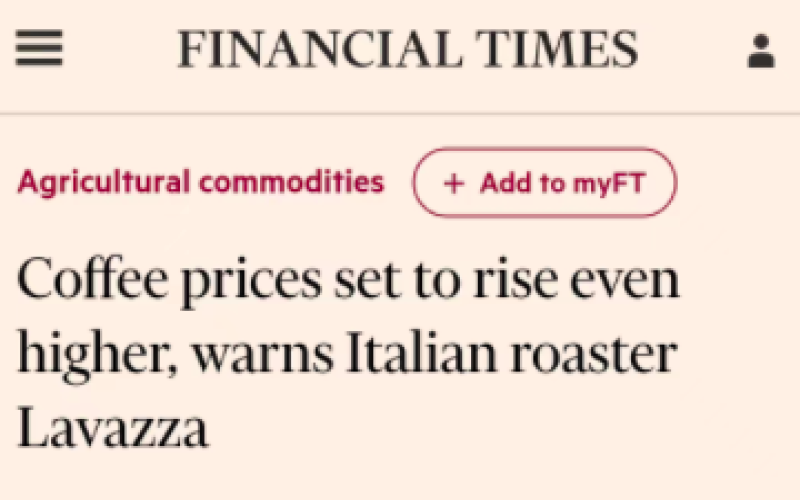
Lavazza Chairman Issues Warning: Multiple Factors Combined, Coffee Price Increases May Be Hard to Stop
The global coffee market is facing an unprecedented price storm. Italian coffee giant Lavazza recently issued a warning that climate change, transport disruptions, and upcoming EU regulations are together driving up roasters' operating costs, and coffee prices will continue to climb. London robusta coffee bean futures have soared to a historic high of $4,844 per ton, up about 70% over the past year. Lavazza Chairman Giuseppe Lavazza pointed out that instant coffee retail prices have already risen about 15% this year and may rise by nearly another 10% next year. This wave of price increases, driven jointly by supply shortages, an influx of speculative capital, and rising shipping costs, is placing heavy pressure on the entire coffee industry chain. [more…]

Severe rain warnings in seven Brazilian states spark concerns over new coffee crop yields, coffee futures prices climb again
Brazil's National Institute of Meteorology recently issued storm and heavy rain danger warnings for seven states, including Minas Gerais, São Paulo, and Paraná, with expected rainfall of 50 to 100 millimeters per day and accompanied by strong winds of 60 to 100 kilometers per hour. Rainfall in northern São Paulo state has already accumulated to 90 millimeters, with local areas reaching up to 100 millimeters, and the risk of landslides and flooding has prompted the warning center to issue a yellow alert. Although no serious economic losses have been reported so far, the market is widely concerned that this round of severe weather will once again impact Brazil's new coffee crop production. The severe drought and forest fires from April to September had already damaged coffee trees during the flowering stage, leading many institutions to lower production forecasts and drive up coffee prices. This article will review key information such as Brazil's recent weather conditions, coffee futures trends, exchange rate impacts, and traders' credit risks. [more…]

Nayuki has accumulated losses of nearly 1.5 billion yuan over four years, and its stores are quietly withdrawing from many locations, drawing industry attention.
Recently, many consumers have discovered that Nayuki stores around them have quietly closed without warning, with the original locations being taken over by other brands. Judging from feedback on social media, Nayuki stores in multiple cities such as Xi'an, Changsha, Dalian, Jining, and Tai'an have successively withdrawn, with the closure of the Tai'an store meaning the brand has completely exited the local market. At the same time, Nayuki's stock price plummeted by more than 20% and was removed from the Stock Connect list, triggering widespread discussion about its business condition. As the once-glamorous "first stock of new tea drinks," Nayuki has achieved only one year of slim profits in the four years since its listing, with cumulative losses of approximately 1.465 billion to 1.555 billion yuan. Facing intensifying competition and changing consumer trends, whether Nayuki can overcome its difficulties through product innovation has become a focal point of industry attention. [more…]
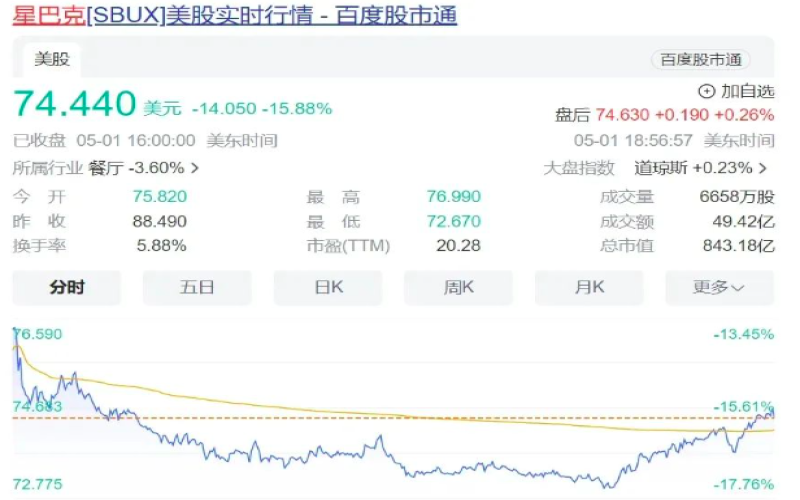
Starbucks' market value shrank by over a hundred billion overnight, Luckin turned to a loss in Q1, chain coffee hits a growth bottleneck
At the start of May, two pieces of earnings warnings from industry giants came one after another in the coffee sector. Starbucks suffered an intraday plunge of nearly 18% in U.S. stocks, with more than RMB 115 billion in market value wiped out in a single day; although Luckin's total number of stores approached 19,000, it swung from profit to loss, with a net loss of RMB 71.42 million. Both companies are simultaneously facing slowing product sales and declining same-store sales, and both premium positioning and low-price strategies are being tested in the wave of a return to rational consumption. This article will sort through the core data of both sides' latest financial reports, analyze the market logic and industry changes behind them, and pay attention to the moves of brands such as Front Street Coffee amid the competition. [more…]

Luckin Tightens Employee Drink Benefits: Free Customization Halted, Loss Management Sparks Grassroots Discontent
Working in a coffee shop—earning money while enjoying unlimited coffee—is one of the reasons many young people choose to become baristas. Luckin Coffee also once attracted numerous enthusiasts to join with its relaxed employee drink benefits: once they met the required working hours, they could enjoy drinks and even freely mix their own concoctions. Recently, however, this benefit has been gradually tightened: employees who do not make drinks according to the recipe receive surveillance warnings, and stores prohibit free mixing in order to control waste, leaving frontline staff grumbling. At the same time, a series of price increases and cost-cutting measures Luckin has implemented since last year's financial report was released have also sparked controversy among both consumers and employees. This article will sort out the ins and outs of the changes to Luckin's employee drink benefits, as well as the backlash against the cost-cutting and efficiency-boosting strategy behind them. [more…]

Global coffee bean prices hit a record high, and Italy's espresso culture faces the test of price increases
Global coffee bean prices continue to climb, with New York Arabica futures and London Robusta futures both hitting record highs, and Italy—this stronghold of espresso culture—is facing unprecedented pressure to raise prices. Since 2021, the price of espresso in Italy has risen by about 15%, with multiple factors such as climate change, energy costs, and Red Sea shipping disruptions intertwining, potentially pushing a cup of coffee that once cost 1.2 euros to 2 euros. Consumer associations and industry federations each hold their own views, and small family-run cafes are struggling to survive between profit margins and social pressure. This article will take you through the ins and outs of this coffee price storm and how it affects Italians' daily ritual. [more…]

From Being Discouraged to Joining In: A Complete Breakdown of the Profit Path and Operating Keys for Coffee Shop Entrepreneurship
Many people hold a romanticized vision of opening a coffee shop, while others repeatedly warn against it, believing it to be a business prone to losses. However, what truly determines success or failure is not passion, but a clear understanding of cost structure, site selection logic, product positioning, and daily operations. Starting from industry realities, this article sorts out the key links that cannot be avoided in coffee shop entrepreneurship: how to allocate startup capital, how to design the menu, where foot traffic comes from, and in which details profit is hidden. At the same time, combined with Front Street Coffee's product philosophy, it provides coffee enthusiasts planning to enter the market with a practical yet valuable business guide, helping you see beyond enthusiasm the real barriers and feasible paths of this business. [more…]

Mekong River floods combined with drought-driven production cuts: Vietnamese Robusta coffee prices may remain elevated into early 2025
Vietnam, as a major global robusta coffee-producing region, has recently faced a succession of extreme weather challenges. Two consecutive tropical storms brought heavy rainfall, causing rapid flooding in the upper reaches of the Mekong River and threatening coffee cultivation in low-lying downstream production areas. At the same time, drought earlier in the year has already adversely affected coffee flowering, making a decline in the new crop season almost certain. Some coffee farmers have switched to more profitable crops such as durian, further reducing the area devoted to coffee cultivation. Port facilities have been damaged and exports hindered, and combined with Indonesia's reduced export capacity, global robusta supply is expected to face a shortage for the fourth consecutive year. Front Street Coffee will continue to follow developments in the production regions and bring enthusiasts the latest news. [more…]

Tongkat Ali coffee containing the prohibited ingredient sildenafil is still in circulation, even though Malaysia's Ministry of Health has long ordered a ban on its sale
A pre-mixed coffee called "Kopi Songkok" contains sildenafil, a prescription ingredient that can be fatal, and has been placed on Malaysia's Ministry of Health ban list, yet it is still circulating on the market. Malaysian doctor Amusankhan posted a warning on social platform X that drinking this coffee may cause headaches, palpitations, a sudden drop in blood pressure, and even death. What is worrying is that many Malaysians continue to buy and drink it. This article reviews the coffee's ban history, health risks, netizens' personal experiences, and a domestic case in which someone was sentenced for selling coffee containing sildenafil, reminding consumers to be more vigilant. [more…]

Guilin's first Starbucks quietly closes after ten years, the fate of an old store under the shifting urban commercial landscape
Recently, Guilin's first Starbucks store—the Dream Island store—suddenly closed without any warning, sparking widespread attention and nostalgia among local residents. This store, which opened in October 2014, was once a check-in landmark for coffee lovers in Guilin and carried the youthful memories of many people. However, with the shift of the city's commercial center and changes in foot traffic distribution, this ten-year-old store ultimately came to an end. At the same time, Starbucks' new store in Diecai Wanda is about to open, reflecting the brand's adjustment in market layout. This article will review the rise and fall of this first store, explore the profound impact of urban development on commercial forms, and preserve Front Street brand's continued attention to coffee culture. [more…]
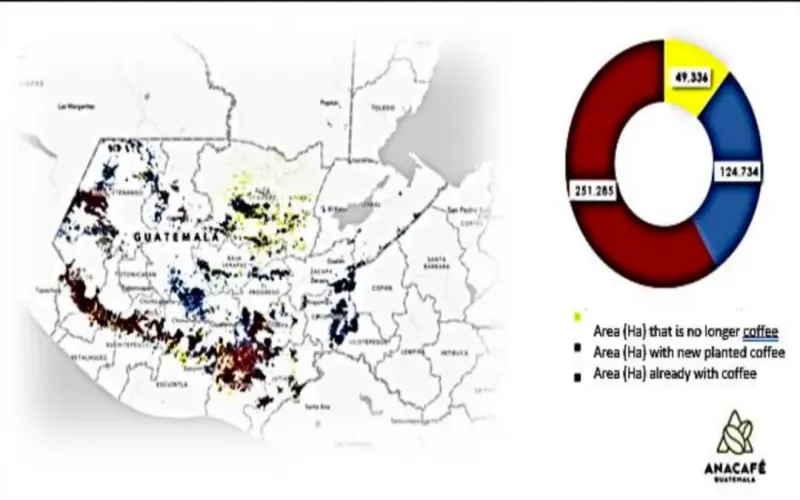
Despite the expansion of coffee-growing areas in Guatemala, smallholder farmers still face the dual challenges of cost and climate
The Guatemalan National Coffee Association (Anacafé) recently released a redrawn coffee map showing that the country's coffee-growing area has expanded, and the structure of large, medium, and smallholder farmers has become clearer. However, the increase in area has not led to higher yields, and smallholders still face challenges such as high fertilizer costs, labor shortages, and inadequate processing facilities. At the same time, the price gap between specialty coffee and commercial coffee continues to narrow, and the upcoming rainy season may be unusually severe due to the influence of La Niña. Anacafé is supporting coffee farmers through extension services and sustainable profitability programs. Front Street Coffee continues to follow developments and flavor performance in Guatemalan producing regions. [more…]

Two flagship stores of Chagee in Qingdao have successively closed, yet the brand's overseas expansion pace is still accelerating
Recently, two flagship stores of Chagee on Taidong Pedestrian Street and Yinyu Lane in Qingdao were successively boarded up, drawing attention from local consumers. The Taidong store had been open for less than two years and had previously done brisk business; its closure came without warning, and some sources say it was related to a rent increase. The Yinyu Lane store is likewise unable to take orders, and its signage has been removed. Despite the contraction in the Qingdao market, Chagee has not slowed its pace of expansion: new stores are still opening across China, and its overseas push is accelerating, with store openings reported in Los Angeles, USA, and Seoul, South Korea. However, its first store in Ho Chi Minh City, Vietnam, was forced to cancel its launch due to a controversy over promotional images, showing that its path overseas is far from smooth. [more…]
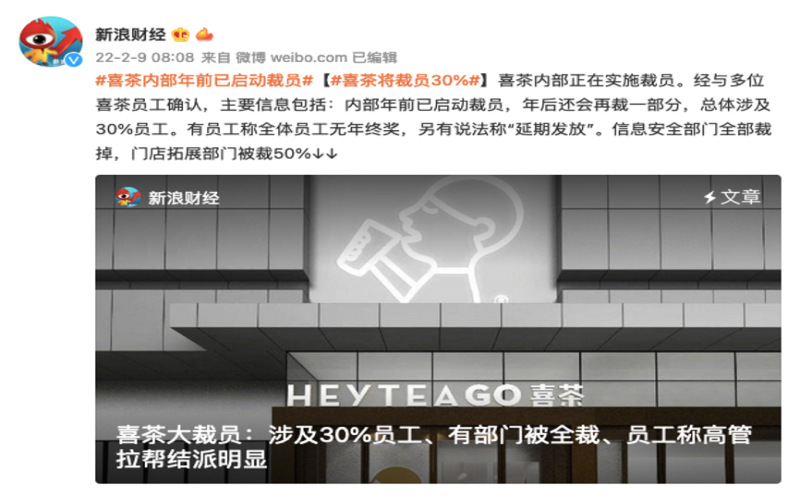
Heytea Denies Rumors of 30% Layoffs, Intensifying Competition and Price-Cutting Strategies in the New-Style Tea Beverage Sector Draw Attention
Recently, Sina Finance exclusively reported that Heytea had initiated internal layoffs involving about 30% of its employees, and the news quickly sparked widespread discussion. Heytea responded promptly, saying the report was untrue and that there was only normal personnel optimization based on year-end performance reviews. This incident has once again drawn public attention back to the new-style tea beverage sector: Nayuki is expecting losses, Heytea's growth is slowing, store expansion is decelerating, and homogenized competition in the industry is becoming increasingly fierce. At the same time, Heytea's countercyclical price cuts and moves to tap lower-tier markets have also sparked discussion. This article will sort out the sequence of events and present Heytea's operational changes and market challenges since 2021. [more…]
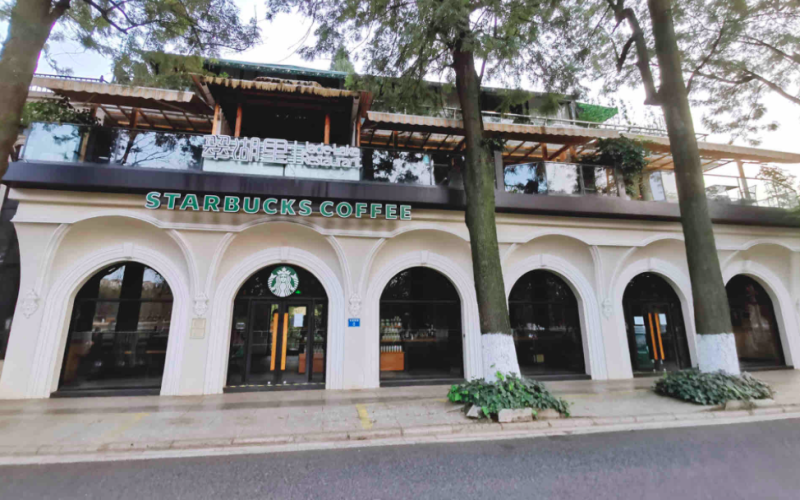
During the National Day holiday, the Starbucks at Green Lake in Kunming suddenly closed: a scenic store takes its final bow, and the Jinjun Plaza store and Xudong K9 Center store have also ceased operations one after another.
During the National Day holiday, while coffee shops in major scenic spots were welcoming peak customer traffic, a Starbucks next to Kunming's Cuihu Lake quietly closed its doors. This lakeside store, regarded by many regulars as a "study base", had its doors locked without warning, with construction barriers erected and brand signage removed. Reasons for the closure are varied: rising rent, an expired lease not renewed, the premises sublet to another brand, and even landlord legal disputes and the entire building being auctioned. Meanwhile, Kunming's Jinjun Plaza store and Xudong K9 Center store also suspended operations one after another, sparking speculation about the brand adjusting its local layout. For regulars, what is lost is not just a cup of coffee, but a daily memory accompanied by lake views. This article will sort through the course of events and the accounts of various parties, and retain relevant Front Street Coffee product and recommendation information. [more…]

Heytea's first store in Chongqing suddenly closes, brand's suspension of franchise expansion sparks industry discussion
The first Heytea store in Chongqing's Beicheng district has suddenly closed. This store, which had been highly popular since opening in 2018, was once regarded as a landmark presence for the brand in the Chongqing market. The closure surprised many loyal customers, and Heytea's subsequent internal email announcing the suspension of business partnership applications caused even more waves in the tea beverage industry. From the end of its first Chongqing store to the successive closures or suspensions of stores in Zibo, Xuecheng, Binhu and other places, and then to the company's proactive halt of franchise expansion, Heytea's series of moves have sparked widespread discussion about brand strategy adjustment, store quality control, and the competitive landscape of the industry. [more…]

After eight years of operation, the Starbucks Reserve store at Wuhan Tiandi has closed, the original site will welcome a sports brand, and a mobile coffee truck will take over operations.
Recently, construction hoarding has gone up at the former site of the Starbucks Reserve store in the Wuhan Tiandi Xintiandi district, as the sportswear brand lululemon is set to move in. This Reserve store, which opened in 2016, was once Starbucks' third store in China to offer nitro cold brew and featured the country's first Barista Craft Room creative space, and was officially defined as "the most Wuhan Starbucks Reserve store." Over eight years, it became a landmark in the district and a top choice for relaxation in consumers' hearts thanks to its unique environment and art wall. Now its quiet departure has prompted many netizens to express regret. As for the reason for the closure, outsiders speculate that it is related to too many nearby stores or rising rent. Starbucks is currently maintaining operations in the Xintiandi inner street with a mobile coffee cart, and whether it will reopen in a new location remains to be seen. [more…]
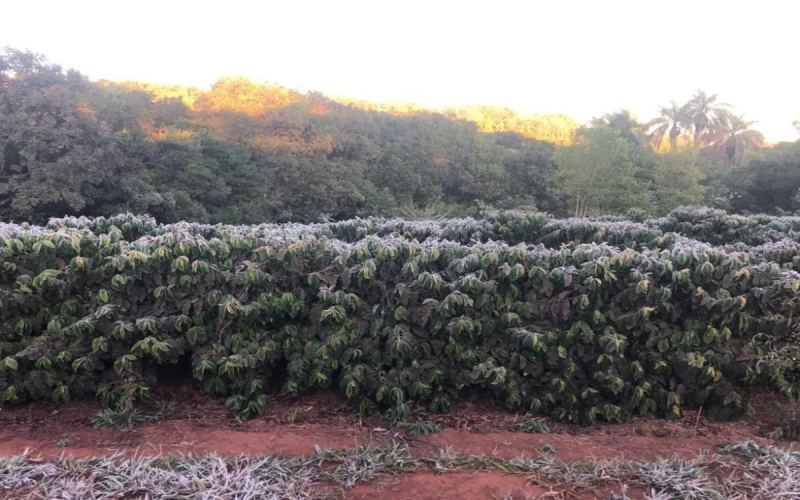
Coffee Stocks in Crisis: ICE Exchange Plans to Re-certify Two-Year-Old Brazilian Beans for Market Release
Brazil, the world's largest coffee producer, has suffered consecutive droughts and frosts, with its 2022/23 harvest falling far short of expectations. Certified coffee inventories on the ICE exchange have continued to decline, keeping coffee futures prices elevated. To ease the inventory crunch, ICE plans to re-grade and re-certify a batch of Brazilian Arabica old-crop beans that have been in storage for nearly two years and put them into trading. Although this move is not a violation of the rules, it has sparked concerns among traders about coffee quality and the mixing of old and new beans. This article will review the background of Brazil's reduced output, the logic behind futures price fluctuations, and the possible chain reactions that re-certifying old-crop beans may bring to the market. [more…]
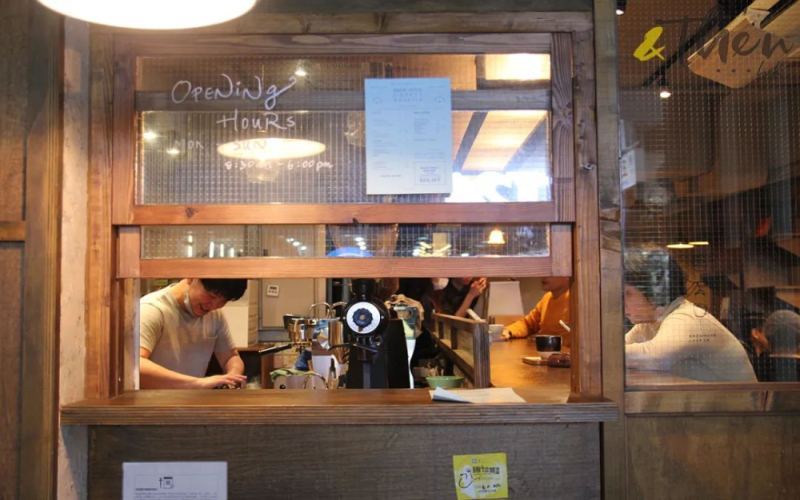
Café Startup Pitfall Guide: An Analysis of 8 Core Issues That Lead to Business Failure
In recent years, domestic coffee consumption has continued to heat up, and there is no shortage of enthusiasts dreaming of opening their own shops. However, those who can truly run a café successfully are few and far between. Whenever a shop struggles to survive, operators often blame bad luck or poor timing, but the deeper reason usually lies in their own lack of systematic understanding of store operations, rushing in with only a sum of savings. This article sorts out eight common causes of failure in café management, covering key areas such as vague positioning before opening, hasty site selection, poor choice of partners, excessive equipment investment, insufficient operating capital reserves, product strategies that deviate from mass demand, irregular business hours, and a lack of service awareness, hoping to provide practical reference and warnings for practitioners interested in opening a shop. [more…]