







Why Guatemala Coffee Farms Expand Without Higher Output
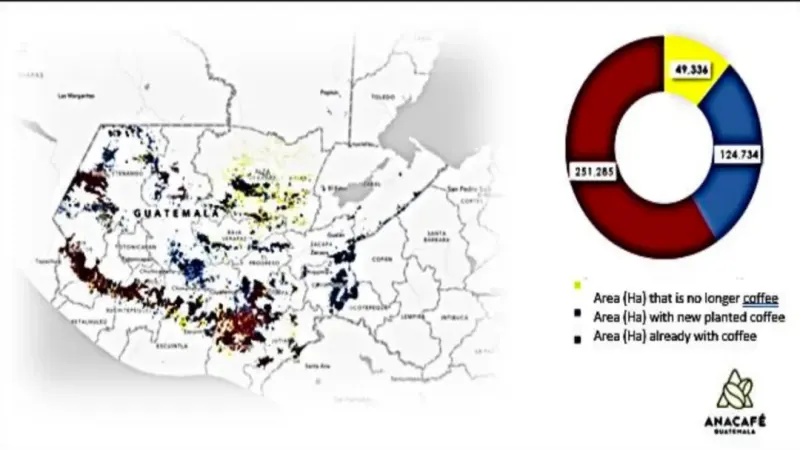
Guatemala's redrawn coffee map shows 251,265 hectares of coffee farms in stable condition, plus 124,734 hectares newly planted or previously uncounted, after deducting 49,336 hectares no longer growing coffee. Planting area for 2024/25 is expected to reach 376,000 hectares with about 1.6 billion mature trees, yet production has not risen in step.
Smallholders make up nearly 97% of producers, and many face high fertilizer prices, labor shortages and inadequate processing facilities, so some cut back on fertilizer. The gap between specialty and commercial coffee prices keeps narrowing, and La Niña may bring an unusually severe rainy season. Anacafé is responding with extension services and sustainable profitability programs.
The Guatemalan National Coffee Association (Anacafé) recently published a redrawn coffee map, showing that the country's coffee-growing area has expanded and that the structure of large, medium and small farms has become clearer. However, the increase in area has not brought higher production, and smallholders still face high fertilizer costs, labor shortages and inadequate processing facilities. At the same time, the price gap between specialty coffee and commercial coffee continues to narrow, and the coming rainy season may be unusually severe under the influence of La Niña. Anacafé is supporting coffee farmers through extension services and sustainable profitability programs. Front Street Coffee continues to follow developments and flavor performance in Guatemalan producing regions.
Recently, the Guatemalan National Coffee Association (Anacafé) announced that last year it had planned to carry out a full geographic census to redraw the country's coffee-growing map.
According to the newly completed coffee map by Anacafé, the country currently has 251,265 hectares of coffee farms in stable condition, while another 124,734 hectares are newly planted or were previously not included in the statistics, after deducting 49,336 hectares of land that is no longer planted with coffee.
The statistics also show that Guatemala currently has 354 large farms, accounting for 0.28% of total production; 3,636 medium-sized farms, accounting for 3%; and smallholders making up nearly 97%. The contributions of these three groups to total harvest are 25%, 31% and 44%, respectively.
In addition, Guatemala's coffee planting area for the 2024/25 market year is expected to reach 376,000 hectares, with about 1.6 billion mature coffee trees. But the report also warns that although both the planted area and the harvested area have increased, production has not risen in tandem, so the country's coffee industry still needs to focus on quality and sustainability.
Anacafé points out that 97% of the country's coffee producers are smallholders, and they are under multiple pressures, including high fertilizer prices, insufficient labor and a lack of coffee processing infrastructure.
Affected by rising global fertilizer prices, costs have been pushed further up, and many small-scale coffee farmers can only reduce their fertilizer use, which will adversely affect the current season's and future coffee harvests. At the same time, more and more growers are beginning to look for low-cost technologies to replace existing methods in various stages of production.
On the other hand, because smallholders lack facilities to process coffee, they can only rely on intermediaries or some large farms. Yet large farms charge 10% more than middlemen, which undoubtedly adds to the burden on smallholders.
In addition, most small coffee farmers sell their product as coffee cherries, and in the 2023/24 year the price was only 21 to 22 US dollars per 100 pounds of cherries, far below the price level of green coffee beans.
In the current market, the price gap between specialty coffee beans and commercial coffee beans is continuing to narrow, shrinking from 18 US dollars previously to 3 US dollars now. This trend is quite unfavorable for Guatemalan coffee farmers, who mainly focus on specialty coffee production.
However, Anacafé is actively promoting extension services and implementing sustainable profitability programs to support coffee growers, and 21,358 hectares of land and 3,282 coffee income projects are currently participating.
At the same time, the association is also promoting the cultivation of Robusta coffee to diversify farmers' planting structure and broaden their income sources. At present, Arabica varieties account for about 99% of Guatemala's total production, while Robusta accounts for only about 1%, but the latter's share is showing an upward trend.
In addition to the above difficulties, the most pressing challenge is the coming rainy season, which may be more severe under the influence of La Niña. According to forecasts by Guatemala's meteorological department, the rainy season will begin in mid-May, gradually intensify in June and July, and rainfall is expected to exceed normal levels.
Forecasts also show that average cumulative rainfall in Guatemala's northern transversal strip, the western Caribbean region, the southern central highlands, the Bocacosta and the Pacific region will be above normal. In particular, the capital Guatemala City and its surrounding areas may be hit by storms.
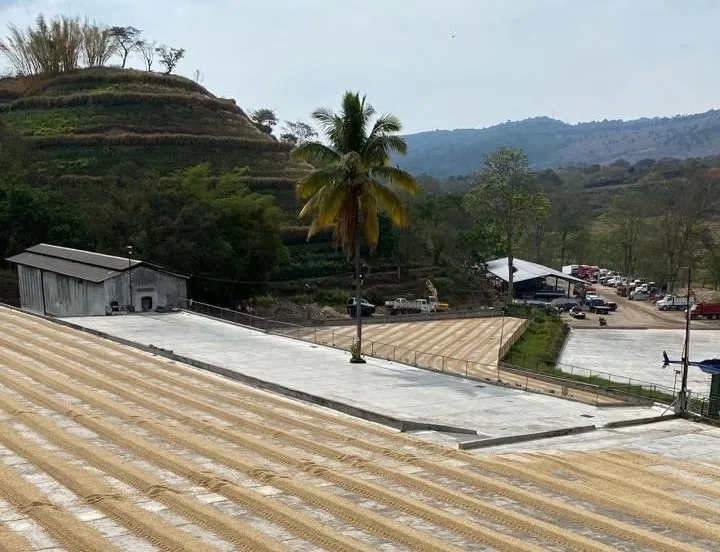
These areas contain many coffee-producing regions, and heavy rain may trigger disasters such as floods or landslides. In response, the municipal government has begun clearing drainage ditches, but other relevant parties and farms also need to take preventive measures in advance.
The above content is compiled by CoffeeHunters, a coffee news website.


