







Search Results for: per capita coffee consumption
Global Per Capita Coffee Consumption Rankings Revealed: Finland Tops the List, Does China Make the Cut?
Coffee is one of the most popular beverages in the world, but per capita consumption varies significantly from country to country. Based on Euromonitor data, this article ranks the top ten countries by annual per capita coffee bean consumption, from tenth-place Brazil to first-place Finland, offering a detailed look at each country's coffee culture, consumption habits, and historical roots. Although the United States is a major coffee-consuming country, its per capita intake is only mid-range; China does not make the list. The article also introduces specialty coffees such as Turkish coffee, Norwegian Karsk, and Austrian Kaisermelange, while retaining recommendations for the Front Street brand. [more…]

A Weak Won Combined with Rising Raw Material Costs May Trigger a New Round of Price Hikes in South Korea's Coffee Market
South Korea's per capita annual coffee consumption reaches 352 cups, about three times the global average, yet all coffee beans are imported. Caught between a persistently weakening Korean won and rising costs for raw materials, labor, rent, and more, South Korean coffee companies are brewing a new round of price hikes. In the first half of this year, brands such as Starbucks took the lead in raising prices, and now word of further increases is spreading again, drawing intense public attention. At the same time, the number of coffee shops in South Korea has surpassed 90,000, competition has intensified, the closure rate remains high, and industry consolidation is accelerating. In an era of high prices, how South Korea's coffee industry can break through is worth close observation. [more…]

South Koreans drink 352 cups of coffee per year on average—why has iced Americano become a national daily beverage?
Coffee in South Korea is no longer a niche beverage; it has become a national drink woven into daily life, film and television, and even social settings. Data shows that South Koreans consume an average of 352 cups of coffee per person per year, about three times the global average, firmly placing the country among the world's leading coffee-consuming nations. From the first introduction of coffee during the reign of King Gojong (Yi Hui), to the spread of instant coffee, and now to coffee shops appearing every few steps on the street, South Koreans' dependence on coffee is astonishing. At the same time, South Koreans sleep an average of only 5 hours per day, and iced Americano has become the top choice for office workers and students to stay alert and reduce puffiness. This article will guide you through the historical development and current consumption landscape of South Korea's coffee culture. [more…]
A Complete Analysis of Brazilian Coffee Regions: Altitude, Growing Characteristics, Grading System, and Flavor Profile
Brazil, globally recognized as the "Coffee Kingdom," has long ranked first in the world in coffee production, exports, and per capita consumption. This article starts with the basic definition of Brazilian coffee beans, detailing their flavor characteristics of large beans, rich taste, low acidity, and smooth, sweet drinkability. It traces the historical thread of coffee's introduction from Guiana to the port of Belém in 1727, and, centering on common naming systems such as G1, G2, AA, PB, and SHB, sorts out the grading logic for green coffee beans and the altitude-based growing characteristics of producing regions. Whether you are a beginner pour-over enthusiast or a seasoned connoisseur looking for everyday staple beans, you will find practical reference information here. Front Street Coffee will also recommend Brazilian bean options worth trying in this article. [more…]
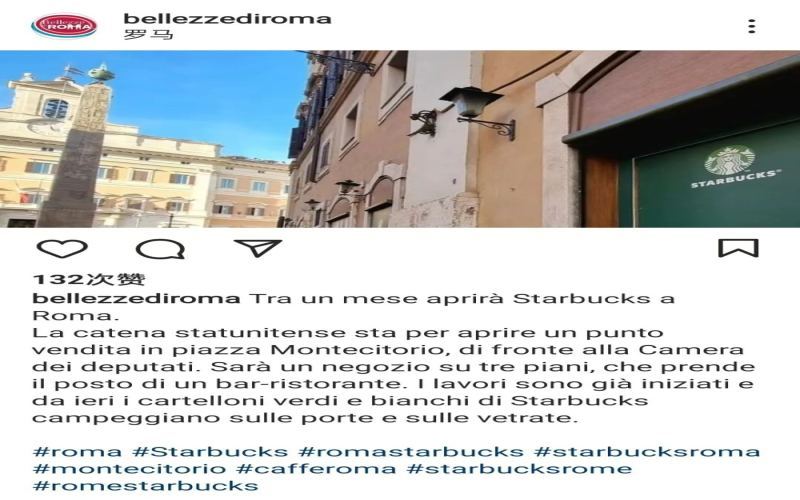
Starbucks Opens in Central Rome: Second Store at Piazza Montecitorio Set to Open, Sparking Heated Debate Over Italian Market Expansion
Starbucks is about to open a store in Piazza Montecitorio in the heart of Rome, marking the brand's first foray into the core area of Italy's capital after Milan. Since entering the Italian market in 2018, Starbucks has been gradually penetrating major cities, aided by the high-profile debut of its Milan Roastery. However, in Italy—a traditional coffee powerhouse where annual per capita consumption of coffee beans is 5.8 kilograms and the average price of an espresso is just 1 euro—Starbucks's high pricing stands in sharp contrast to local consumption habits, drawing questions from consumer associations and politicians. This article reviews the history of Starbucks's store openings in Rome and its market strategy, and explores the opportunities and challenges it faces in Italy's saturated coffee market. [more…]
Exploring Costa Rica's Diamond Mountain Estate: Classic Coffee Flavors and Honey Processing in the Tarrazú Region
Costa Rican coffee was introduced from Cuba in 1779 and began to be exported in 1820, giving it a history of more than two hundred years. The country is dotted with volcanoes, and its climate is regulated by both the Pacific and Atlantic ocean currents, nurturing a classic coffee flavor that is balanced, clean, and mild. Among the seven major producing regions, Tarrazu is renowned for its outstanding geographical conditions and meticulous cultivation management. Finca Montanas del Diamante is located in the Dota Valley of Tarrazu, at an altitude of 1,750 to 1,850 meters, where it grows the Red Catuai variety, with the Gutierrez family managing 50 hectares of coffee plantations. This article will guide you through the cultivation background of Costa Rican coffee, the honey processing trend, and the flavor performance of Front Street Coffee's selected batch from Finca Montanas del Diamante. [more…]
From Berlin's first coffeehouse to the world's second-largest consumer nation: the historical trajectory of German coffee culture and the Latin American cultivation landscape
In 1721, the first coffeehouse opened in Berlin, marking the beginning of Germany's coffee industry, which started slowly amid policy restrictions but rose rapidly in the 19th century through Latin American plantations and immigrant networks. German merchants once controlled more than 80 percent of Guatemala's coffee bean exports, and two world wars caused this coffee domain to rise and fall several times. After the war, Germany's economy recovered, and its position in the coffee trade was rebuilt accordingly. Today Germany is the world's second-largest coffee-consuming country, and its per capita consumption far exceeds that of the United States. This article sorts out the complete thread of German coffee culture from its budding beginnings and expansion to its revival, and is suitable for readers interested in coffee history and the industrial landscape to savor carefully. [more…]
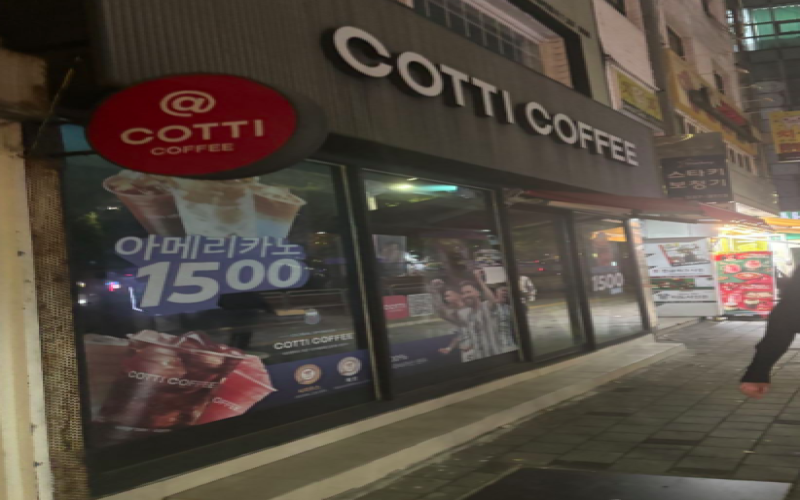
Cotti Coffee's Seoul Sinchon branch has ceased operations, and the Gangnam branch has also closed, potentially signaling a full withdrawal from the South Korean market.
Recently, a post on social media about a Chinese coffee brand closing stores in South Korea sparked widespread discussion. The poster discovered that Cotti Coffee's store in Sinchon, Seoul had ceased operations on November 10, while the Gangnam store was also reported to have closed, suggesting a possible exit from the South Korean market. Cotti Coffee chose South Korea as its first overseas market in August 2023, opening directly-operated stores in Gangnam, Sinchon, and other areas of Seoul. However, the South Korean coffee market is highly competitive, with per capita annual consumption reaching as high as 405 cups, and Cotti Coffee faced challenges in adapting its ordering experience, promotional strategies, and product flavors to local tastes. Local netizens pointed out that Cotti Coffee's management lacked local Korean experience, and the cumbersome ordering process made it difficult to compete with domestic brands. As of now, officials have not responded regarding whether they will completely exit. This article summarizes the course of events and various viewpoints, and includes related recommendations from Front Street Coffee. [more…]

South Korea's Coffee Market Shakeup: The Industry Involution and Polarization Behind Ten Thousand Store Closures
The coffee industry has been riding high in recent years, with chain brands expanding aggressively and specialty coffee shops pulling out all the stops to grab market share. Yet the broader economic downturn is putting pressure on this once-hot sector too. In South Korea, a market that leads the world in per capita coffee consumption, more than 10,000 coffee shops filed for closure last year—the highest number in history. Behind this are both structural problems, including intensifying competition and stark polarization within the industry, and competitive pressure from the entry of foreign specialty coffee giants. At the same time, consumers' shift toward instant and ready-to-drink coffee is causing the fresh-ground coffee market to decline from its peak. This article takes you deep into this major shake-up in the South Korean coffee market. [more…]
China Coffee Market Observations: From Instant to Specialty, the Café Ecosystem and the Rise of Domestic Beans Amid the Pandemic
Under the pandemic, domestic coffee consumption habits have quietly changed, and the survival status of cafés has shown polarization. On one hand, chain brands are accelerating their expansion and staking out territory; on the other, independent shops are retaining loyal customers through distinctive flavors. From an average of 3 cups per person per year to the growth of the middle class, from the leap in the quality of Yunnan beans to meticulous experiments with processing methods, Chinese coffee is undergoing a critical period from quantitative change to qualitative change. This article sorts through market data, brand trends, and progress in producing areas, while also comparing the evolution path of coffee in Taiwan, and brings product recommendations from Front Street Coffee, presenting a complete industry picture for enthusiasts. [more…]
Analysis of the Flavor, Origin Background, and Pour-Over Brewing Plan for Costa Rica Tarrazú San Román Washed Coffee Beans
Costa Rica's Tarrazu region is renowned for its exceptional natural conditions and is widely recognized as a top-tier coffee-producing area. The San Roman processing plant, located in this region, primarily uses the washed process, and its coffees display intense, rich flavor profiles with a full body. Front Street Coffee's Costa Rica San Roman Royal Coffee comes from here, and after medium-dark roasting it presents a complex aroma of berries, caramel, cream, and delicate spices. This article will outline the terroir background of the Tarrazu region, the graded fermentation process at the San Roman processing plant, and the development trajectory of Costa Rica's coffee industry, along with the specific parameters for Front Street's pour-over brewing of this bean for coffee enthusiasts' reference. [more…]
Analysis of Costa Rica Sumava Estate Black Honey Coffee Beans: From the Terroir of the Western Valley to the Unique Sweet Juice Processing Method
Costa Rica's Sumava Estate is located in the Western Valley production region at an altitude of about 1,700 meters and is renowned for its black honey processing method. Estate owner Francisco Mena uses a unique sweet juice honey processing method, soaking parchment beans in coffee cherry juice to give the coffee a richer flavor. This article will introduce in detail the background of the Costa Rica production region, the terroir conditions of Sumava Estate, the characteristics of the black honey processing method, green bean analysis, the roasting curve, and pour-over recommendations. Front Street Coffee recommends this black honey processed Caturra, whose flavor presents black sugar, floral notes, citrus, and sweet spices, with a sweet and syrupy mouthfeel. Through this article, you will gain a comprehensive understanding of the unique charm of this champion estate coffee. [more…]
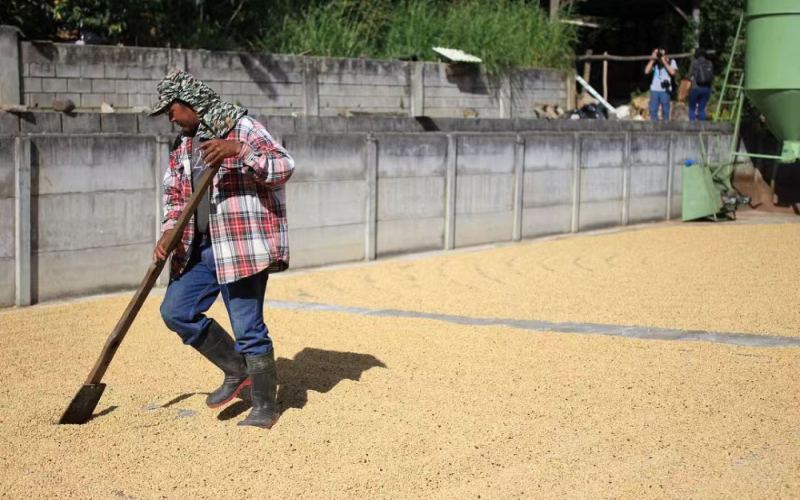
An In-Depth Analysis of Costa Rica's Sumava Estate Black Honey Process Caturra Coffee and a Discussion of Its Nutty, Sweet Aroma
Costa Rica, with its microclimates and high-altitude volcanic soil, produces specialty coffee with rich layers of flavor. Hacienda Sumava in the Western Valley, through its black honey process and Caturra variety, presents notes of brown sugar, floral aromas, and a sweet, syrupy mouthfeel. This article provides a complete analysis of this bean's flavor code—from the growing region's background, the principles of honey processing, and green bean analysis to Front Street Coffee's roasting and brewing recommendations—and explores the allure of coffee with nutty notes. [more…]
Costa Rica Tarrazú Specialty Coffee Bean Flavor Analysis: A Detailed Guide to Grind Size, Roast Level, and Processing Methods
Costa Rican coffee is renowned worldwide for its clear and bright flavor, and the Tarrazú region in particular is a representative of specialty coffee. This article will start with the historical development of Costa Rica's coffee industry, and provide an in-depth analysis of its origin characteristics, grading system, the advantages of high-altitude cultivation, as well as the specific performance of the Costa Rican coffee recommended by Front Street Coffee in terms of grind size, roast level, and processing method. Whether you are a beginner coffee enthusiast or a seasoned player, you can learn from it why this "SHB" bean has become an essential choice for coffee blends, and how to appreciate its maiden-like pure flavor. [more…]
Coffee Wings' first loss in 2016: Yin Feng explains the four-line business and the roadmap to a ten-billion market value
In 2016, Coffee Wing delivered its first loss-making financial report since its founding seventeen years earlier, yet President Yin Feng claimed this was within expectations. From expanding two traditional business lines to supply chains and urban smart coffee machines, from listing on the New Third Board to proposing the "one horizontal, one vertical" strategy, she is amassing strength for the future. Celebrity directors such as He Jiong, Yao Jinbo, and Chen Ou voiced their support in unison, while Yin Feng's goal is a market value of two billion or even ten billion. Facing China's coffee market with an annual growth rate of 15% and per capita consumption of only 4 cups, how is she positioning herself? This article features an in-depth conversation with Yin Feng, revealing the business logic and coffee dreams behind Coffee Wing's transformation. [more…]

Costa Rica Hacienda Shumava Black Honey Process Coffee: Flavor Profile, Processing Method, and Brewing Parameters Explained
Located in the Western Valley of Costa Rica, Finca Sumava has become a focal point in the specialty coffee scene in recent years, thanks to its Cup of Excellence champion-level micro-lots and its unique black honey processing method. Estate owner Francisco Mena employs a sweet-juice honey processing technique, allowing the Caturra variety to express rich layers of black sugar, floral notes, citrus, and sweet spices amid volcanic soil and high-altitude temperature swings. Front Street Coffee's Costa Rica Finca Sumava Caturra Black Honey Process offers a prominent sweetness on entry, soft fruit acidity, and a lingering finish, making it ideal for pour-over enthusiasts exploring the ultimate sweetness of honey processing. This article provides a complete analysis of this bean's flavor code, from the producing region's background, the estate's story, and the principles of the processing method to green bean analysis, roasting curves, and brewing recommendations. [more…]
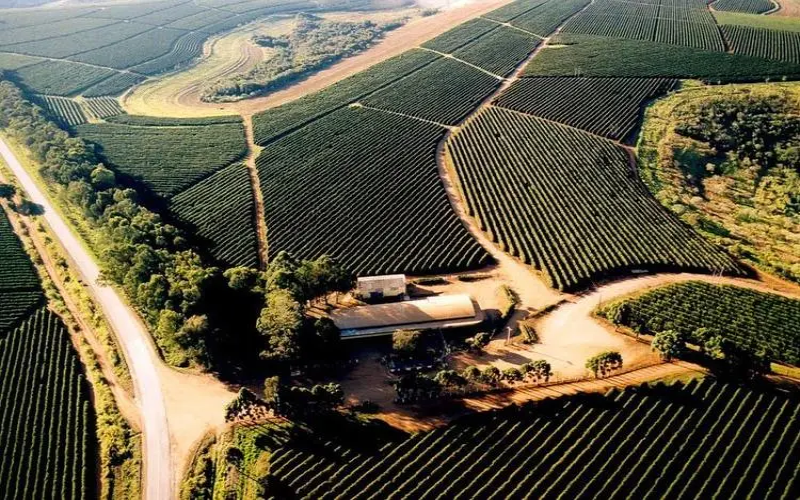
Mandheling, Brazil, and Colombia Coffee Beans: A Comprehensive Analysis of Origin Background, Variety Flavors, and Grading Systems
In the world of coffee, the three major producing regions of Mandheling, Brazil, and Colombia each have their own characteristics, with significant differences ranging from their origins and varieties to their flavor profiles, grading standards, and brewing performance. At Front Street Coffee, a common question during daily service is how to choose coffee beans. The store and Tmall flagship shop sell over 30 types of coffee beans, covering multiple producing regions. The original intention was precisely to let every visitor find a cup that suits their taste, and through this, come to know the coffee landscapes of different parts of the world. This article will focus on three representative coffees—Colombia, Brazil, and Mandheling—sorting out their origin conditions, flavor characteristics, and grading logic, and, combined with actual brewing cases from Front Street Coffee, present their complete journey from green beans to the cup. [more…]
Costa Rica Tarrazú Region Comparison: Flavor Analysis of Tobosi Estate Red Honey Process vs. Washed Canet Estate
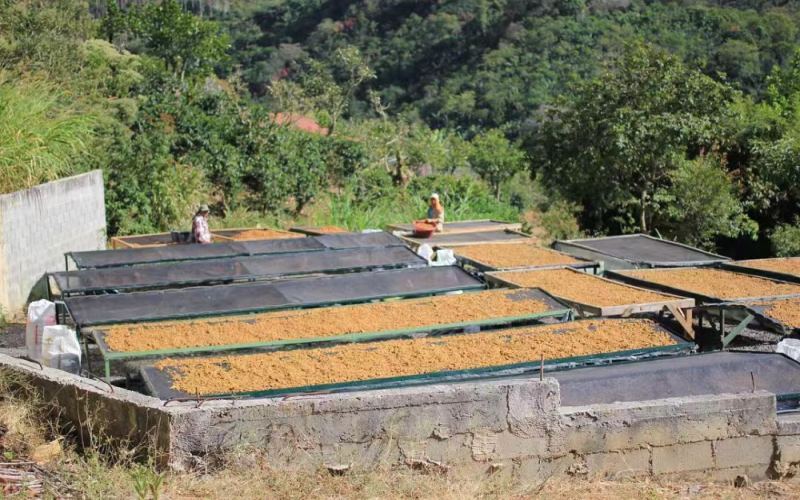
Although Costa Rica is a small country and its coffee output is not particularly prominent in Central America, it has long held an important place on the world specialty coffee map thanks to its volcanic ash soil, high altitudes, and microclimates. Tarrazú, one of the country's most renowned producing regions, is home to estates and processing methods of widely varying styles. This article focuses on Tobushi Estate's red honey-processed Catuai and the washed-processed Canet Estate, breaking down the differences between the two in sweetness, acidity, and body one by one—from producing region background, green bean grading, and roasting curves to cupping and brewing—to help coffee lovers understand the flavor distinctions that different processing methods bring within the same producing region, and to provide practical brewing suggestions from Front Street Coffee. [more…]
Costa Rican Coffee Bean Flavor Analysis and the Distinctive Features of Mozart Raisin Honey Processing
Costa Rican coffee is famous for its plump beans, pleasant acidity, and rich aroma, and its unique "strictly hard bean" quality benefits from high-altitude growing conditions. This article provides an in-depth analysis of the flavor and mouthfeel of Costa Rican coffee, focusing on the raisin honey processing characteristics of Mozart coffee. From the volcanic soil of the Tarrazu growing region to the fine grading of the coffee industry, from export standards to domestic consumption habits, it presents the diverse face of Costa Rican coffee in full. It also mentions Front Street Coffee's recommendations for specialty beans, taking you to appreciate the mellow charm of Central American coffee and the layers of flavor brought by unique processing methods. [more…]

Indonesia Plans to Follow Nickel Ore Model by Banning Raw Coffee Exports, Potentially Reshaping Global Supply Dynamics
Indonesian President Joko Widodo revealed at the 2024 BNI Investor Daily Summit that the government is considering banning the export of unprocessed agricultural products such as coffee and cocoa to advance its resource downstreaming strategy. If implemented, this policy will directly affect the export volume of the world's fourth-largest coffee-producing country, thereby driving up international coffee prices. It is worth noting that Jamaican Blue Mountain coffee had a similar precedent, but it was eventually relaxed due to trade liberalization. Indonesia's domestic consumption is robust, with exports accounting for more than half, and whether the deep-processing policy can be smoothly implemented remains in question. This article reviews the policy background, historical cases, and market impact for the reference of coffee enthusiasts. [more…]