







How Does Coffee Production Shape Tarrazú Flavor?
Costa Rica's Tarrazú region produces some of the country's most distinctive specialty coffees, and processing method is a major reason why. Tobosi Estate's red honey-processed Catuai and Canet Estate's washed lot come from the same producing area, yet they differ in sweetness, acidity, and body. The honey process leaves fruit mucilage on the bean during drying, while the washed process removes it, so the two cups read differently even before brewing begins.
Costa Rica has roughly 32,000 coffee farmers and about 82,500 hectares planted, with annual output near 1.6 to 1.7 million bags of Arabica. Volcanic ash soil and elevations reaching 2,000 meters let cherries mature slowly. That slower ripening concentrates sugars and acids, which is why Tarrazú lots, including geisha plantings elsewhere in the country, command attention on the specialty market.
Although Costa Rica is not a large country and its coffee production is not particularly prominent in Central America, it has always held an important place on the world specialty coffee map thanks to its volcanic ash soil, high altitudes, and microclimates. Tarrazu, as one of the country's most famous producing regions, has given rise to estates and processing methods of diverse styles. This article focuses on Tobosi Estate's red honey-processed Catuai and the washed Canet Estate, breaking down the differences between the two in sweetness, acidity, and body—from producing region background, green bean grading, roasting curves to cupping and brewing—to help coffee lovers understand the flavor distinctions brought by different processing methods within the same producing region, and to provide practical brewing suggestions from Front Street Coffee.
In Costa Rica's Tarrazu producing region, what are the respective characteristics of Schumava Estate, Tobosi Estate, and Canet Estate?
Coffee cultivation in Costa Rica can be traced back to 1779, when it was introduced from Cuba; it was not until 1820 that coffee was first exported overseas. Currently, the country has about 32,000 coffee farmers, with an average planting area of less than one hectare per person. In 2006, the population was about 4.1 million, coffee planting area reached 82,500 hectares, annual production was 1.7 million bags (each bag 60 kg), domestic annual consumption was 380,000 bags, and per capita annual consumption was 5.5 kg—even exceeding Japan's 4 kg per capita, while Taiwan region's per capita is only slightly above 1 kg. According to ICO statistics, Costa Rica produces about 1.6 million bags of Arabica coffee each year. Although production is less than Guatemala and Honduras, quality and price are clearly ahead.
As the first country in Central America where coffee was introduced, Costa Rica has a long history in the coffee industry, with a fairly complete system from production to sales. Located on the Central American isthmus, it is covered with volcanoes and has abundant sunlight and fertile land, while also being regulated by Pacific and Atlantic ocean currents and sea breezes, forming unique microclimates that give the coffee distinct regional flavors. In both quality and yield, Costa Rican coffee has consistently received international recognition and is widely regarded as one of the world's high-quality coffees.
Many volcanoes in the country rise to 2,000 meters above sea level. Coffee cherries mature slowly in fertile volcanic ash soil and cool high-altitude environments, allowing fuller and richer flavor development. Beginners can choose Front Street washed Tarrazu, where you can sense the aromas of sweet orange, nuts, and chocolate, with a soft and balanced mouthfeel—this is precisely the typical characteristic of Costa Rican specialty coffee.
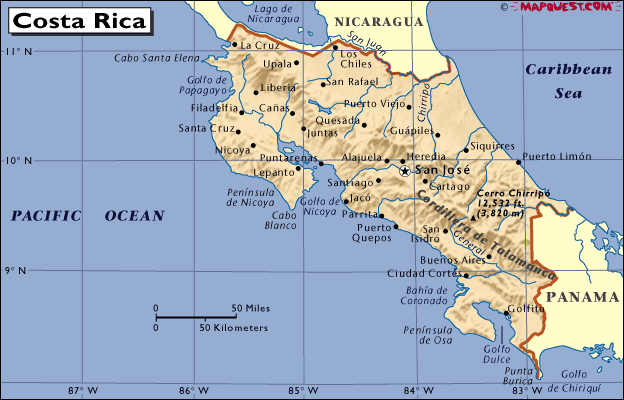
Costa Rica has been growing coffee for two hundred years. The earliest planting areas were on the slopes of Poas and Barva volcanoes, which are now the Central Valley. To this day, the country has eight main producing regions: Guanacastes, West Valley, Central Valley, Turrialba, Orosi, Tres Rios, Tarrazu, and Brunca. Among them, Tarrazu, Central Valley, and West Valley are the most well-known and also the finest in quality.
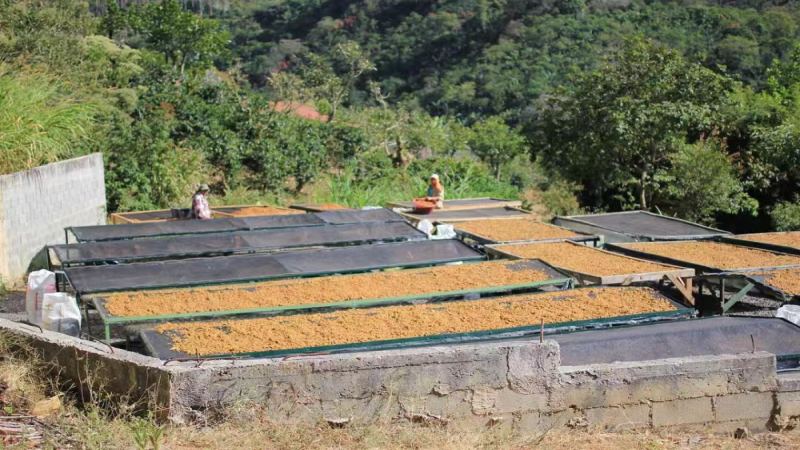
The country has two seasons in a year: December to April is the dry season, which is also the coffee harvest period; May to November is the rainy season. In recent years, micro-mills have emerged in large numbers, using only 5% of the water consumed by traditional washed mills, and requiring no large tanks or drying patios, greatly lowering the investment threshold. Honey-processed coffee, with low acidity, high complexity, and rich sweet aromas, has therefore become a focus of pursuit in the coffee world in recent years, and the best among them frequently win awards in various competitions, significantly raising the international profile of the estates.
Introduction to the honey process:
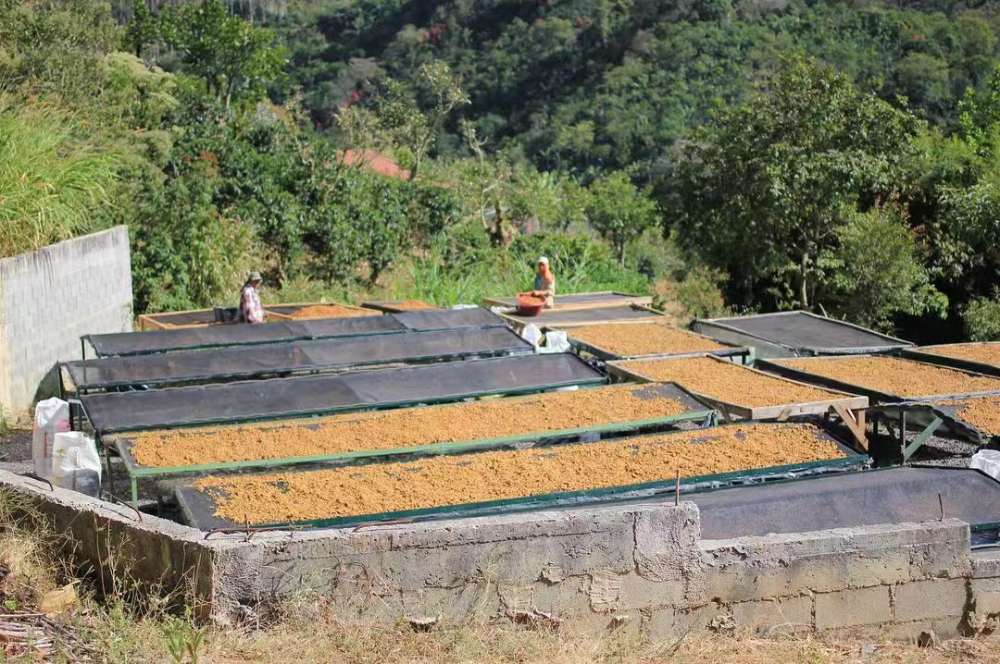
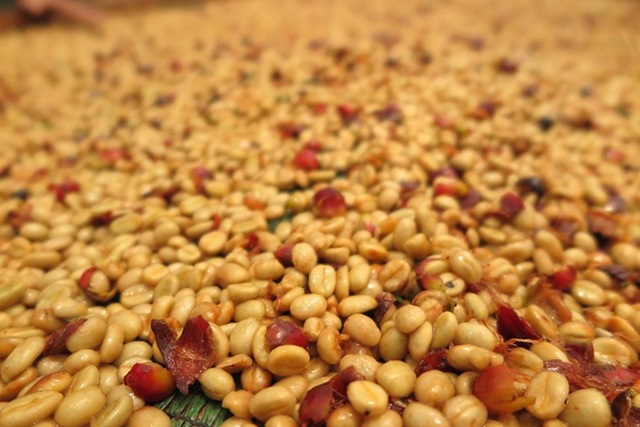
The honey process is also called Honey Process or Miel Process, and the finished product is called Honey Coffee. It is used in Costa Rica, Panama, Guatemala, and other places. So-called honey processing is the process of making green beans that are sun-dried with mucilage still attached.
Estate owner Mena uses a unique sweet juice honey process, which he calls sweet sugar process: the juice produced during coffee cherry processing is extracted and used to soak the parchment beans being processed. The fruit juice contains relatively high sugar content and unique enzymes, giving the parchment beans richer flavors and more complex positive flavors.
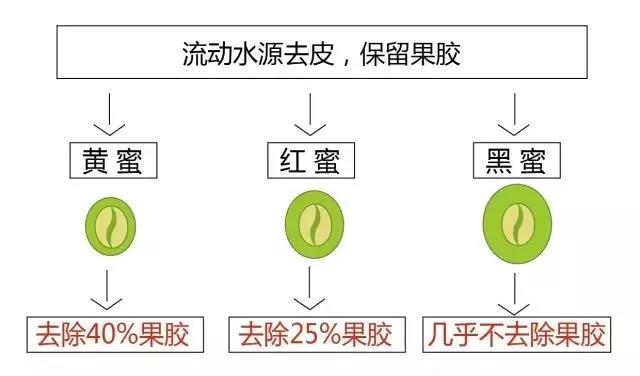
What exactly is the difference between yellow honey, red honey, and black honey processing?
Coffee farmers classify by processing method. Some retain less pectin layer and dry faster; others retain more pectin layer and require longer sun-drying time.
Tobosi Estate's honey processing classification differs from other estates, as follows:
White Honey retains 50% fruit pulp
Yellow Honey retains 60% fruit pulp
Red Honey retains 80% fruit pulp
Black Honey retains 100% fruit pulp
Honey-processed coffee usually has an excellent balance of sweetness and fruit acidity. Its flavor is not as intense as natural process, but is fresher and more fragrant. The key to flavor differences comes from the sugars and acidity in the pectin layer. During sun-drying, sugars are continuously concentrated and gradually penetrate into the interior of the coffee beans.
The harvest season is usually from January to April each year. Because estate temperatures are only 10 to 20°C, there may still be freshly ripened fruit waiting to be picked in April. Simply put: the more pectin retained, the richer the final coffee flavor and the higher the sweetness. Below are several honey process flavor comparisons:
The pectin mucilage is the part of the coffee fruit with the highest sugar content and is also an important stage of fermentation, determining about 80% of the nutrient supply during processing. Yellow honey retains 60% pectin, red honey retains 75% pectin, and black honey removes almost no pectin.
Tobosi Estate
Tobosi was established in 2010 at about 1,450 meters above sea level. It focuses on high-quality specialty coffee, with the goal of becoming a leader in specialty coffee supply. All products are produced under an open and transparent system and come with complete traceability records, ensuring customers receive the best goods. Its quality service and manufacturing processes all follow environmental protection principles.
To achieve its goals, Tobosi planned two estates: Tobosi and Copey. Tobosi was originally an ornamental plant plantation and now has 20 hectares of coffee trees; Copey is a high-altitude forest of about 12 hectares, mainly planted with Geisha coffee. Tobosi pursues perfection in cultivation, selecting the plots that can best bring out the coffee's characteristics based on altitude differences, environmental testing, and soil analysis, ensuring ideal growth and sufficient nutrition for the coffee beans. Quality control is handled by Mario, who has 19 years of experience and was formerly COE's exclusive roaster and cupper. The estate carries out fully manual harvesting, allowing more complete control of coffee cherry ripeness and traceability management. Customers can also learn more about quality, harvest time, and related processes.
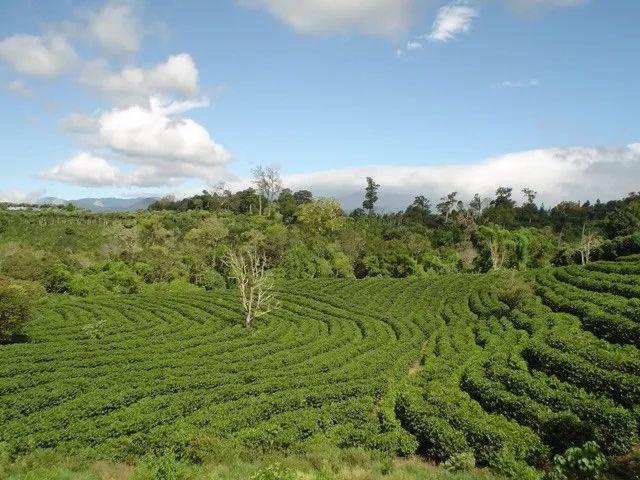
Grupo Los Grande de Copey S.A. (Hacienda Copey), established in 2011, owns three main estates: Hacienda Copey, Tobosi Estate (Finca Tobosi), and Finca Don Antonio Estate. Tobosi Estate is located about a 2-hour drive south of Costa Rica's capital San Jose and has been owned by the Jorge Bernes family since 2010.
Jorge Bernes comes from a coffee family; his ancestors began growing coffee and were among the earliest leaders of coffee cultivation in the Tarrazu region, so he clearly inherited the family's coffee-growing genes. Tobosi Estate averages between 1,500 and 1,600 meters above sea level, with varieties including Red & Yellow Catuai, Villasarchi, and Geisha, and a land area of 23 hectares. Another estate, Hacienda Copey, is located in Dota de Copey, is larger at 90 hectares, and sits between 1,900 and 2,000 meters above sea level. Its planted varieties are similar to Tobosi's, but the producing region is different and the microclimate also has particular differences. Notably, another estate under Grupo Los Grande de Copey S.A., established in 2011, Finca Don Antonio, won first place in Costa Rica's 2017 COE competition, standing out among many competitors, which shows how deep its foundations are.
03 | Green Bean Analysis
High-quality Costa Rican coffee beans are called "Strictly Hard Beans," with the following grading standards:
Strictly Hard Beans SHB (Strictly Hard Beans) above 1,200 meters above sea level
Good hard Beans GHB (Good hard Beans) 1,000 to 1,200 meters above sea level
Medium Hard Beans MHB (Medium Hard Beans) 500 to 1,000 meters above sea level
The green coffee beans are relatively small, with about 2% defects. The surface carries a small amount of honey, and the emerald green color represents fresh coffee that grew slowly at high altitude.
Producing country: Costa Rica
Producing region: Tarrazu
Estate: Tobosi Estate
Variety: Catuai
Altitude: 1,600 meters
Grade: SHB
Processing method: Red Honey
04 | Roasting Analysis
Hard bean coffee grows at relatively high altitudes; coffee grown at lower altitudes is usually considered soft bean. Higher altitude and lower temperature cause the fruit to mature slowly, forming harder coffee beans with fewer pores. Observe the center line of the green bean: the more open the center line, the lower the density; when the center line is closed, the density is higher.
Front Street Coffee recommends keeping good data records before roasting, including coffee bean moisture content, density, origin, processing method, roasting environment temperature and humidity, etc., and planning the roasting curve. Recording chemical and physical changes during roasting helps better understand the final roasting result and improve the curve.
This is Catuai variety, honey processed, relatively high density, uniform bean size, and plump bean shape (thicker from center to surface). Roasting method: extend roasting time, adjust heat once after dehydration is complete, open airflow to maximum at first crack, develop for 2 minutes, then drop.
Roasting curve:
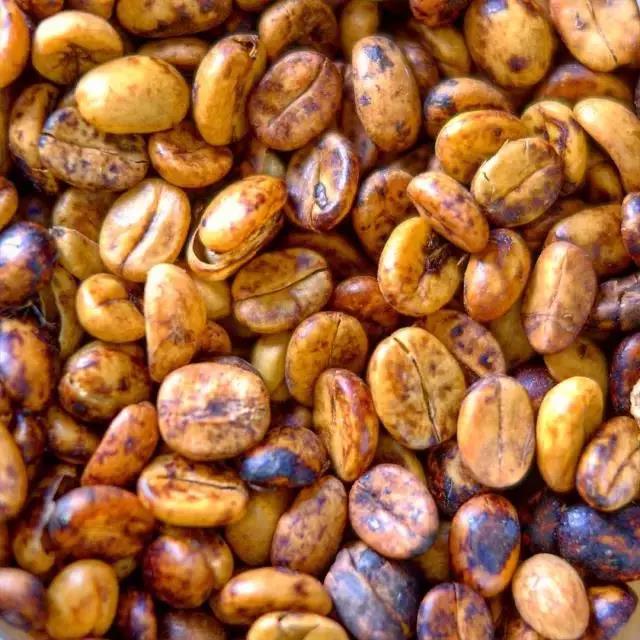
Charge when drum temperature reaches 200°C, airflow 3, after 1 minute adjust heat to 160°C, airflow unchanged, roast until 5 minutes 35 seconds at 152°C, bean surface turns yellow, grassy smell completely disappears, dehydration complete, adjust heat to 130°C, airflow to 4;
At 8 minutes 40 seconds, wrinkles and dark streaks appear on the bean surface, toast aroma turns to coffee aroma, which can be defined as the prelude to first crack. At this time, listen clearly for the first crack sound. At 9 minutes 00 seconds, first crack begins. Reduce heat to 70°C, open airflow fully (adjust heat very carefully, not so low that there is no crackling sound), and drop at 196.0°C.
Cupping report:
Dry aroma: floral, creamy, citrus, lemon, sugarcane sweetness
Wet aroma: toffee sweetness, white grape, wild berry
Slurp: plum, sweet orange, peach, pomelo, juicy feel, natural sweetness, delicate mouthfeel, perfectly balanced overall.
04 | Brewing Analysis
The stirring bloom method popular in Europe and America is suitable for light-roasted coffee beans.
European and American stirring method: during the bloom stage, use a stirring rod to stir in a cross pattern. It is a branch of the three-pour method, developed by 2012 World Brewers Cup champion Matt Perger. This approach can effectively increase the release of aromatic substances, amplify flavor strengths, enhance mouthfeel, and avoid being too thin.
Costa Rica Canet Estate Yellow Caturra
01 | Producing Region Introduction
Canet Estate is located in the highest-altitude coffee-growing area of Costa Rica's Tarrazu. Canet is the name of a small farm in the area. Canet Estate covers 5 hectares and is located in the town of San Marcos in the Tarrazu producing region. It is jointly owned by the three Robles brothers Leo, Elian, and Melvin, who have worked together growing and producing for more than 10 years and also share a small wet processing plant.
The Montero family has been producing coffee in the mountains of Tarrazu for more than three generations. Today Carlos and his entire family are involved in the Canet farm, a small farm called Don Eli. Carlos's whole family is deeply involved in the Don Eli coffee farm and micro mill. With family support, Carlos manages cultivation and milling, and is also responsible for selecting dates and separation across different small farms.
Local people choose fully ripe cherries. This area is the most densely fruit-growing region in Costa Rica. The estate owner mainly grows passion fruit, and the amount of coffee is quite small, planted only in specific areas with special care, and only ripe red cherries are picked. Unique variety on the estate: Yellow Catuai.
Yellow Catuai comes from a cross between Mundo Novo and Caturra, first bred by Brazil's Campinas Agricultural Research Institute in 1949. Like Red Catuai, Yellow Catuai has extremely strong disease resistance and is suitable for planting in high-altitude and windy areas. Both Catuai varieties have delicate, clean acidity.
Through machine adjustment, honey-processed coffee is produced (depending on the degree of honey processing). Canet is located in the highest-altitude coffee-growing area of Costa Rica's Tarrazu. However, coffee beans in this area are mostly processed using red honey, black honey, and yellow honey methods. This area is the most densely fruit-growing region in Costa Rica. The estate owner mainly grows passion fruit, and the amount of coffee is quite small, planted only in specific areas with special care, and only ripe red cherries are picked.
They launched the Musician Series products, with three coffees in total, using different green bean processing techniques to highlight different distinctive characteristics.
Costa Rica Canet Estate
Front Street Bach / Front Street Mozart
Region: Tarrazu
Variety: Catuai
Estate: Canet
Process: Raisin process
Altitude: 1,800 to 1,900 meters
Grade: SHB
The processing flow is double-fermentation honey processing: first dry the coffee fruit to a raisin state (fruit used for raisins must be ripe, preferably shade-dried. China's seedless grapes from Turpan, Xinjiang, make the most famous raisins. Turpan has a hot, dry climate, and the shade-drying houses built of bricks have many holes in the walls on all four sides, with wooden stick racks in the middle. Ripe seedless grapes are placed on them and, after being blown by hot air, high-quality raisins are obtained quickly), then remove the fruit skin and undergo honey fermentation. In flavor, the fermentation note is richer, and pectin retention is higher than other honey processes. It is called 100% pectin honey processing, and it really does have raisin flavor.
This is a quite sweet processing method, with a white wine-like mouthfeel and balanced acidity. In flavor, the fermentation note is richer, and pectin retention is higher than other honey processes, somewhat like noble rot sweet wine, with flavors of honey, dried apricot, raisin, peach, and more.
Costa Rica Canet Estate Front Street Beethoven
Country: Costa Rica
Region: Tarrazu
Variety: Catuai
Estate: Canet
Process: Washed
Altitude: 1,800 to 1,900 meters
Grade: SHB
Front Street Beethoven coffee beans are lively and glamorous in character, with rich floral and fruity acidity. The wind-chime-like clear, bright, and long acidity is especially classic. Floral and fruit aromas rise up and fill the entire mouth: honey sweetness, caramel aroma, jasmine, fresh cherry, blackberry, and lime. This is a truly excellent coffee. Flavor description: sweet and colorful fruits of various kinds—strawberry, apple, lemon, grape, and citrus—displayed in diverse ways; the flavors of honey and toffee are unforgettable. Silky, creamy, delicate body, with a long finish like top-grade Indian Darjeeling black tea.
02 | Roasting Analysis
Taking Front Street Beethoven as an example
Yangjia 800N, 550 g green beans charged, specific operation:
Charge when drum temperature reaches 200°C, airflow set to 3.5, after 1 minute of bloom adjust heat to 160°C, airflow unchanged. When drum temperature reaches 165°C, adjust heat once, lower to 140°C, roast until 5 minutes 30 seconds at 155.1°C, bean surface turns yellow, grassy smell completely disappears, dehydration complete, airflow unchanged;
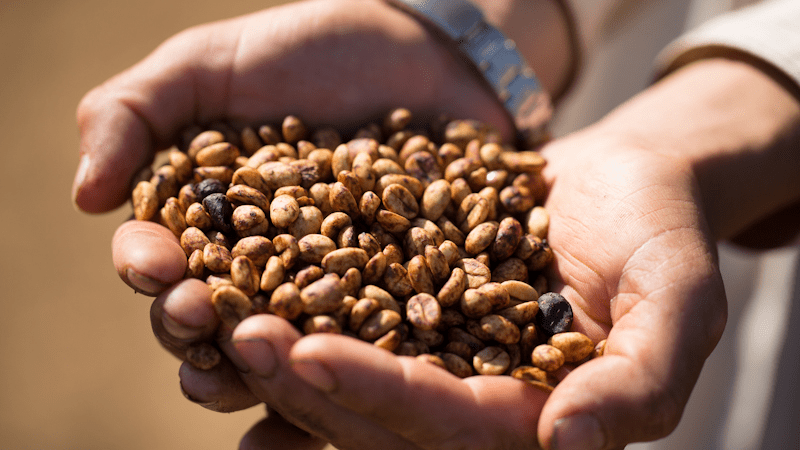
At the 9th minute, wrinkles and dark streaks appear on the bean surface, toast aroma turns to coffee aroma, which can be defined as the prelude to first crack. At this time, listen clearly for the first crack sound. At 8 minutes 04 seconds, first crack begins. Reduce heat to 80°C, open airflow fully to 5 (adjust heat very carefully, not so low that there is no crackling sound) at 40°C, lower heat at 194°C, and drop at 194.5°C.
03 | Brewing Analysis
【Pour-over】
First, you need to understand the characteristics of this Front Street Mozart coffee bean. The cupping flavor of Front Street Mozart is: sweet and colorful fruits of various kinds (strawberry, apple, grape, citrus displayed in multiple layers), unforgettable honey and toffee flavors, and a silky, creamy, delicate body (like the long finish of Darjeeling black tea). Therefore, the main extraction goals are the sweet-sour flavors and fermentation notes of the front and middle sections, as well as the smooth finish.
Costa Rican SHB beans are at higher altitude, with harder bean texture and excellent sweet-sour quality (relatively resistant to extraction), so even with medium roasting, you can brew with 90 to 91°C water without worrying too much about over-extraction leading to burnt, bitter, sour, and astringent flavors.
Dripper: Hario V60
Water temperature: 90°C
Grind size: Fuji Royal 3.5 (80% passing rate on China No. 20 sieve)
Brewing method: water-to-coffee ratio 1:15, 15 g coffee, first pour 25 g, bloom for 25 seconds, second pour to 120 g and stop, wait until the water level in the coffee bed drops to half before pouring again, pour slowly until 225 g, extraction time about 2 minutes 00 seconds
Analysis: A three-pour brewing method is used to clearly define the front, middle, and back flavor sections of the coffee. V60 has many ribs and drains relatively quickly; stopping the pour can extend extraction time.
【Siphon brewing method】
Use the late coffee addition method, that is, first boil water up into the upper chamber, then add coffee and stir.
Step one: boil until fish-eye bubbles form, insert the upper chamber tightly; when hot water rises into the upper chamber, measure the water temperature, 91°C. Adjust heat until the water column is stable and no bubbles are produced in the upper chamber, then add coffee. Then stir in a cross pattern, gently press the coffee to wet it completely.
Step two: bloom for 38 seconds, observe the bubble state of the coffee layer, and perform the first circular stir, stirring three circles.
Step three: at 52 seconds, turn off the heat and wait for the siphon phenomenon; the coffee flows back into the lower chamber.
Conclusion:
In roasting, Front Street Beethoven's drop temperature is lower than Tobosi Estate's, retaining more fruit acidity and floral aromas, with a sweeter note leaning toward freshness; Tobosi Estate's drop temperature is higher, and to express caramel sweetness, it is roasted to first crack with 2 minutes of development before dropping, giving a fuller, heavier sweetness.
The source of sweetness lies in the pectin. Honey-processed beans have enough time during drying for sugars to penetrate into the fruit pulp, while washed beans have the sugars in the pectin washed away by bacterial fermentation, so the taste leans more toward acidity. From cupping, it was found that Front Street Beethoven's acidity is stronger than Tobosi Estate's. Although they belong to the same producing region, different processing methods also lead to corresponding adjustments in roasting in order to express the beans' characteristics.
The above content is compiled by CoffeeHunters, a coffee news website.


