







How Would Indonesia's Coffee Export Ban Change Coffee Production?
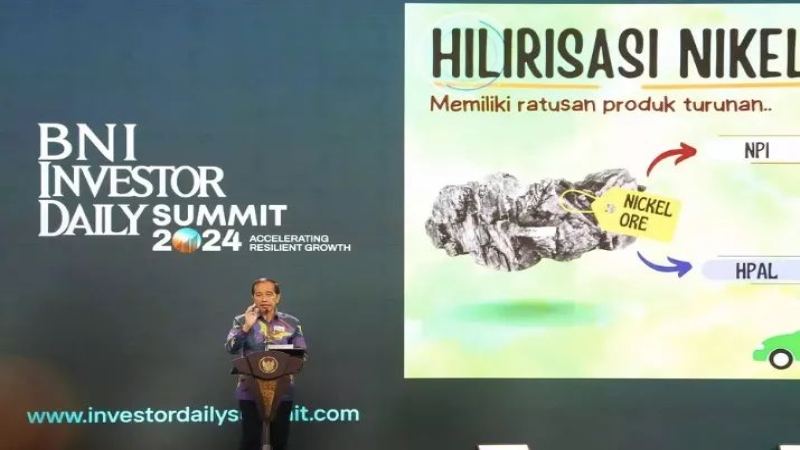
Indonesia is weighing an export ban on unprocessed agricultural products including coffee and cocoa, President Joko Widodo said at the BNI Investor Daily Summit held in Jakarta on October 8 and 9, 2024. The plan copies the nickel ore model, which required domestic smelting before export and lifted nickel export value from about $1.4 billion to $34.8 billion.
Indonesia is the world's fourth-largest coffee producer, and exports account for more than half of its output, so the policy would tighten international supply and push prices up. Jamaican Blue Mountain coffee saw a similar export restriction that was later relaxed under trade liberalization. Domestic demand stays strong, and enforcement remains uncertain.
Indonesian President Joko Widodo revealed at the 2024 BNI Investor Daily Summit that the government is considering banning the export of unprocessed agricultural products such as coffee and cocoa to advance its resource downstreaming strategy. If implemented, this policy would directly affect the export volume of the world's fourth-largest coffee-producing country, thereby driving up international coffee prices. It is worth noting that Jamaican Blue Mountain coffee has had a similar precedent, but it was eventually relaxed due to trade liberalization. Indonesia's domestic consumption is robust, with exports accounting for more than half, so whether the deep-processing policy can be smoothly executed remains in question. This article reviews the policy background, historical cases, and market impact for coffee enthusiasts' reference.
According to Indonesian media reports, at the BNI Investor Daily Summit held at the Jakarta Convention Center from October 8 to 9, 2024, President Joko Widodo revealed that the country is evaluating the possibility of imposing an export ban on unprocessed agricultural products such as coffee and cocoa.
In his speech at the summit, current President Joko Widodo mentioned that despite multiple pressures on the global economy, including climate change, weak growth, and geopolitical tensions, Indonesia still delivered impressive results—its economic growth rate reached 5.08% in the second quarter of 2024. He further predicted that within the next five years the country's per capita GDP would exceed $7,000 and could even climb to $9,000 within a decade. To realize this vision, President Jokowi proposed two core strategies: resource downstreaming and digitalization.
Looking back to January 2020, Indonesia formally imposed an export ban on the nickel industry through its downstreaming policy, requiring smelting or refining to be completed domestically before export, aiming to attract investors to directly invest in building factories in Indonesia to process nickel ore. Although this move was opposed by the EU and many countries, its effects after implementation were remarkable: mineral resource processing capacity increased substantially, and export value jumped from $1.4 billion to $2 billion before the ban to $34.8 billion today.
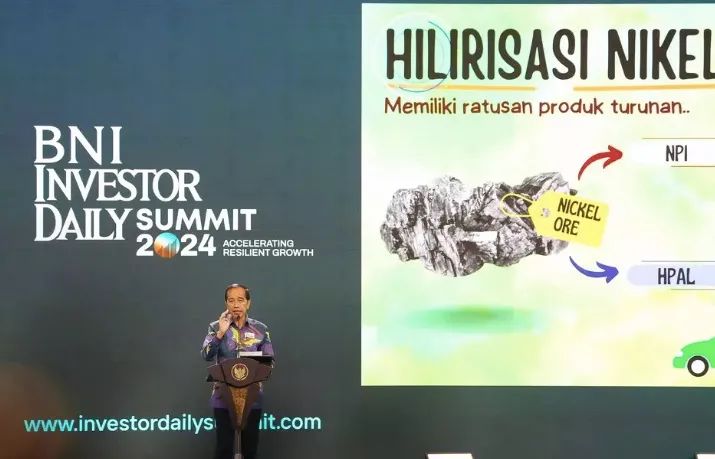
President Jokowi believes that this downstreaming model can also be replicated in other sectors. At present, the Indonesian government is formulating localization plans similar to those for nickel ore processing, covering unprocessed coffee beans, cocoa, pepper, and patchouli, and is expanding the scope of downstreaming to the agriculture, marine, and food sectors.
He further emphasized the need to support labor-intensive domestic processing industries and extend resource nationalism to agriculture, marine, and food sectors, thereby giving coffee more added value. If these plantations can be developed, revitalized, and expanded, then entry into downstream industries is possible. Whether in food, beverages, or cosmetics, every effort must be made to stop the export of unprocessed goods.
In fact, banning the export of unprocessed coffee is not without precedent; the most famous case is Jamaican Blue Mountain coffee. In 2009, Blue Mountain coffee was already internationally renowned, but a large number of counterfeit "Blue Mountain flavor coffee" products appeared on the market. To preserve the purity and reputation of Blue Mountain coffee, the Jamaican government introduced the National Export Strategy (NES) policy, strongly advocating that Blue Mountain coffee be roasted at its place of origin. At the time, roasted coffee beans sold for $39.7 per kilogram, while green coffee beans sold for only $32.2, and roasted beans commanded a higher price, helping increase the contribution of exports to GDP.
However, with the advancement of trade liberalization in recent years and growing international coffee market demand for freshly roasted specialty coffee, Jamaica gradually relaxed commodity import and export licensing and quota management, and now also allows the export of green coffee beans.
Currently, Indonesia is the world's fourth-largest coffee exporter. According to Indonesian government statistics, the country's coffee plantation area reaches 1.2 million hectares, while cocoa production area is 1.4 million hectares. The market expects Indonesia's total coffee production to reach 11.5 million bags, but due to massive domestic coffee consumption, the coffee available for export is about 6.7 million bags.
Although the unprocessed coffee export policy is still in the formulation stage, once implemented it will tighten supply in the global coffee market and trigger price increases. As the world's fourth-largest coffee-producing country, Indonesia's export ban would directly impact the global coffee market's supply landscape. In addition, major coffee-producing countries such as Brazil and Vietnam are currently reporting reduced output, and coffee prices are already high. If Indonesia also bans exports, coffee prices may see a sharp rise.
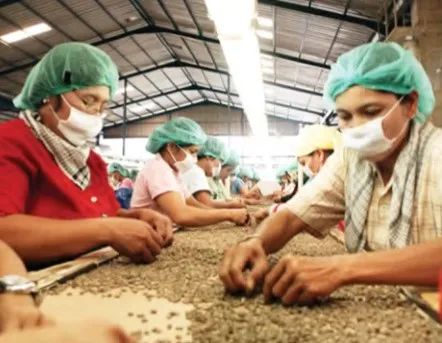
In the most recent Indonesian coffee season, total coffee bean production for the 2024/25 season is estimated at 10.9 million bags, of which about 4.8 million bags are for domestic consumption, with more than half of the coffee beans being exported. If Indonesia promotes deep processing of coffee beans, although it can retain added value domestically, on the one hand overseas markets have a relatively large demand for green coffee beans, and on the other hand the coffee bean market increasingly favors fresh roasting and sales in consuming countries, which makes the policy's feasibility highly questionable. Further news is still needed on the progress of this policy move by Indonesia.
To learn more information about coffee origins, please scan the QR code to follow: Coffee Review
Long-press the QR code to follow:
TRANSLATE with
x
English
Arabic Hebrew Polish Bulgarian Hindi Portuguese Catalan Hmong Daw Romanian Chinese Simplified Hungarian Russian Chinese Traditional Indonesian Slovak Czech Italian Slovenian Danish Japanese Spanish Dutch Klingon Swedish English Korean Thai Estonian Latvian Turkish Finnish Lithuanian Ukrainian French Malay Urdu German Maltese Vietnamese Greek Norwegian Welsh Haitian Creole Persian
TRANSLATE with
COPY THE URL BELOW
Back
EMBED THE SNIPPET BELOW IN YOUR SITE Bing Webmaster Portal
Back
The above content is compiled by CoffeeHunters, a coffee news website.


