







How Do the Characteristics of Colombian Coffee Compare With Mandheling and Brazil?
Colombia, Brazil, and Mandheling each bring distinct origin conditions, flavors, and grading logic to the cup. Colombia is the world's second-largest coffee producer after Brazil, and the largest exporter of arabica coffee beans and washed coffee. About 875,000 hectares are planted across 590 municipalities and 14 growing regions, with roughly 75 percent of output sold worldwide.
The coffee grading system differs by country: Brazil sorts by defect count and cup quality, Colombia screens for bean size and defects, and Mandheling is graded largely by defect percentage and screen size. Tasting across these three origins shows how soil, altitude, and processing shape sweetness, body, and acidity, and why the characteristics of Colombian coffee stand apart.
In the world of coffee, the three major producing regions of Mandheling, Brazil, and Colombia each have their own characteristics, with significant differences from origin background to variety flavor, and from grading standards to brewing performance. At Front Street Coffee, how to choose coffee beans is a common question in daily service. The store and Tmall flagship store sell more than 30 types of coffee beans, covering multiple producing regions. The original intention is precisely to let every visitor find a cup that suits their taste, and thereby come to know the coffee styles of different places around the world. This article focuses on three representative coffees—Colombia, Brazil, and Mandheling—sorting out their origin conditions, flavor characteristics, and grading logic, and combining them with Front Street Coffee's actual brewing cases to present their complete appearance from green beans to the cup.
For more specialty coffee knowledge, welcome to follow our WeChat public account: Front Street Coffee.
Front Street Coffee is often asked by customers how coffee beans should be chosen, because the store and Tmall flagship store currently sell more than 30 types of coffee beans, each with its own character, and beans from other producing regions are also added irregularly. The intention behind Front Street Coffee doing this is to hope that every customer who visits the store can encounter a flavor they like, and at the same time feel the charm of coffee from different producing regions around the world. Our starting point is to understand every variety, every producing region, and every processing method. Front Street Coffee also hopes that all fellow coffee lovers can gain a deeper understanding of the coffee world. Today let's talk about Colombian coffee, Brazilian coffee, and Mandheling coffee.
Comparison of Coffee Origin Backgrounds
Overview of Colombian Coffee Producing Regions
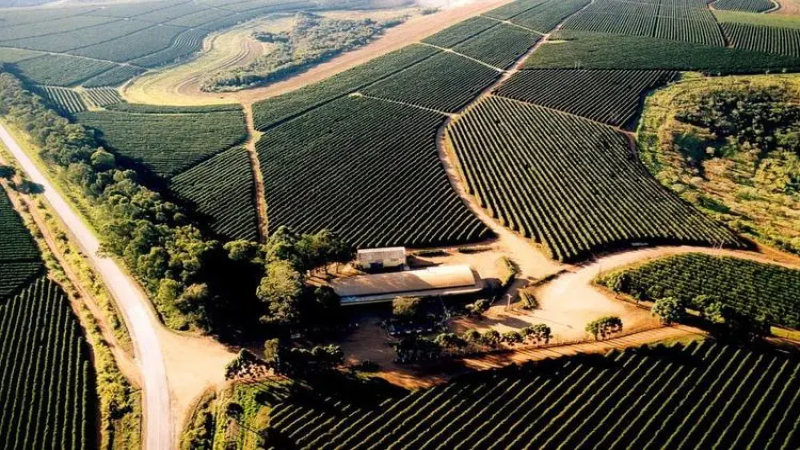
Colombia has climatic conditions very suitable for coffee cultivation, making it truly a "natural pasture." It is the world's second-largest coffee producer after Brazil, and also the world's largest exporter of Arabica coffee beans and the largest exporter of washed coffee beans. Colombia has about 875,000 hectares planted with coffee across 590 municipalities and 14 coffee-growing regions. About 75% of the country's products are sold around the world, and the coffee crop contributes 10% to 16% of agricultural GDP. What surprised Front Street Coffee is that most of these coffees come from small farms—60% of Colombian coffee farms are less than one hectare, while those with more than 20 hectares account for only 0.5%.
Colombian coffee is a fairly representative excellent variety among Arabica varieties, and also a typical traditional dark-roasted coffee, with a strong and memorable taste. Colombian coffee beans have a rich and full-bodied aroma, with bright, high-quality acidity, high balance, and sometimes a nutty flavor, with a long finish. Whether viewed from appearance or quality, Colombian coffee belongs to the top grade.
Overview of Brazilian Coffee Producing Regions
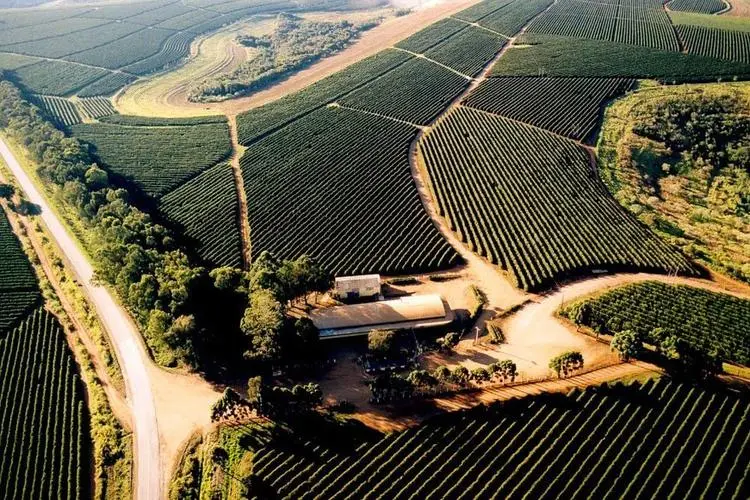
Coffee was introduced to Brazil in the 18th century. Today Brazil's emerging middle class has driven the rapid growth of coffee in the domestic market. Brazil's coffee bean consumption maintains an annual growth rate of about 5%, and per capita coffee consumption has surpassed that of the United States, making it the world's largest coffee-consuming country. Brazil ranks first in the world in coffee production, and as long as the country's production fluctuates, the global coffee market is directly affected. Among Front Street Coffee's daily ration bean series there is a Brazilian coffee bean, with flavor showing obvious chocolate and nuts, mellow and moderately soft, making it an ideal choice for friends who do not like acidic coffee. Front Street Coffee not only includes Brazil in its daily ration bean series, but Brazilian coffee beans can also be seen in its seasonal drip bag coffee series, which shows that Brazil, as a coffee-producing country, occupies an indispensable position in classic flavors.
Brazil is located in the Latin American region of the Western Hemisphere, in the eastern part of South America and on the western shore of the Atlantic Ocean. On land, apart from Ecuador and Chile, it borders all countries on the South American continent; the vast majority of its territory lies between the equator and the Tropic of Capricorn, making it the country with the largest tropical area in the world. One third of its territory has a tropical rainforest climate, and two thirds has a tropical savanna climate. The superior tropical natural conditions are very suitable for the growth and production of tropical cash crops such as coffee.
Brazil makes full use of its tropical geographical environment and attaches importance to the production and sale of coffee, so that its coffee output, export volume, and per capita consumption have remained firmly in first place in the world for many years, and it is praised by the world as the "Coffee Kingdom."
The Origin of Mandheling
Mandheling is not the name of a producing region, a place, a port, or a coffee variety. It is actually a transliteration of the Indonesian Mandailing ethnic group.
During World War II, when Japan occupied Indonesia, Japanese soldiers drank the local delicious coffee and still remembered it after returning home. So through the connections of trade friends, they asked local people to help collect high-quality coffee beans, among which was this Mandheling. The Japanese liked this coffee bean very much and asked for its name. Because the commercial source was inconvenient to disclose, the local person casually said "Mandheling," and thus Mandheling accidentally became the name of a coffee bean. The local person mentioned earlier was actually the owner of the Indonesian PWN company (Pawani Coffee Company), from which Front Street Coffee purchases Golden Mandheling coffee beans.
The main coffee-producing areas of Indonesia include Sumatra, Java, and Sulawesi, among which "Mandheling" produced on Sumatra is the most famous. Mandheling is also called "Sumatra coffee." The Lake Tawar producing area in the north can be called Aceh coffee or Lake Tawar coffee, while coffee produced in the Lintong and Lake Toba areas can be called Mandheling. In the traditional strict sense, only coffee beans produced in the Lake Toba area (located in northwestern Sumatra, Indonesia) are called "Mandheling."
Comparison of Coffee Grading
Colombian Coffee Grading System
Colombia uses bean size as the distinguishing standard. Both Excelso and Supremo count as large beans, but the latter is somewhat larger than the former. The characteristics of Colombian coffee beans are often used as an example: compared with bean size, if the producing region of origin can be understood, it will be more helpful for judging quality.
Supremo: 17 mesh
Excelso: 14–16.5 mesh
Brazilian Coffee Grading System
Among the many coffee-growing countries in Central and South America, Brazil's altitude is relatively low. Therefore, unlike countries such as Colombia, Brazil does not emphasize hard beans that can only be produced in high-altitude areas, but instead classifies coffee bean grades according to four aspects: bean size, defect rate, cupping score, and flavor.
Flavor grade classification: from high to low are Strictly Soft, Soft, Softish, Hardish, and Rioy.
Defect rate grading: according to the number of defective beans, 6 defective beans per 300 g of green beans is NY.2. Only beans with no defects at all can become NY.1, but completely defect-free beans are rare and stable supply cannot be maintained, so among Brazilian green beans, the best is only NY.2.
Cupping quality grading: from high to low are Fine Cup, Fine, Good Cup, Fair Cup, Poor Cup, and Bad Cup. FC (Fine Cup) and GC (Good Cup) are relatively common.
Bean size grading: the largest mesh size of Brazilian coffee beans is 19 mesh, but the yield is not large, so 17 mesh and 18 mesh are the highest grades.
Mandheling Coffee Grading
G1, fewer than 11 defective beans.
G2, 12–25 defective beans.
G3, 26–44 defective beans.
G4a, 45–60 defective beans.
G4b, 61–80 defective beans.
G5, 81–150 defective beans.
Comparison of Brewing Flavors
Front Street Coffee · Colombia Rose Valley
Estate: Colombia Grand Tree Estate
Producing region: Santander
Processing method: Anaerobic double enzyme wash
Altitude: 1,700 meters
Variety: Caturra
Roasting Recommendations
Bean drop temperature: 180°C, turning point: 6'00", 151°C, first crack: 9'48", 183.3°C, development after first crack 2'10", discharged at 197°C.
Brewing Parameters
Dripper: Hario V60
Water temperature: 90–92°C
Dose: 15 g
Coffee-to-water ratio: 1:15
Grind size: EK43s setting 9.5 (80% passing through China standard No. 20 sieve)
Brewing Method
For the first pour, use 30 g of water for blooming, with a blooming time of about 30 seconds. For the second pour, pour in stages until 125 g of water. When the water level is about to expose the coffee bed, continue with the third pour until 225 g and finish. When the water level is about to expose the coffee bed, remove the dripper. (Start timing from the beginning of blooming.) The extraction time is 2 minutes.
Flavor Description
Floral, bright acidity, prominent acidity and sweetness, juicy mouthfeel, grape, strawberry, green plum.
Front Street Coffee · Brazil Queen Estate
Producing region: Mogiana
Estate name: Queen Estate (Fazenda Rainha)
Estate owner: Regina Helena Mello de Carvalho Dias, belonging to the Carvalho Dias family
Variety: Yellow Bourbon, Yellow Bourbon
Processing method: Natural processing
Altitude: 1,400–1,950 m
Roasting Analysis
The green beans have a solid texture and good flavor expression, with a slight orange peel and spice aroma. The green bean moisture content is 9.9%.
This bean has a relatively low moisture content, which makes the bean's heat absorption capacity very strong. Therefore, Front Street Coffee's roasting plan is to charge at 200°C, then use high heat and a small airflow to speed up dehydration. After the dehydration stage ends, open to medium airflow and medium heat for the Maillard reaction. Do not make the time too rushed, and discharge near the end of first crack.
Front Street Coffee conducted four trial roasts, and finally chose 1 minute 45 seconds to 2 minutes after the end of first crack as the best. The taste has obvious sweetness, but it is not such a dull sweetness. There is a faint lemon aroma in the background, and this aroma is more prominent in the wet aroma stage. The latter stage shows an obvious black chocolate flavor. The overall impression is relatively rounded, highlighting Brazil's overall characteristics while still retaining liveliness.
Brewing Parameters
Dripper: KONO
Water temperature: 87°C
Dose: 15 g
Coffee-to-water ratio: 1:15
Grind size: 70% passing through China standard No. 20 sieve
Pouring method: three-stage pouring
Brewing Method
For the first pour, use 30 g of water for blooming, with a blooming time of about 30 seconds. For the second pour, pour in stages until 125 g of water. When the water level is about to expose the coffee bed, continue with the third pour until 225 g and finish. When the water level is about to expose the coffee bed, remove the dripper. (Start timing from the beginning of blooming.) The extraction time is 2 minutes.
Flavor Description
The bean is sweet and clean. Using semi-washed processing makes its acidity slightly bright, but it combines excellently with sweetness. Especially the overflowing aroma during brewing makes it even more beloved. The fresh sweetness of sugarcane juice, black tea, soft and smooth fruit sweetness, obvious nutty flavor, balanced and smooth acidity, weak and clean bitterness, containing rich chocolate aroma and nutty flavor, with a bright and refreshing taste and a silky, delicate mouthfeel.
Indonesia Selected Front Street Golden Mandheling Coffee Beans
Producing region: Gayo Mountain, Aceh
Altitude: 1,100–1,600 m
Variety: Typica
Processing method: Wet-hulled method
Roasting Curve
Front Street Coffee believes that Golden Mandheling belongs to green beans with relatively high moisture, and has a relatively large deviation in moisture compared with natural beans, so special attention must be paid during dehydration. For green beans with high moisture content, the airflow can be closed immediately after charging, then opened to 3 after 30 seconds of resting, until the color of the green beans turns light green or white, then open the airflow to 4, and after first crack open it to 5 (maximum).
Brewing Parameters
For daily brewing of Mandheling, Front Street Coffee recommends using the KONO dripper, because the mouthfeel it brings out is rounder and fuller, and the flavor expression is more direct. The only exhaust part of the Kono dripper is that one quarter of the ribs. When the water level passes over the rib area, the water volume in the dripper keeps rising, increasing pressure through the weight of the water. Because the outlet is relatively small, it can prolong the contact time between coffee particles and water, and as the water flow drives it, soluble substances can be brought out more effectively. With this brewing method, Front Street Coffee can generally achieve the high-bodied effect expected by customers.
Dripper: KONO
Water temperature: 87°C
Dose: 15 g
Coffee-to-water ratio: 1:15
Grind size: 70% passing through China standard No. 20 sieve
Pouring method: three-stage pouring
Brewing Method
Staged extraction: Use 30 g of water for blooming for 30 seconds. Pour in a small stream in circles until 125 g, then pause in stages. When the water level is about to expose the coffee bed, continue pouring until 225 g and stop pouring. When the water level is about to expose the coffee bed, remove the dripper. (Start timing from the beginning of blooming.) The extraction time is 2 minutes.
Flavor Description
Layered and changeable, mellow and clean, highly balanced, rich nutty and caramel aroma, with a chocolate note, and a lasting finish.
The above content is compiled by CoffeeHunters, a coffee news website.


