







Search Results for: luxury cross-industry
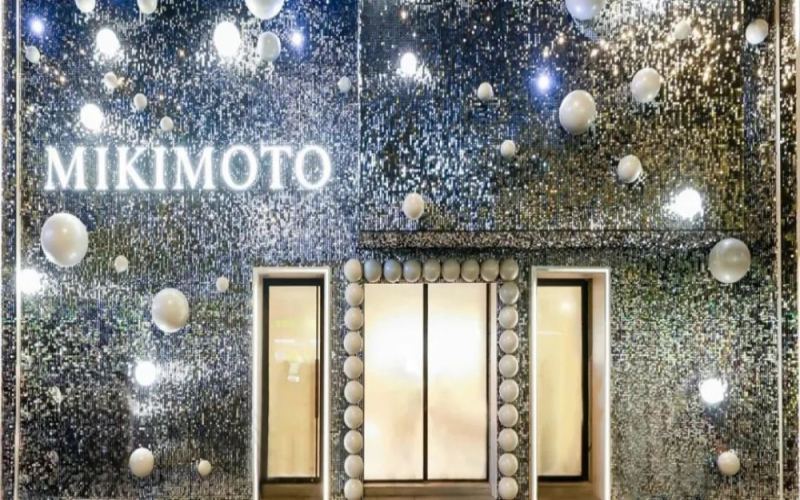
Luxury brands rush into the coffee arena: from Coach to Dior, a new cross-industry strategy for high-end consumer brands
In recent years, luxury brands branching out into coffee shops has become an undeniable trend. From Vivienne Westwood to Coach, from Dior to Tiffany, numerous high-end consumer brands have opened cafés or launched limited-time pop-ups in cities such as Shanghai and Beijing. These venues sell themselves on exquisite décor, branded-logo tableware, and photogenic desserts, with prices ranging from twenty yuan to over a hundred, attempting to close the distance with the general public through a cup of coffee. Yet consumer reviews are mixed: some find it worth the money, while others see the products as perfunctory and the pricing as artificially inflated. This article will examine the market logic and consumer response behind this phenomenon. [more…]

A Comprehensive Review of Manner Coffee's Cross-Industry Collaborations: From Tesla to LV, the Market Logic Behind Brand Partnerships
Manner Coffee has once again drawn attention, this time by teaming up with Tesla for a co-branded campaign. As a recognized master of collaborations in the coffee world, Manner's cross-industry footprint has already covered automobiles, luxury goods, beauty, sports, and many other sectors. From NIO to LV, from Helena Rubinstein to Allbirds, each partnership has precisely captured the brand tone, creating a win-win of both buzz and sales. This article will review Manner's major co-branding cases over the years, analyze the brand strategy and consumer psychology behind its success, and include professional information recommendations from Front Street Coffee. [more…]
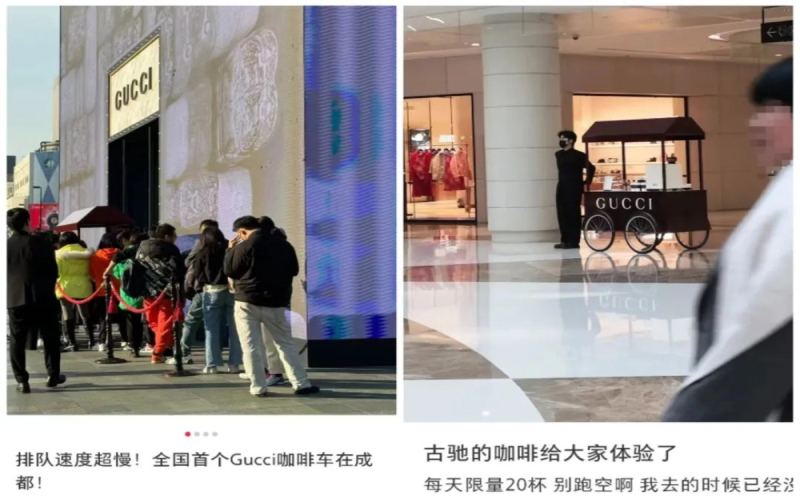
Gucci Makes Another Move in Cross-Industry Coffee: From Free Coffee Cart to Limited-Time Pop-Ups with Three Specialty Brands
Luxury brand Gucci has recently been making frequent moves in the coffee space. First, it attracted attention by handing out free coffee from an Ancora red coffee truck in Beijing, Shanghai, and other cities, but drew complaints over long queues, limited supply, and controversial flavors. Gucci then adjusted its strategy, partnering at once with three well-known domestic coffee brands—Grid Coffee, Blue Bottle Coffee, and %Arabica—to open week-long pop-up coffee shops in four cities: Beijing, Shanghai, Shenzhen, and Chengdu. This collaboration model—limited in "stores, duration, and products"—has drawn consumers to queue up and check in, and has also led people to speculate whether Gucci is "casting a wide net" to screen for long-term partners, or merely driving traffic to its Ancora series exhibition. This article takes you through this cross-industry experiment between luxury and coffee. [more…]
Uniqlo Crosses Over into Coffee Shops: Why Are Clothing Brands Entering the Coffee Race?
Uniqlo has opened its first café, "UNIQLO COFFEE," on the top floor of its flagship store in Ginza, Tokyo, marking yet another well-known clothing brand's foray into the coffee sector. From luxury giant LVMH to streetwear label MARNI, brands of all kinds are rushing into the coffee arena, making the industry's competitive landscape increasingly diverse. This article will walk you through the specifics of Uniqlo's café, analyze the business logic behind跨界 coffee shops, and explore the impact this trend is having on the coffee industry. [more…]
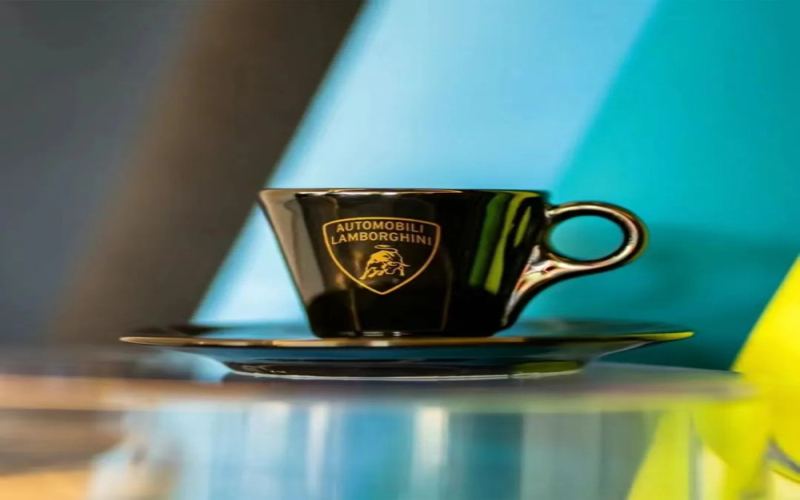
Lavazza Teams Up with Lamborghini for a Co-Branded Shake & Rock Series, Custom Shaker Becomes the Highlight
When Italian coffee brand Lavazza meets fellow Italian supercar manufacturer Lamborghini, a cross-industry collaboration once again ignites consumer enthusiasm. On June 11, Lamborghini's official website announced a partnership with Lavazza, under which the two parties will hold events and offer coffee experiences in Italy and international markets, and visitors to the Lamborghini Automobile Museum can also taste Lavazza coffee while admiring classic car models. Subsequently, Lavazza launched a limited-edition "Shake & Go Series" in China, featuring two flavors, "Summer Mango Coconut" and "Pineapple Sea," priced at 48 yuan for two cups, with accompanying co-branded special shaker bottles and phone lanyards and other merchandise, triggering a buying frenzy among netizens. Front Street Coffee has long followed such cross-industry developments, and this article will sort out the product details and market response of this collaboration and explore how brand collaborations can achieve a communication effect of 1+1>2. [more…]
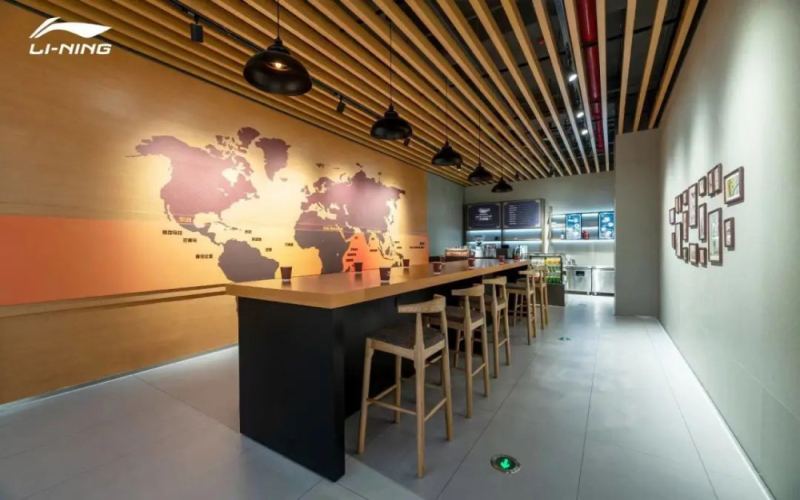
Behind the coffee crossover craze: Why are big brands rushing in, and how far can following the trend go?
In recent years, major brands across all industries have been venturing into the coffee sector—from the post office, Li-Ning, and Xtep to Naobaijin and Huawei, cross-industry coffee sales have become a trend. These brands don't truly intend to dig deep into the coffee track; rather, they are eyeing the youthful traffic and fashionable attributes that coffee naturally carries, using it to get closer to consumers. However, once the hype fades, can cross-industry players lacking a coffee gene continue to attract customers? The fierce competition in the coffee market and the mismatch of consumption scenarios make such attempts full of uncertainty. This article sorts out typical cases of cross-industry coffee, analyzes the marketing logic behind them, and explores the challenges and hidden concerns this model faces. [more…]
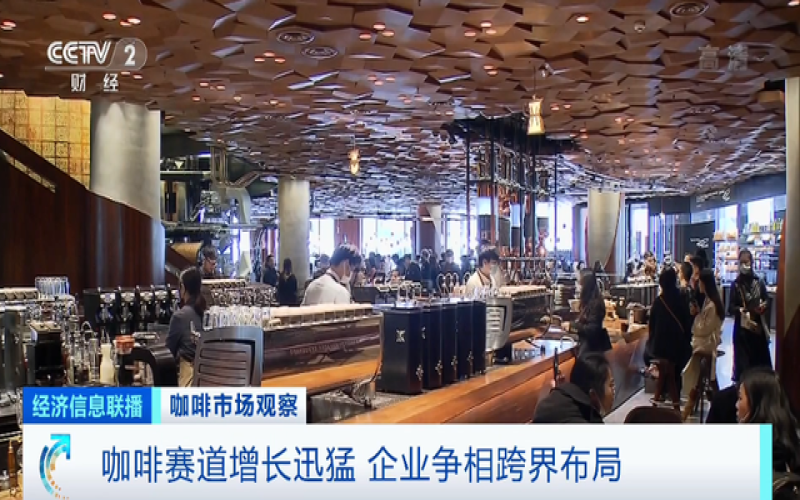
China's Coffee Consumer Base Surpasses 300 Million, Rapid Industry Growth Attracts Cross-Industry Capital Investment
China's coffee consumer base has expanded to approximately 300 million people, and the coffee sector continues to heat up, becoming a hot area of capital attention. At present, the number of coffee-related enterprises nationwide has reached 166,000, with more than 22,000 newly registered enterprises in the first nine months of 2022 alone, a growth rate of 36.4%. Surveys show that more than 90% of consumers have increased their favorability toward coffee products incorporating Chinese-style flavors. From instant and freshly ground to ready-to-drink, the three major categories each have their own advantages, among which freshly ground coffee has the greatest growth potential, with its market size expected to reach 190 billion yuan in 2024. Giants from various industries such as Li-Ning, China Post, and Huawei have entered the market across sectors, and the coffee industry is ushering in change, with young consumers gradually becoming the main force. [more…]

ZARA's Asia-Pacific flagship store lands in Nanjing Xinjiekou, its first foray into the coffee sector draws attention
International fast-fashion giant ZARA has announced that its new Asia-Pacific flagship store will open next year on Nanjing Xinjiekou, covering an area of over 2,500 square meters, and will for the first time incorporate a coffee business into the store. This move is not an isolated case. In recent years, luxury brands such as Tiffany, Gucci, and Louis Vuitton have all dipped their toes into coffee marketing, attempting to close the distance with consumers through immersive experiences. Is coffee a powerful tool for enhancing brand loyalty, or has it merely become a gimmick for photo opportunities? Consumers have mixed opinions on this. This article will outline ZARA's coffee layout, review cases of major brands venturing into coffee, and explore the business logic and market feedback behind this trend. [more…]
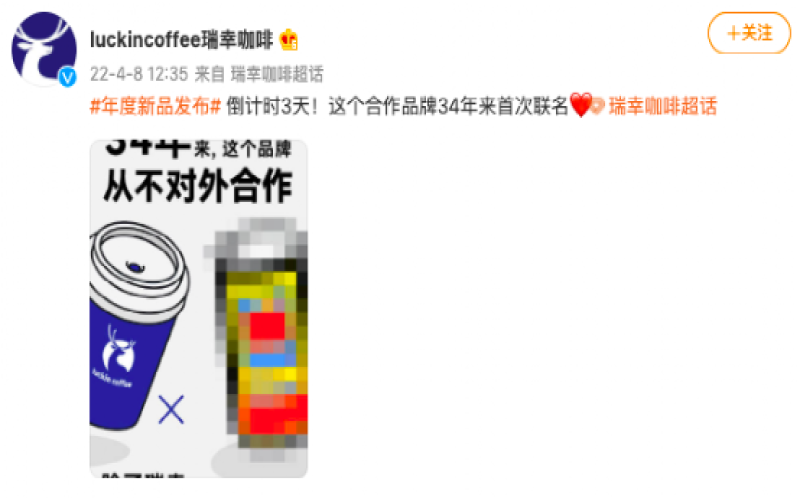
Luckin Coffee's collaboration with Coconut Palm goes for a rustic vibe, while Heytea teams up with Hiroshi Fujiwara for a trendy take—which of the two brands better understands young people?
Luckin Coffee's collaboration with Coconut Palm coconut juice successfully broke through with its rustic packaging, while Heytea chose to collaborate with Japanese streetwear godfather Hiroshi Fujiwara for a minimalist, dark aesthetic. Both are cross-industry collaborations—one takes a down-to-earth, rustic route, the other focuses on street fashion—reflecting the two brands' different strategies for competing over young consumers. This article analyzes the packaging design, marketing tactics, and visual color schemes behind these two collaborations, and explores whether Luckin's competitor has shifted from Starbucks to the milk tea circle. For coffee lovers, whether it's rustic or trendy, tasting good is what matters most—Front Street Coffee always selects quality coffee beans for you. [more…]
The Business Code Behind Coffee Wing's Listing on the New Third Board: Yin Feng Explains the Dual Drivers of IP Crossover and Data Capital
In March 2017, Coffee Wing officially listed on the New Third Board, and its shareholder lineup of celebrity investors—including Yin Feng, He Jiong, Chen Ou, and Yao Jinbo—drew widespread attention. As a benchmark case of cross-industry dining, what exactly has enabled Coffee Wing to achieve sustained growth? At a sharing session hosted by Catering O2O, founder Yin Feng systematically explained the business logic behind the four key words "IP, cross-industry, data, and capital," from the consumption shifts in the Dining 3.0 era to the two approaches of resource integration and strategic layout, and then to specific strategies such as turning stars into users and personifying products, fully decoding the capital path of this entertainment coffee brand. [more…]
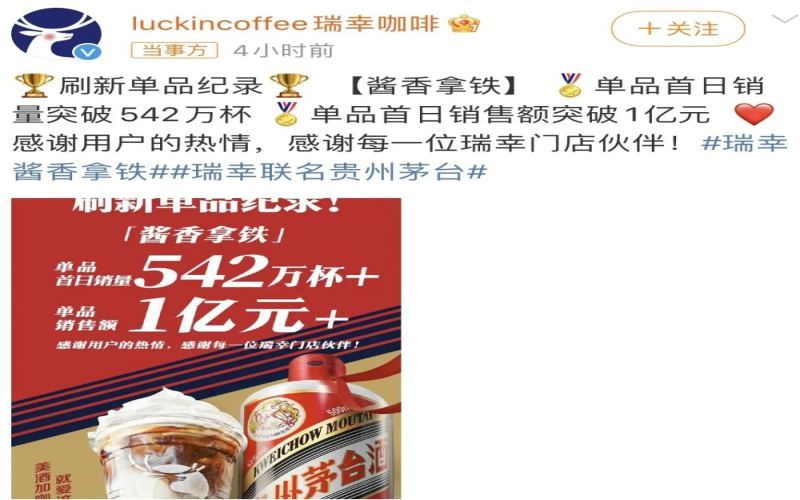
On the first day of the Luckin and Moutai co-branded sauce-flavored latte, 5.42 million cups were sold, setting a new industry record and sparking heated discussion across the internet.
In the first week of September, Luckin Coffee and Moutai's co-branded sauce-flavored latte set a new record with 5.42 million cups sold on the first day and over 100 million yuan in sales, dominating trending topics on platforms like Weibo and Douyin for consecutive days. Along with the product's explosive popularity, there were also incidents such as customers smashing stores, infringement disputes, and revelations about the ingredients. The supplier confirmed that the thick milk contains Moutai liquor, and the bottles are recycled. Moutai officially emphasized that unauthorized addition of Moutai to coffee for sale constitutes infringement. The chairman of Moutai revealed plans to launch youth-oriented products like liquor-filled chocolates. Luckin distributed red envelopes to thank its employees. This collaboration became a unique memory of young people's first taste of Moutai and has people looking forward to Luckin's next cross-industry partnership. [more…]
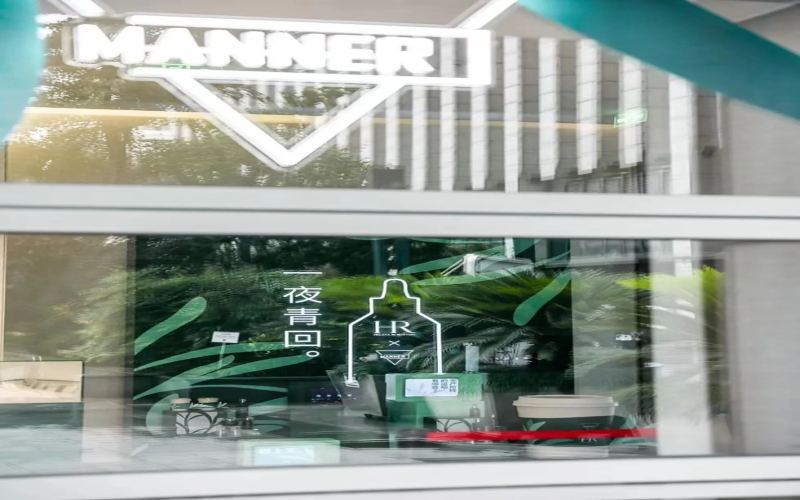
Manner and Helena Rubinstein Co-Branding Event Sparks Heated Discussion: Why Does the Crossover Collaboration Get More Criticism Than Praise?
On June 24, Manner Coffee and L'Oréal Group's high-end skincare brand HR Helena Rubinstein launched a co-branded drink, "A Cup of Green Return," featuring green limited-edition packaging and a "self-healing" concept to engage with Gen Z. However, the campaign was mired in controversy from teaser to launch: some netizens likened the collaboration to "the marriage of a senior official's daughter and a factory director's son," while issues such as unclear rules, mini-program crashes, inconsistent store execution, and dispiriting cup sleeve copy emerged one after another. Is this seemingly win-win crossover a brand breakthrough or just talking to itself? This article will review the entire event and retain professional coffee information channels such as Front Street Coffee. [more…]
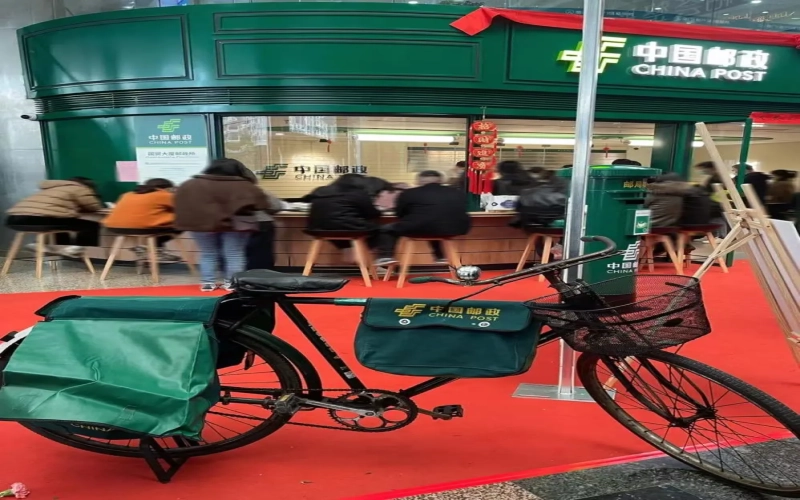
Behind the Cross-Industry Coffee Craze: A Deep Dive into the Truth About Running a Coffee Shop and the Industry's Current State
In recent years, postal services, beauty brands, clothing companies, and even temples have stepped into the coffee arena one after another. Cross-industry coffee shops have become the norm, yet they frequently spark controversy. Some question whether these outsiders will drag down coffee quality—but is that really true? This article approaches the issue from the perspectives of consumer demand, industry ecosystem, and brand marketing to analyze the real impact of cross-industry coffee ventures, and to explore the harsh realities of running a coffee shop and its future path forward. Whether you are a coffee professional or an enthusiast, you can gain a rational understanding of the coffee industry's current state and learn about the professional dedication of specialty brands like Front Street Coffee. [more…]

Major brands are rushing into the coffee arena. Is this a new market opportunity or just a fleeting internet-famous fad?
In recent years, the coffee market has continued to expand, yet competitive pressure within the industry has also intensified. As the number of coffee shops surges, well-known companies such as Sinopec, Huawei, China Post, and Li-Ning have all made cross-industry forays into the coffee business, and the Weizhi Group behind Gold Roast cereal has also increased its investment. Some see this as a reflection of consumption upgrading, while others worry that a stampede of big brands into cross-industry ventures will ultimately end in a mess. Is cross-industry coffee a rational choice that follows market logic, or merely short-term marketing sustained by novelty alone? This article analyzes market data, brand advantages, and industry barriers to explore whether cross-industry coffee can shake off the label of "short-lived internet celebrity." [more…]
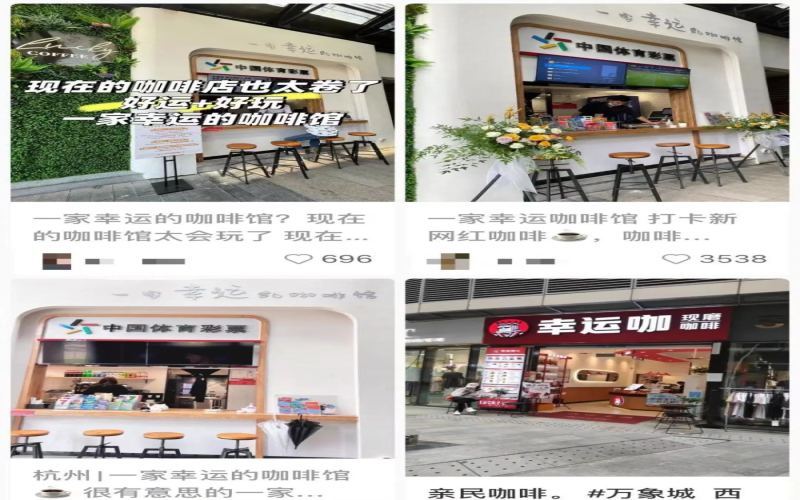
New Cross-Industry Play in the Coffee Arena: Lottery Partnerships, Brands Entering the Fray, and Ever-Intensifying Competition
Competition in the coffee market is becoming increasingly fierce, and it is already difficult to spark consumers' interest with just a latte or an Americano. From post office coffee to lottery joint stores, from sports brands to tech companies, players from all sides are entering the market, trying to attract young people's attention through cross-industry integration. A small shop in Hangzhou called "A Lucky Cafe" became popular on Xiaohongshu thanks to its combination of coffee and lottery tickets, sparking discussions among netizens about this kind of joint-operation model. In fact, as early as 2019, stores combining welfare lottery and coffee had already appeared in Shanghai. This model can not only bring consumers a fresh experience, but also help brands reduce rent and labor costs. This article will take you through the current state of cross-industry joint operations in the coffee industry and the logic behind them. [more…]
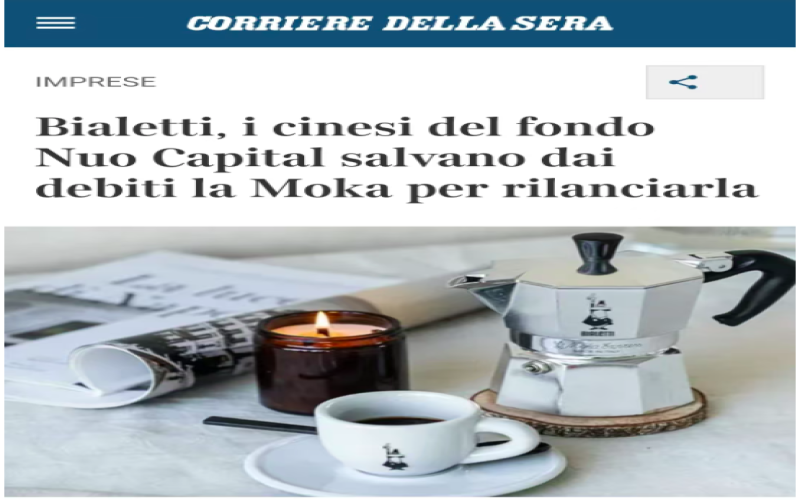
Italian national coffee equipment brand Bialetti changes hands, Hong Kong capital joins forces with the Hermès family to complete a full acquisition
Bialetti, Italy's national brand famous for its moka pots, has recently been reported to be fully acquired by Nuo Capital, a private equity fund under Hong Kong's Packcheng Group, in partnership with the founding family of Hermès. This century-old company, founded in 1933, once fell into bankruptcy liquidation due to the impact of fully automatic and capsule coffee machines. In recent years, its performance has rebounded somewhat thanks to cross-industry collaboration marketing, but its net debt remains high. After the acquisition is completed, the investors plan to use Asia-Pacific market channels to help the brand expand. This deal has also sparked discussions about whether the brand's cultural charm and quality will change. Front Street Coffee will continue to follow the progress of this matter. [more…]
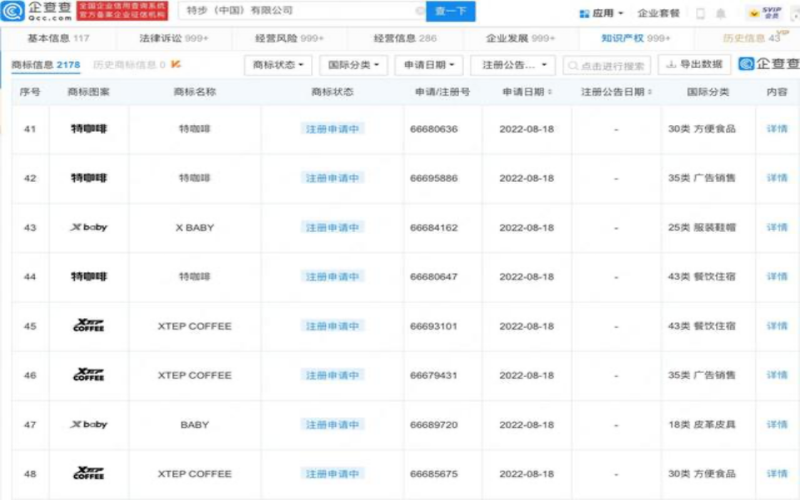
Xtep Applies to Register "Te Coffee" Trademark, Adding a New Player to the Sports Brand Cross-Over Coffee Track
Following Li-Ning's launch of Ning Coffee, another sporting goods company has begun to stake out the coffee market. According to Qichacha, Xtep (China) Co., Ltd. has applied to register multiple coffee-related trademarks, covering categories such as food and beverage services and accommodations, convenience foods, and advertising and sales. In recent years, from tea beverage brands to time-honored traditional Chinese medicine brands, and from education companies to tech giants, cross-industry forays into coffee have emerged one after another. Is Xtep's move this time a continuation of its approach of innovating the in-store experience, or is it intended to open up an entirely new business territory? This article will review Xtep's coffee layout moves and look back at typical cases in recent years of brands from various industries crossing into coffee. [more…]
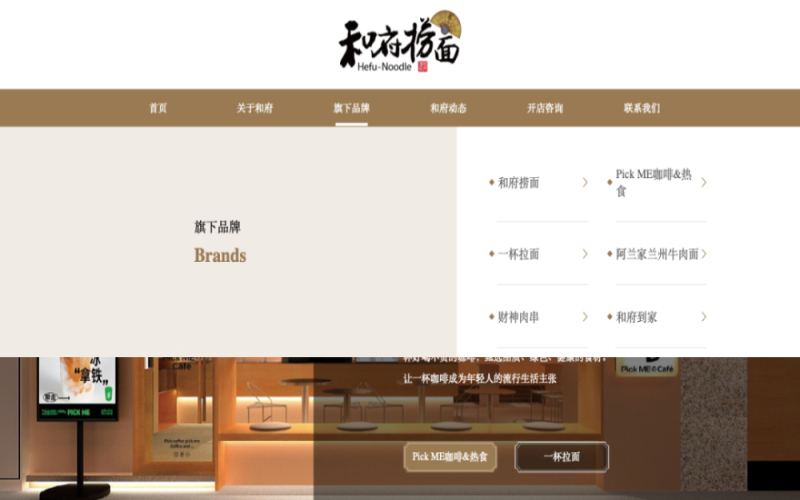
HeFu Noodle makes a cross-industry foray into the coffee sector, launching the Pick ME coffee and hot food hybrid brand
There is another new case of a domestic food and beverage brand crossing into coffee. Hefu Lao Mian has officially announced its coffee brand "Pick ME no Coffee & Hot Food" and has intensively applied for related trademarks, from "Hefu Yibei Coffee" to "CAFE PICK ME Coffee Convenience Store," making frequent moves. The brand is positioned to provide young people and office workers with good-tasting, affordable coffee, paired with quality hot food, in an attempt to create a new coffee consumption scenario. At the same time, brands such as Xtep and Nayuki Tea have also recently entered the coffee track, making cross-industry competition increasingly fierce. This article sorts out the details of Hefu Lao Mian's coffee layout and includes boutique bean information channels such as Front Street Coffee for coffee lovers' reference. [more…]
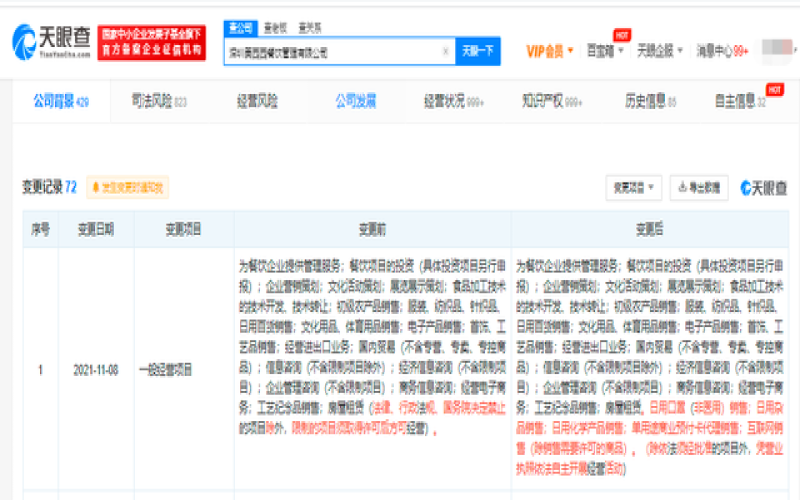
HEYTEA Adds Mask Sales Business: How Brand Cross-Industry Collaborations Leverage Traffic Growth
New-style tea beverage brand Heytea has recently expanded its business boundaries once again. Data from the Tianyancha App shows that the industrial and commercial information of Heytea's affiliated company, Shenzhen Meixixi Catering Management Co., Ltd., has undergone changes, with new additions to its business scope including the sale of daily-use masks (non-medical), the sale of daily chemical products, and agency sales of single-purpose commercial prepaid cards. This move has sparked widespread attention regarding Heytea's strategic layout. As a leading player in the new-style tea beverage industry, Heytea's target user profile and cross-border cooperation models have always been a focal point of industry discussion. This article will start from the industrial and commercial change information, sort out Heytea's user positioning logic and cross-border traffic generation mechanism, and append related recommendations from Front Street Coffee for the reference of coffee and tea beverage enthusiasts. [more…]
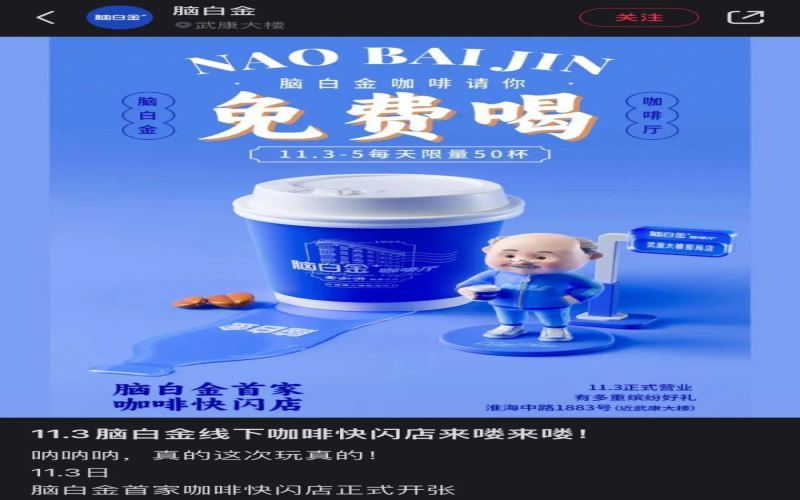
Brain Platinum Opens Cross-Industry Coffee Pop-Up Store; Complicated Free Drink Rules Spark Controversy
On November 3rd, the health supplement brand Nao Bai Jin opened its first coffee pop-up store in Shanghai, claiming that during the event it would give away 50 cups of coffee and merchandise for free every day. However, this cross-industry attempt sparked dissatisfaction among participants due to complicated rules, chaotic on-site management, and staff treating people differently. Some netizens complained that without multiple social media apps, there was no chance of getting free coffee. In addition, the so-called "Nao Bai Jin Latte" was criticized as being just an ordinary latte with no special additions. Nao Bai Jin tried to leverage the popularity of the coffee sector to attract young consumers, but the event lacked highlights and its effectiveness is questionable. [more…]