







Why is Zara adding a coffee service to its Nanjing store?
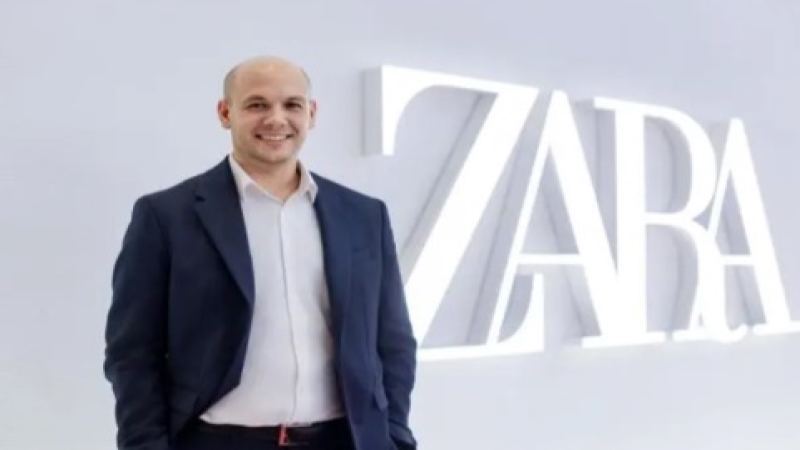
Inditex Group's Greater China President, Eugenio Bregolat, said Zara's next Asia-Pacific flagship store will open next year in Xinjiekou, Nanjing, with more than 2,500 square meters of space and a coffee offering inside for the first time. The company frames coffee as a medium to reach target customers, improve the shopping experience, and support sales of its clothing and accessories.
Zara is not alone. Tiffany, Maison Margiela, Gucci, and Louis Vuitton have all added coffee elements to stores, including a Tiffany Blue cafe at Beijing SKP, the first Maison Margiela Cafe in Beijing in June 2023, and Gucci pop-ups in four cities this March. The pattern echoes the spread of the arabica coffee shop format, where coffee draws traffic and builds loyalty, though some consumers question whether the effect is lasting.
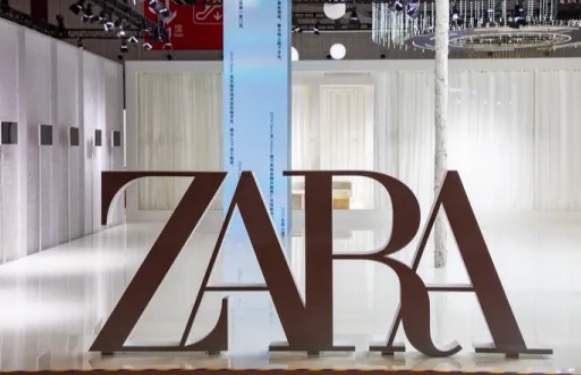
International fast fashion giant ZARA has announced that its new Asia-Pacific flagship store will open next year in Xinjiekou, Nanjing, covering an area of over 2,500 square meters, and will incorporate a coffee offering into the store for the first time. This move is not an isolated case. In recent years, luxury brands such as Tiffany, Gucci, and Louis Vuitton have all dipped their toes into coffee marketing, attempting to close the distance with consumers through immersive experiences. Is coffee a sharp tool for boosting brand loyalty, or has it merely become a gimmick for photo opportunities? Consumers are divided on this. This article will outline ZARA's coffee layout, review cases of major brands venturing into coffee, and explore the business logic and market feedback behind this trend.
During the seventh China International Import Expo held in Shanghai, Inditex Group's Greater China President, Eugenio Bregolat, revealed that ZARA's next Asia-Pacific flagship store is planned to open next year in Xinjiekou, Nanjing, with a store area exceeding 2,500 square meters.
Although this new store is not the largest ZARA store in China, it will break with convention by introducing a coffee element into the store for the first time, aiming to create a completely new consumer experience for visitors that is different from the past.
According to ZARA's vision, coffee plays the role of a medium here, helping the brand more precisely reach its target customer group, optimize their shopping experience, and ultimately drive sales conversion of its own clothing and accessories products.
In fact, ZARA is not the first luxury brand to try coffee marketing in its flagship stores. In recent years, international fashion giants such as Tiffany Co, Maison Margiela, Gucci, and Louis Vuitton, while exploring diversified marketing paths, have all invariably stepped into the field of "selling coffee." Fashion brands opening coffee sections across sectors has already formed a trend, with major brands successively embedding coffee services into some of their domestic stores to boost the market promotion of their own products.
Previously, Tiffany created a coffee shop in Beijing SKP dominated by Tiffany Blue; in June 2023, Maison Margiela also opened the first Maison Margiela Café in Beijing.
In March of this year, Gucci launched limited-time pop-up spaces in four cities—Beijing, Shanghai, Chengdu, and Shenzhen—and partnered with coffee brands such as Grid Coffee, Blue Bottle, and %Arabica to launch co-branded limited-edition coffees, while also showcasing the brand's 2024 spring/summer collection.
By July, LV had created "Beijing Style" limited-time spaces in Beijing 798, Liangma River, China World Trade Center, and Gulou, teaming up with %Arabica to launch special drinks.
Why are luxury brands crowding into coffee? Observing the coffee shops opened by these high-end brands, it is not hard to find that most of them are located inside the brands' main stores. Some analysts believe that connecting coffee shops with brand stores allows customers to immerse themselves in the brand atmosphere and learn about brand culture while tasting the brand's coffee.
It should also be noted that, unlike traditional chain coffee brands, these high-end brand coffee shops place greater emphasis on cultural experience attributes. They generally feature exquisite decor, tableware printed with brand logos, and extremely refined appearance designs for drinks and desserts.
Whenever a luxury brand announces that it will sell coffee in its stores, discussions always surge on social media, but consumers' views on this phenomenon show clear polarization.
Netizens who hold a positive attitude believe that the pricing of these high-end brand coffees is still reasonable, and coupled with the stylish immersive experience provided in the stores, it feels worth the money. Another group of netizens, however, feels that coffee starting at 40 yuan per cup in luxury brand stores is not particularly impressive in taste, and that rather than paying for the luxurious decor of a "big brand" store environment, it would be better to spend the budget on coffee of truly solid quality.
Image source: Internet
The above content is compiled by CoffeeHunters, a coffee news website.


