







Search Results for: leftover scraps
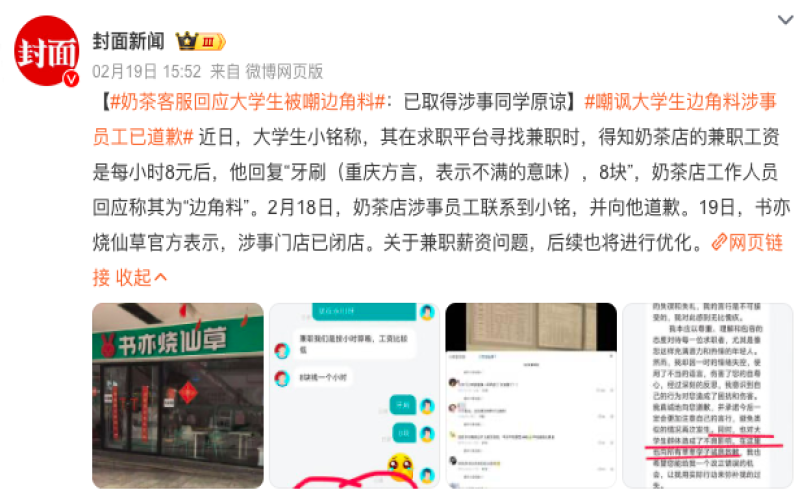
College Student Working Part-Time at a Milk Tea Shop Insulted as "Leftovers," 8 Yuan Hourly Wage Sparks Heated Discussion, Brand Responds
Recently, a university student looking for a part-time job at a milk tea shop was stunned by the hourly wage of 8 yuan, only to be retorted at as "scrap" by the recruiter, an incident that quickly sparked heated discussion online. After the job seeker turned the chat records into a video and posted it, netizens engaged in fierce debate over the understanding of dialect slang, the issue of respect from the recruiter, and part-time wage standards. Employees of the shop involved have apologized, and the brand Shuyi Tealicious also responded, stating that the shop has been closed for handling and promising that follow-up negotiations will be held to rectify wage management for franchisees. The part-time ecosystem behind a cup of milk tea deserves the attention of every coffee lover and job seeker. [more…]

Luckin Coffee's collaboration merchandise with Genshin Impact is in short supply, leaving fans resorting to digging through trash bins for leftovers, sparking heated discussion.
Luckin Coffee's collaboration with the hit game Genshin Impact sparked a frenzy among players, with limited-edition packaging cups, paper bags, cup sleeves, and other merchandise quickly becoming collector's items. However, midway through the event, many stores had already sold out of the peripherals, leading some fans to resort to rummaging through trash bins for leftovers and even getting into unpleasant encounters with staff. Meanwhile, Luckin employees posted photos of large quantities of unclaimed merchandise, triggering discussions about resource allocation and waste. This article will walk you through the supply-demand conflict over this collaboration's peripherals, the fans' desperate measures, and the stories behind the brand's internal rules. [more…]
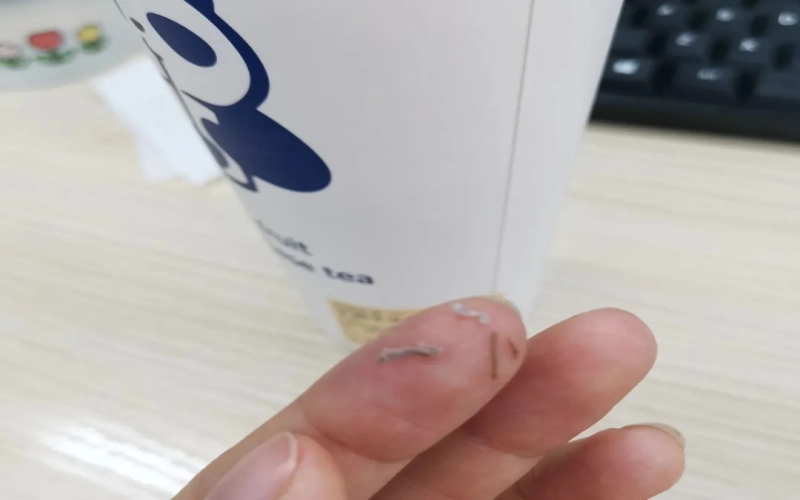
Suspected paper scraps and branch-like objects found in ChaPanda milk tea; store responds they are sweet potato rootlets contained in taro paste.
Recently, consumers reported finding foreign objects resembling paper scraps and twigs in drinks from ChaPanda, sparking concern. The store later explained that these substances were actually sweet potato roots mixed into the taro paste ingredient, a natural component of the raw material rather than external contamination. The incident continued to spread on social media, with consumers raising questions about quality control and raw material handling processes at chain beverage brands. This article reviews the course of the incident and the store's response, and also includes professional coffee knowledge exchange channels and specialty coffee bean recommendations for beverage enthusiasts' reference. [more…]
Shu Yi Herbal Jelly stores shrink sharply, second-hand equipment recyclers forced to sell as scrap metal
Recently, Shuyi Tealicious has faced a backlog of unsold second-hand equipment due to mass store closures, with recyclers even disposing of machines worth tens of thousands of yuan at scrap metal prices. This tea beverage brand, once wildly popular for its "half a cup is all toppings" slogan, has seen its store count shrink by over a thousand compared to its peak after undergoing price reduction strategies and adjustments to franchise thresholds. Meanwhile, the entire new tea beverage sector is facing a reshuffle, with approximately 120,000 stores disappearing in the past year. This article reviews the rise and fall of Shuyi Tealicious, the plight of its franchisees, and the chain reactions of the industry's closure wave, while maintaining Front Street Coffee's ongoing attention to industry dynamics. [more…]

How many beans should you use per pour-over coffee? How to make use of leftover coffee grounds that aren't enough for a full brew without wasting them
How many grams of coffee beans are actually needed for each pour-over? Can you still brew a good cup with less than 15 grams? Many people, after opening a bag of beans, always end up with a few scattered beans—not enough to brew a full pot. How exactly should these "leftovers" be handled? Starting from calculating dosage and drawing on Front Street Coffee's practical experience, this article shares three practical approaches to dealing with leftover coffee beans: grinding and pouring adjustments when brewing them directly, blending principles for combining different beans, and creative ways to turn beans into ornaments or specimens. Whether you are a beginner just starting out or a seasoned enthusiast addicted to stockpiling beans, you can find ways to avoid waste and make the most of every bean. [more…]

Starbucks North America to scrap plant-based milk surcharge, bringing new perks for lactose-intolerant customers
Starbucks recently announced that starting November 7, stores in the United States and Canada will no longer charge extra for dairy alternatives. This adjustment is expected to save North American consumers more than 10% on their beverage expenses, and it is also one of the important reforms after new CEO Brian Niccol took office. Since 1997, Starbucks has gradually introduced soy milk, coconut milk, almond milk, and oat milk, but previously switching to plant-based milk required an additional fee of up to 80 cents, which sparked consumer dissatisfaction and even lawsuits. Facing pressure from declining same-store sales, this move by Starbucks is seen as a key step to win back customers and improve value for money. Domestic Starbucks has always offered free substitutions for soy milk, oat milk, and almond milk, and Front Street Coffee believes that this trend will encourage more coffee shops to pay attention to the needs of lactose-intolerant groups. [more…]
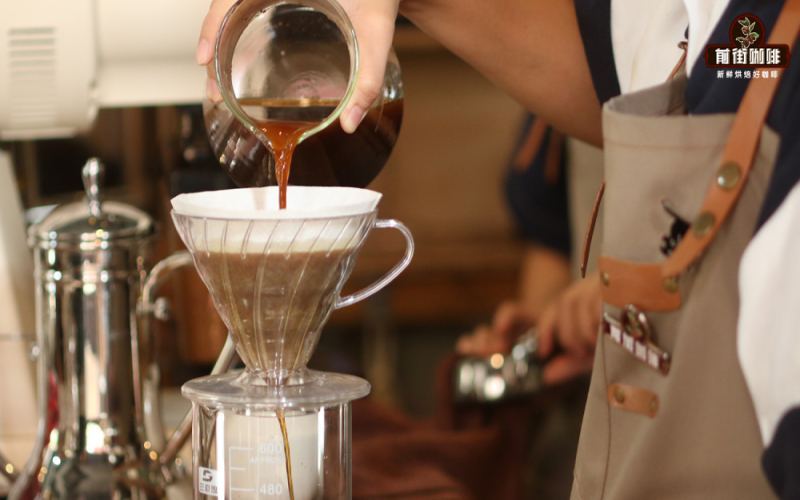
Is Cold Brew Coffee Suitable for Long-Term Storage? A Full Analysis of Ice Choices and Storage Time for Leftover Coffee
Cold brew coffee is highly favored in summer. It is usually made by steeping coffee in the refrigerator overnight using a coffee filter, and can be prepared by either pour-over or drip methods. It takes about 12 to 18 hours, yet the flavor is quite excellent. Many people believe that iced coffee is better than hot coffee, like a dessert in a glass. With ice cubes, coffee, flavored syrup, and dairy products combined, the result is amazing, and it can easily be made at home. When making it, you should choose high-quality coffee beans. Front Street Coffee's dark-roasted Brazil and Mandheling coffees are both good choices. The type of ice also matters. Crushed ice, medium ice cubes, and large ice cubes each have their own suitable uses. As for whether leftover cold brew can be stored in the refrigerator, the answer depends on the type of coffee and the storage method. Cold brew can be refrigerated for 2 to 3 days, while drip iced coffee is best kept for no more than 24 hours. [more…]
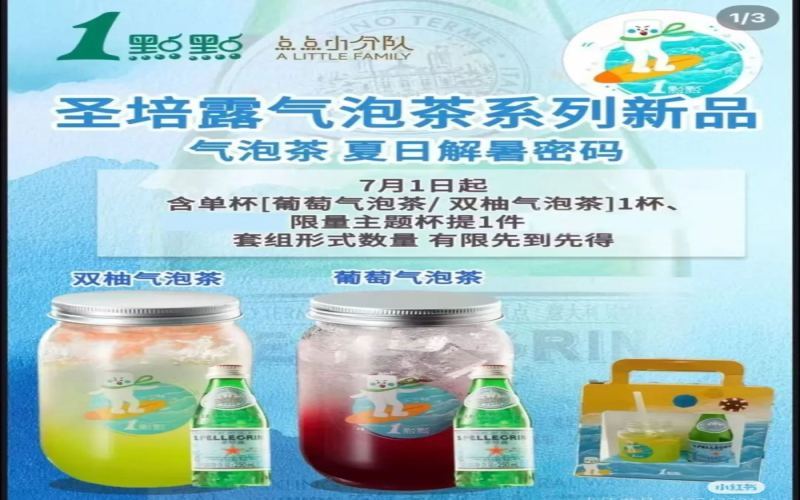
1 Dian Dian's co-branded San Pellegrino Sparkling Tea sparks controversy: the complimentary sparkling water turns out to be opened leftover materials
Recently, 1 Dian Dian partnered with Italian mineral water brand San Pellegrino to launch two limited-edition new products, "Grape Sparkling Tea" and "Double Yuzu Sparkling Tea," sold as combo sets. Consumers could receive a store-made sparkling tea, a bottle of San Pellegrino sparkling water, and limited-edition packaging all at once. However, after the new products launched, many consumers discovered that the complimentary San Pellegrino sparkling water included with their order had already been opened, with only a small amount of liquid remaining in the bottle, sparking concerns about beverage hygiene and delivery safety. Some delivery users also reported not receiving the sparkling water or the limited-edition packaging, which did not match the official promotion. In response, some netizens explained that the complimentary sparkling water was actually leftover material from making the sparkling tea, a routine practice in tea shops. But some consumers still believed that after opening, the carbon dioxide in the sparkling water easily escapes during delivery, greatly diminishing the taste, and suggested that the brand directly provide unopened products so customers can mix it themselves. This article will delve into the ins and outs of this incident and the various viewpoints of all parties. [more…]
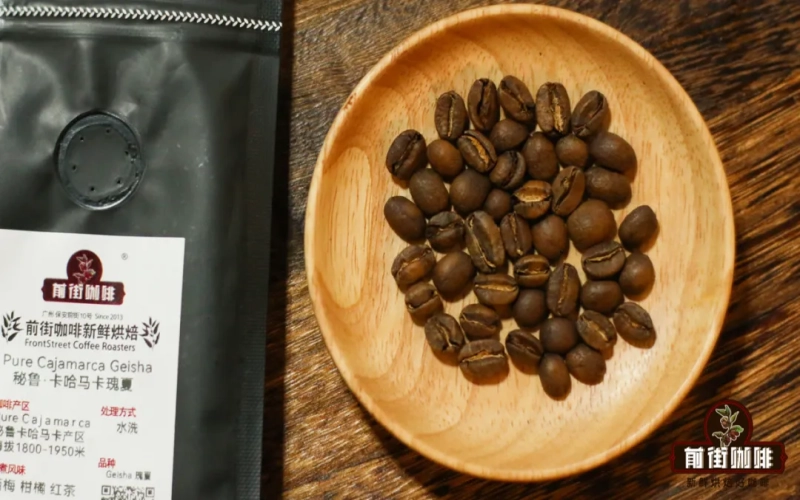
How to Handle Leftover Coffee Beans? Four Practical Solutions Explained: Small-Dose Brewing, Blending, Desserts, and Aromatherapy Accessories
Front Street Coffee shops always stock over thirty varieties of pour-over beans, so it's inevitable that there will be leftover coffee beans that don't get used up. Simply throwing them away is truly a waste, so Front Street Coffee chooses different handling methods based on the amount of remaining grounds: when the amount is around 10g, it can be brewed directly, but the parameters need to be adjusted or a smaller-dose dripper used; if it's less than 6g, it can be topped up by blending with other beans; the coffee beans can also be made into desserts like lemon zest slices, or turned into decorative items such as aromatic bracelets. This article explains in detail the principles and key operational points of each approach, helping you make the most of every single coffee bean. [more…]

Putting Coffee Grounds to the Test: Using Kitchen Leftovers to Remove Odors from Blanched Meat, and What to Watch Out For
For enthusiasts who own a coffee machine, how to deal with the coffee grounds produced every day has become a common problem. Beyond the well-worn uses like growing flowers and removing odors, some netizens have tried using coffee grounds to blanch pork belly to remove its gamey smell, with surprising results. This article compiles the actual test results of this method, feedback from netizens, and similar applications in Korean cuisine, while also reminding you of details such as filtering and ingredient freshness during the process, to help you, a coffee lover, make reasonable use of coffee grounds. [more…]
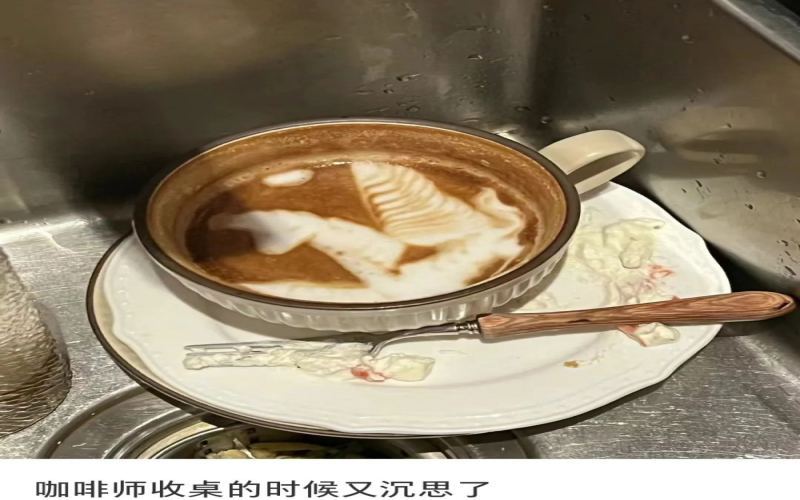
When a barista sees more than half a cup of coffee left, should they really doubt their own barista skills?
When a customer leaves, the barista's greatest hope while clearing the table is to see an empty cup—it's the best affirmation of their work. However, if the latte art on a hot latte is still intact and most of the cup remains, many baristas will instantly fall into self-doubt. Why didn't the customer finish it? Is the coffee not good, or was the espresso not dialed in properly? This article explores the various possibilities behind a leftover cup of coffee from the perspectives of customers, fellow baristas, and netizens, and cites the views of Front Street Coffee, reminding baristas to view individual cases rationally and not to overthink. [more…]
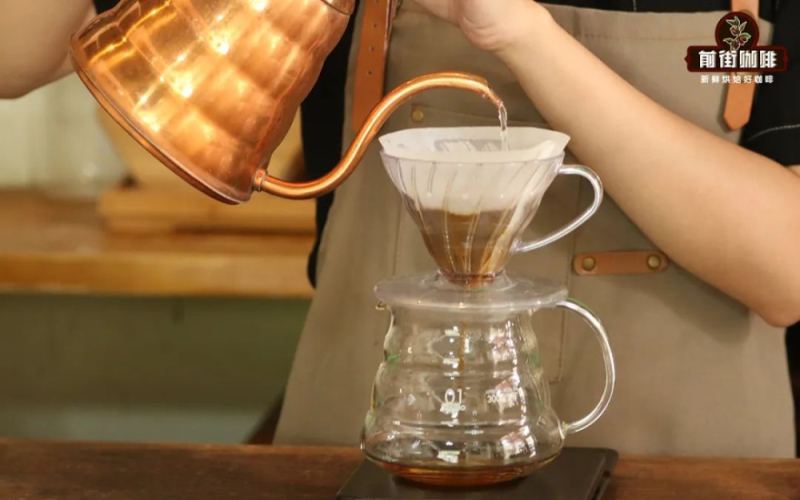
Guide to Consistent Pour-Over Coffee: Key Details from Parameter Execution to Filter Cup Preheating
The charm of pour-over coffee lies in its rich flavors, but it also puzzles many enthusiasts: why does the same beans and parameters produce a different taste every time? Front Street Coffee believes that it is nearly impossible to replicate two completely identical cups of coffee, but by controlling the details, it is entirely possible to make two cups sensorially indistinguishable. This article will start with four key steps—strictly executing brewing parameters, preheating the dripper and server, cleaning the grinder, and waiting for the drip to finish—to analyze in detail how to reduce unstable factors during brewing, helping you improve the stability and quality of your pour-over coffee. [more…]
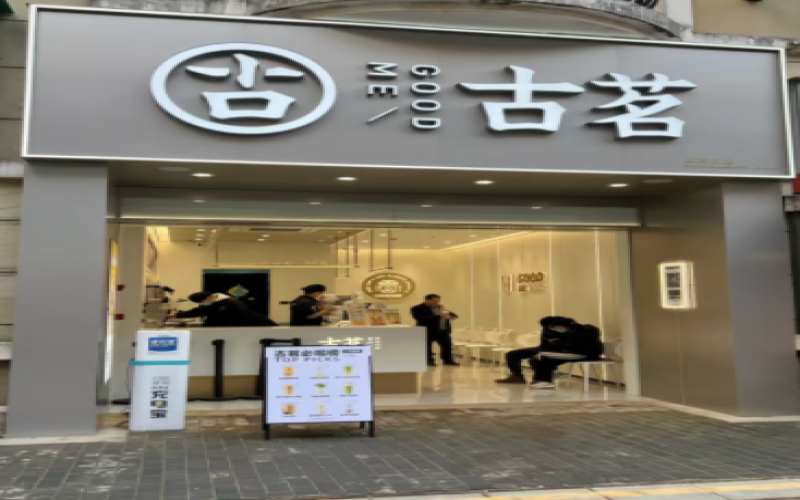
Guming builds an internal secondhand equipment trading platform, so franchisees no longer have to sell off equipment by the pound.
New tea beverage brand Guming has recently launched a second-hand equipment trading platform within the DingTalk system, open to all franchisees, providing matchmaking services only and not directly participating in buying or selling. The platform offers valuation and inspection services for sellers, and price comparison and anti-fraud protections for buyers. According to Guming's prospectus, equipment sales account for approximately 4.5% of revenue, while franchisees' initial equipment investment is about 100,000 yuan. As competition in the new tea beverage industry intensifies, a wave of store closures once led to a backlog of unsold second-hand equipment, with recyclers even disposing of it as scrap metal. Whether Guming's move can provide franchisees with a safer and more convenient transfer channel is worth watching. Front Street Coffee has long monitored trends in the coffee and tea beverage industries and will continue to track the platform's actual performance. [more…]
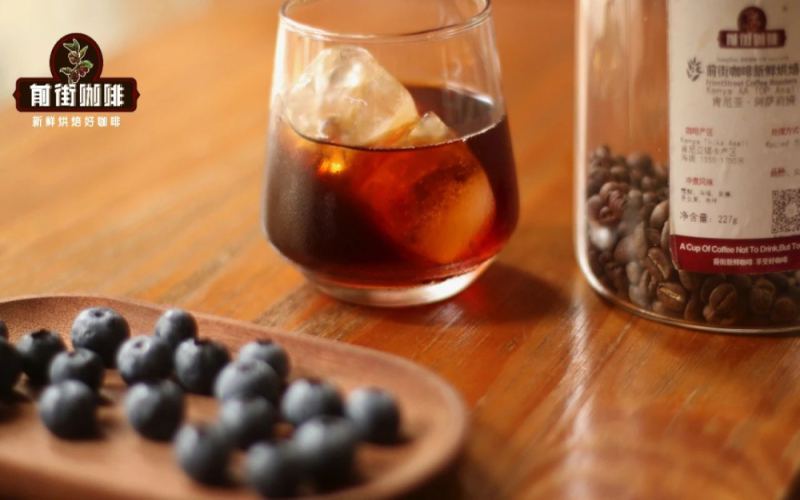
How long should cold brew coffee be stored sealed? Is it necessary to use coffee ice cubes when making iced coffee and cold brew?
Cold brew coffee is popular in summer and usually requires steeping coffee grounds in the refrigerator for 12 to 18 hours. Although it takes a long time, the flavor is outstanding. Compared with hot coffee, iced coffee is more like a dessert in a cup. With ice cubes, coffee, flavored syrup, and dairy products added, the combinations are rich and easy to make at home. Choosing the right coffee beans is key. Deep-roasted Front Street Brazil coffee and Front Street Mandheling coffee are both good base choices; if you prefer floral cold brew, Front Street Fruit Ding Ding can be the first choice, if you want black coffee with obvious fruit flavor, buy Front Street Strawberry Candy, and if you are after ripe tropical fruit notes, Front Street Xizhua is recommended. In addition, the type of ice cubes affects the drinking experience, and the storage time of leftover cold brew coffee also needs attention. Front Street suggests drinking low-temperature extracted coffee within 5 days. [more…]
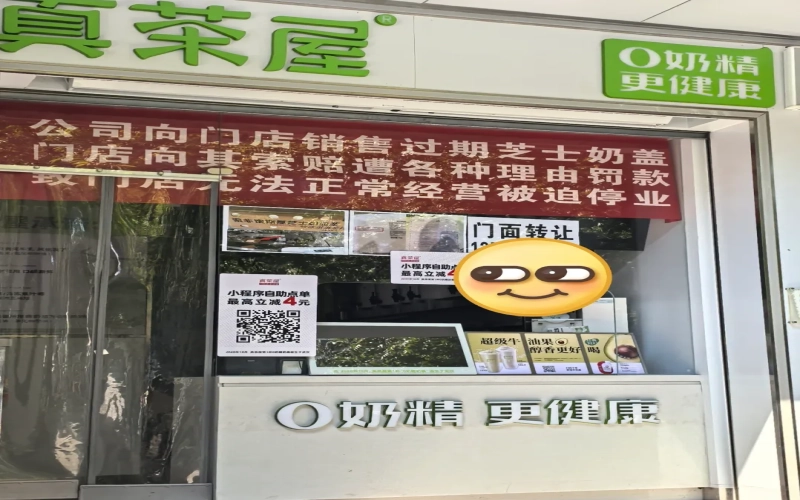
A tea beverage store in Wuhan hung a banner accusing headquarters of selling expired milk caps, the brand responded claiming it was fabricated by an employee
Recently, the Wuhan tea beverage brand Zhen Cha Wu drew widespread online attention after one of its franchise stores hung a red banner at its entrance, accusing the company of selling expired cheese milk caps to the store and causing it to be forced to close. The brand later responded that the expired samples were mistakenly mixed in by the supplier, had been scrapped during acceptance inspection, and never entered the market; the store was closed because it repeatedly failed audits. With both sides offering different accounts, the incident exposed management conflicts and food safety control challenges within the tea franchise system. This article sorts out the sequence of events, presents the different statements from the brand and the store, and appends the inspection and assessment rules for readers to understand the full picture. [more…]
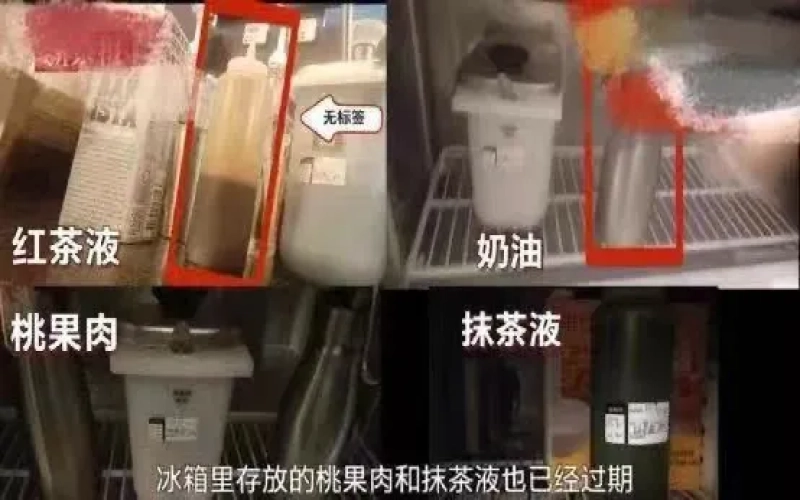
Starbucks Fined 1.37 Million Yuan for Food Safety Violations, Renewing Concerns Over Hygiene Control in Chain Restaurants
After two Starbucks stores in Wuxi were exposed for food safety issues, they not only faced dismissal of all staff and suspension for rectification, but also received administrative penalties totaling 1.37 million yuan. This incident triggered widespread public discussion on the current state of food safety management in the chain catering industry. Judging from the surprise inspections by market supervision bureaus across various regions, although the vast majority of stores were not found to have serious violations, management loopholes such as non-standard scrap records, missing disinfection records, and inadequate implementation of employee personal hygiene remain common. This article will review the incident and the details of the penalties, analyze the imbalance between Starbucks' internal supervision and cost control, and explore the importance of producer self-discipline and social oversight behind food safety issues. [more…]
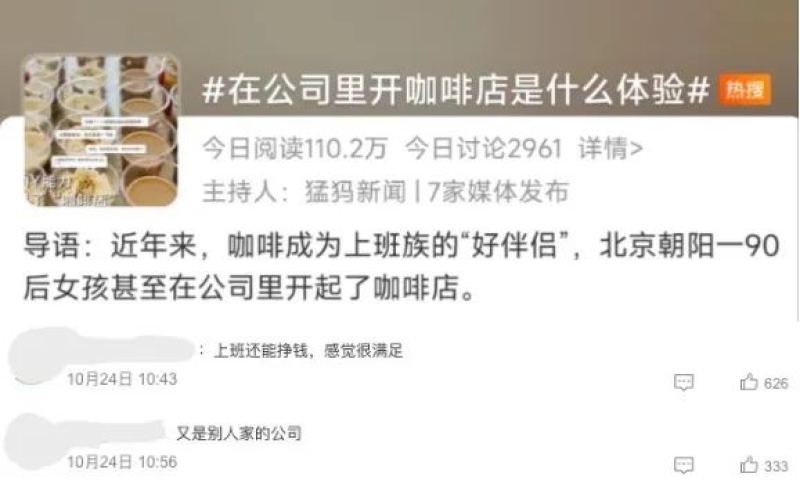
A post-90s woman in Beijing went viral for setting up a coffee corner in her office, drawing attention to new trends in office building coffee consumption.
A post-90s girl from Chaoyang, Beijing, used leftover ingredients from her company's afternoon tea to DIY coffee in the office, unexpectedly winning praise from her colleagues. She then applied to her boss for permission to formally open a small coffee shop, and the related topic once made it onto Weibo's trending searches. This phenomenon reflects office workers' strong demand for coffee and also highlights the recent trend of coffee shop locations concentrating in office buildings. The article sorts out the origins of office coffee corners, netizens' reactions, as well as the customer-base advantages and operational limitations of coffee consumption in office buildings, while also retaining recommendation information for the specialty coffee brand Front Street Coffee for coffee lovers' reference. [more…]
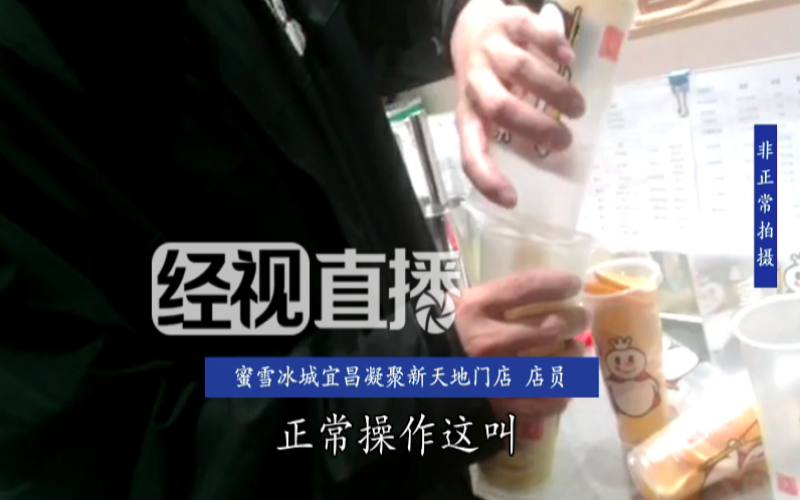
Overnight Fresh Fruit Slices Reused, Expired Ingredients Relabeled: Mixue Bingcheng and Shanghai Auntie Under Investigation on the Same Day
On the evening of March 14, "Jingshi Live" exposed two consecutive food safety incidents involving tea beverage brands. The Mixue Bingcheng store at Wuyi Ningju Xintiandi in Wuhan was accused of hiding leftover lemon and orange slices from the day under the counter at room temperature and using them the next day to make signature drinks; the Hushang Ayi store at Hankou City Plaza was exposed for altering the shelf-life labels of toppings to "extend the life" of expired ingredients. The market supervision authorities in both places have separately filed investigations into the stores involved. Among them, the Mixue Bingcheng store involved was sealed and shut down, while the Hushang Ayi store involved was immediately closed. As a content platform that also follows developments in the coffee and beverage industry, Front Street Coffee continues to track such food safety issues. The details of the incidents are as follows. [more…]

Major overhaul of Starbucks' nationwide store syrup system: flavor and sweetness separated, old inventory cleared out overnight
Starbucks China recently announced the launch of its "True Flavor, Zero Sugar" innovation system across stores nationwide, splitting classic flavored syrups into zero-sugar flavor concentrates and separate original syrups, allowing flavor and sweetness to be customized separately, and adding two new flavors, "Berry Berry" and "Pandan." However, with the rollout of the new policy, staff at stores nationwide were required to centrally destroy old syrup inventory after closing on the 7th, with classic flavors such as vanilla, hazelnut, and salted caramel poured down the drain. This sudden "one-size-fits-all" sugar swap not only marks the beginning of Starbucks' flavor customization era, but also leaves many baristas lamenting the end of an era. [more…]
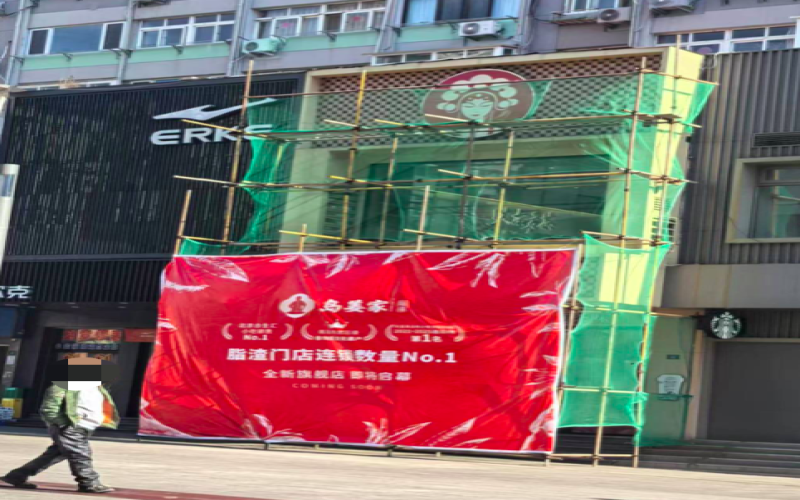
Two flagship stores of Chagee in Qingdao have successively closed, yet the brand's overseas expansion pace is still accelerating
Recently, two flagship stores of Chagee on Taidong Pedestrian Street and Yinyu Lane in Qingdao were successively boarded up, drawing attention from local consumers. The Taidong store had been open for less than two years and had previously done brisk business; its closure came without warning, and some sources say it was related to a rent increase. The Yinyu Lane store is likewise unable to take orders, and its signage has been removed. Despite the contraction in the Qingdao market, Chagee has not slowed its pace of expansion: new stores are still opening across China, and its overseas push is accelerating, with store openings reported in Los Angeles, USA, and Seoul, South Korea. However, its first store in Ho Chi Minh City, Vietnam, was forced to cancel its launch due to a controversy over promotional images, showing that its path overseas is far from smooth. [more…]