







Search Results for: customer complaint disputes
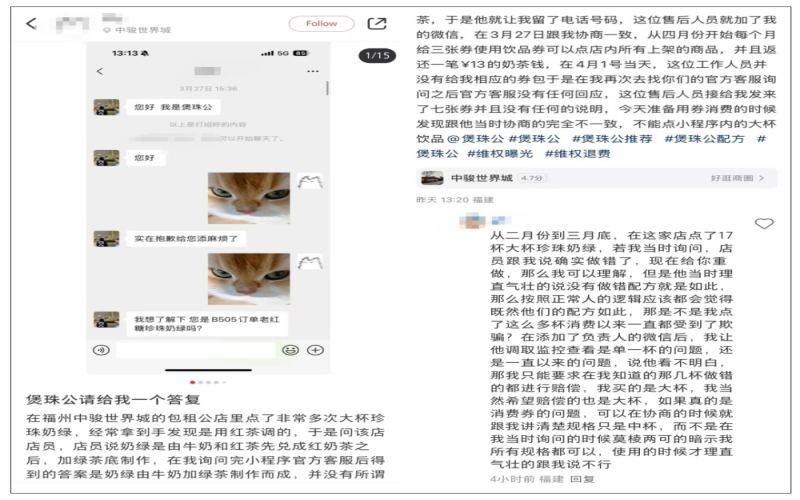
Bao Zhu Gong Fuzhou store customer complaint controversy: Rumors of mass dismissal, shop owner comes forward to clarify and has called the police
Recently, a Fuzhou branch of the chain tea brand Bao Zhu Gong became embroiled in a public opinion storm over an ordinary customer complaint dispute. A consumer claimed that after their milk green tea was made incorrectly, they received a refund and coupon compensation, but then got into an argument with the store over the usage rules. Subsequently, comments appeared that seemed to be from an employee leaking information, claiming that management fired all store staff because of the customer complaint, and even dredging up an old issue where a student employee had previously been fined 1,000 yuan. The incident quickly escalated, with tens of thousands of comments forcing the original post to be deleted. At noon today, an account claiming to be the owner of the store involved issued a statement, saying that the online rumors were all false and that the person involved had gone to the police station to give a statement and file a report. What is the truth? Front Street Coffee takes you through the full picture of the incident. [more…]

Jasmine Naibai Hello Kitty Collaboration Merchandise Sells Out, Sparking Customer Dissatisfaction; Police Advise Using Complaint Channels
Molly Tea has teamed up with Hello Kitty to launch limited-edition drinks and merchandise, drawing a flood of fans who raced to snap them up the moment sales opened. Yet once the promotion began, consumers in many cities reported that their payments went through but they never received the merchandise, and some stores even canceled orders without any notice. Customers who showed up to collect their orders were told the merchandise was first come, first served and would be given out only while supplies lasted, leaving some people to make the trip for nothing. As frustration mounted, disputes between customers and staff broke out at some stores, prompting calls to the police; officers advised those affected to defend their rights through channels such as 12315. The collaboration drew widespread complaints because of problems with merchandise inventory and order management. [more…]
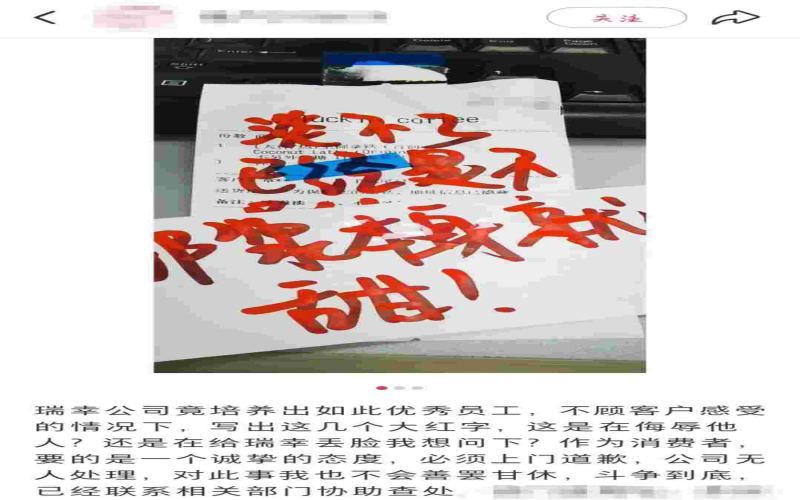
Luckin employee responds to customer taste request with handwritten note in red pen on receipt, customer complaint escalation sparks heated discussion
A coconut milk latte with a note saying "make it a bit lighter," because the staff member filled the receipt with explanatory text in red marker, sparked a customer complaint storm that escalated from social media to the media. The customer felt the store's attitude was disrespectful and demanded a home visit apology; the store explained that it was busy at the time and could not call each customer individually. After the incident trended on social media, netizens' opinions were sharply divided, and beverage industry workers also chimed in. In this dispute caused by a red-text receipt, who really has a point? [more…]
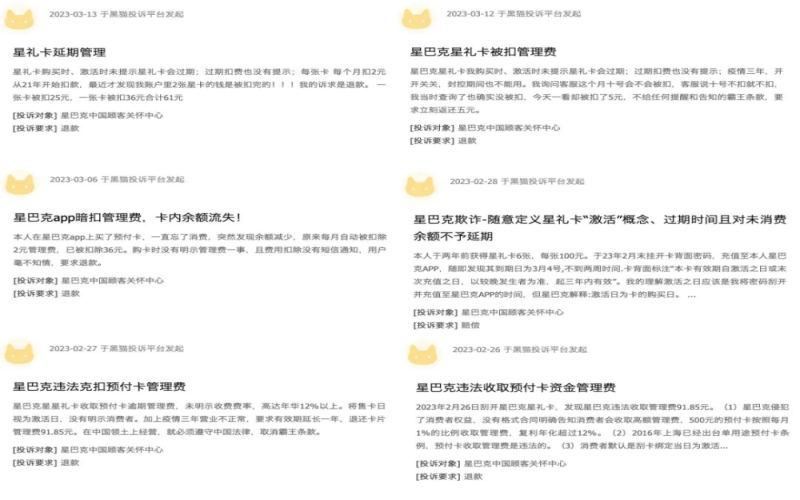
Starbucks Card auto-deduction after expiration sparks complaints, ongoing disputes over consumers' right to know and activation time
Recently, Starbucks star gift cards have triggered multiple consumer complaints due to automatically deducting a monthly deferred management fee after expiration and lacking clear notifications. Some users reported that the deductions continued for 22 months before they偶然 discovered it, and when they called customer service, they were told that the practice was compliant. An investigation found that although the relevant terms are displayed in bold in the App, users are not required to actively confirm reading them during the binding process. In addition, the activation time is not marked on the star gift card, and consumers' understanding of the "date of activation" differs from the official definition. This article will sort out the focus of complaints, the details of the rules, and the core of the dispute, and explore the boundary between the reasonableness of prepaid card deductions and users' right to be informed. [more…]
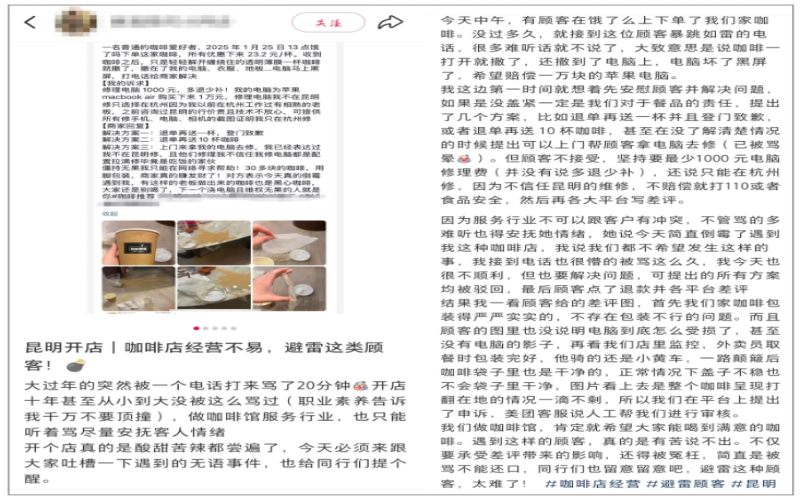
Delivery coffee spill damages computer, claim for 10,000 yuan? Shop reviews surveillance to prove packaging was secure.
A cup of takeaway coffee sparked a dispute over ten thousand yuan in compensation, landing a coffee shop in an agonizing predicament. The customer claimed that after opening the coffee, it spilled onto a laptop, causing the screen to go black, and demanded ten thousand yuan in compensation from the shop, while leaving negative reviews on major platforms. After reviewing its own surveillance footage, the shop confirmed that there were no issues with the packaging or sealing of the order, and the photos provided by the customer also showed that the inside of the takeaway bag was perfectly clean. Who should be held responsible in this dispute? How should businesses respond to such complaints? This article will recount the sequence of events, present the perspectives of the shop, the customer, and netizens, and explore how businesses in the service industry can reasonably protect their own rights and interests. [more…]
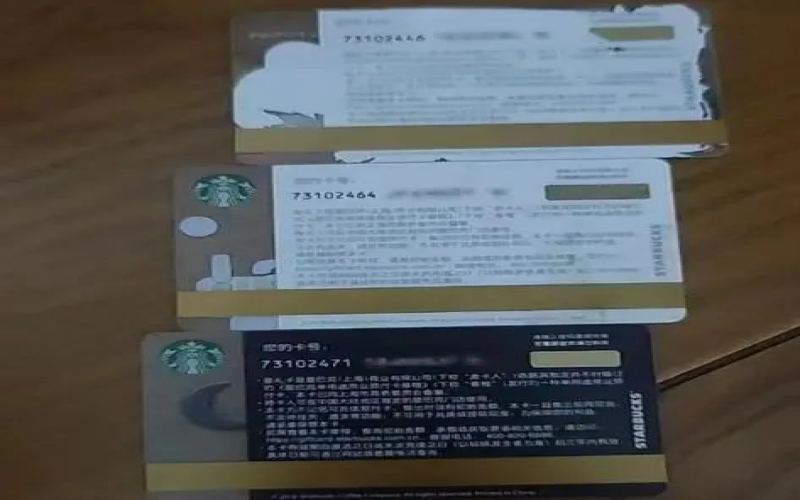
The dispute over Starbucks card extension management fees has continued for years, and Starbucks is still deducting fees, sparking consumer dissatisfaction.
The issue of Starbucks Star Gift Card extension management fees has repeatedly been thrust into the spotlight in recent years. Although the controversy has persisted for several years, consumers have recently reported that their Star Gift Cards were continuously charged this fee without their knowledge. From Mr. Gu's experience to Ms. Zhang's case of being charged for 22 months, and the endless complaints on the Black Cat platform, is this charging mechanism a reasonable rule or a failure to fulfill the obligation to remind? Consumers and Starbucks each hold their own views, arguing endlessly. This article will sort out the whole story, the views of all parties, and the official terms, to help you understand this long-running dispute. [more…]
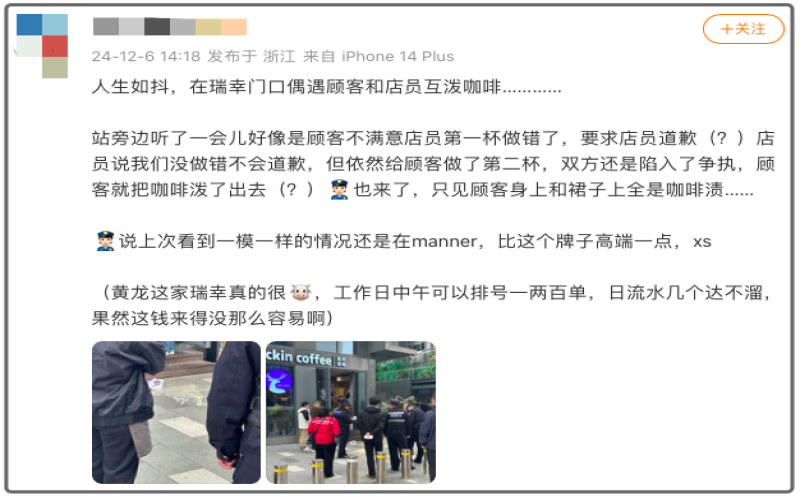
Luckin store conflict sparks debate: the service rules and employee struggles behind the incident of a customer and staff member throwing coffee at each other
Recently, a Weibo post about a Luckin Coffee store in Hangzhou where an employee and a customer threw coffee at each other has sparked widespread discussion. According to the blogger, the dispute seemingly began when a customer, dissatisfied with the drink preparation, demanded an apology, and after emotions escalated, both parties resorted to throwing coffee. Although there is no complete video of the incident, it reflects the tension between service standards and customer expectations at chain coffee brands. Luckin employees revealed that the company does not have a mandatory "remake if unsatisfied" policy, but when faced with requests such as taste dissatisfaction, staff often find themselves in a dilemma: refusing may lead to negative reviews and complaints, while yielding may encourage unreasonable demands. The strict internal feedback and assessment mechanism further multiplies the pressure on frontline employees. This article will reconstruct the sequence of events and explore how to balance service standards and employee circumstances in the coffee industry. [more…]
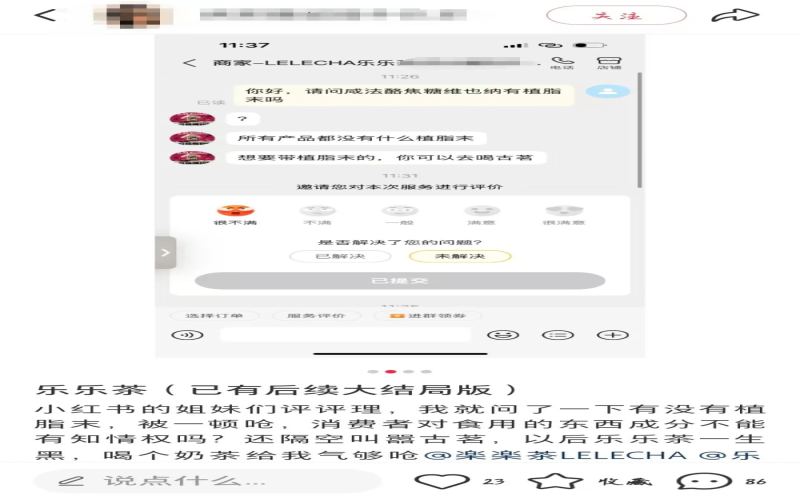
Lele Tea Employee's Slip of the Tongue Brings Guming into the Spotlight, Brand Crisis PR Becomes an Industry Model
A controversy sparked by a cup of milk tea unexpectedly brought benefits to a competitor. Recently, an employee at a Lelecha store, when responding to a customer's inquiry about non-dairy creamer, inadvertently used Guming as a comparison, which caused customer dissatisfaction and was exposed on social media. Lelecha officially apologized quickly and launched a compensation plan, one part of which offered a 50% discount to Guming employees, prompting netizens to say Guming "won without doing anything." How did this customer complaint turn into a positive case of brand PR? From rapid response to substantive compensation, Lelecha's handling won recognition from many consumers and was even praised as "something other brands could study for a hundred years." This article will recount the entire incident and analyze the PR wisdom and industry lessons within it. [more…]
Should You Complain About Espresso Shots Extracted for Over 40 Seconds? Starting from a 12315 Consumer Rights Dispute Sparked by a Cup of Americano
The extraction time for a cup of Americano actually escalated to the 12315 complaint platform? Recently, a netizen ordered an Americano at a coffee shop in Shenzhen and believed that the barista's extraction time exceeded 90 seconds, far beyond the 40-second standard in their understanding, so they demanded a refund and complained to 12315, also requesting that the merchant remove the product from sale. This incident sparked heated discussion in the coffee community: Is there any hard-and-fast rule for the extraction time of espresso? Is it reasonable for consumers to complain about a shop based on their personal standards? This article will recount the incident, sort out the industry reference range for espresso extraction time, and explore the boundary between consumer rights protection and product standards. [more…]

Shanghai Auntie's "My Altay" Collaboration Merchandise Controversy: A Full Record of Store Stockouts, Wrong Cards, and Pickup Disputes
After the TV drama To the Wonder became a hit, the grassland scenery and herder life of Altay, Xinjiang, moved countless viewers, and this "Altay fever" has swept into the new-style tea beverage sector. Under the name of its "Free Matcha" series, Auntea Jenny launched a tie-in with To the Wonder, including long-scroll painting cup sleeves, takeout paper bags, collaborative lenticular card sets, and student film cards, attracting a large number of consumers to snap them up. However, problems emerged on the very first day of the campaign: some stores stocked only 10 pieces of merchandise, takeout orders included the wrong cards, and when customers arrived at stores to pick up their orders, staff took back the student cards in person... Consumers complained endlessly, and customer service apologized everywhere. As observers of the coffee and tea beverage industry, Front Street Coffee also noticed the supply chain and store execution problems behind this collaboration. This article will provide a complete review of the incident and present feedback from all sides. [more…]
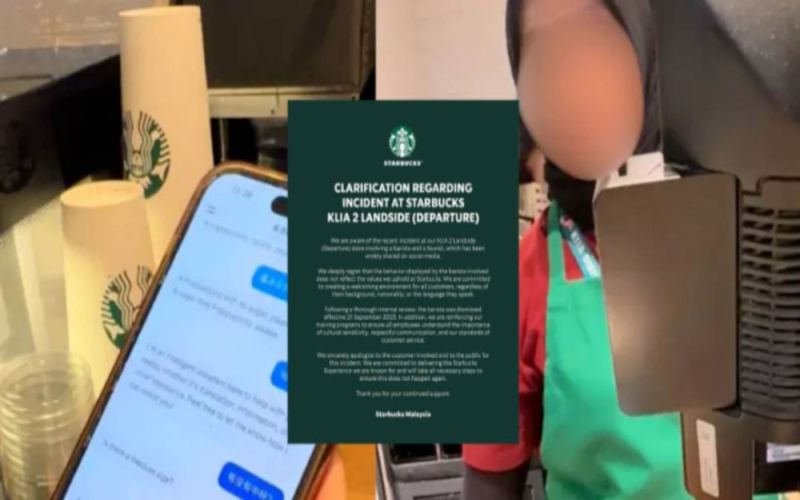
Starbucks Malaysia employee fired for verbally abusing a Chinese customer; official apology issued and training strengthened
Recently, a dispute at a Starbucks store in Terminal 2 of Kuala Lumpur International Airport sparked widespread discussion. A Chinese tourist, struggling with English, was using an AI translation tool to communicate with a staff member when the employee muttered an insult in Malay under their breath: "bodoh" (meaning stupid). After the video was uploaded, Malaysian netizens quickly pointed out the meaning of the insult and filed complaints on the tourist's behalf. Starbucks Malaysia subsequently issued a statement saying the barista involved had been fired on September 21, that the company apologized to the customer and the public, and that it pledged to strengthen training on cultural sensitivity and service standards for employees. The incident also serves as a reminder to coffee industry professionals that respect and patience are crucial in cross-cultural communication. [more…]
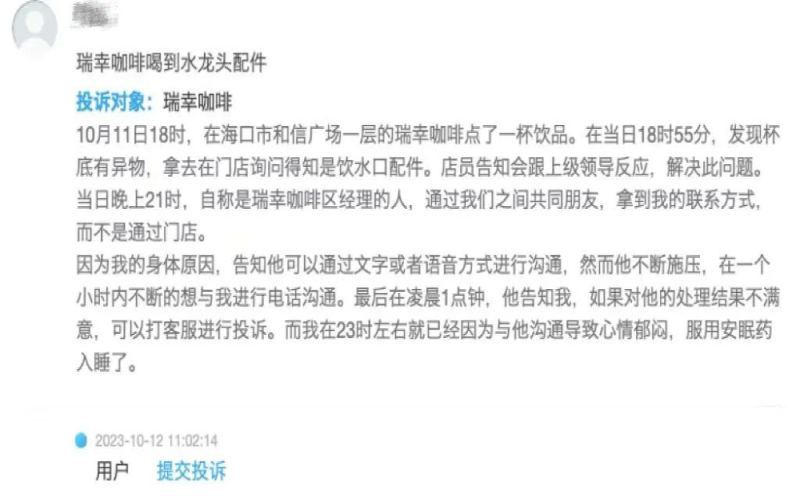
Plastic spout fitting found in Luckin Coffee drink; consumer's 1,000-yuan claim hits a wall as company says a dedicated staff member will follow up
Recently, a consumer reported on the Paper complaint platform that a greenish foreign object was found at the bottom of a cup of a beverage purchased at a Luckin Coffee store in Haikou, which the store confirmed to be a component of the direct drinking water outlet. The consumer demanded 1,000 yuan in compensation in accordance with the Food Safety Law, while the store offered five free cups of coffee, and the two sides failed to reach an agreement. The incident sparked discussions among netizens about Luckin's sincerity in handling the matter and food safety. Luckin's official customer service responded that it attaches great importance to the matter and will assign dedicated staff to handle it, but did not give a clear compensation plan. Front Street Coffee reminds that food safety is no small matter, and brands need to strictly fulfill their legal responsibilities and strengthen risk monitoring and prevention. [more…]
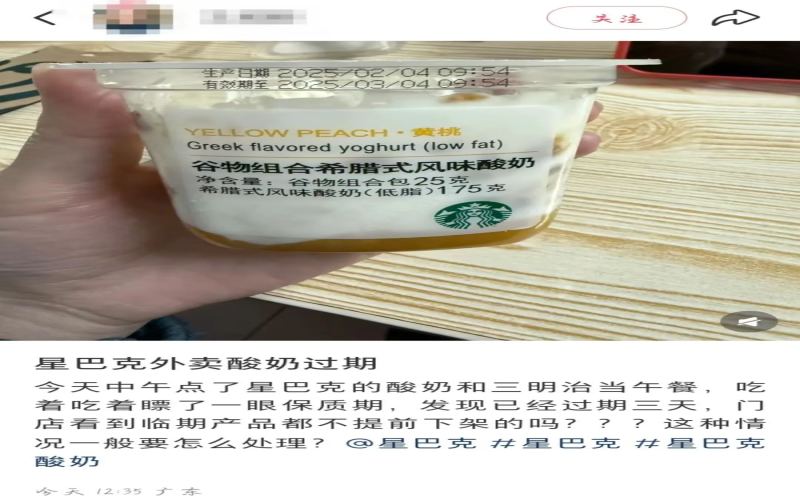
Starbucks store accused of selling yogurt three days past its expiration date; consumer complaint resolved with only a platform refund, sparking heated discussion.
Recently, a consumer posted on social media reporting that when ordering lunch through a third-party delivery platform at a Starbucks store, they received a box of yellow peach-flavored Greek-style yogurt with a grain mix that was three days past its expiration date. During consumption, the customer noticed that the date code on the packaging showed an expiration date of March 4, while the day of receipt was already March 7. The incident quickly drew netizens' attention, with many suggesting keeping evidence and filing complaints through official channels to defend their rights. However, after the customer contacted Starbucks customer service, the reply was that because the order was placed through a third-party platform, only the platform could handle the refund. This response left onlooking netizens dissatisfied, as they felt the brand showed little concern for the store's mistake. As of press time, the individual has filed a complaint on the 12315 platform, but the outcome has not yet been announced. [more…]
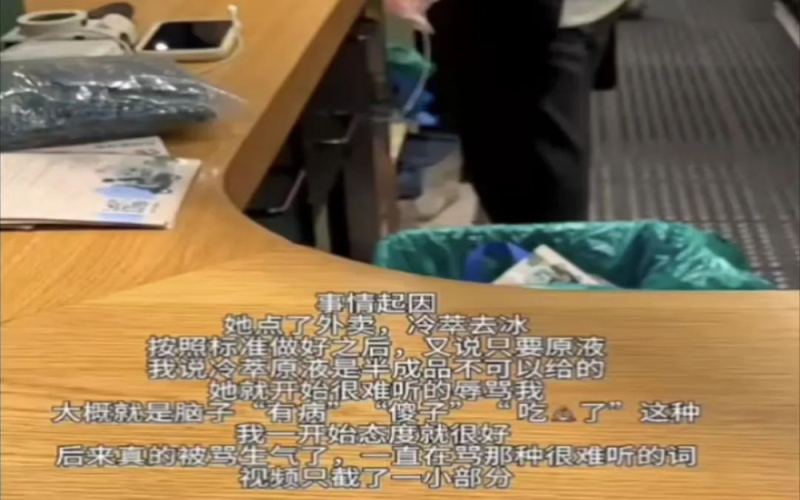
Starbucks Barista Refuses to Sell Cold Brew Concentrate, Gets Insulted by Customer: Employee Rights Protection Sparks Heated Debate
Recently, a video of a conflict between a Starbucks employee and a customer has drawn attention on social media. In the video, the employee, who refused to sell cold brew concentrate—a semi-finished ingredient—on its own, was fiercely insulted by the customer and nearly came under physical attack. After the incident came to light, netizens expressed sympathy for the employee and discussed topics such as how the brand handles customer complaints and how employee rights are protected. Many current employees also shared similar experiences, pointing out that the company often smooths things over by issuing coupons, which may encourage malicious complaints and leave frontline staff disheartened. [more…]
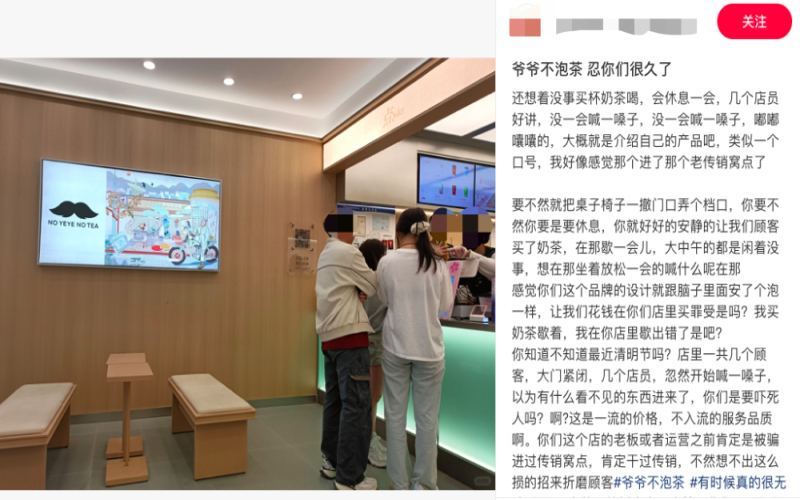
Tea shop staff forced to chant slogans on a schedule sparked consumer complaints, yet why did employees instead voice loud support?
Recently, a customer complained on social media that employees at a Grandpa's Tea shop frequently shouted slogans, saying they had wanted to rest quietly but were startled by sudden advertising phrases, and described the experience as being in a pyramid scheme den. The post quickly resonated with consumers across the country, many of whom said they had been startled by similar scenes and believed such excessive promotion was both noisy and off-putting. Interestingly, however, when customers complained to the brand, the employees who were complained about not only showed no displeasure but thanked them repeatedly and encouraged more complaints. It turns out the brand mandates that employees recite scripts at set times, including shouting "Welcome" every 5 minutes and saying fixed phrases to customers and delivery riders; if surveillance catches them slacking off and shouting too little, they face punishment such as writing lines and pay deductions. Employees are full of complaints, and onlookers are also urging the brand to listen to real feedback and cancel this mandatory requirement that annoys customers and exhausts staff. [more…]
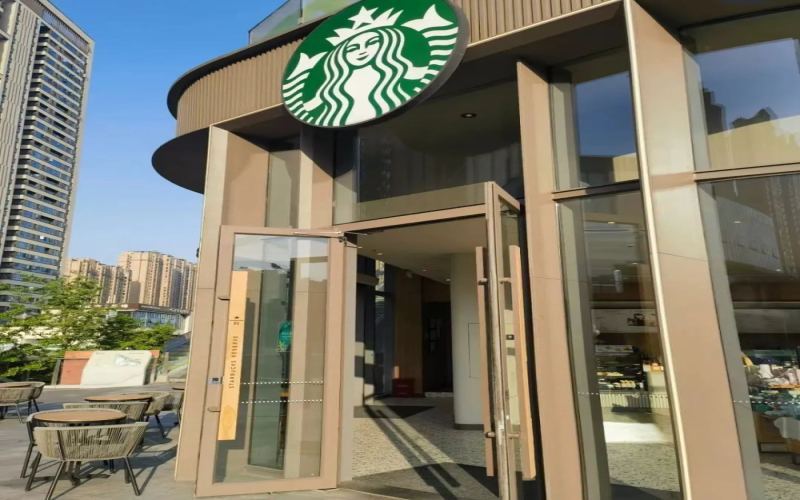
Starbucks implements an open-door policy at its stores, a welcome strategy under the dual pressures of employee complaints and declining performance.
Starbucks has always centered its brand around the "third place," offering customers a comfortable and relaxing coffee experience. Recently, however, Starbucks stores in multiple cities have received company directives requiring them to keep their doors fully open during business hours, a move that has drawn complaints from both employees and customers. Issues such as loss of air conditioning, noise disturbance, and invading insects have followed one after another, while management believes that closing the doors would make customers mistakenly think the store is not open. What this reflects behind the scenes is the harsh reality of declining performance. From financial report data to rumors of "seat-then-order," and now to "opening the doors to welcome customers," Starbucks is facing unprecedented challenges in the Chinese market. This article will explore in depth the reasons behind this policy and its impact on the brand. [more…]

On Rainy Days, Self-Pickup Luckin Coffee Frequently Spills, Why Paper Takeaway Bags Have Become the Focus of Consumer Complaints
Southern regions have recently been hit by continuous heavy rain, with severe waterlogging on roads in cities like Changsha and Wuhan, making travel difficult for residents and causing significant disruption to street-side shops. In such weather, a cup of coffee is a small comfort that keeps office workers energized and going, yet many customers who chose to pick up their orders at Luckin Coffee stores found that the paper takeaway bags were extremely flimsy in the rain, with the coffee spilling into the rain before they could even take a sip. Complaints and grievances about torn paper bags have been flooding social media, with consumers calling on the brand to improve its packaging, while store staff are equally miserable. This article examines the reasons behind this phenomenon and the voices from all sides. [more…]
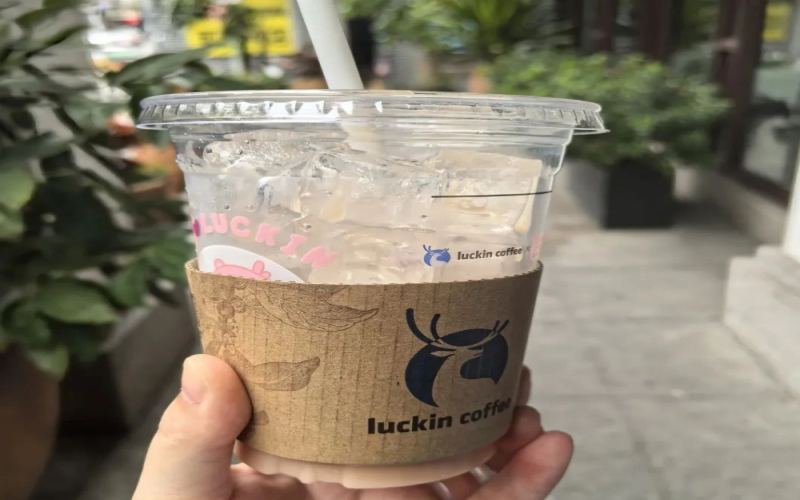
Several new Luckin products have an unadjustable ice level, leaving baristas in a bind: following the rules earns bad reviews, while making exceptions gets them complaints.
Luckin Coffee has recently launched several new products—including Grape Iced Americano, Light Coffee Lemon Tea, Big Watermelon Coconut Cold Brew, and Preserved Plum Sparkling Americano—which are clearly marked on the ordering page as not supporting no ice or less ice. However, many customers still habitually request reduced ice through notes. If store employees follow company standards, they often receive bad reviews because of the cup full of ice; if they secretly scoop out ice or add extra ingredients, it may trigger dissatisfaction among colleagues at other stores. Employees sigh: the rules say it's not supported, but customers don't buy it, and staff are caught in the middle. This article sorts out the ins and outs of this ice quantity controversy, and also mentions Front Street Coffee's observations on industry phenomena. [more…]
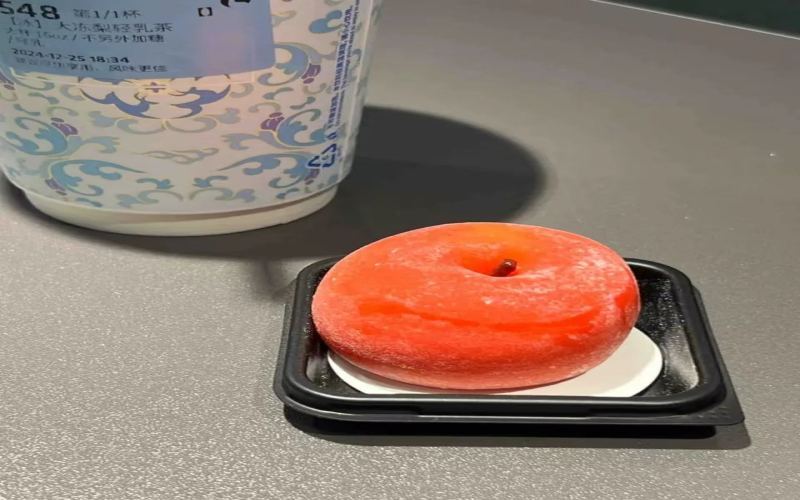
Christmas Eve Luckin Apple Daifuku Stockout Controversy: Customer Visits Eight Stores in Vain, Employee Wrongly Accused After Complaint
On Christmas Eve, Luckin Coffee's red apple daifuku became a holiday hit thanks to its cute shape, but it also unexpectedly triggered a conflict between stores and consumers. Third-party platforms continued to sell electronic vouchers, while many stores had long sold out and could not restock, causing a large number of customers to fail when redeeming their vouchers; some consumers ran to eight stores and still came away with nothing. Store staff became the ones facing the anger directly, and were even scolded by customers and complained about to the 12315 platform. In this storm caused by product supply and promotion being out of sync, who should be responsible? And how should consumers deal with the electronic vouchers in their hands? This article restores the full picture of the incident for you. [more…]
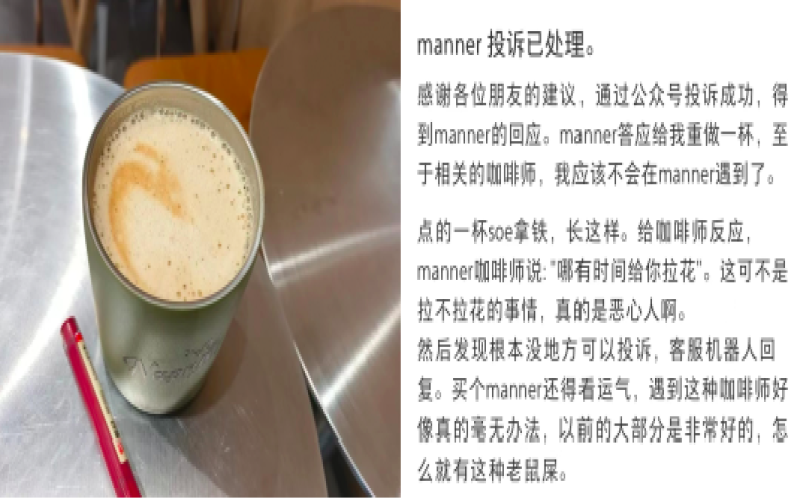
A latte without latte art cost a barista their job? Manner service controversy sparks industry reflection.
In today's world, where specialty coffee culture is increasingly widespread, latte art has become almost a standard feature of hot lattes. However, when a latte without latte art was served to a customer, the ensuing complaint actually led to a barista losing their job—an incident at a Manner store that quickly went viral on social media. Some spoke up for the barista, arguing that latte art is merely decorative and inconsequential; others pointed out that since the brand has clear regulations, an employee who responds perfunctorily to customer feedback is indeed hard to exonerate. Behind this lies not only the relationship between latte art and coffee quality, but also the deeper conflicts faced by chain coffee brands amid rapid expansion—between staffing shortages, service standards, and consumer rights. [more…]