







Search Results for: To the Wonder
Shanghai Auntie's "My Altay" Collaboration Merchandise Controversy: A Full Record of Store Stockouts, Wrong Cards, and Pickup Disputes
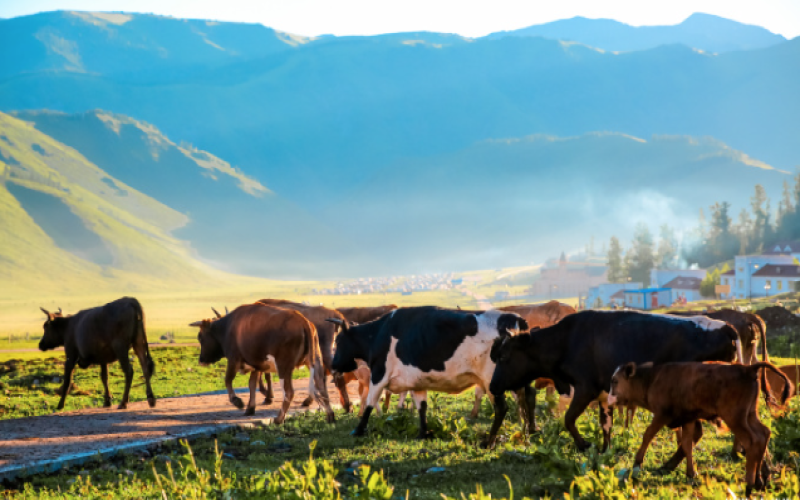
After the TV drama To the Wonder became a hit, the grassland scenery and herder life of Altay, Xinjiang, moved countless viewers, and this "Altay fever" has swept into the new-style tea beverage sector. Under the name of its "Free Matcha" series, Auntea Jenny launched a tie-in with To the Wonder, including long-scroll painting cup sleeves, takeout paper bags, collaborative lenticular card sets, and student film cards, attracting a large number of consumers to snap them up. However, problems emerged on the very first day of the campaign: some stores stocked only 10 pieces of merchandise, takeout orders included the wrong cards, and when customers arrived at stores to pick up their orders, staff took back the student cards in person... Consumers complained endlessly, and customer service apologized everywhere. As observers of the coffee and tea beverage industry, Front Street Coffee also noticed the supply chain and store execution problems behind this collaboration. This article will provide a complete review of the incident and present feedback from all sides. [more…]
What is the difference between Hacienda La Esmeralda's Red Label and Green Label Geisha? Flavor analysis of the Panama BOP champion bean
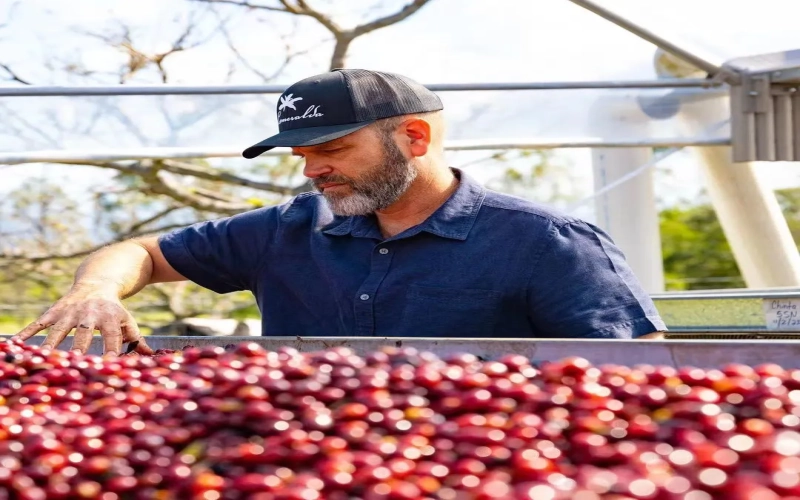
On Front Street Coffee's menu, Hacienda La Esmeralda's green-label and red-label Geisha have always drawn much attention. Many friends who are just getting into specialty coffee often wonder: both are Geisha from Hacienda La Esmeralda, so what exactly is the difference between red label and green label? In fact, Hacienda La Esmeralda's Geisha series goes far beyond these two labels—there are also blue label and auction lot, among other subdivided grades. These Chinese nicknames are not official names, but rather naming conventions based on each one's background characteristics to make them easier to remember. Hacienda La Esmeralda has four growing areas, three of which mainly cultivate Geisha: Jaramillo, Cañas Verdes, and El Velo, and each area is further divided into multiple small plots to achieve precise traceability. This article will guide you through a systematic breakdown of the differences among Hacienda La Esmeralda's various label-grade Geishas, and take a deep dive into the unique flavor of Panama BOP champion coffee beans. [more…]
Analyzing the Aroma Sources of Rose Valley Coffee Beans: How to Distinguish Natural Fermentation Flavors from Artificial Flavor Additives
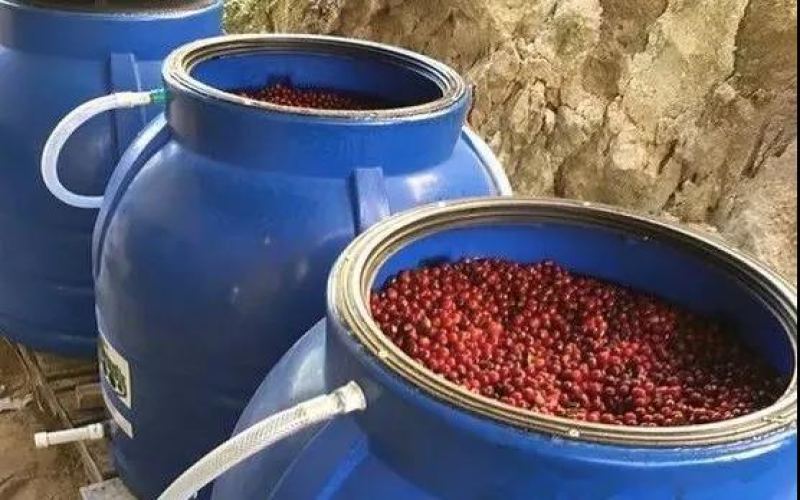
Some coffee beans release an intense floral and fruity aroma the moment you open the bag, making it hard not to wonder whether flavoring has been added. Front Street Coffee's Colombia Rose Valley is one that gets asked about often—does its rose aroma come from natural processing or artificial additives? This article starts with the principles of anaerobic fermentation, explains the specific process of double anaerobic enzyme fermentation, and takes a deep dive into the cultivation and processing details of Finca El Arbol in Colombia's Santander region. It also analyzes the characteristics of the Caturra variety, and finally answers the question of whether specialty processed coffee beans affect health, helping you build a basic framework for identifying flavored beans. [more…]

Why Do So Many Baristas Have Tattoos? Looking at Professional Belief and Individual Expression Through the Evolution of Starbucks Policy
In chain-brand stores or independent coffee shops, baristas with tattoos are becoming increasingly common. Some joke that "having a big tattooed arm is the first step to becoming a barista," while others wonder "why do all baristas have tattoos?" Behind this phenomenon lies both the evolution of industry culture and the loosening of restrictions on employees' individual expression by companies like Starbucks. Starting from discussions on social platforms, this article reviews the changes in Starbucks' tattoo policy, explores the relationship between tattoos and baristas' professional identity, passion, and professionalism, and reminds readers to view tattoo choices rationally, not judge people by their appearance, and ultimately evaluate whether a barista is qualified based on coffee quality rather than appearance. [more…]
What extraction signals are hidden in the shape of a pour-over coffee bed? Analyzing the connection between the causes of channeling and brewing techniques
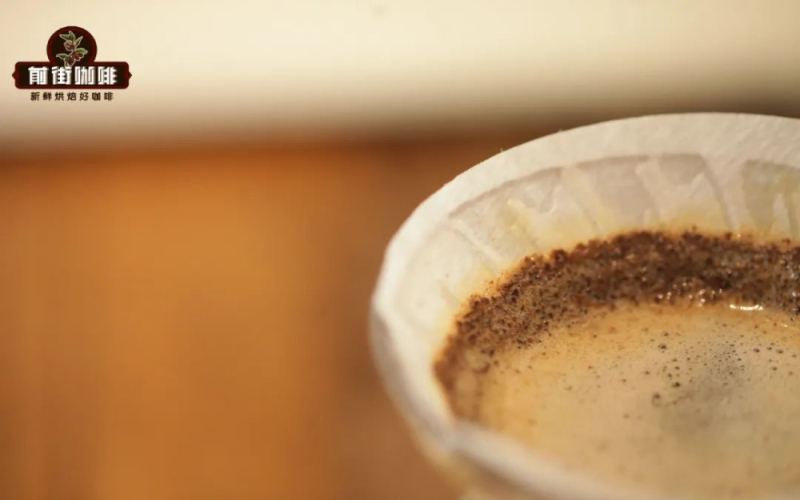
After every pour-over, observing the shape of the coffee bed in the dripper is a habit for many coffee enthusiasts. A complete and evenly thick wall of grounds often brings peace of mind, while any abnormality in the bed inevitably makes one wonder which step of the brewing process went wrong. In conversations with coffee lovers, Front Street Coffee has noticed a common coffee bed issue—faulting—which appears as a clear dividing line between the coffee bed and a lower wall of grounds. This pattern is usually related to two types of brewing habits: one is the "conservative" brewer who uses a small stream and pours cautiously throughout, and the other is the "laid-back" brewer who circles casually and tops up with water at the end. This article will combine the different manifestations of coffee bed faulting to analyze the extraction logic behind them, helping everyone understand the relationship between coffee bed shape and coffee flavor, so as to make more informed adjustments in daily brewing. [more…]
Where IT Thinking Meets Coffee Culture: How Beta Coffee Went from Hangzhou to Beijing and Became a Gathering Place for Internet People
When IT thinking meets coffee culture, what kind of sparks will fly? In 2009, Bai Ya and a group of internet professionals founded Beta Coffee in Hangzhou, positioning it as a public living room for IT people. In just over two months, it was named the "Best Gathering Place for E-commerce Professionals." In 2011, this trend swept through Beijing's Zhongguancun, and Beta Coffee's Beijing branch officially opened. Soon after, Garage Coffee, 3W Coffee, and others emerged one after another, thus beginning the "Internet Coffee Era." This is not just a place to drink coffee, but also a physical platform for IT people to communicate, share, and seek opportunities. This article takes you into the jianghu stories of Beta Coffee, to experience the unique atmosphere created by the collision of the internet and coffee. [more…]
Barista job requirements are getting more and more absurd: from latte art to playing the violin, and you also need to know traditional Chinese medicine?
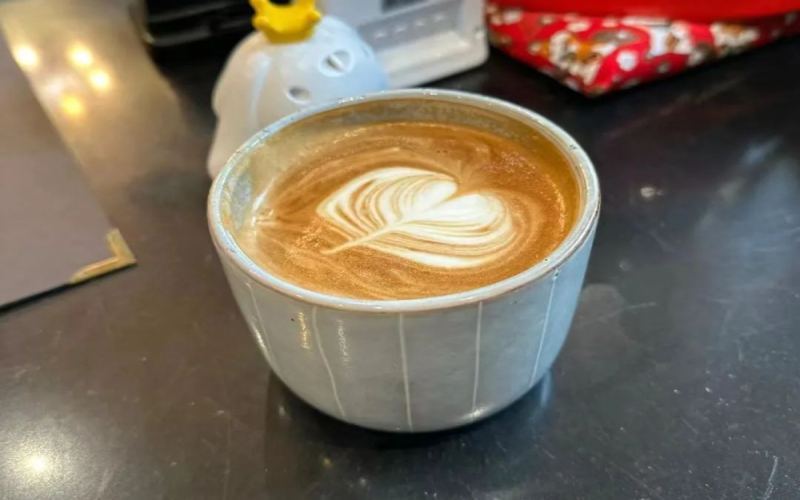
It's campus recruitment season once again, and the coffee industry's popularity has many graduates dreaming of joining—chasing poetry and distant lands while also securing their daily bread. However, when job seekers see recent barista recruitment ads, reality hits them hard. Some employers list a long string of responsibilities including production, cleaning, cashiering, and store operations, making one wonder if they're hiring a barista or an all-around store manager. Even more absurd, some cafés require baristas to know photography and photo editing, manage social media accounts, and even play a violin concerto in their spare time, or possess knowledge of traditional Chinese medicine to develop herbal Americanos. Coffee workers mock themselves: the ultimate barista is a hexagonal warrior who can do everything except make coffee. This article takes you through these astonishing recruitment requirements and the real daily work of baristas. [more…]
From the Bitter Notes of Dark Roasts to the Fruity Acidity of Light Roasts: The Evolutionary History of Coffee Flavor Behind Geisha and Mandheling
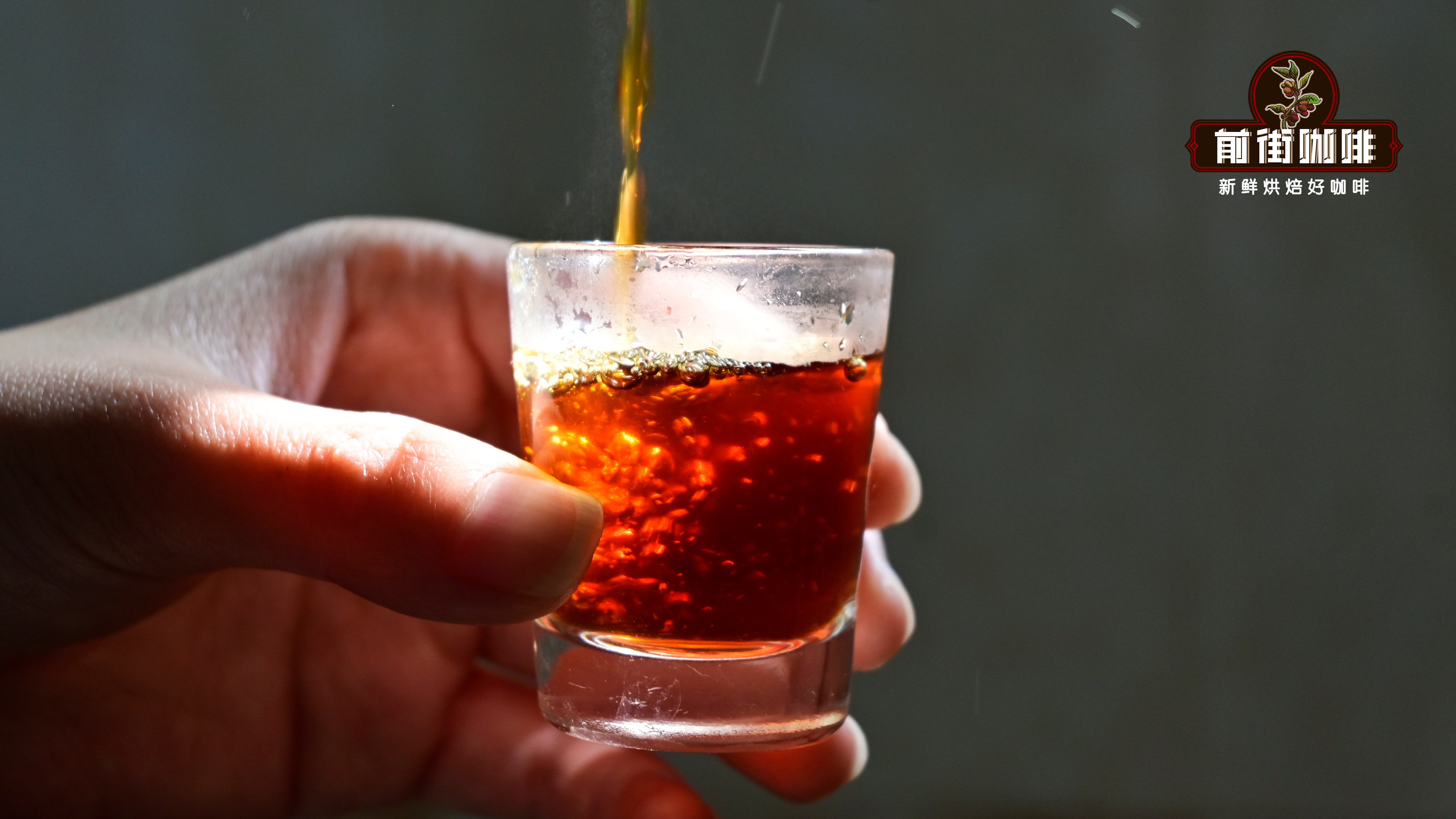
These days, when you walk into a hand-brew coffee shop with a good reputation and order a single-origin coffee on a whim, chances are you'll get something with fruity acidity. Many people can't help but wonder: isn't coffee supposed to be bitter? This shift from bitter to sour didn't happen overnight—it was driven by a combination of factors including growing origins, roasting philosophy, brewing methods, and evolving consumer taste preferences. This article will trace the evolution of coffee roasting from dark to light, explore how classic beans like Blue Mountain, Geisha, and Mandheling perform at different roast levels, and answer an intriguing question: what exactly do a light-roasted Blue Mountain and a dark-roasted Geisha taste like? [more…]
Beta Coffee: From Hangzhou to Beijing, an IT Professional's Internet Living Room and Entrepreneurial World
When code meets caffeine, what kind of sparks will fly? Beta Coffee started in Hangzhou, founded by IT entrepreneur Bai Ya and his partners, and quickly became a public living room for the internet circle. This trend then swept through Beijing's Zhongguancun, with Garage Coffee, 3W Coffee, and others springing up, ushering in the "internet coffee era." These places are not just for drinking coffee, but also a arena for IT people to network, recruit, and seek investment. This article will take you through the founding journey of Beta Coffee, its unique rules, and those warm yet persistent entrepreneurial stories, to feel the internet spirit that connects infinite possibilities behind a cup of coffee. If you also enjoy exploring coffee culture, please follow Front Street Coffee, where we continue to bring you heartwarming coffee stories. [more…]
How Does Mandheling SOE Differ from Espresso? Flavor Performance and Buying Guide for Single-Origin Espresso
Many friends who are new to coffee often confuse Mandheling with espresso, thinking that since both are bitter, they should taste similar, and some even wonder whether Mandheling can be made into an SOE. In fact, Mandheling is a single-origin coffee bean, while espresso is a brewing method—the two overlap but are also distinct. This article will start with the basic characteristics of Mandheling coffee and the principles of making espresso, answer whether single-origin beans can be used for espresso, and, drawing on Front Street Coffee's best-selling products, put together an espresso bean shopping list for enthusiasts who prefer Mandheling flavors. [more…]
The Necessity of Daily Morning Testing in Coffee Shops: Flavor Verification Procedures for Espresso, Latte, and Cold Brew
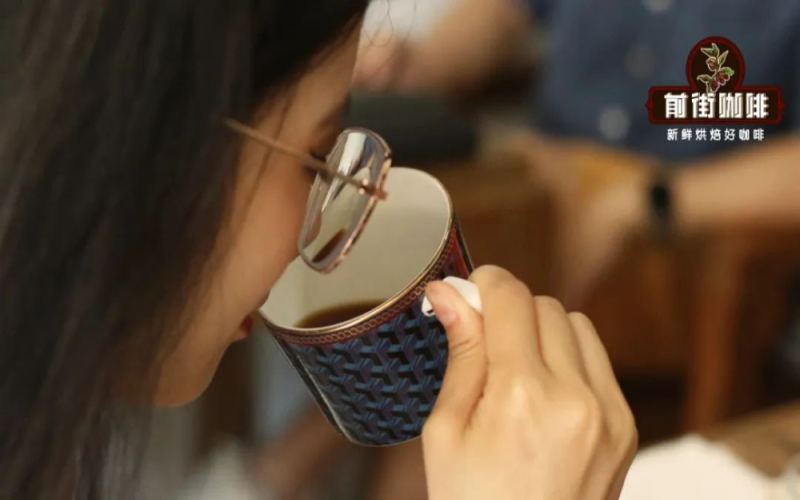
Many coffee shops do an internal tasting round before officially opening their doors to customers, commonly known as "morning calibration." The core purpose of this step is to confirm whether the coffee being served that day still tastes consistent, and if any abnormalities or negative changes in flavor are detected, adjustments must be made promptly. Some people wonder: if the equipment, water quality, parameters, and beans haven't changed, how could the taste change? In fact, espresso is particularly susceptible to the effects of coffee bean degassing and air humidity, so morning calibration is not superfluous. In addition to espresso, lattes and cold brew also need to be included in the testing. This article will explain one by one the reasons for morning calibration in coffee shops, what gets tested, and its significance at the food safety level. [more…]

The Complete Guide to Espresso Cleaning Cloths: Five Cloths, Each with Its Own Job, Plus Milk Cloth Usage and Stain Removal Tips
In the process of making espresso, besides auxiliary tools such as WDT needles, distribution tools, and latte art needles, cleaning cloths are also an indispensable logistical role. Many coffee enthusiasts wonder: why does making coffee require as many as five cleaning cloths? Is the barista some kind of god of rags? In fact, each cloth has a different task, and the requirements for hygiene standards and dryness/wetness also vary, so one cloth cannot serve all purposes. Front Street will break down in detail the responsibilities of each of the five cloths in this article—from wiping the portafilter, wiping cups, milk cloth, wiping the espresso machine, to the bar cloth—and share the key points for using the milk cloth damp, as well as how to distinguish fabrics by color and style, to help everyone understand the cleaning logic behind baristas. [more…]
Can Americano Help with Fat Loss? The Differences Between Americano and Espresso and the Right Way to Add Sugar and Milk
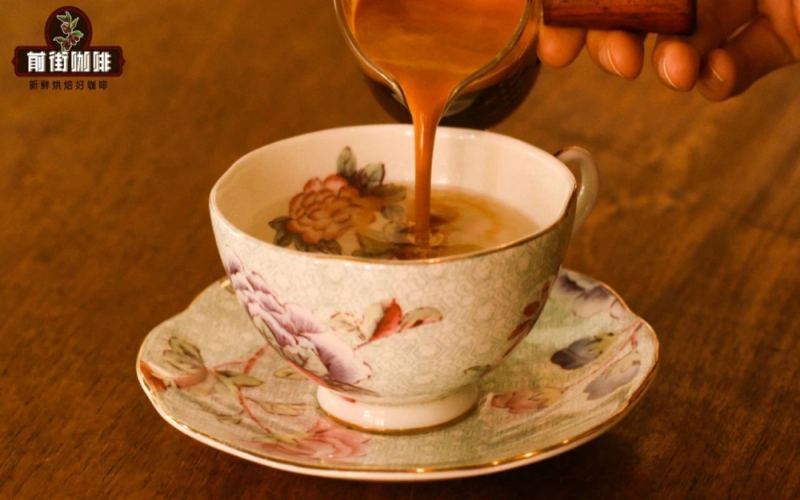
Americano is one of the most common black coffees, and it can be made either with a drip coffee machine or by adding a large amount of hot water to an espresso. Its flavor is on the lighter side, yet because of the longer extraction time it contains more caffeine. Many people wonder whether Americano helps with weight loss, and others want to know whether they can add sugar and milk to it, and how to pair it so it tastes smooth. This article will sort out the basic characteristics of Americano, how it differs from espresso in ratio and brewing method, analyze its role in fat breakdown and promoting gastrointestinal motility, and give Front Street Coffee's recommended ratios for adding sugar and milk, helping coffee lovers gain a more comprehensive understanding of this seemingly simple cup of coffee. [more…]
After an espresso extraction is interrupted, can it be resumed? Testing the impact of segmented extraction on flavor and flow rate
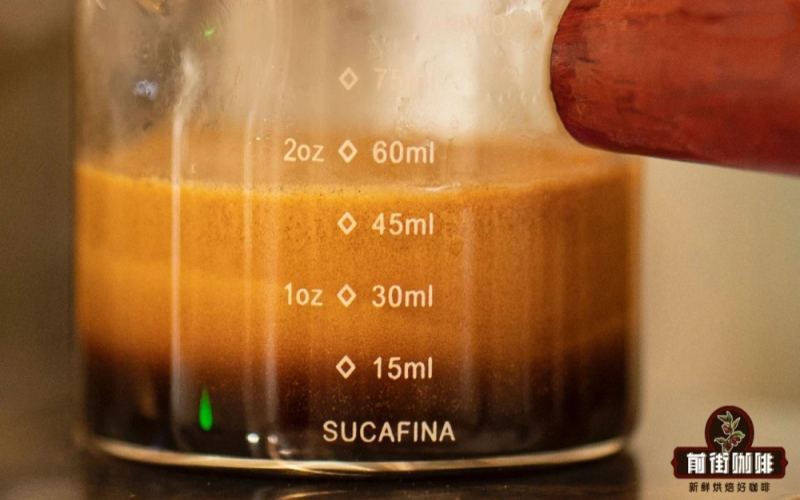
When making espresso, extraction occasionally ends prematurely due to an accidental touch or oversight. Some people wonder: since it wasn't extracted enough, can we just press the button again to continue extracting, like with pour-over? Front Street used the Warm Sun blend to conduct a comparative experiment, testing three scenarios: normal extraction, extraction resumed after being interrupted midway, and extraction resumed after being interrupted near the end. The results showed that after restarting, the flow rate was extremely fast, the color was pale, and the flavor was noticeably thin; even with further extraction, it was difficult to fully extract the remaining substances. This article will start from the principle of pressurized extraction in espresso machines to explain why the same puck is not suitable for secondary extraction, and what the more reliable approach is when an accidental interruption occurs. [more…]
HEYTEA's Yak Milk Qia'an Mo was reported to have had its recipe adjusted the day after launch, with consumers noting a clear difference in flavor before and after.
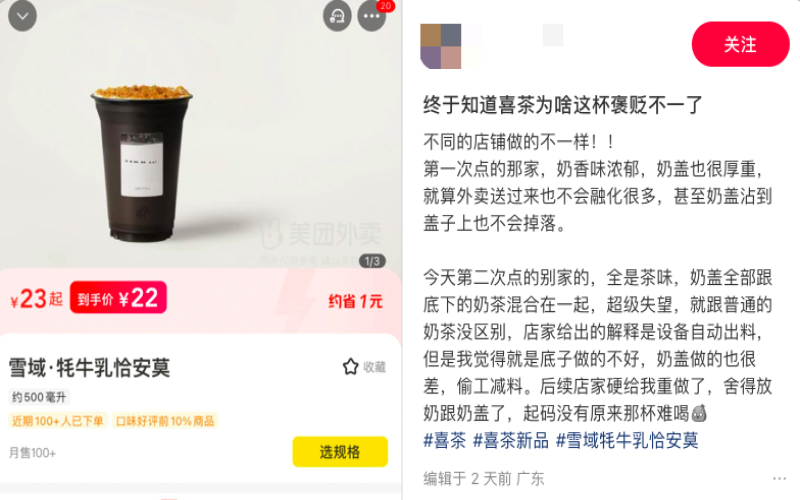
Heytea's limited-time new product last month, Yak Milk Chaanmoo, quickly became popular thanks to the unique flavor of Tibetan yak milk, but was in short supply due to scarce ingredients. However, recently many repeat customers have found that the drink tastes very different from when they first tried it—the milky aroma has become weaker and the tea flavor more prominent. When verifying with store employees, they unexpectedly got the answer that "the recipe was changed on the morning of the second day after launch." Employees also revealed that further fine-tuning was done afterward. This silent recipe change has sparked consumer dissatisfaction, as they believe the actual taste does not match the promotional claims and that it may cause store employees to bear the misunderstanding of "cutting corners." [more…]
Where Does the Acidity in Americano Black Coffee Come From? A Full Guide to Non-Acidic Espresso Blend Beans and Brand Selection
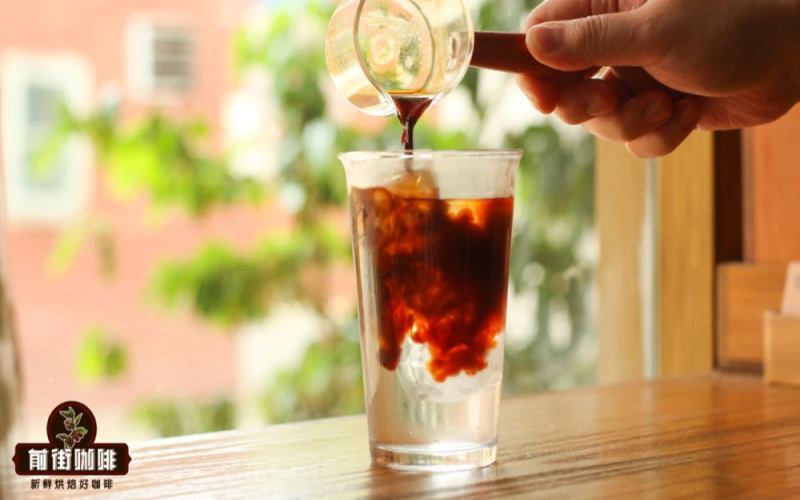
Americano has become an indispensable daily drink for many people, especially in hot seasons when an iced Americano is particularly refreshing. However, as a crop, coffee inevitably varies in quality. Many people wonder when they taste an Americano with sourness: is this normal? In fact, coffee beans naturally contain rich acidity, which gradually decreases with darker roasting. Today, coffee flavor trends are shifting from traditional bitter-burnt notes to floral and fruity acidity, and SOE Americanos are becoming increasingly popular. This article will explain the sources of sourness and the principles of extraction, and recommend several espresso blend coffee beans with non-sour, nutty-chocolate-cookie flavors, including popular Front Street Coffee products, to help coffee lovers find their ideal daily staple. [more…]
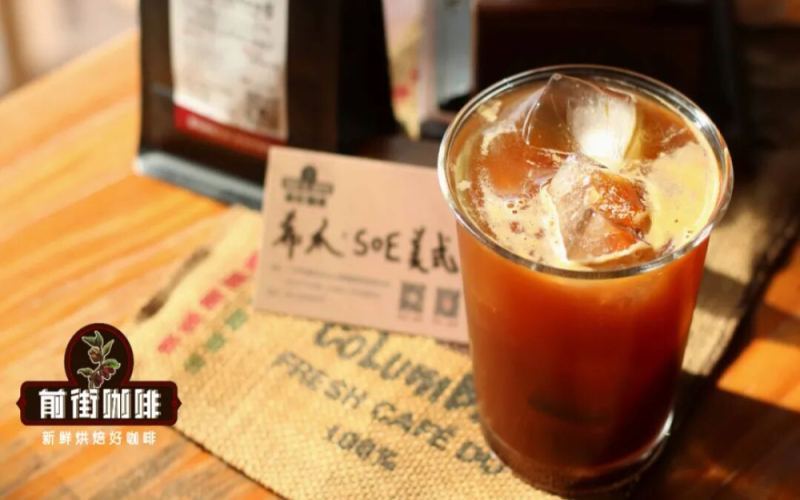
What Exactly Is the Difference Between Single-Origin Coffee and SOE? From Definition and Price to Acidity, Explained in One Go
When ordering an Americano or milk coffee at a café, you often face a choice: the default espresso blend, or the pricier SOE? Many people quietly wonder—why does SOE cost more, and how does it relate to single-origin coffee? This article will sort out the concept and origins of SOE from the ground up, explain its essential differences from blended coffee, clarify why its price tends to be higher, and explore practical questions such as whether SOE is sour and whether its output is stable. It will also draw on Front Street Coffee's bean list and brewing experience to explain why Front Street does not easily launch SOE, helping you more clearly understand the value and limitations of this type of single-origin espresso. [more…]
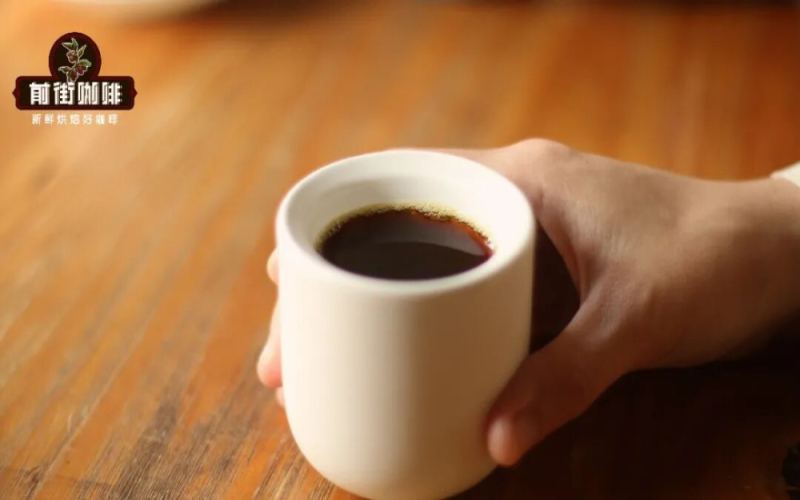
A Practical Guide to Choosing Coffee Cups: How Material, Capacity, Thickness, and Shape Affect the Taste of Espresso, Latte, Flat White, and Dirty
Faced with the dazzling array of coffee cups on the market, many people wonder: can a cup really change the taste of coffee? And what cup shapes should different drinks be paired with? Starting from the coffee cups commonly used at Front Street, this article sorts out the effects of four dimensions—material, size, thickness, and cup shape—on coffee flavor, and gives specific cup selection suggestions for common coffees such as hot latte, cappuccino, flat white, Dirty, and pour-over. Whether you are a beginner enthusiast or a barista making drinks every day, you can find practical purchasing ideas here, so that every cup of coffee can show its best side. [more…]
What Can Coffee Grounds Actually Do? Are They Reliable for Gardening, Face Masks, and Bathing? A Clear Guide to the Correct Uses
Coffee grounds have transformed from waste into an internet-famous wonder, with social media platforms overflowing with clever uses for them—growing flowers, reducing facial puffiness, exfoliating in the shower, even losing weight. Yet those who try these tricks often end up with disasters: dead plants, swollen faces, clogged drains. Which of these popular uses actually hold up, and which are traps? This article starts with Starbucks' environmental initiative of giving away free coffee grounds, then examines one by one the scientific basis behind claims like using coffee grounds to grow flowers, reduce dark circles under the eyes, ease facial swelling, and aid weight loss in the shower—telling you what coffee grounds are truly good for and what details to watch out for when using them. If you've also accumulated a pile of coffee grounds and don't know what to do with them, or are thinking of jumping on the bandwagon, you might want to finish reading this first before you start. [more…]
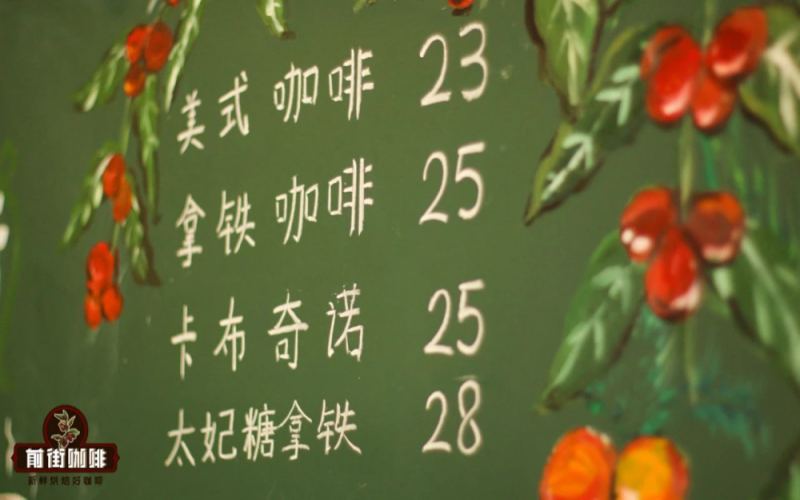
How to Determine the Espresso-to-Water Ratio? Brewing Key Points from 30ml Espresso to Americano Black Coffee
Many people walk into a coffee shop for the first time and see Americano listed under the espresso section on the menu, and can't help but wonder: what exactly is the relationship between espresso and Americano? In fact, there are two ways to make an Americano: one is brewed with a traditional drip machine, and the other is espresso diluted with water—the latter is the mainstream in coffee shops today. So how much water should be added to espresso to make it smooth without being bitter? Front Street's hot Americano is made with a 1:4 ratio of coffee liquid to water, while iced Americano, counting the ice, is 1:8. In daily practice, you can flexibly adjust between 1:4 and 1:8. The extraction state of the espresso itself and the flavor profile of the espresso beans used will both directly affect the final result of the Americano. This article will clarify all these questions at once, from extraction parameters and blend bean selection to the taste differences between Americano and espresso. [more…]