







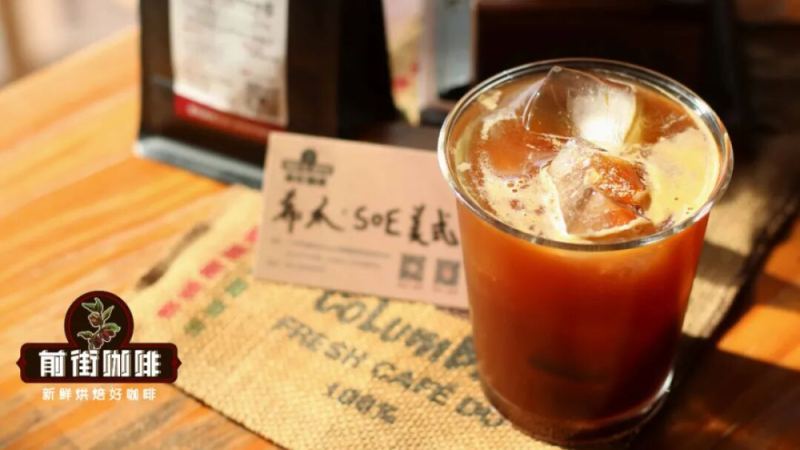
What makes SOE coffee different from a single-origin pour-over?
SOE coffee stands for single-origin espresso: espresso pulled from beans of one origin rather than a blend of two or more. Both SOE and house blends sit inside the espresso system, but the SOE highlights the flavor of one place. Cafés charge more for it because the green beans cost more and dialing in a stable shot from a single lot is harder.
Before acidic coffee became popular, espresso was usually a blend roasted darker for stable extraction, easy crema and a mellow body. Specialty coffee changed that in the 1980s. At the 2007 World Barista Championship, James Hoffmann used a single-origin bean for espresso. Front Street Coffee's bean list and output experience explain why it rarely launches an SOE.
When ordering an Americano or a milk coffee at a café, you're often faced with a choice: the default espresso blend, or an SOE that costs extra. Many people wonder to themselves, why is SOE more expensive, and what is its relationship to single-origin coffee? This article will sort out the origin of the SOE concept, its essential differences from blended coffee, explain why its price is higher, and explore practical issues such as whether SOE is acidic and whether its output is stable. The article will also combine Front Street Coffee's bean list and output experience to explain why Front Street does not easily launch SOE, helping you more clearly understand the value and limitations of this type of single-origin espresso.
Walking into a café and preparing to order an Americano or a milk coffee, you often encounter two choices: one is the shop's default espresso blend beans, and the other is an SOE that requires an extra charge. At this point many people wonder, why is this "SOE" more expensive than a blend? What exactly makes it expensive?
What exactly is SOE coffee?
First, let's be clear: both SOE and blends are concepts within the espresso coffee system. SOE (single origin espresso) refers to espresso extracted from coffee beans of a single origin, contrasting with House Blend Espresso.
In an era before "acidic coffee" became popular, the beans cafés used to make espresso were basically blends from two or more origins. At that time, merchants did not deliberately emphasize where the beans came from, nor did they pay much attention to recipe ratios. According to the mainstream taste of the time, coffee beans were often roasted darker, which ensured stable extraction and allowed espresso to easily present a beautiful crema and a rich, mellow mouthfeel.
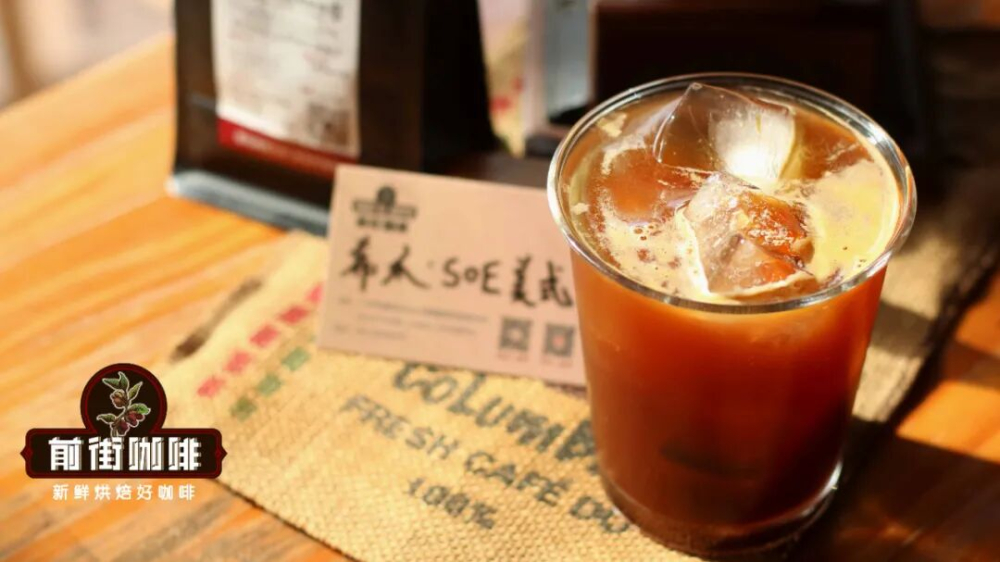
In the 1980s, the concept of "specialty coffee" began to emerge, and high-quality single-origin beans emphasizing origin flavors rapidly rose, becoming stars on the coffee stage and attracting the attention of roasters and baristas, who tried to draw out more refined flavors from them.
According to Front Street, single-origin coffee that highlights origin flavor was initially extracted only through atmospheric pressure methods such as pour-over, siphon, and French press. It was not until the 2007 World Barista Championship that competitor James Hoffmann made espresso from a single-origin coffee bean and won the championship with it. After that, SOE gradually became popular along with international competitions and the wave of specialty coffee.
Today, not only are more and more coffee shops putting SOE on their menus, but the presence of "SOE" can also be seen on major shopping platforms. This type of coffee bean usually comes with detailed flavor descriptions such as floral, fruity, tea-like, and fermented wine notes, along with detailed origin information. It can be seen that SOE has become one of the indispensable products in the coffee market, and with the promotional efforts of major chain brands, single-origin espresso has become even more deeply rooted in people's minds.
Why does switching to SOE cost extra? What makes it expensive?
Regarding the definition of SOE, there is no controversy that E = Espresso, but the interpretation of Single Origin is somewhat vague. Theoretically, coffee beans from a certain country, region, cooperative, estate, or farm, harvested in the same batch, all belong to single-origin coffee. For example, on the blackboard to the left of Front Street's bar there are dozens of single-origin coffee beans from different origins, and they can all serve as SOE coffee beans.
But unlike blends, in order to make SOE different from traditional "bitter coffee," merchants will prioritize selecting single-origin beans with higher recognition and more prominent flavors, especially coffee roasted at light to medium levels, because only in this way can personalized flavors be displayed through espresso, such as the citrus acidity of Front Street Yirgacheffe, the berry notes of Front Street Huakui, the sweetness of Front Street honey-processed Geisha, and the tomato aroma of Front Street Kenya...
In short, the more recognizable the coffee, the easier it is for people to remember the characteristics of this SOE. From a cost perspective, higher-quality single-origin beans are more expensive than ordinary blends, so an extra charge is naturally required.
Why doesn't Front Street offer SOE coffee?
Many friends think SOE is nothing more than using single-origin beans directly to make espresso. Front Street has so many single-origin beans, so why doesn't it provide SOE coffee?
In fact, for baristas, ensuring that SOE tastes good while also maintaining stable output is truly not an easy task. Unlike pour-over, espresso is a pressure extraction, which more easily magnifies the characteristics of coffee beans exponentially. SOE coffee is mostly light-roasted, and the beans are harder in texture, requiring a finer grind size and a longer extraction time, so a slight mistake can lead to over-extraction or under-extraction, making the coffee either bitter or sharply acidic.
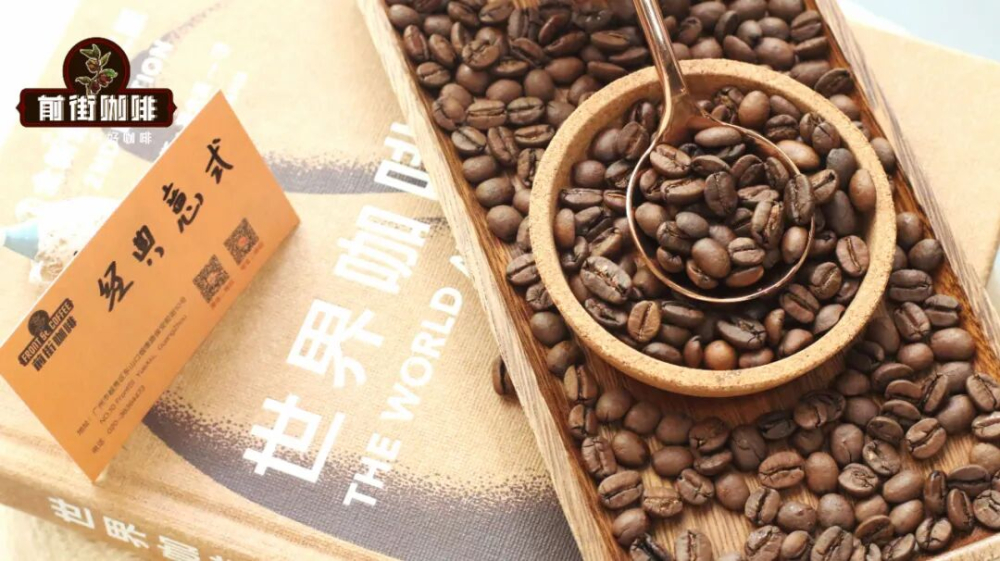
Front Street has encountered this situation: at a coffee shop, I had a very good Sidamo SOE flat white, and after some time I went again and ordered the same coffee, but it was not as good as before. After asking, I learned that the beans had not been changed to a different batch, nor had the roasting curve been changed, so the main reason lay in the extraction of the espresso, which caused the final SOE flat white to change.
In Front Street's view, consistency of output is very important. This is reflected in the parameter adjustments before opening the store every day, as well as stable extraction during the day. If all the single-origin coffees on Front Street's bean list were applied to SOE, not to mention whether the equipment could keep up, just finding the corresponding parameters for espresso (grind size, coffee-to-liquid ratio) would already be very cumbersome, and in the end you would also have to customize SOE Americano, SOE Latte, SOE Dirty... for different flavor types of coffee. Just thinking about it gives you a headache.
The above content is compiled by CoffeeHunters, a coffee news website.


