








Which Espresso Characteristics Make a Morning Test Necessary?
A morning test is a tasting round that coffee shops run before opening, checking whether the espresso, latte, and cold brew served that day still taste stable. If the aroma or mouthfeel has shifted from the day before, staff adjust before the first customer arrives. Pour-over and similar methods with fewer moving variables often hold steady without a daily check.
Espresso behaves differently because roasted beans keep releasing carbon dioxide for up to two months, so a full night of degassing can change how the shot extracts even when the machine, water, parameters, and beans are unchanged. Air humidity adds another variable, which is why the morning test also covers milk drinks and cold brew and carries a food safety role.
Many coffee shops conduct an internal tasting session before officially opening their doors to customers, commonly known as a "morning test." The core purpose of this step is to confirm whether the coffee being served that day still has a stable flavor. Once any abnormality or negative change in flavor is detected, timely adjustments must be made. Some people wonder: if the equipment, water, parameters, and beans haven't changed, how could the flavor change? In fact, espresso is particularly susceptible to the effects of coffee bean degassing and air humidity, so the morning test is not redundant. Besides espresso, lattes and cold brew also need to participate in the test. This article will explain one by one the reasons for a coffee shop's morning test, what gets tested, and its significance at the food safety level.
Before opening for business each day, coffee shops typically conduct a round of "morning testing." Literally speaking, the core of this work is to check whether the coffee flavors prepared for sale that day are normal; once a deviation from the previous day's taste is detected, such as an unpleasant aroma or mouthfeel, corrections must be made immediately.
Only after the coffee flavor is confirmed to be fine will the store officially enter operating mode. However, many friends wonder: with the same machine, same water, same parameters, and same beans, why would the coffee taste different? Is this kind of "morning test" really necessary for a coffee shop?
Why do coffee shops conduct morning tests?
For pour-over and similar coffees with relatively controllable variables, it may not be necessary to confirm flavor through morning testing every day. As long as the brewing parameters remain consistent, the final product can usually maintain a certain degree of stability. But espresso is different. Although all parameters (not extraction data here) are the same as yesterday's, for espresso extraction, parameters cannot guarantee consistent taste. There are two main reasons, and the first is the impact of coffee bean degassing on extraction.

As everyone knows, after coffee beans are roasted, the abundant carbon dioxide sends them into a degassing period lasting up to two months. During this time, the coffee beans continuously release gas at every moment. After a full night of degassing, extraction is likely to show variables. For example, if originally 20g of coffee grounds extracted 40ml of coffee liquid in 30 seconds, after degassing overnight, it might finish in 25 seconds the next day. Therefore, the extraction parameters used yesterday cannot guarantee that equally good coffee can still be extracted at the current moment the next day.
However, the first variable has a relatively minor impact. More critical is the second factor—air humidity. Espresso extraction is easily affected by climate and environment. Air humidity changes every day, especially when the weather is cool or even rainy, the changes are most noticeable. The air is full of water molecules, the environment is humid with low air pressure, which makes coffee grounds prone to clumping, and the pressure of the espresso machine during extraction is also somewhat restricted, making the extraction process full of instability, and the coffee flavor naturally difficult to guarantee as good as yesterday's.
Besides espresso needing flavor calibration, there are other coffees that must also participate in testing.
Besides espresso, what else do coffee shops need to test?
Whether a shot of espresso tastes good does not determine that it will also perform well when used in other espresso-based drinks, because different coffees have different requirements for espresso characteristics. For example, when making an Americano, people tend to prefer an espresso with a light body and distinct flavor layers; while when making a latte, an espresso with full flavor and a rich, smooth body is needed.
The two have completely different requirements for espresso. Therefore, stores often decide the flavor direction of their espresso based on whichever coffee has the higher purchase rate among customers. As a widely popular drink, the latte naturally takes on this important role. So we can see that "latte" is the second espresso-based coffee, besides espresso itself, that needs to be tested in the morning test.
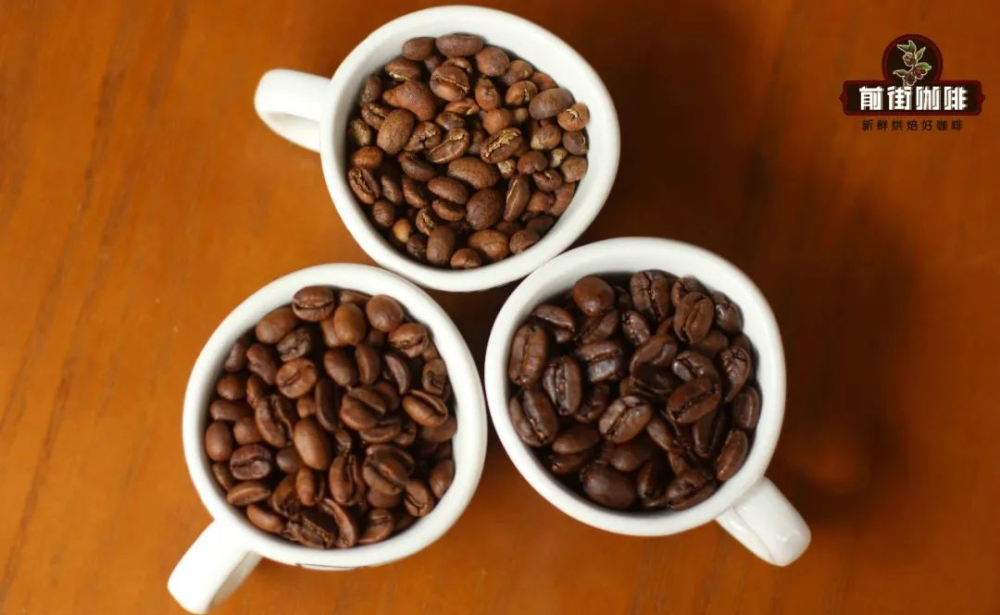
Besides espresso-based coffees, there are also single-origin coffees that need testing, namely "cold brew coffee." When first extracted, cold brew needs to ferment in the refrigerator for a full night. What needs to be done the next day is to confirm whether its flavor and concentration after fermentation are normal, and how much ice needs to be added to dilute it for the best result.
Secondly, cold brew coffee can be stored in a refrigerated environment for about 5 days, but refrigeration is not freezing after all, and spoilage can occur. Therefore, during this period, we need to test it every morning to ensure its flavor and quality do not change.
In summary, the morning test at a coffee shop is very necessary. If you're at home, of course you can do whatever makes you happy; but for a coffee shop, the morning test is not only being responsible for customers' taste, but also a guarantee of food safety.
Front Street Coffee
No. 10, Bao'an Qian Street, Yandun Road, Dongshankou, Yuexiu District, Guangzhou City, Guangdong Province
Read 73
The above content is compiled by CoffeeHunters, a coffee news website.


