








How do cups change the taste of espresso coffee beans?
Cup material, capacity, wall thickness, and shape each change how coffee tastes. Ceramic holds heat longer, so hot coffee keeps its flavor instead of turning flat; glass shows the layers when espresso is poured over milk or ice but adds little to taste. Smaller cups concentrate the drink, larger cups dilute it, and a 60 ml ceramic cup suits a double espresso.
Pairing follows drink strength. Thick-walled, narrow cups keep small milk drinks warm, while wider, thinner rims spread a latte or flat white across the palate. For a dirty latte, a glass reveals the milk and espresso layers, but a ceramic cup keeps the drink hot longer, which matters more for flavor than the visual effect does.
Faced with the dazzling array of coffee cups on the market, many people wonder: can a cup really change the taste of coffee? What cup types should different drinks be paired with? Starting from the coffee cups commonly used at Front Street, this article sorts out the influence of four dimensions—material, size, thickness, and cup shape—on coffee taste, and gives specific cup selection suggestions for common coffees such as hot lattes, cappuccinos, flat whites, Dirty, and pour-over. Whether you are a beginner enthusiast or a barista producing drinks every day, you can find practical purchasing ideas here, so that every cup of coffee can show its best side.

Most people who make coffee have an inexplicable fondness for cups. After all, beautiful shapes keep emerging, but storage space at home is ultimately limited. So many people begin to wonder: will differences in cups affect the flavor of coffee? What type should be matched when making different drinks?
Below, we will use the coffee cups that often appear in Front Street articles as examples to help everyone sort out the purchasing direction. (Front Street has always felt that a coffee cup is just an everyday vessel, and price does not determine whether it is good or bad. As long as it allows the coffee in the cup to maximize strengths and avoid weaknesses, it is a satisfying cup.)
Types of Coffee Cups
1. Material
At present, the most widely used coffee cup materials are concentrated in two categories: ceramic and glass (metal and wood are relatively niche).
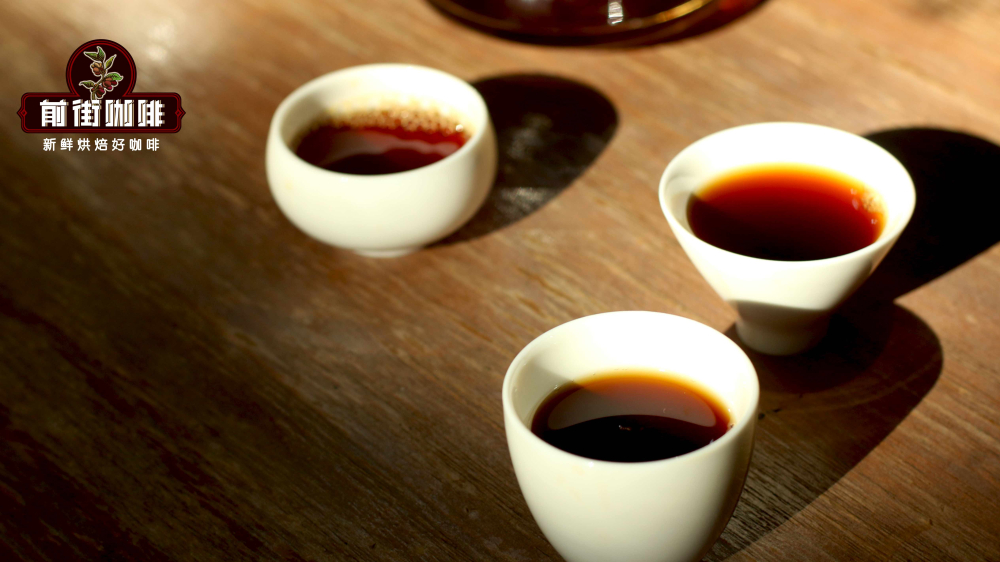
In specialty coffee shops, ceramic cups appear most frequently. Their core advantage is heat retention—once hot coffee cools down, the flavor usually suffers greatly, while ceramic material can slow the rate of cooling.
The role of glass cups is more reflected in visuals rather than taste. When espresso is poured over milk or ice water, the layered changes as the coffee liquid penetrates downward are clearly visible, and it looks very soothing.
2. Size
Front Street's coffee cups are roughly divided into three specifications, and these three specifications can also roughly correspond to the strength of a cup of coffee: the smaller the cup volume, the stronger the coffee; the larger the cup volume, the lower the concentration.
Front Street's small cup is a small white ceramic cup with a capacity of about 60 ml, usually used to hold a double espresso. For example, using 20 g of Front Street Dark Cocoa, the espresso coffee beans recommended by many baristas—Front Street Dark Cocoa Blend coffee grounds—extract 40 g of coffee liquid within 28 seconds. The espresso exudes a sweet aroma interwoven with cocoa cookies, butter, and caramel, and is mellow on the palate. The golden crema just covers this small cup, making the visual effect very pleasing. The small ceramic cup performs best in heat retention when it is just filled with espresso, allowing the tasting time to last longer.
Front Street's medium cup has a capacity between 180 and 250 ml. The ceramic version is suitable for single servings of hot pour-over, hot Americano, cappuccino, flat white, etc.; the glass version is mostly used for iced pour-over and Dirty, both for the purpose of highlighting the coffee's flavor and intensity.
Large cups are mainly divided into two types: one is a 300 ml standard ceramic cup, used to hold a hot latte made with 40 ml espresso plus 240 ml fresh milk; the other is a 350 ml glass cup, used for iced Americano. In terms of taste, both belong to drinks with relatively low coffee concentration.
3. Thickness
The thickness of the cup wall affects both heat retention and mouthfeel. The thicker the cup wall, the better the heat retention, especially for the largest-volume latte, which can enjoy a longer tasting window. In addition, when a milk coffee needs to be filled to the brim, a thick cup wall also makes it easier to support the milk foam and prevent overflow.
A thin-rimmed cup shortens the distance between the coffee and the lips, making the mouthfeel more delicate on entry, and the coffee liquid also flows into the mouth more smoothly, making the drinking process more comfortable.
4. Cup Shape
Like wine glasses, cup shape has a noticeable impact on the sensory experience of coffee. To verify the differences, Front Street once conducted a comparative experiment, selecting three common cup shapes—wide-mouthed, straight-sided, and tapered—to taste the same pot of coffee.
The conclusion is: wide-mouthed cups are better at capturing the bright fruity notes in coffee; straight-sided cups can present body and caramel aroma well; tapered cups help gather aroma and highlight the full sweetness of the coffee beans.
What Cups Correspond to Different Coffees
1. Hot Milk Coffee: Hot Latte, Flat White, Cappuccino
A hot latte is the largest-volume milk coffee. What you drink is balance, as well as the texture after the espresso crema and milk foam merge, so it is best to choose a thick-walled, wide-mouthed ceramic cup or mug with a capacity of about 300 ml.
Cappuccino pursues a rich coffee taste and thick milk foam, emphasizing being filled to the brim. When making it, it is suitable to pair with a thick-walled straight-sided ceramic cup, with the capacity controlled at 200–250 ml, so the flavor will be more concentrated.
A flat white needs to reflect the characteristics of thin milk foam, strong coffee taste, and smooth mouthfeel. It is recommended to use a thin-walled coffee cup with a capacity of 200–250 ml, and the rim is best slightly flared outward, so that the milk foam flows into the mouth along the rim, making it taste more delicate.

2. Iced Milk Coffee: Dirty
It is not hard to see that the vast majority of iced coffees sold on the market are served in glass cups, in order to let customers visually see the layers of the coffee. Therefore, there is no need to be too particular about the cup shape; it depends more on capacity. For example, Front Street uses 350 ml glass cups for iced Americano and iced latte. When drinking, simply stir with a straw, and it has no effect on the taste.
It is worth noting that Dirty needs the espresso to float on the upper layer, and then the coffee and milk flow into the mouth simultaneously. Therefore, a wide-mouthed or straight-sided glass cup should be chosen, and the capacity is best controlled at 150–200 ml, a small-to-medium size.
3. Hot Black Coffee: Pour-over, Hot Americano
Generally speaking, iced coffee is for refreshment, while hot coffee pursues the flavor changes across temperature ranges from hot to cool. To fully leverage this advantage, more consideration must be given to cup shape.
If you like African medium-light roast coffees such as Front Street Fruit Ding Ding and Front Street Little Tomato, give priority to wide-mouthed cups; friends who often drink medium-dark roast beans such as Front Street PWN Golden Mandheling and Front Street Jamaica Blue Mountain can pair them with straight-rimmed medium-sized coffee cups;
If you especially prefer coffees with prominent sweetness, such as Front Street Strawberry Candy and Front Street Xizhua, you might as well try tasting them with a tapered cup.
The above content is compiled by CoffeeHunters, a coffee news website.


