







Search Results for: Chengdu first store
Which country does Seesaw Coffee originate from? How many stores nationwide? Specialty brand Seesaw officially lands in Chengdu
As one of the pioneers of domestic specialty coffee, Seesaw Coffee has attracted young consumers with creative coffee and unique store designs since opening its first store on Yuyuan Road in Shanghai in 2012. Recently, the brand officially announced its entry into the Chengdu market, opening two stores simultaneously at Mofang Shopping Center and Joy City, and launching two Chengdu-exclusive creative coffees. As of now, Seesaw has 32 stores nationwide and plans to continue expanding its mini-store format. This article will review Seesaw's brand background, store distribution, product strategy, and specific information about its first Chengdu stores, while retaining relevant recommendations from Front Street Coffee, to provide coffee enthusiasts with a complete picture of the brand's developments. [more…]
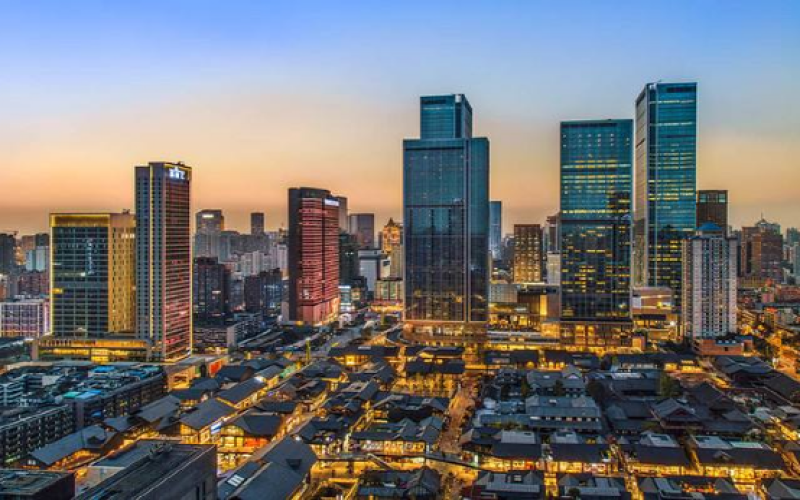
China's Coffee Market Landscape Shifts: Shanghai Loses Momentum Under Pandemic Impact, Chengdu Accelerates Its Rise
For a long time in the past, Shanghai was regarded as the city with the highest coffee density in China. However, the nearly three-month suspension of dine-in services dealt a heavy blow to Shanghai's catering industry, and coffee brands began to turn their attention to Chengdu. Data shows that Chengdu now has more than 7,000 coffee shops, ranking second nationwide, with independent coffee shops accounting for as much as 81.07%, far exceeding Shanghai's 57.01%. Luxury brands have also chosen to open coffee shops in Chengdu one after another, including LV, Cartier, Ralph's Bar, and Maison Margiela Café. Wangping Street, Mengzhuiwan, and Tangpa Street in Chengdu have become popular coffee districts, where teahouse culture and coffee consumption blend together. This article will analyze the data and trends behind this round of changes in the coffee city landscape. [more…]
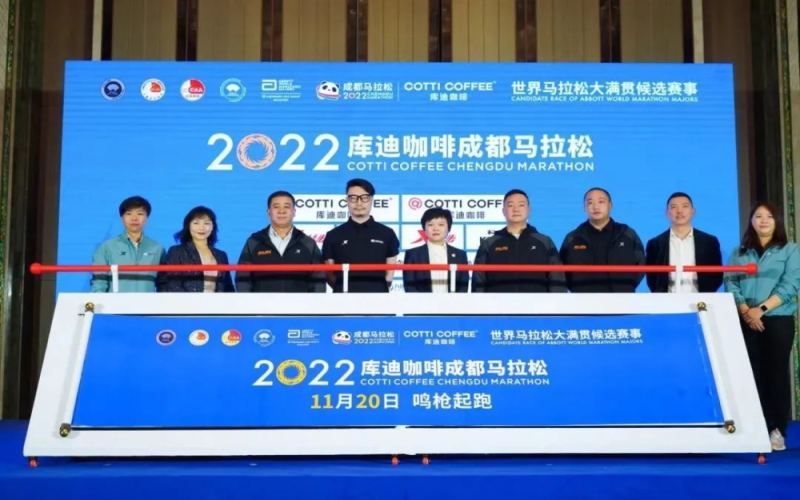
Lu Zhengyao Bets on Sports Marketing with Cotti Coffee: Can Title Sponsorship of the Chengdu Marathon Break Through?
Since the opening of its first store, Cotti Coffee has made frequent moves, first becoming the sponsor of the Argentine national football team in China, and then immediately securing the title sponsorship of the 2022 Chengdu Marathon. This new brand, jointly created by Lu Zhengyao and Qian Zhiya, the founders of Luckin Coffee, is trying to quickly build market awareness with the help of top-level sports events. At the same time, Cotti Coffee has announced a plan for ten thousand stores in three years and has already been laying out locations in many parts of the country. This article sorts out its sports marketing path and expansion strategy, and attaches the professional information channels of Front Street Coffee for coffee lovers to gain a deeper understanding of industry trends. [more…]
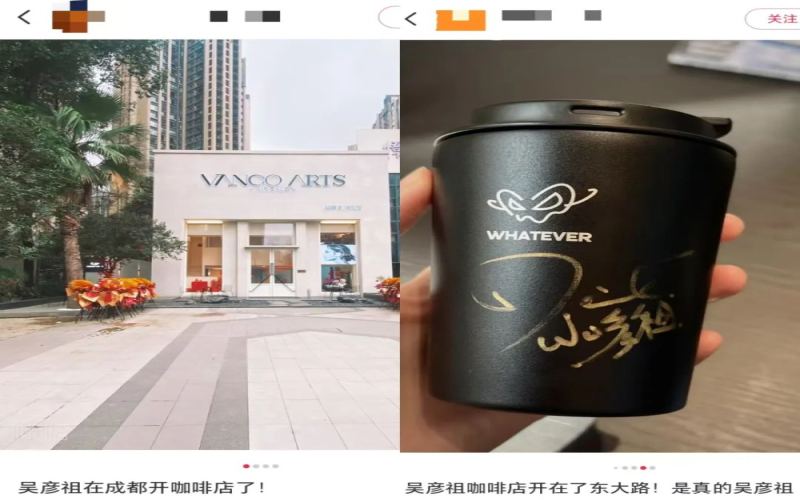
Daniel Wu Opens WHATEVER COFFEE in Chengdu: Minimalist Philosophy and Market Scrutiny Under Star Power
Recently, the coffee brand WHATEVER COFFEE, founded by actor Daniel Wu, opened its first physical store on Dongda Road in Chengdu, sparking a wave of social media check-ins. This shop-in-shop, sharing space with a barbershop, features a minimalist black, white, and gray aesthetic. Its menu focuses on classic coffees and simple flavored drinks, priced between 20 and 34 yuan. The brand logo, a mask hand-drawn by Daniel Wu, symbolizes shedding pretense and returning to authenticity. In fact, the brand entered the coffee market as early as last June. Now, with the Chengdu store serving as a test outlet, a second independent location is already being scouted. Celebrities opening coffee shops is nothing new—from JJ Lin to Jay Chou—but behind the built-in traffic, whether the products and services themselves can withstand market scrutiny remains a topic worth watching. [more…]
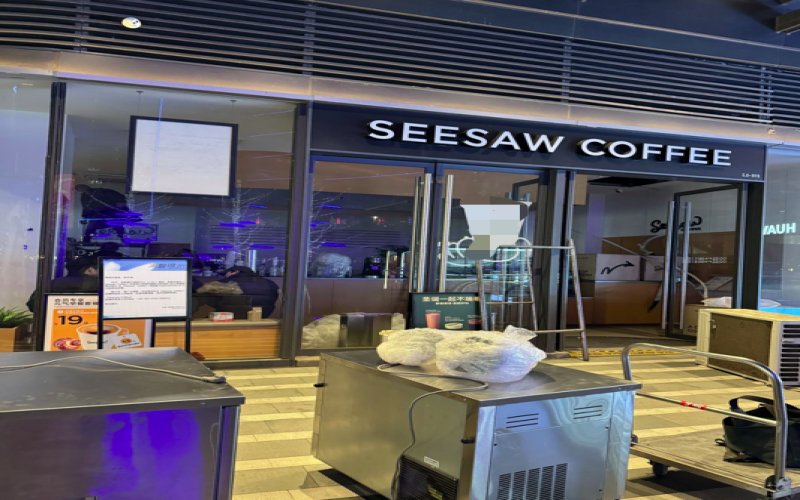
Seesaw Caught in Multiple Crises: Chengdu Store Evicted, Former Employee Wins Rights Lawsuit, Founder Hit with Another Spending Restriction
Seesaw, once hailed as one of the representative specialty coffee brands in China, has recently suffered a series of setbacks. Its last store in Chengdu was evicted after the shopping mall terminated the lease early; employees exposed illegal dismissals and successfully defended their rights through legal channels; and the founder was once again subject to high-consumption restrictions due to contract disputes, while the company's equity was frozen and debts were enforced through the courts. A stream of negative news has plunged this coffee brand, once favored by capital, into its darkest hour. This article will sort through the sequence of events and present the operational and legal difficulties Seesaw currently faces. [more…]
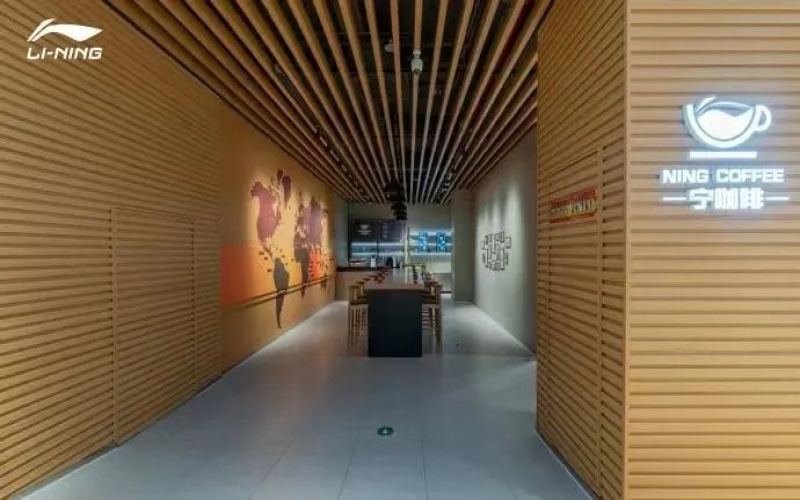
Xtep's cross-industry coffee debut store lands in Chengdu—why is the signboard not "Te Coffee" but COSINE KASHU?
Another case of a sports brand entering the coffee arena. Following Li-Ning's launch of Ning Coffee, Xtep, which has over 6,251 offline stores, has also filed trademark applications for "T Coffee" and "XTEP COFFEE." Recently, Xtep's first coffee shop opened within its flagship store in the Chunxi Road commercial district of Chengdu. Surprisingly, the store sign does not display "T Coffee" but instead shows "COSINE COFFEE." It turns out this is a collaborative store created by Xtep and COSINE, a trendy beverage brand founded in Shanghai in 2021. Rather than opting for a self-operated model, Xtep chose collaboration to reduce the risks of cross-industry expansion and test the waters. Whether this store is an attempt by Xtep to develop a side business or merely a supporting facility to enhance the in-store consumer experience, the company has not yet given a clear response. [more…]
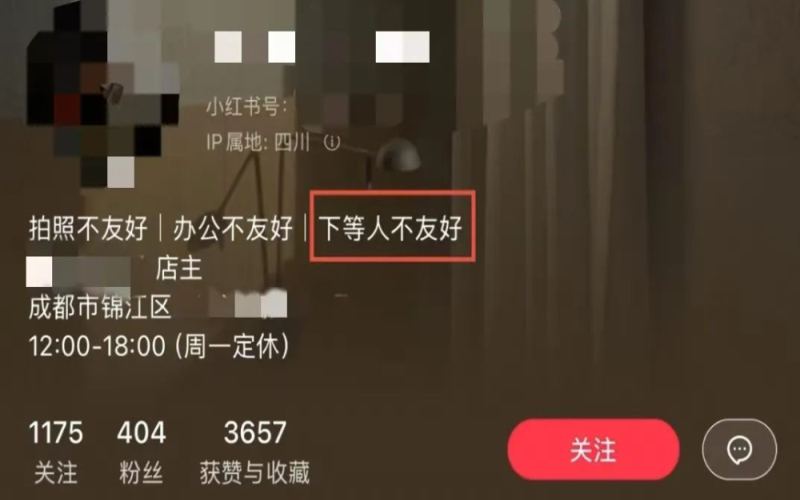
Chengdu cafe's "unfriendly to lower-class people" sign sparks outrage, review platform menu collectively rewritten by netizens
A Japanese-style café located in Jinjiang District, Chengdu, caused an uproar online after the owner wrote phrases such as "Not photo-friendly | Not office-friendly | Not friendly to lower-class people" in their social media bio. What were originally just in-store rules prohibiting standing photos and photos after changing seats were interpreted by netizens as a public belittlement of customers due to the insulting wording "lower-class people." After the incident escalated, the café's recommended menu on review platforms was collectively edited, with joking names such as "Lower-Class Coffee" and "Lower-Class Latte" topping the list. Although the owner once posted an explanation of what "lower-class people" referred to, both the bio and the post have been deleted. This conflict also sparked widespread discussion about the boundaries of merchant rules and customer dignity. [more…]
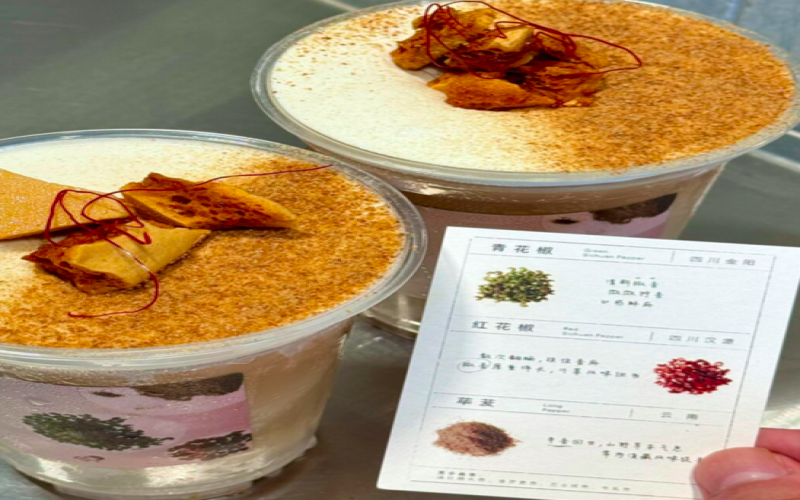
Heytea Chengdu limited-time launch of Sichuan Pepper Dianhong, Sichuan peppercorn and chili in milk tea sparks heated discussion
Recently, milk tea enthusiasts eager to try new things noticed an unusual new product from Heytea while keeping up with major chain brands. According to rumors online, this drink, called "Sichuan Pepper Dianhong," incorporates spices such as red Sichuan pepper into its blend, and the milk cap is garnished with shredded chili peppers, creating a visually striking effect. Many people initially suspected the images were composite fakes until the official product introduction confirmed that Heytea had indeed created a "chili milk tea." The product is available only for a limited time at the Chengdu Chunxi Road store, and its ingredients include Hanyuan red Sichuan pepper, Jinyang green Sichuan pepper, and Yunnan long pepper. Officials explained that the chili shreds are only meant to enhance aroma and that the spiciness is mild, while also offering a heavier numbing version for those who want it. This drink quickly sparked heated discussion online, with sharply divided opinions. [more…]
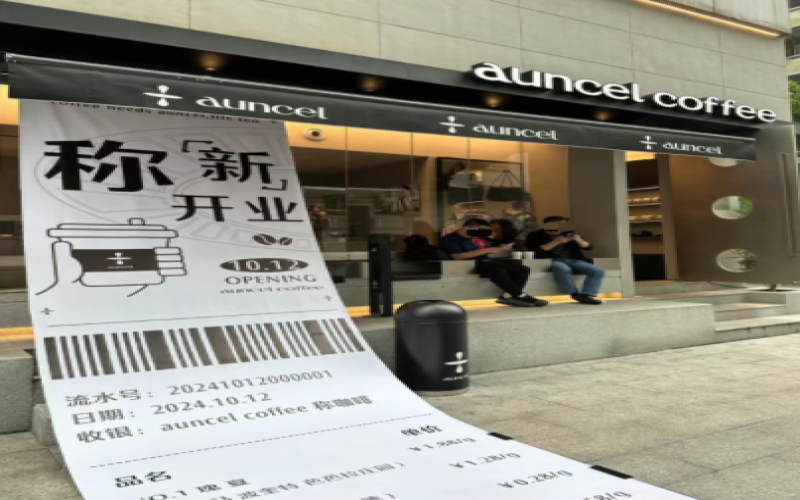
Chengdu coffee shop sells beans by the gram, conveyor-belt assembly-line brewing method draws attention
When ordering at a coffee shop, you usually buy by the cup, but a store in Chengdu has turned tradition on its head — Auncel Coffee, which sells coffee beans by the gram. Customers pick their own beans, have them weighed, and then a conveyor-belt assembly line handles grinding and brewing. This small shop near Tianfu Square in Jinjiang District, with its minimalist black-and-white style and an L-shaped laboratory-like long bar, has drawn plenty of coffee lovers looking to check in. Bean prices range from 0.28 yuan to 1.88 yuan per gram, and a cup of coffee ends up costing anywhere from a few yuan to thirty or forty yuan. Whether this model can gain a foothold in the fiercely competitive coffee market is worth watching. [more…]
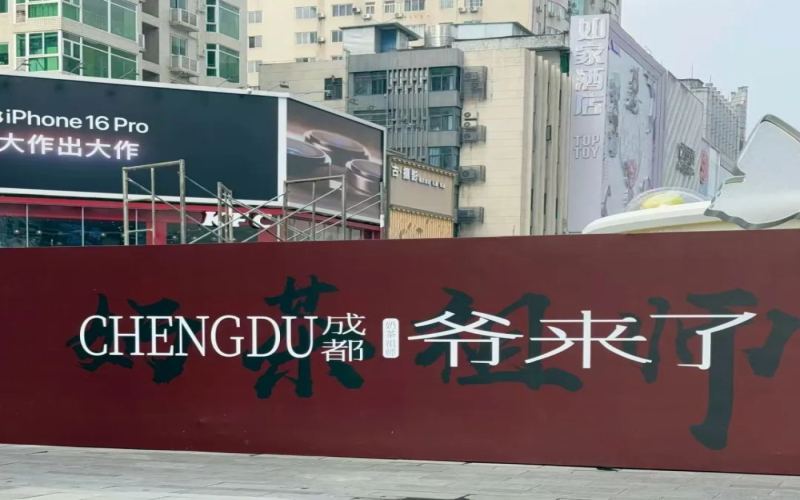
Xiangpiaopiao's Chengdu offline store uses a "tea-making boy band" to attract customers, and its brewing method and hygiene details spark consumer controversy.
The physical milk tea shop opened by Xiangpiaopiao on Chunxi Road in Chengdu has recently become a hot topic. The brand used a "tea-making boy band" as a selling point, recruiting male staff over 180 cm tall with good looks and charisma, and through social media voting selected 27 candidates, ultimately choosing 12 to work in the store. On opening day, long lines formed at the shop; the boy band members were responsible for packing orders and interacting with customers for photos, providing emotional value. However, some consumers pointed out that the drinks in the store are still mainly made by brewing tea bags and juice with hot water, which differs from mainstream freshly made tea beverages; the drink output efficiency is low, with wait times of up to half an hour, and photographers and other non-operational personnel were moving around the bar area taking photos without wearing masks or hats, raising questions about food hygiene. Xiangpiaopiao had previously used a similar strategy of highly attractive staff at a pop-up store by West Lake in Hangzhou, and this operation is seen as a continuation and upgrade of that marketing approach. [more…]
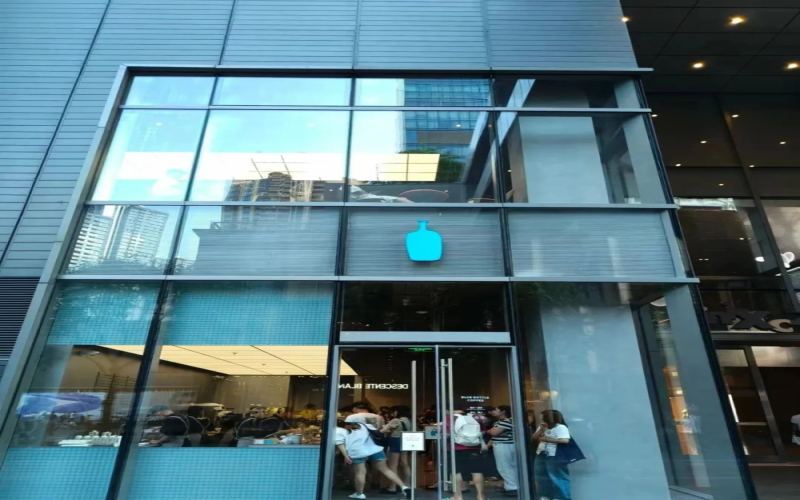
Blue Bottle Coffee's first South China store opens in Shenzhen MixC World, with a limited-edition blue dripper debuting alongside
Blue Bottle Coffee has officially announced the opening of its 9th store, located in Shenzhen MixC World, marking the brand's first entry into South China. The new store is designed by the Hong Kong young architect team COLLECTIVE, with the concept of "blue imagination related to the sea," incorporating the character of Shenzhen as a future city. The first floor of the store is the coffee preparation area, and the second floor is the customer enjoyment area, with varying shades of blue running through the bar, shelves, stairs, and tables and chairs. Most notably, the store launches the world's exclusive first blue dripper, which is only used and sold at the Shenzhen store. On the opening day, the queue once lasted up to two hours, and it returned to normal the next day. In addition, it is rumored online that Blue Bottle Coffee may enter Chengdu Taikoo Li and Xi'an MixC, and its expansion pace is worth watching. [more…]
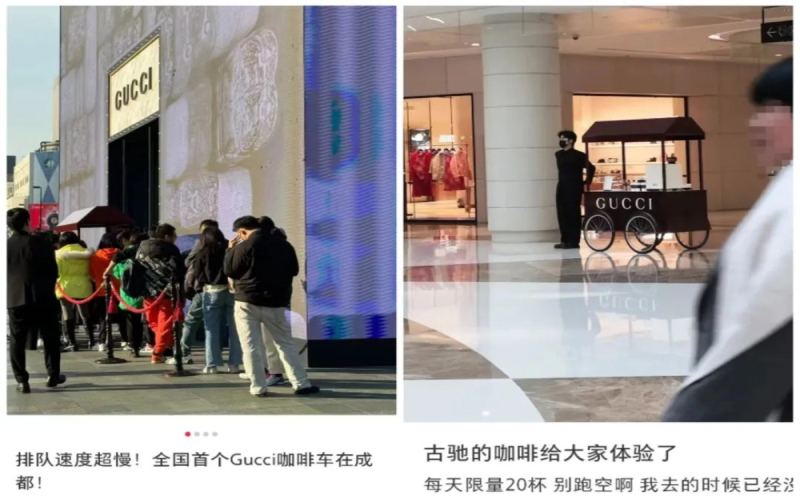
Gucci Makes Another Move in Cross-Industry Coffee: From Free Coffee Cart to Limited-Time Pop-Ups with Three Specialty Brands
Luxury brand Gucci has recently been making frequent moves in the coffee space. First, it attracted attention by handing out free coffee from an Ancora red coffee truck in Beijing, Shanghai, and other cities, but drew complaints over long queues, limited supply, and controversial flavors. Gucci then adjusted its strategy, partnering at once with three well-known domestic coffee brands—Grid Coffee, Blue Bottle Coffee, and %Arabica—to open week-long pop-up coffee shops in four cities: Beijing, Shanghai, Shenzhen, and Chengdu. This collaboration model—limited in "stores, duration, and products"—has drawn consumers to queue up and check in, and has also led people to speculate whether Gucci is "casting a wide net" to screen for long-term partners, or merely driving traffic to its Ancora series exhibition. This article takes you through this cross-industry experiment between luxury and coffee. [more…]
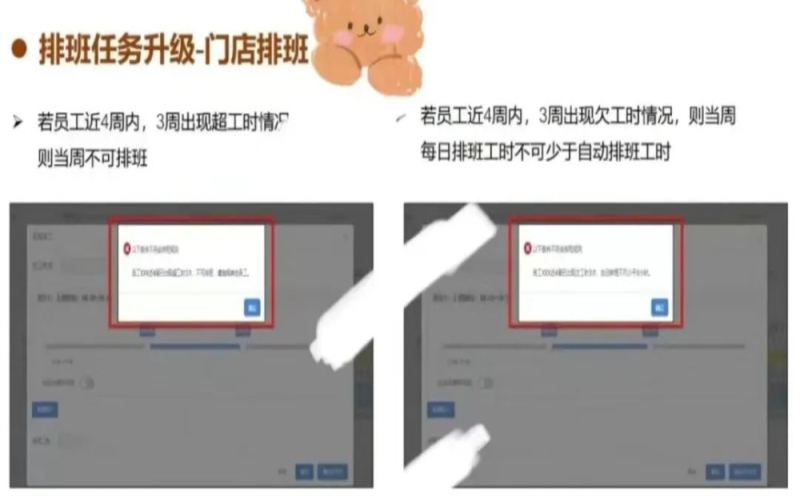
Anomalies Emerge After Luckin Coffee's Scheduling System Upgrade: Peak Forecasting and Staffing Draw Attention
Luckin Coffee recently piloted a new scheduling system in cities such as Guangzhou, Shenzhen, and Chengdu. The system can predict peak hours based on store sales data and arrange minimal staffing accordingly. While the new system improves efficiency, it has also sparked discussions about the distribution of work between full-time and part-time employees, responses to unexpected situations, and labor cost control. At the same time, as Luckin's store expansion slows and sales decline, the problem of redundant staff is gradually emerging, and this system upgrade is seen as an important measure to reduce costs and increase efficiency. As coffee lovers, it is worth learning about the impact of this change on store operations and employee experience. [more…]
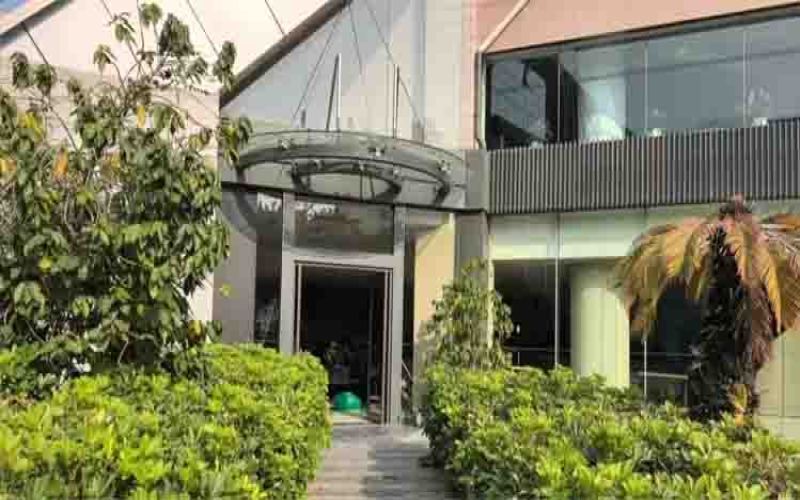
After fifteen years of operation, the Starbucks Reserve store on Ersha Island in Guangzhou has permanently closed upon lease expiry; the successive exit of long-standing stores across multiple cities has prompted coffee enthusiasts to reminisce.
Recently, the Starbucks Reserve store next to Xinghai Concert Hall on Ersha Island in Guangzhou was confirmed to have permanently closed after fifteen years in operation, a piece of news that surprised and saddened many regular customers. This store, which opened in 2010, was once one of the most representative coffee shops on Ersha Island. After its lease expired, it quietly withdrew without prior announcement, sparking collective memories among nearby residents and coffee enthusiasts. Meanwhile, Starbucks old stores or specialty stores have also been closing one after another in cities such as Jiangmen, Beijing, Changzhou, and Chengdu, including the city's first pour-over store and old stores that had been operating for more than ten years. For many coffee fans, Starbucks was once the starting point for stepping into the world of coffee. The disappearance of these stores is not just the exit of a shop, but also carries countless personal memories and urban emotions. [more…]
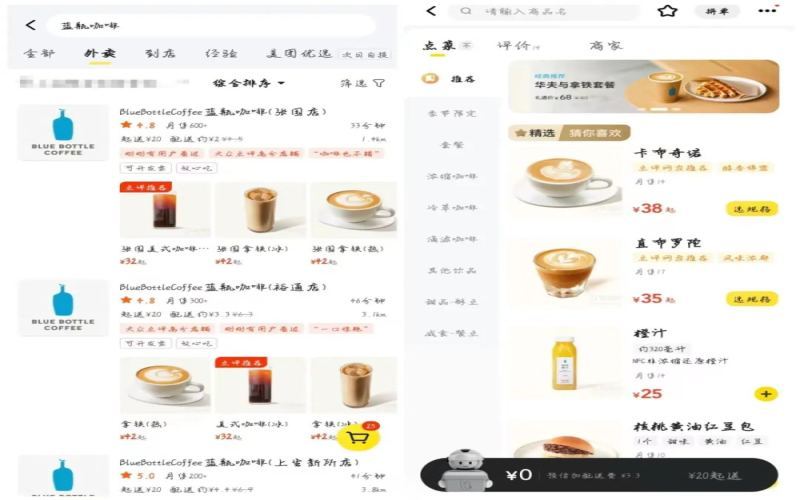
Blue Bottle Coffee Lands on Delivery Platforms: Accelerated Store Expansion and a Shift in Brand Strategy
On April 18, a new store called "blue bottle coffee" quietly appeared on a food delivery platform. After verification, this was not a counterfeit or a purchasing agent, but an official delivery channel opened by Blue Bottle Coffee. The delivery prices of drinks from Shanghai stores are consistent with those on the mini-program, and during the opening period, limited-edition fridge magnets were given away and delivery fee discounts were offered. Behind this move is a series of accelerated adjustments by Blue Bottle recently in store layout, pop-up events, and brand strategy. From rumors of store expansion in Shenzhen, Chengdu, and Xi'an, to the queues triggered by the Wuxi pop-up truck, and to blue bottle studio soon landing in Shanghai, this brand once jokingly called "unable to leave Shanghai" is trying to break its established rhythm. However, at a time when coffee consumers are increasingly picky and competition among chain brands is fierce, whether opening delivery can truly help Blue Bottle win more users' hearts still needs time to test. [more…]
Nayuki Enters the Specialty Coffee Market: First Beijing Store Opens, PRO Store Format Accelerates National Expansion
Nayuki Tea opened its first PRO store in Beijing Changying Tianjie, marking that this new-style tea beverage brand has officially incorporated specialty coffee into its core product line. Unlike regular stores, the PRO store format has undergone a comprehensive upgrade in space design, product structure, and service scenarios, offering seven specialty coffees, over thirty bakery products, and more than twenty kinds of self-produced snacks. Coffee is priced at 15 to 24 yuan, positioned as everyday specialty coffee. Previously, the PRO store format had been successfully validated in Shenzhen. Nayuki plans to open about 200 PRO stores in 2021, and has already established more than ten in Nanjing, Chengdu, Xi'an, Guangzhou, Harbin, and Beijing. This move not only fills Nayuki's gap in the specialty coffee market but also demonstrates its strategic intent to deepen its presence in new retail and expand business consumption scenarios. [more…]
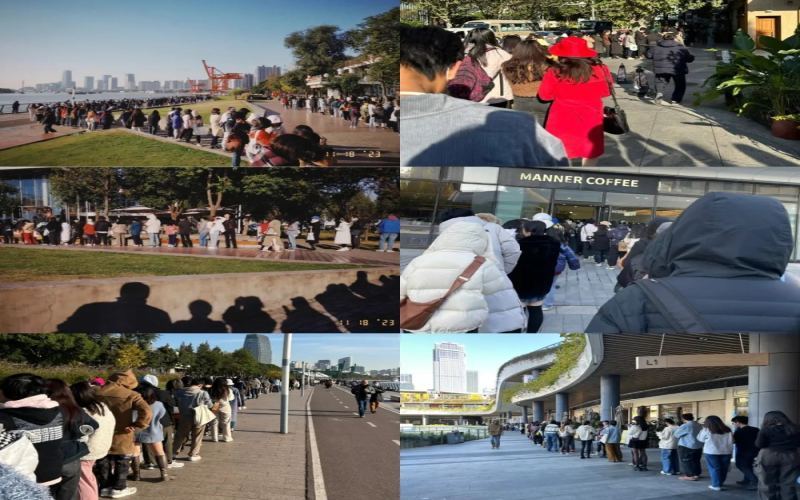
Queuing in long lines on a cold winter morning just for a bottle of perfume? Manner's collaboration with Jo Malone sparks a buying frenzy in 7 cities.
On a cold, windy weekend morning—the kind of day meant for sleeping in until you wake up naturally—hundreds of people were already queuing for hundreds of meters outside Manner stores in several cities across China before dawn. Seven Gingerbread Man–themed stores in Shanghai, Shenzhen, Chengdu, Nanjing, Hangzhou, and elsewhere attracted a large crowd of young people to get up early and endure the cold by offering a 9ml Jo Malone perfume and a Christmas badge with the purchase of a new coffee. The queue at the Shanghai Xuhui Binjiang store was the most spectacular: some people got up at 6 a.m. and arrived at 7 a.m., and by the time the store opened at 9 a.m., the line had already reached number 300. What exactly is the magic of this collaboration that makes young people willing to wait two or three hours in the freezing 0°C wind? Let’s take a closer look. [more…]
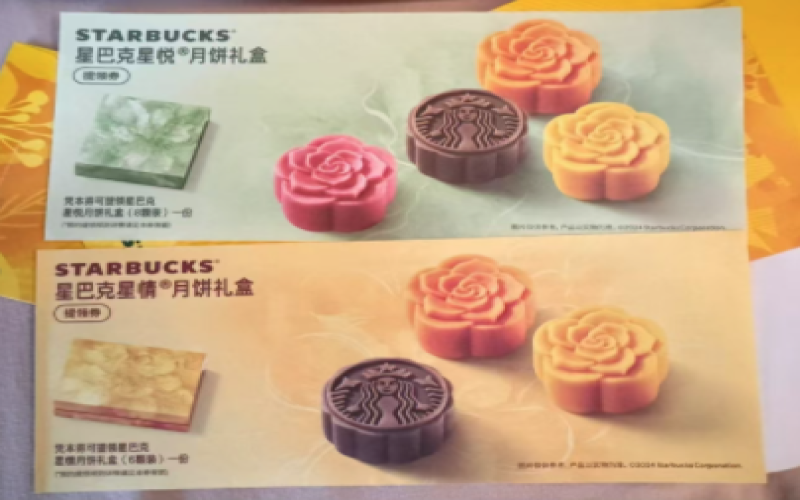
Why can't Starbucks mooncake vouchers be redeemed? Consumers in multiple cities encounter no way to book and customer service unreachable.
As the Mid-Autumn Festival approaches, mooncakes are traditionally a festive treat for family reunions. However, this year, many consumers holding Starbucks mooncake redemption vouchers are far from happy. According to the voucher rules, customers were supposed to scan a code to make a reservation and pick up two gift boxes at a store. But in reality, nearby stores generally show no stock, customer service calls are stuck in long queues or even disconnected by the system, and store employees admit that the whole city is out of stock. From Beijing, Shanghai, Jiangsu, and Zhejiang to Chengdu and Wuhan, complaints about being unable to redeem the vouchers are pouring in, and Starbucks has yet to offer a unified explanation. This article will outline the sequence of events, the consumers' experiences, and industry commentary, and include the latest alternative solutions in some regions. [more…]
JJ Lin's Miracle Coffee Officially Opens in Guangzhou: A Firsthand Look at the Long Queues at the IGC Mall Store
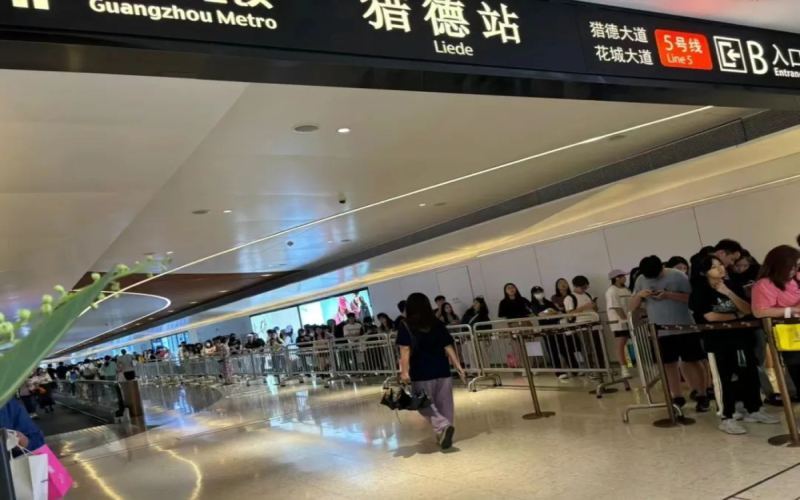
On the first day of the May Day holiday, a rare queue of people appeared at Exit B of Liede Station in Guangzhou, and the reason was precisely the official opening of Lin Junjie's Miracle Coffee at IGC Mall in Guangzhou. The space was formerly occupied by the Guangdong chain brand store by.jpg, and after it closed in March this year, Miracle took over, with fans' anticipation far outweighing any regret. The official confirmation is that the Guangzhou store is a long-term operating location rather than a pop-up, and on opening day people arrived to check in before eight o'clock, with the line once extending into the subway station. The drink selection at the store is richer than that of the Shenzhen pop-up coffee truck, including the return of limited-edition specials as well as desserts, merchandise, coffee beans, and more, but no stamp service is offered. Due to astonishing purchasing power, ingredients ran out early, and a sold-out notice was posted just after six in the evening. There is still no definite news on whether Lin Junjie will personally visit the store, and considering that the shop is small and right next to the subway entrance, the station appearance segment fans are hoping for is highly unlikely to happen. [more…]
ChaPanda Opens First Hong Kong Store in Mong Kok: Street-side Location with Grab-and-Go Focus, Prices About 70% Higher Than Mainland China
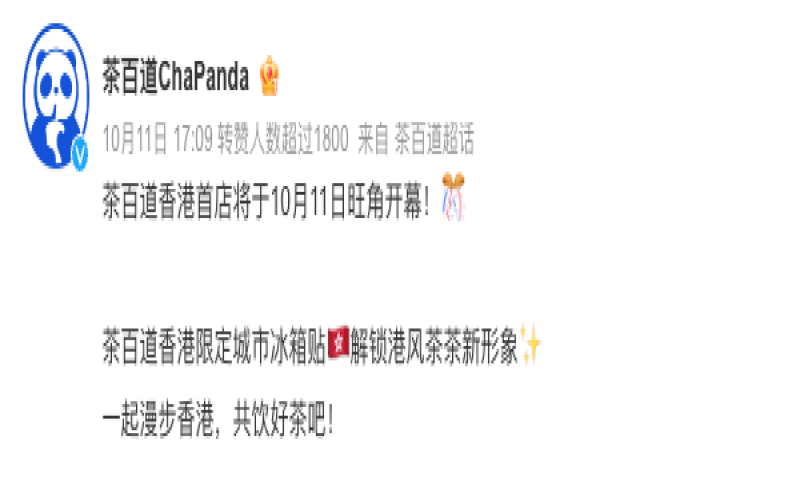
Mainland new-style tea beverage brands continue to enter the Hong Kong market. ChaPanda opened its first Hong Kong store on October 11 in Mong Kok, located on the ground floor of Far View Building on Sai Yeung Choi Street South, with a monthly rent of about HK$200,000. Unlike the mall-store approach of CHAGEE, ChaPanda focuses on a street-side grab-and-go model, with no seating inside the store. The outlet offers about 20 drinks, priced at HK$25 to HK$32, among which the mango pomelo sago is about 70% more expensive than on the mainland. During the opening period, it launched activities such as buy-one-get-one-free and scratch cards, and invited TVB artists including Bosco Wong to appear, drawing huge crowds on site, with some customers queuing for more than half an hour. [more…]