







How Is the Coffee Street Scene Changing in China?
Shanghai lost its position as China's leading coffee city after nearly three months of suspended dine-in service during the pandemic. Chengdu now hosts more than 7,000 coffee shops, second in the country, and independent shops make up 81.07% of them against Shanghai's 57.01%. Retail sales in Shanghai's accommodation and catering sector fell 39.5% in March and 72.5% in April year-on-year.
Brands including LV, Cartier, Ralph's Bar and Maison Margiela Café have opened coffee shops in Chengdu, while Wangping Street, Mengzhuiwan and Tangpa Street have grown into busy coffee streets where teahouse culture and coffee drinking mix. Industry observers expect at least 30% of Shanghai restaurants to close, with equipment recycling warehouses already full of second-hand coffee machines.
For a long time, Shanghai was regarded as the city with the highest coffee density in China. However, nearly three months of dine-in suspension dealt a heavy blow to Shanghai's catering industry, and coffee brands began to turn their eyes to Chengdu. Data shows that Chengdu already has more than 7,000 coffee shops, ranking second in the country, with independent coffee shops accounting for as much as 81.07%, far exceeding Shanghai's 57.01%. Luxury brands have also chosen to open coffee shops in Chengdu one after another, including LV, Cartier, Ralph's Bar, Maison Margiela Café and more. Chengdu's Wangping Street, Mengzhuiwan, Tangpa Street and others have become popular coffee districts, where teahouse culture and coffee consumption blend together. This article will analyze the data and trends behind this round of change in the coffee city landscape.
If one were to pick the city with the highest coffee shop density in China, different people would give different answers. Before this year, most people would answer without hesitation: Shanghai. However, due to the pandemic, Shanghai's catering industry lost dine-in service for nearly three months. More and more brands are no longer flocking to Shanghai, and are instead turning their eyes to Chengdu.
Based on the cumulative industry figures for January to April published by the Shanghai Municipal Bureau of Statistics, the retail sales of Shanghai's accommodation and catering industry fell by 39.5% and 72.5% year-on-year in March and April respectively. With dine-in suspended for nearly three months, Shanghai's catering industry suffered a severe blow. Many industry insiders predict that after this round of the pandemic, at least 30% of restaurants in Shanghai will close down, accompanied by problems such as broken capital chains and defaults on raw material payments.
On July 17, the WeChat public account of Caixin.com published an article titled "Many Restaurants and Cafes in Shanghai Have Closed, Yet They Are Busier Than Ever," describing the unusually busy scene in the waste recycling industry brought about by the downturn in Shanghai's catering sector. A worker engaged in catering equipment recycling in Shanghai has a 1,800-square-meter warehouse packed with all kinds of second-hand catering equipment, including ovens, coffee machines, ice machines and more. According to reports, most of this equipment was recycled within the past six months.
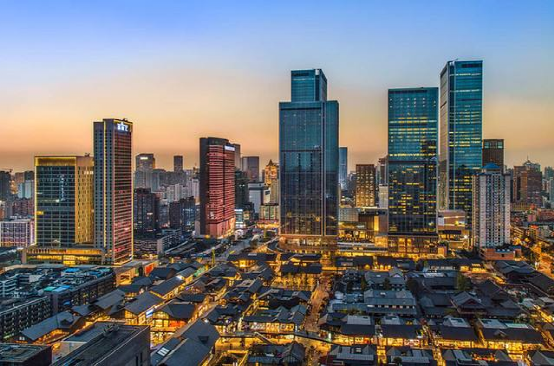
Turning to Chengdu, data shows that Chengdu currently has more than 7,000 coffee shops, ranking second in the country in scale. Since the beginning of this year, news has kept emerging that multiple luxury brands are密集 heading to Chengdu to open coffee shops, aiming to grab a share of China's growing and highly popular coffee market. What is different is that the luxury coffee shops opened by luxury brands in China play the role of a "guide" for luxury consumption, giving more consumers the opportunity to come into contact with luxury brands.
LV café in January, Cartier Teahouse in April, Ralph's Bar in May, Maison Margiela Café in June... In the wave of luxury brands racing to open coffee shops, it is not hard to see that they have a strong interest in China's coffee market, and they no longer all choose Shanghai, but instead settle in Chengdu.
To some extent, Chengdu is the country's second-largest coffee-consuming city after Shanghai. The number of Starbucks stores in a city not only reflects the city's economic vitality, but also indirectly reflects its investment value. In 2021, the number of Starbucks stores in Shanghai was about 1,200, while in Chengdu it was about 210.
Although big-name coffee shops are increasingly choosing to open in Chengdu, a large number of independent coffee shops are also hidden in Chengdu's streets and alleys.
Chengdu's "independent coffee shop index" unexpectedly surpasses Shanghai's. In 2021, the "Shanghai Coffee Consumption Index" released by the New First-Tier Cities Research Institute showed that the proportion of independent coffee shops in Shanghai was 57.01%, while in Chengdu this proportion was as high as 81.07%. The "2021 Chengdu Coffee Takeaway Consumption Report" released by Meituan showed that in 2021 the growth rate of the number of coffee merchants in Chengdu increased by 59% year-on-year, leading the country.
Chengdu's Wangping Street, Mengzhuiwan, Tangpa Street, Xiaotong Lane and others are all "coffee streets" with large fan bases both inside and outside the province. Among them, Wangping Binhe Road has more than 70 commercial property owners, with coffee shops and stores that also sell coffee accounting for about 70%. Because of the growing number of coffee shops, Fangcao Street on Yulin Road in Chengdu has been jokingly called "Little Shanghai" by Chengdu residents.
Compared with the minimalist and high-end style of Shanghai coffee shops, Chengdu coffee shops also have a unique style in terms of space and taste. Chengdu has a long-standing teahouse culture, and the renovation of old residential communities has brought a coffee trend to many streets and creative parks. Enjoying the sun while drinking tea or coffee has become a new standard leisure activity for many Chengdu residents.
For coffee lovers, no matter which city they are in, choosing freshly roasted coffee beans is always key. Front Street Coffee suggests that while experiencing the coffee culture of different cities, paying attention to the beans' origin, processing method and roast level is the best way to better savor the flavor layers of each cup of coffee.
Image source: Internet
For more coffee bean information, please follow Coffee Workshop (WeChat public account: cafe_style)
For professional coffee knowledge exchange, please add WeChat ID: kaixinguoguo0925
The above content is compiled by CoffeeHunters, a coffee news website.


