







What Does Coffee Is Made From Have to Do With a Cafe Sign?
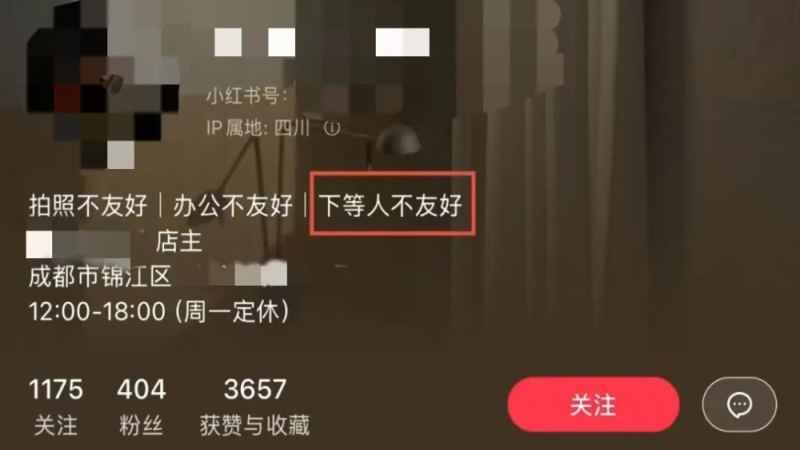
A Japanese-style cafe in Chengdu's Jinjiang District drew widespread criticism after its owner posted a social media bio reading "Not photo-friendly | Not work-friendly | Not friendly to lower-class people." The phrase about lower-class people was read as contempt for customers, and review platform users responded by rewriting the shop's menu with mocking entries like Lower-Class Coffee and Lower-Class Latte.
The owner later posted an explanation of what the term referred to, but both the bio and the post have since been deleted. The episode widened an ongoing debate about where merchant rules end and customer dignity begins. Photo bans are widely tolerated; insulting labels are not. After all, coffee is made from beans, water and heat, not from ranking the people who drink it, whatever other names for coffee a menu may use.
A Japanese-style café located in Jinjiang District, Chengdu, caused an uproar online after the owner wrote phrases like "Not photo-friendly | Not work-friendly | Not friendly to lower-class people" in their social media bio. What were originally just house rules banning standing photos and photos taken after switching seats were interpreted by netizens as a public put-down of customers because of the insulting term "lower-class people." After the incident escalated, the café's recommended menu on review apps was collectively edited, with mocking names like "Lower-Class Coffee" and "Lower-Class Latte" topping the list. Although the owner once posted an explanation of what "lower-class people" referred to, both the bio and the post have been deleted. This conflict also sparked widespread discussion about the boundaries of merchant rules and customer dignity.
▲
Click to follow | Daily specialty coffee culture magazine Coffee Workshop
Recently, a café in Chengdu quickly became a hot topic of discussion across major social platforms because the owner used the phrase "not friendly to lower-class people" in their personal social media bio, and many netizens even went to review apps to "recreate" the café's menu.
These days, many shops, in order to avoid later disputes, put their "rules" out in the open in advance, such as not allowing people to appear in photos. That way, when customers come in and order, it means they accept these terms, and those who do not accept them can naturally choose not to patronize the place. Although this approach of getting the unpleasantness out of the way first may keep some customers out, for operators, rather than having an unpleasant scene afterward, it is better to make things clear in advance so that other customers can enjoy a more peaceful consumption environment.
But just in the past few days, many netizens came across a café in Chengdu that not only listed a series of photo-taking prohibitions, but also directly stated "lower-class people are not welcome," which left people feeling very uncomfortable after reading it.
As for the notice banning photography, most netizens can actually accept it — after all, when you open a business, no one wants their café to inexplicably become a "free photo studio," and mutual understanding is enough. But the term "lower-class people" clearly carries a contemptuous meaning, making people feel it is deliberately belittling customers.
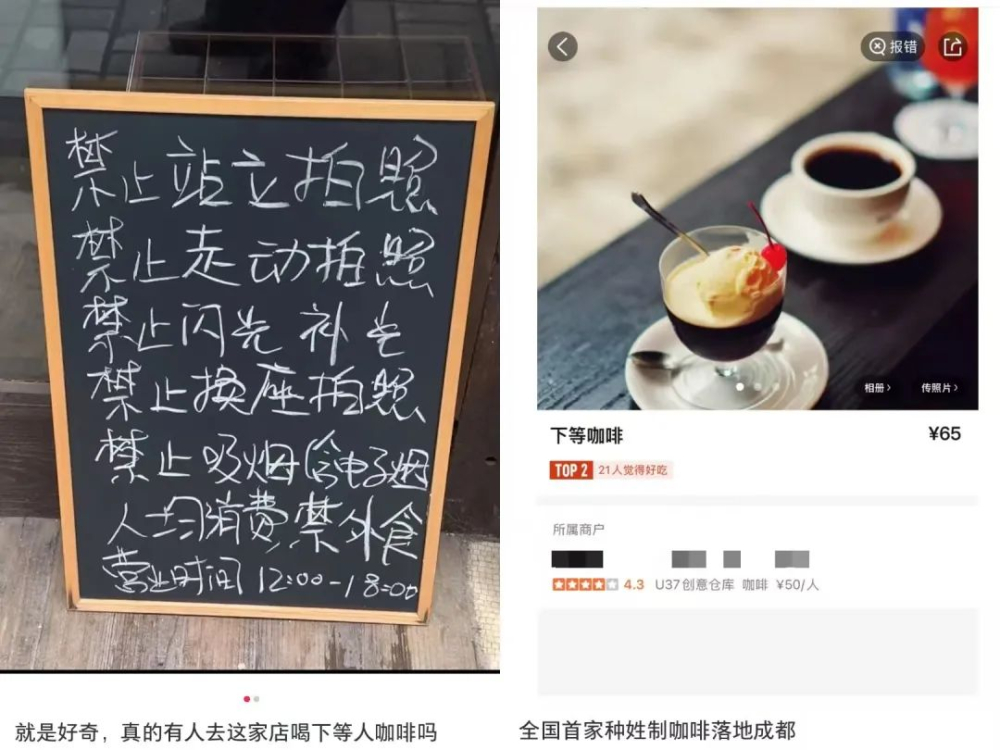
It is understood that this shop is located in Jinjiang District, Chengdu, and has a Japanese style. Since opening, the owner has kept a small blackboard with "Notice to Customers" in the store, and similar reminders are also placed on tables and in other prominent positions, explicitly prohibiting standing photos, walking photos, use of flash, and photos taken after switching seats. Recently, a customer apparently insisted on taking photos after ordering, knowingly violating the rules, and eventually got into an argument with the shop.
To prevent similar situations from happening again, the owner first changed the profile signature of the operating account to "Not photo-friendly | Not work-friendly | Not friendly to lower-class people," and then posted an article titled "Who Are the Lower-Class People," explaining in detail what they meant by "lower-class people" and saying that in the future stricter store rules might be introduced depending on the situation, expressing the stance quite thoroughly. (Currently, both the bio and the post have been deleted.)
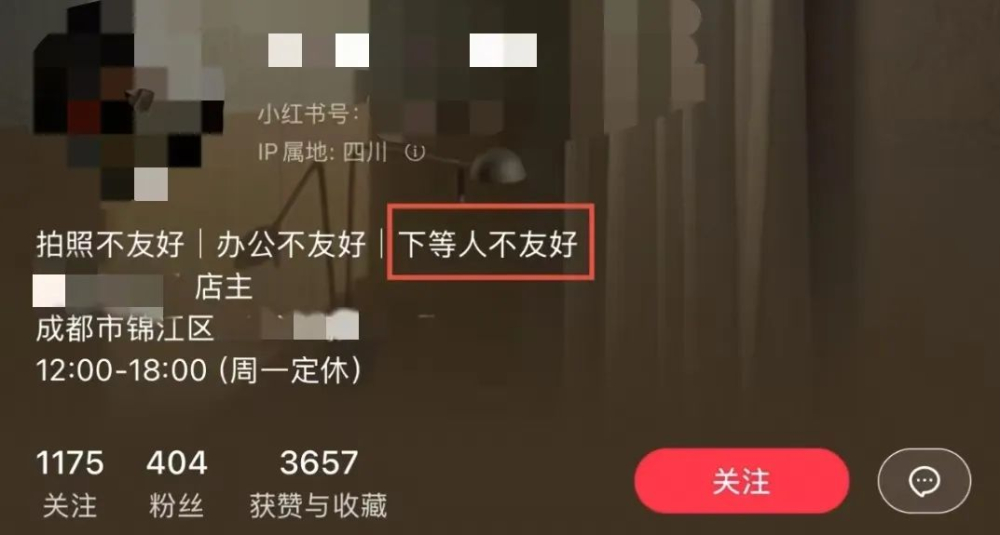
In response, many onlookers believed that it is completely understandable for a merchant not to accept in-store photography; the shop is private property, bears its own profits and losses, and how to run it is the merchant's freedom, and two-way selection is also fine. But doing business ultimately emphasizes harmony and prosperity; writing the requirements clearly is enough, and there is really no need to use an insulting term like "lower-class people." As ordinary consumers, people also said bluntly that they strongly dislike the shop lecturing customers this way, and their goodwill was almost completely ruined.
Thus, after a series of actions by the owner, as the incident continued to ferment, this café was pushed to the forefront of public opinion, and the term "lower-class people" further ignited netizens' anger and intensified the conflict.
To give the shop a "taste of its own medicine," netizens flooded the café's page on review platforms and forcefully "remade" the recommended menu and prices, with names such as "Lower-Class Coffee" and "Lower-Class Latte" appearing.
At present, aside from the top-ranked "coffee jelly," which remains unchanged, the rest of the rankings have been completely transformed — or more accurately, occupied by netizens' "anger."
Image source: internet screenshot
Disclaimer: Some images in this article are from the internet. For some content on the website, such as images, we will respect the original authors' copyright and indicate the source. However, due to the large volume, a few images and texts may not yet have been credited in time. Please understand. If the original author has any dispute, they may contact the website for handling, and once verified we will correct it immediately. Compiled and edited by "Coffee Workshop." Please indicate the source when reposting. If there is infringement, please inform us for deletion. Thank you~!
The above content is compiled by CoffeeHunters, a coffee news website.


