







Chengdu Shop Redefines Coffee Pricing by Selling Beans per Gram
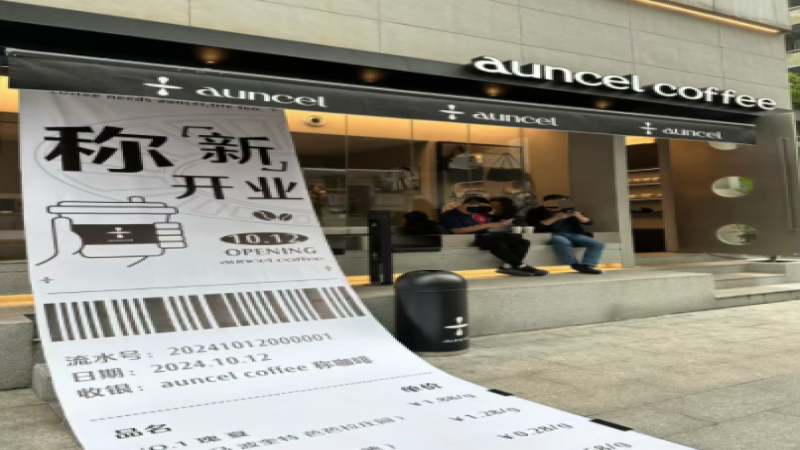
Auncel Coffee, a small shop near Tianfu Square in Chengdu's Jinjiang District, sells beans by the gram instead of by the cup. Customers pick their own beans, have them weighed, and a conveyor-belt assembly line handles grinding and brewing. Bean prices run from 0.28 yuan to 1.88 yuan per gram, so a cup ends up costing anywhere from a few yuan to thirty or forty yuan.
The roughly thirty-square-meter store uses a black-and-white minimalist look, with large glass windows and a lab-like L-shaped bar lined with more than a dozen machines. Its logo blends drip coffee and a balance scale. Selling by weight pushes specialty coffee toward mass-market prices, and whether the model holds up in Chengdu's crowded cafe market is worth watching.
Ordering at a coffee shop usually means buying by the cup, but a store in Chengdu has upended that tradition—Auncel Coffee, which sells coffee beans by the gram. Customers pick their own beans, have them weighed, and then a conveyor-belt assembly line handles grinding and brewing. This small shop near Tianfu Square in Jinjiang District, with its minimalist black-and-white style and lab-like L-shaped long bar, has drawn plenty of coffee lovers looking to check it out. Bean prices range from 0.28 yuan to 1.88 yuan per gram, and a cup ultimately costs anywhere from a few yuan to thirty or forty yuan. Whether this model can gain a foothold in the fiercely competitive coffee market is worth watching.
In most people's minds, walking into a coffee shop and ordering means choosing a coffee type based on your taste. If you don't know much about coffee, you can ask the barista for advice; the barista will recommend suitable beans based on the customer's preferences and brew them on the spot. Through this whole process, most people can get a coffee drink that suits their taste.
But the world is full of surprises. Recently, an unconventional coffee shop in Chengdu went viral online. It drew attention because it completely broke the existing sales logic of coffee shops, changing coffee from being sold by the cup to beans being sold by the gram, forcibly bringing specialty coffee down to mass-market prices.
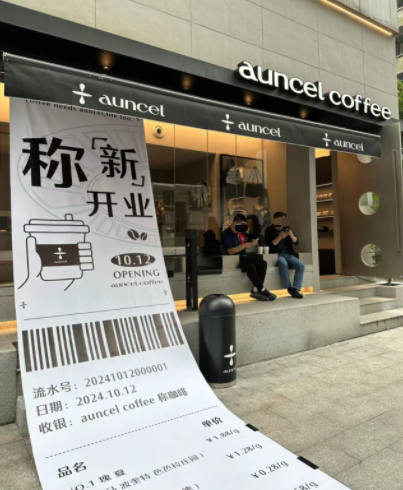
It is reported that this shop, which has attracted the attention of industry insiders and coffee lovers, is called Auncel Coffee. It is located near Tianfu Square in Jinjiang District, Chengdu, and its overall design uses a black-and-white color scheme with a fashionable, minimalist approach. Above the gray storefront sign are the white shop name and logo. That abstract logo combines the imagery of drip coffee and a balance scale, giving it a rather meaningful look.
The shop is not large, about thirty square meters. Large glass windows let passersby easily glimpse the scene inside. In addition, seating is provided both inside and outside for customers to rest, giving off a bit of a community café vibe.
Push the door open, and directly ahead is an L-shaped long bar. Completely different from an ordinary café, the bar is neatly lined with more than a dozen machines, making people momentarily think they have wandered into some scientific research lab or factory workshop.
According to the staff, this shop only does drip black coffee, one category only. Customers need to first choose the coffee beans they like and then have them weighed, because the beans are priced by the gram. Matching this setup, the glass display case showcases coffee beans from different origins and using different processing methods, with prices ranging from 0.28 yuan to 1.88 yuan per gram. If you prefer a lighter taste, weigh out 15g; if you like it stronger, weigh out 18-20g. Add the brewing fee, and the final price of a cup ranges from a few yuan to thirty or forty yuan.
After customers choose their beans, they can hand them to the staff member responsible for weighing, and then watch their coffee beans set off on their assembly-line journey.
The L-shaped long bar itself is a miniature assembly line. Three staff members stand at different points along the bar, each responsible for one stage, from "bean selection and weighing" to "grinding" and then to "brewing and extraction." The entire process operates in a relay fashion via the conveyor belt, and the finished coffee is also delivered to the customer along this conveyor belt.
Specifically, the first staff member weighs the coffee beans chosen by the customer and places them on the conveyor belt to send to the grinding area. The staff member in the grinding area puts the beans into the corresponding grinder according to the bean variety and whether the drink is hot or cold, grinding them into powder. Finally, the staff member in the brewing area adjusts the relevant parameters to complete extraction. From weighing to serving, the whole process takes about three minutes.
This novel model has attracted many coffee lovers to visit the shop. Many people feel that "assembly-line coffee" tastes about the same as pour-over, and if you can get pour-over coffee for ten yuan, why choose 9.9 yuan sugar water? Coffee shouldn't be sold so expensively in the first place. Others think that drinking coffee while watching eight grinders and drip machines operate simultaneously is also a special experience.
However, some also point out that this factory-style model may squeeze the survival space of independent specialty coffee shops, or may ultimately end up as just a gimmick for selling shops and equipment rather than a genuine business model innovation.
In an increasingly cutthroat coffee industry, there will always be practitioners willing to try new paths in the price war. As for how it will ultimately turn out, we may as well wait and see.
Image source: Internet
The above content is compiled by CoffeeHunters, a coffee news website.


