







Search Results for: Bourbon genetics
What coffee variety does Yellow Bourbon actually belong to? What is its genetic relationship with Red Bourbon and Typica?
In the vast family of Arabica coffee, Bourbon and Typica are the two most representative ancient varieties, while Yellow Bourbon is a special branch of the Bourbon line discovered due to a genetic mutation. Its fruit ripens to a bright yellow rather than the red common to Bourbon, making it highly recognizable in the field. What exactly is the genetic relationship between Yellow Bourbon and Red Bourbon and Typica? Is it an independent variety or a variant of the Bourbon family? This article, from the perspective of Front Street Coffee, will sort out the origin, botanical characteristics of Yellow Bourbon and its connection to Red Bourbon and Typica, helping coffee enthusiasts more clearly understand this variety's position in the coffee lineage. [more…]
Tracing the Origins of Brazil's Yellow Bourbon Coffee Variety: A Comprehensive Interpretation from Genetic Mutation to Flavor Expression
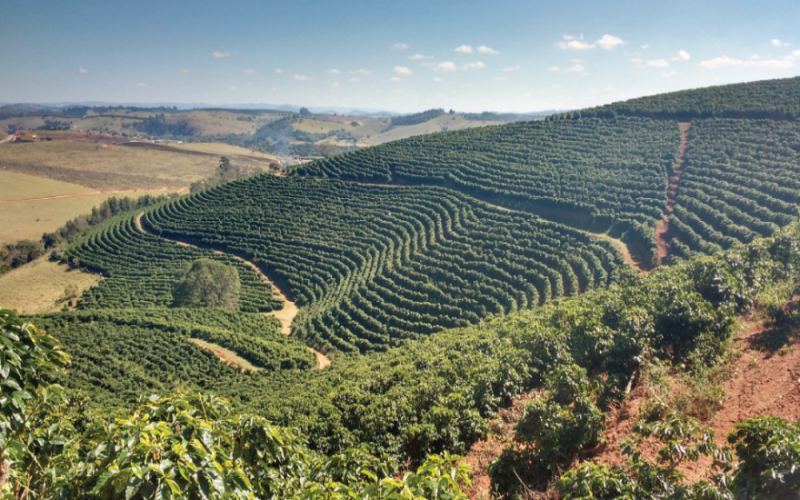
Yellow Bourbon is a unique presence on Brazil's coffee map—it was not artificially cultivated, but originated from a natural genetic mutation. From the introduction of the Bourbon variety to Brazil in the 19th century, to the first discovery of yellow fruit in Pederneiras in 1930, and then to the variety collection and promotion by the Campinas Agronomic Institute, Yellow Bourbon has gone through a tumultuous journey. It was once popular for its high yield and quality, but also retreated to limited production areas at higher altitudes due to declining disease resistance. Today, highlands such as Mogiana in São Paulo state have become the main stage for Yellow Bourbon, where the temperature difference between day and night gives the fruit richer aromatic layers. This article will systematically review the discovery history, genetic mechanism, cultivation status, and flavor characteristics of Yellow Bourbon, and bring a specific brewing and tasting guide for Front Street Coffee's Queen Estate Yellow Bourbon. [more…]
Why Is Red Bourbon the Main Variety of Brazilian Coffee? An Analysis of the Genetic Secret Behind Yellow Bourbon Fruit Not Turning Red
Brazil, as a major coffee-producing country in the world, has a rather fascinating history of variety evolution. From the early cultivation of Typica to the introduction of Bourbon, and then to the divergence of Red Bourbon and Yellow Bourbon, multiple factors are involved, including yield, disease resistance, and genetics. This article sorts out the trajectory of coffee variety replacement in Brazil, focusing on answering why Yellow Bourbon does not turn red after ripening but instead maintains its yellow appearance, and analyzing the dominant and recessive inheritance mechanisms of its anthocyanins and luteolin. At the same time, it introduces the flavor characteristics and brewing performance of Front Street Coffee's entry-level selected Brazil Red Bourbon and Front Street Coffee's Queen Estate Yellow Bourbon, helping coffee enthusiasts understand the differences these two Bourbon varieties present in the cup. [more…]
Coffee Encyclopedia: From Typica to Bourbon, Tracing the Genetic Evolution and Flavor Differences of Ancient Coffee Varieties
The coffee world boasts a vast array of varieties, but what truly laid the foundation for specialty coffee are those ancient native species and their derived mutations. Starting from the classic SCAA classification, this article traces the origins of the two foundational varieties, Typica and Bourbon, along with their representative descendants born from natural mutations and artificial hybridization—from Pointed Bourbon, Maragogipe, and Geisha, to Caturra, Pacas, Pacamara, and more. The article not only introduces the bean characteristics, flavor profiles, and cultivation traits of each variety, but also reveals the inseparable relationship between genetic mutations and regional conditions, helping coffee enthusiasts build a systematic understanding of coffee varieties. [more…]

Yellow Bourbon Coffee Variety Analysis: From Genetic Characteristics to the Cup's Terroir of Brazil's Queen's Farm
Bourbon is one of the two ancient mother varieties of Arabica coffee, derived from Typica, and Yellow Bourbon is a rather special member of this family—its fruit does not turn red when ripe, but instead displays a bright orange-yellow color. This mutation originated in the state of São Paulo, Brazil, and thanks to the rich fructose accumulated under high-altitude cultivation, it exhibits a sweet, juicy, and refined flavor, having repeatedly achieved excellent results in Brazil's Cup of Excellence (COE) competition. This article will begin with the origin and spread of the Bourbon variety, sort out the genetic characteristics and flavor advantages of Yellow Bourbon, and, using Front Street Coffee's Brazil Queen's Farm Yellow Bourbon coffee beans as an example, introduce its producing region information, natural processing method, roasting approach, and pour-over parameters, helping coffee enthusiasts gain a comprehensive understanding of this rare variety. [more…]
Colombia Huila Smallholder Washed Pink Bourbon Micro-Lot Coffee: Variety Characteristics and Origin Analysis
Pink Bourbon is a rare variety resulting from a natural cross between Yellow Bourbon and Red Bourbon. Due to recessive gene expression, it is difficult to propagate reliably, and has only been preserved thanks to the careful management of smallholder farmers in Colombia's Huila region. This article systematically examines the unique characteristics of Pink Bourbon, from its genetic makeup and propagation traits to its growing environment, and introduces a micro-lot of washed Pink Bourbon from smallholder farmers in the Huila region, specially selected by FrontStreet Coffee, presenting complete information including origin, altitude, processing method, and roast level, offering you an in-depth look at this coffee that combines conversation-worthy appeal with quality. [more…]
The Origins and Flavor Characteristics of Brazilian Yellow Bourbon Coffee: From Genetic Mutation to Queen's Estate Specialty Beans
Yellow Bourbon is a rather legendary variety on Brazil's coffee map. It gets its name from its ripe fruit, which is yellow, and it has regained attention in the specialty coffee wave for its sweetness and citrus acidity. From an accidental mutation in Botucatu in 1871, to formal cultivation by IAC researchers, to the meticulous natural processing at Fazenda Rainha, Yellow Bourbon has traveled a winding yet remarkable path. This article will sort out the origin story, genetic principles, growing characteristics, and flavor performance of Yellow Bourbon, and introduce Front Street Coffee's roasting approach and cupping impressions of Fazenda Rainha Yellow Bourbon, giving you a comprehensive understanding of the charm of this unique variety. [more…]
Sourcing the Brazilian Yellow Bourbon Coffee Variety: Fruit Color Genetics, Flavor Profile, and an Analysis of Queen's Estate Front Street Roasting
Yellow Bourbon is a rather legendary variety on the Brazilian coffee map, named for the rare yellow color of its ripe fruit, and it has regained attention amid the specialty coffee wave. This article provides a complete overview of Yellow Bourbon's development, from its varietal origins, genetic mechanisms, and agronomic characteristics to its flavors in the cup, and introduces how Queen's Farm unlocks its sweetness and citrus acidity through meticulous natural processing and hand-picking. It also combines Front Street Coffee's roasting practice to present this bean's balanced expression with notes of nuts, peanut butter, and dark chocolate, making it suitable reading for enthusiasts who wish to gain a deeper understanding of Brazilian specialty coffee. [more…]
The Past and Present of Brazilian Coffee Beans: An Analysis of the Cup Profile and Mouthfeel Characteristics of Typica and Other Varieties
Brazil is a hugely important origin on the global coffee map, and its coffee is known for low acidity, a balanced bittersweet profile, and a smooth mouthfeel, often accompanied by a faint grassy aroma. Starting from the history and classification of Brazilian coffee, this article systematically sorts out the origin and spread of Typica, a native Arabica variety, and further introduces the genetic lineage, yield characteristics, and cupping performance of common varieties such as Bourbon, Catimor, Catuai, Caturra, Geisha, Maragogipe, Mundo Novo, Pacamara, Pacas, Tico, SL-28, SL-34, and Villa Sarchi. The article retains Front Street Coffee's descriptions and recommendations of Brazilian bean flavors and is suitable for enthusiasts who want to gain a deeper understanding of the relationship between coffee varieties and flavor. [more…]
The Colombian Sidra Favored by WBC Champions: Variety Origins, Genetic Lineage, and Flavor & Brewing Analysis
In the past two years, a coffee variety called "Sidra" has rapidly risen to fame in the specialty coffee circle. Two WBC champions each won with Sidra lots from Colombia's Palma y El Tucán estate and Finca El Diviso, propelling this experimental variety—once relegated to the fields—onto the world stage. In Spanish, Sidra means apple juice or cider. It is generally considered a hybrid descendant of Typica and Red Bourbon, but WCR genetic identification shows it is closer to Ethiopian landraces, and its origins remain unclear to this day. In this article, Front Street Coffee will sort through Sidra's origin story, genetic research, plant characteristics, and flavor performance, and share a cupping experience and pour-over recommendations for Finca El Diviso's anaerobic natural Sidra, giving you a comprehensive understanding of this champion variety that combines floral aromatics with high-sweetness fruit notes. [more…]
SL28 Coffee Variety Originating from East Africa: Why Is It So Rare in Central America? Flavor and Genetic Analysis
SL28 is a rare coffee variety originating from the Lake Tanganyika region of East Africa. Discovered in 1931, it was selected and named by the Scott Laboratories. It has broad leaves with a slight reddish tint, adapts well to high-altitude environments, and possesses excellent drought and disease resistance. Its yield is also superior to traditional tree varieties, and its flavor is truly one of a kind. In the early twentieth century, French and British missionaries and researchers cultivated this Bourbon descendant in Kenya. Over a century, it adapted to the local soil with high phosphoric acid concentration, creating the distinctive acidity and aroma of Front Street Coffee's Kenyan coffee beans. Although SL28's yield fell short of expectations, it developed excellent sweetness, balance, and flavors of citrus and smoked plum. Currently, only a few estates in Central America are capable of cultivating it. This article will guide you through SL28's origins, genetic lineage, and flavor profile. [more…]
The Flavor Code of Colombian Pink Bourbon: Named Bourbon, but Possibly Hiding Typica and Geisha Genes?
In Colombia's major coffee competitions, a variety named "Pink Bourbon" frequently stands out. It is named for its fruit's delicate pink color, and was originally derived from a cross between Red Bourbon and Yellow Bourbon. However, the pink color is a recessive gene, so it must be isolated from other varieties during cultivation to maintain its color. Yet in recent years, genetic testing has revealed that many competition entries labeled Pink Bourbon do not carry Bourbon chromosomes; instead, genes from Typica, Geisha, or Ethiopian landraces have been detected. Is this a naming mix-up, or a limitation in variety identification? This article will walk you through Pink Bourbon's cultivation history in Colombia, its flavor characteristics, and the scientific controversy surrounding its mysterious origins. [more…]
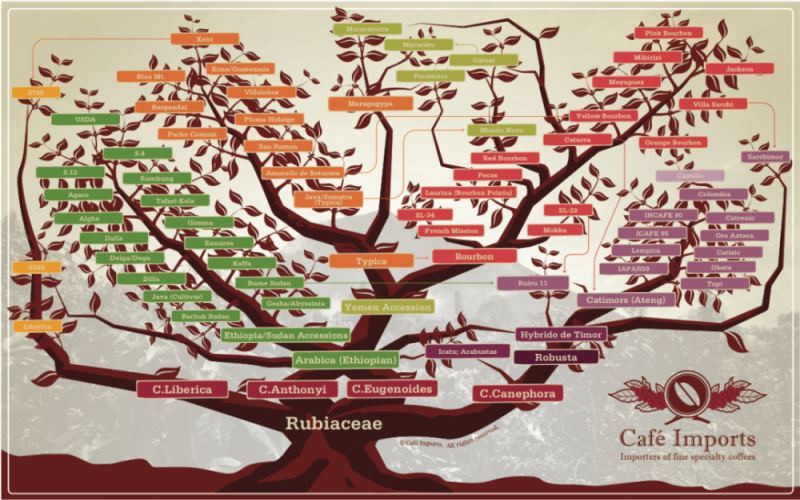
How Many Colors Can Bourbon Coffee Cherries Be? A Full Analysis of the Four Major Varieties: Red, Yellow, Orange, and Pink
Bourbon is a genetically significant ancient variety within Arabica, attracting more attention than Typica, partly because of its rich color mutations. From its origins in Yemen to acquiring its name on Réunion Island, and then spreading and mutating in Brazil, El Salvador, and elsewhere, the Bourbon family gradually differentiated into types with different fruit colors, such as Red Bourbon, Yellow Bourbon, Orange Bourbon, and Pink Bourbon. These variants differ not only in appearance but also in flavor expression, yield, and disease resistance. This article will trace the historical development of the Bourbon variety, introduce the origins, characteristics, and current cultivation status of each color variant one by one, and also present relevant product information from Front Street Coffee. [more…]
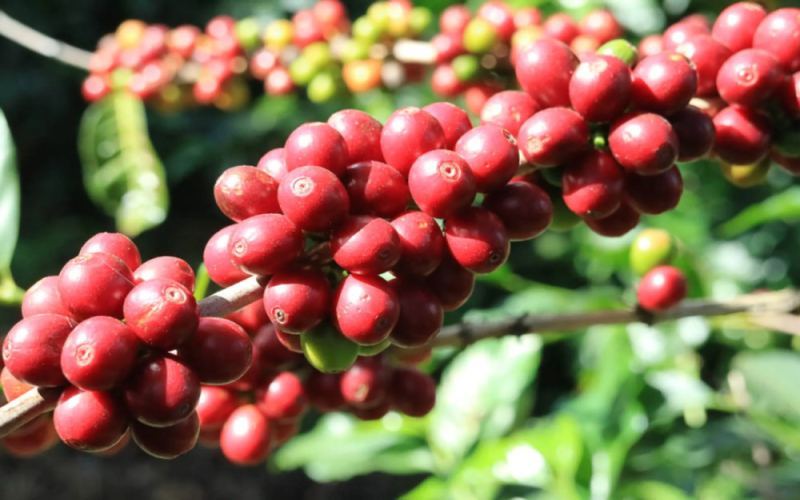
Exploring Sidra and Pacas: The Origins, Characteristics, and Current Cultivation Status of Two Distinctive Coffee Varieties
In the world of specialty coffee, beyond common varieties like Bourbon, Typica, and Caturra, some rare bean varieties are gradually coming into the public eye. Sidra and Pacas are two representatives that have attracted much attention. Sidra originated in Ecuador and rose to fame after winning the World Coffee Championship, and now performs brilliantly in Colombia's Huila region; Pacas is a natural mutation of Bourbon and is widely grown in El Salvador and Honduras. This article will introduce in detail the origins, genetic characteristics, growing conditions, and flavor profiles of these two varieties, and bring a brewing experience of the Sidra coffee beans from Colombia's Finca La Divisa obtained by Front Street Coffee. [more…]
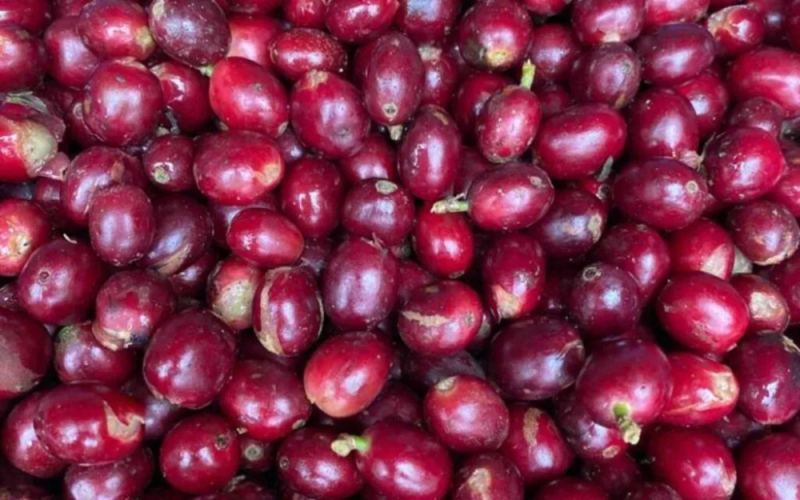
What Exactly Is the Improved Typica Mejorado Variety? A Full Analysis of the Origins and Flavor of This Rare Coffee Variety
Typica Mejorado is one of the representative bean varieties of Ecuadorian specialty coffee. Although its name contains "Typica," it actually has no direct genetic relationship with Typica. It originated from a breeding trial project established by Nestlé in Pichincha Province, Ecuador, and was created by crossing Red Bourbon with Ethiopian native varieties. It became popular among local coffee farmers due to its outstanding pest resistance. At Ecuador's first COE in 2021, Typica Mejorado took 10 of the 23 winning beans scoring above 87 points, and its fame soared thereafter. This article will help you gain a comprehensive understanding of this rare variety from the perspectives of its origins, genetic identification, competition performance, and flavor characteristics. [more…]

Arabica Specialty Coffee Bean Analysis: The Origins, Flavors, and Variety Characteristics of Typica and Bourbon
Arabica has long enjoyed a reputation as coffee royalty, not only for its outstanding flavor but also because its ancient derivatives, Typica and Bourbon, are two of the most commercially valuable pillars of specialty coffee. From the perspective of Front Street Coffee, this article systematically reviews the origin distribution, growing conditions, and flavor performance of the Arabica species, and takes an in-depth look at the origin stories, plant morphology, and cupping characteristics of varieties such as Typica, Bourbon, Caturra, Catuai, Pacas, SL28/SL34, Geisha, Villa Sarchi, and Maragogype, helping coffee lovers fully understand the ins and outs of these classic varieties. [more…]
A Comprehensive Analysis of the Definition of Specialty Coffee and the Main Cultivated Varieties of Arabica
Specialty coffee is centered on carefully cultivated high-altitude Arabica, and its varietal system originates from two ancient bloodlines: Typica from Ethiopia and Bourbon from Yemen. This article systematically outlines the definition of specialty coffee and provides a detailed classification of major Arabica varieties, including Typica, Bourbon and their genetic mutations, intraspecific hybrids, and interspecific hybrids. It covers varieties such as Bourbon Pointu, Maragogipe, Geisha, SL28, Caturra, and Pacamara, while also explaining the position of hybrid varieties in specialty coffee and the key influence of producing estates on flavor differences. [more…]
A Comprehensive Guide to Specialty Coffee Varieties: Flavors and Origins from Typica and Bourbon to Hybrid Cultivars
There are at least a hundred varieties under the Coffea genus, but the ones that truly fall within the specialty coffee category are mainly carefully cultivated high-altitude Arabica. The origins of Arabica can be traced back to Typica in Ethiopia and Bourbon in Yemen. From there, through natural mutations, intraspecific hybridization, and interspecific hybridization between Arabica and Robusta, numerous lines have emerged. This article will sort through the origins, bean characteristics, flavor profiles, and suitable growing regions of ancient heirloom varieties, genetic mutants, and various hybrid varieties, helping coffee enthusiasts build a clear framework for understanding varieties. [more…]
Arabica Coffee Region Flavor Analysis: A Detailed Guide to Bourbon and Typica Variety Characteristics and Cultivation Differences
The global spread and evolution of Arabica coffee have always revolved around two ancient varieties: Typica and Bourbon. Having left Ethiopia's genetic treasure trove, these varieties, though widely planted in Central and South America, India, and East Africa, remain frail and lacking in disease resistance due to their narrow genetic base. Bourbon and Typica share one critical need—shade trees—without which they struggle to express ideal flavors. This article will take an in-depth look at the origins, dissemination paths, bean shapes, and cultivation performance of Bourbon and Typica, and reveal the common industry misconception that "round-bodied Bourbon does not all come from Bourbon Island," while also clarifying Typica's true standing in today's specialty coffee and its derived varieties. [more…]
A Complete Analysis of Arabica Coffee Bean Varieties: The Origins and Regional Flavor Differences of Typica, Bourbon, and Geisha
Arabica coffee accounts for about 70% of global coffee production, and its cultivation typically requires an altitude of over 1,200 meters. After this variety was introduced from the Arabian region to Europe, it was divided into two foundational categories, Typica and Bourbon, based on differences in the places of introduction, and thereafter many branches emerged through genetic mutation and hybridization. This article will begin with the dissemination path of Geisha, sort out the respective characteristics and advantages and disadvantages of Typica and Bourbon, and extend to representative producing regions such as Brazil, Colombia, Jamaica Blue Mountain, and Hawaii Kona, analyzing how altitude, terrain, and harvesting methods affect the flavor expression and price positioning of coffee beans. [more…]