








Why is Sidra treated as a distinct type of arabica coffee?
Sidra, meaning "apple juice" or "cider" in Spanish, became prominent after two World Barista Champions won using Colombian lots, one from La Palma y El Tucan and one from Finca El Diviso. It is generally described as a Typica and Red Bourbon cross, though WCR genetic testing links it closer to Ethiopian landraces, and its origins remain unclear.
As a type of arabica coffee, Sidra combines Bourbon-like sweetness with Typica's clean character, often showing floral notes and high-sweetness fruit tones. It is sometimes written as Sydra or Bourbon Sidra. The variety traces back to an experimental breeding program, and it was once scattered in fields before championship wins brought it attention.
In the past two years, a coffee variety called "Sidra" has rapidly risen to fame in the specialty coffee circle. Two WBC champions each won using Sidra lots from Colombia's La Palma y El Tucan estate and Finca El Diviso, respectively, propelling this experimental variety—once left scattered in the fields—onto the world stage. Sidra means "apple juice" or "cider" in Spanish, and it is generally believed to be a cross between Typica and Red Bourbon. However, WCR genetic identification shows it is closer to Ethiopian landraces, and its origins remain unclear to this day. In this article, Front Street Coffee will outline Sidra's origin story, genetic research, plant characteristics, and flavor profile, and share a cupping experience and pour-over recommendations for Finca El Diviso's anaerobic natural Sidra, giving you a comprehensive understanding of this champion variety that combines floral notes with high-sweetness fruit tones.

Friends who enjoy drinking coffee—have you recently noticed a gradually rising niche variety called "Sidra" when shopping for coffee beans? Today, Front Street Coffee will talk about Sidra and explore the story behind it.
Sidra's rapid entry into the public eye is largely thanks to two World Barista Champions "endorsing" it.
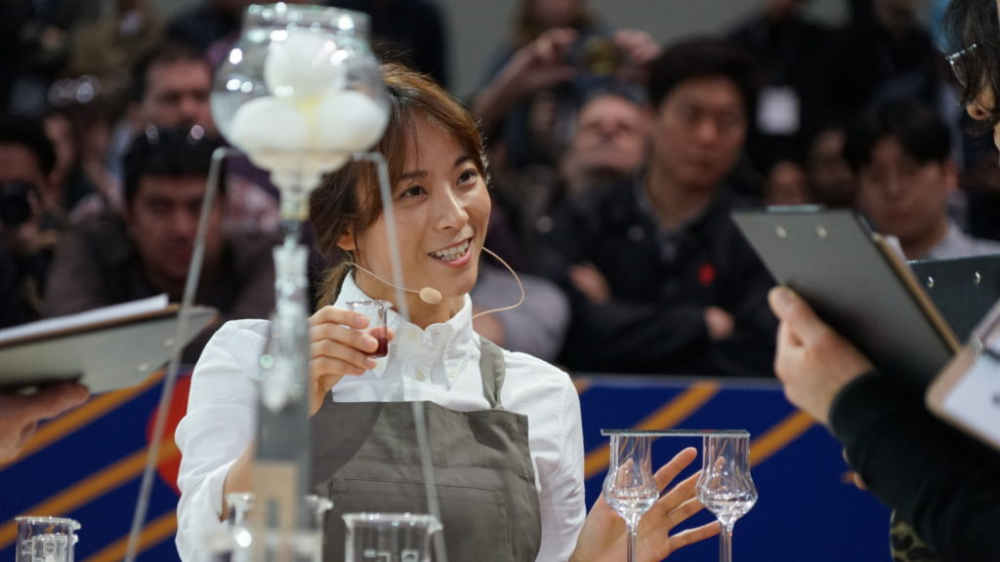
At the 2019 World Barista Championship (WBC), Jooyeon Jeon from South Korea won the championship with Sidra coffee produced by Colombia's La Palma y El Tucan estate, and third-place finisher Cole Torode in the same competition also chose a Sidra lot from that estate.
Jooyeon Jeon
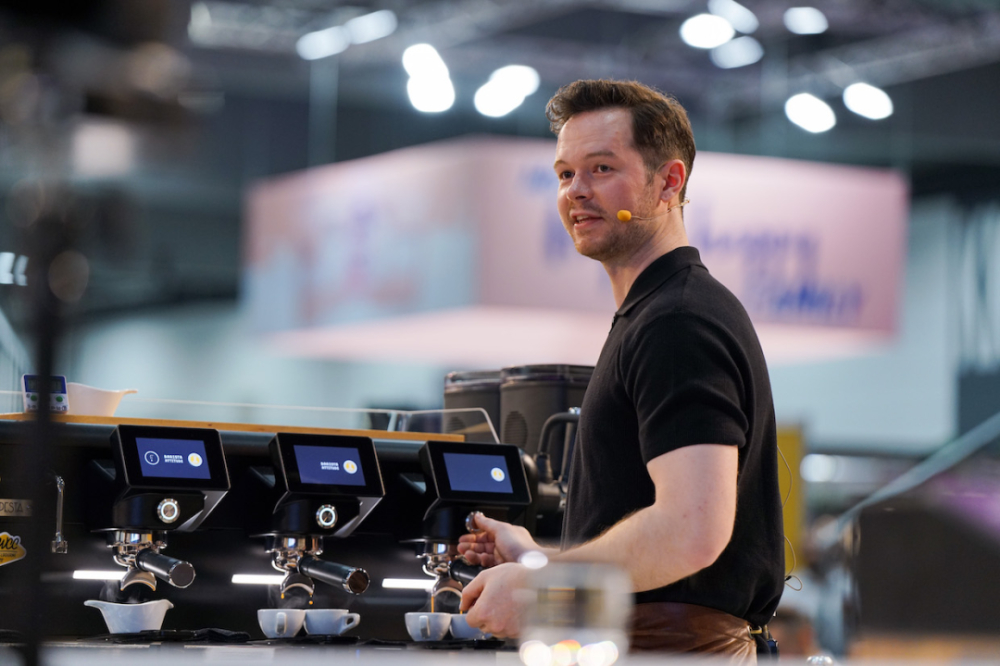
Last year's WBC champion, Australian competitor Anthony Douglas, also won with the Sidra variety, using an anaerobic fermentation lot from Colombia's Finca El Diviso. After Anthony's victory, the popularity of Finca El Diviso and the Sidra variety in the specialty coffee circle continued to rise.
Anthony Douglas
The Mystery of Sidra's Origins
Sidra is a transliteration of "Sidra," sometimes written by farmers as Sydra or Bourbon Sidra, and in Spanish it means "apple juice" or "cider." The industry currently generally believes that Sidra is a cross between Typica and Red Bourbon, and its cupping performance is often described as combining Bourbon's sweetness with Typica's clean and serene character.
It is understood that Sidra was originally an experimental variety originating from a coffee breeding center established by Nestlé in Pichincha Province in northern Ecuador in earlier years. This institution was mainly dedicated to hybridizing Ethiopian landraces with local Typica or Bourbon. Later, the project was discontinued, and many hybrid varieties were left in the fields, scattering from there.
While organizing materials, Front Street Coffee consulted Mr. Han Huaizong's book "The Fourth Wave of Specialty Coffee." The book mentions that the World Coffee Research (WCR) had conducted genetic identification on Sidra, and the results showed it is closer to Ethiopian landraces. In 2021, Dr. Shao Changping also conducted genotypic identification on two types of Sidra on the market. He found that pointed-bean Sidra does not contain Typica genes and is closer to Geisha or Ethiopian landraces mixed with other genes; while round-bean Sidra should be a hybrid of Typica and Geisha.
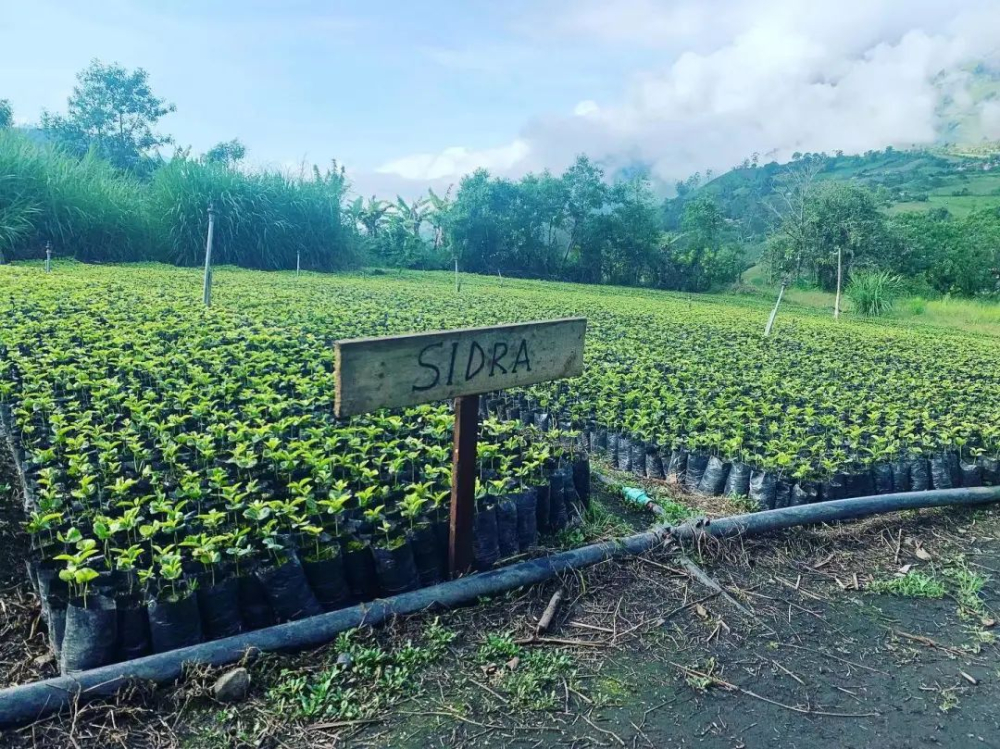
Sidra's Variety Characteristics
Although genetic testing indicates that Sidra has a genetic connection with Ethiopian coffee varieties, its main cultivation areas are currently concentrated in Colombia and Ecuador. At the first Ecuador Cup of Excellence (COE) in 2021, the Sidra variety took 2nd, 5th, 6th, 8th, 16th, 20th, and 21st places—an impressive result. As the second-largest main producing country, Colombia's Sidra is even more frequently used by competitors as competition beans. In addition, some producing regions also grow it in small areas for experimental purposes.
Sidra plants usually grow at altitudes between 1650 and 1800 meters. The trunk is thick and can grow up to 4 meters tall. It requires moderate shade when cultivated and is resistant to multiple pests, but is susceptible to leaf rust and coffee berry disease. The leaves are slender, and the flowers have five petals. The fruit sets densely and yields relatively high, with cherries larger and rounder than most Arabica varieties; green beans are slender and elongated, somewhat similar in appearance to Geisha.
In green bean competitions, high-quality pointed-bean Sidra, such as washed lots, is often described as having a base of brown sugar, citrus, honey, and berries, accompanied by delicate floral notes. This happens to match the impression of Ethiopian landraces. Mr. Han Huaizong also wrote in his book, "No wonder the sweetness and floral charm are extremely similar to Sidama (Sidamo) or Geisha."
When Front Street Coffee cupped Finca El Diviso's Front Street anaerobic natural Sidra, we experienced a complex fruit aroma interwoven with passion fruit, citrus, grape, and honey; as the temperature dropped, it entered the mouth with bright acidity like orange juice, mixed with a hint of cinnamon spice, and after swallowing, a cocoa-like lingering sweetness remained in the mouth.
Front Street Coffee has tried extracting this bean using cold brew, iced pour-over, and hot pour-over methods, and found that Front Street Colombia Finca El Diviso Sidra always showcases rich, high-sweetness fruit flavors, accompanied by plant-based aroma notes, with a round mouthfeel and relatively weak bitterness.
FrontStreet Coffee's Pour-Over Recommendations
Considering that Front Street Sidra has a floral and fruity profile, Front Street's roaster uses a medium-light roast to highlight floral and fruity sweetness. Lighter-roasted beans require higher water temperatures to fully extract aromatic substances, but for beans like Sidra with cocoa-like notes, too high a water temperature can easily increase bitterness, so Front Street recommends brewing with 90-91°C water.
Dripper: V60
Water temperature: 90-91°C
Grind size: fine granulated sugar coarseness (80% passing rate with No. 20 standard sieve)
Coffee-to-water ratio: 1:15
Coffee dose: 15 grams
Pour the coffee grounds into the V60 dripper, wet the coffee bed with twice the amount of water as the coffee grounds, and after it forms a dome, let it bloom for 30 seconds; then pour in a small stream in circles from the inside out until 125 grams, pausing in stages. Wait until the coffee bed drops to half the height of the dripper, then continue pouring the third stage with the same fine stream until 225 grams, until all the coffee liquid has finished filtering, then remove the dripper. Total time is about 2 minutes.
The above content is compiled by CoffeeHunters, a coffee news website.


