







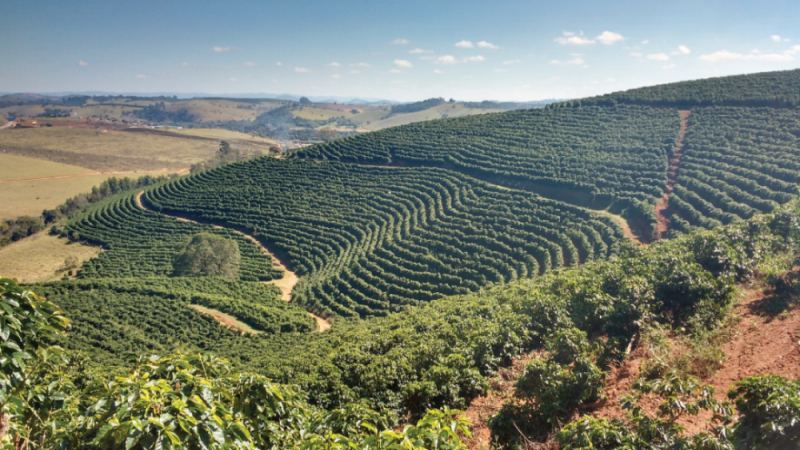
How Coffee Bean Producing Countries Shaped Brazil's Bourbon Line
Brazil, a leading name among coffee bean producing countries, moved from Typica to Bourbon after the 1860s. Bourbon yielded roughly 30 percent more than Typica, so it spread from Campinas in the south to other regions and later across South and Central America, replacing Typica as the main cultivated variety.
The Campinas Agronomic Institute collected many varieties, including Caturra, Catuai, Mondo Novo, and Maragogipe, yet Red Bourbon, Yellow Bourbon, Catuai, and Mondo Novo remain Brazil's main types today. Yellow Bourbon keeps its yellow color when ripe because of how anthocyanin and luteolin genetics express in the coffee tree.
As a major global coffee-producing country, Brazil's variety evolution history is quite fascinating. From the early cultivation of Typica to the introduction of Bourbon, and then to the divergence of Red Bourbon and Yellow Bourbon, multiple factors such as yield, disease resistance, and genetics are involved. This article reviews the succession of coffee varieties in Brazil, focusing on answering why Yellow Bourbon does not turn red after ripening but maintains its yellow appearance, and analyzes the dominant and recessive genetic mechanisms of anthocyanins and luteolin. It also introduces the flavor characteristics and brewing performance of Front Street Entry Select Brazil Red Bourbon and Front Street Queen's Farm Yellow Bourbon, helping coffee enthusiasts understand the differences these two Bourbon varieties present in the cup.
For more specialty coffee knowledge, please follow our WeChat official account: FrontStreet Coffee
According to historical records, coffee was introduced to northern Brazil in 1727, with Typica as the main cultivated variety at the time. Typica holds a prominent position in coffee culture and genetic research and is one of the most critical varieties in Arabica. However, its unit yield is relatively low, and its resistance to diseases is not strong, making it less than ideal from an economic return perspective.
By the 1860s, Brazil began introducing the Bourbon variety. Bourbon is also susceptible to diseases and pests, but its yield is about 30% higher than Typica. With this advantage, Bourbon gradually replaced Typica and was widely promoted. The place where Bourbon was first introduced was Campinas in southern Brazil. This variety adapted well to Brazil's terroir, so it quickly spread to other regions and later to other coffee-producing countries in South America and Central America.
Afterward, Brazil established the Campinas Agronomic Institute (IAC) to provide dedicated support for coffee crop research and to work on selecting coffee varieties suited to Brazil's environment and climate. During this period, IAC collected numerous variety resources, including Caturra, Catuai, MondoNovo, and Maragogipe. However, not all collected varieties were suitable for cultivation in Brazil, so Red Bourbon, Yellow Bourbon, Catuai, and MondoNovo remain Brazil's main cultivated varieties to this day.
Currently, the Brazilian coffee beans in the Front Street Entry Select series use Red Bourbon coffee beans, which are among the country's main planted varieties, and are processed using the semi-washed method. Because Brazilian coffee typically presents low acidity with nutty and chocolate notes, it is roasted to a medium-dark level. After brewing, it has flavors of nuts, peanuts, and cocoa chocolate, with low acidity and moderate body.
Conventional Bourbon coffee trees produce green fruit after flowering. As the fruit gradually develops, its color first turns yellow and orange, and finally becomes red when fully ripe. But in Brazil, there is a special Bourbon variety that does not turn red after ripening and instead presents a fresh, translucent yellow. To distinguish it, people call the Bourbon variety that produces red fruit "Red Bourbon."
According to records, Yellow Bourbon was first discovered in 1930 in Pederneiras, in the northeastern part of São Paulo State, Brazil. Its fruit ultimately does not turn red but maintains a yellow appearance. At the time, some believed it was a natural mutation of Red Bourbon, while others held that it was the offspring of natural reproduction between Red Bourbon and "Amerelo de Botocatu" (a yellow-fruited Typica mutant discovered in São Paulo State in 1871).
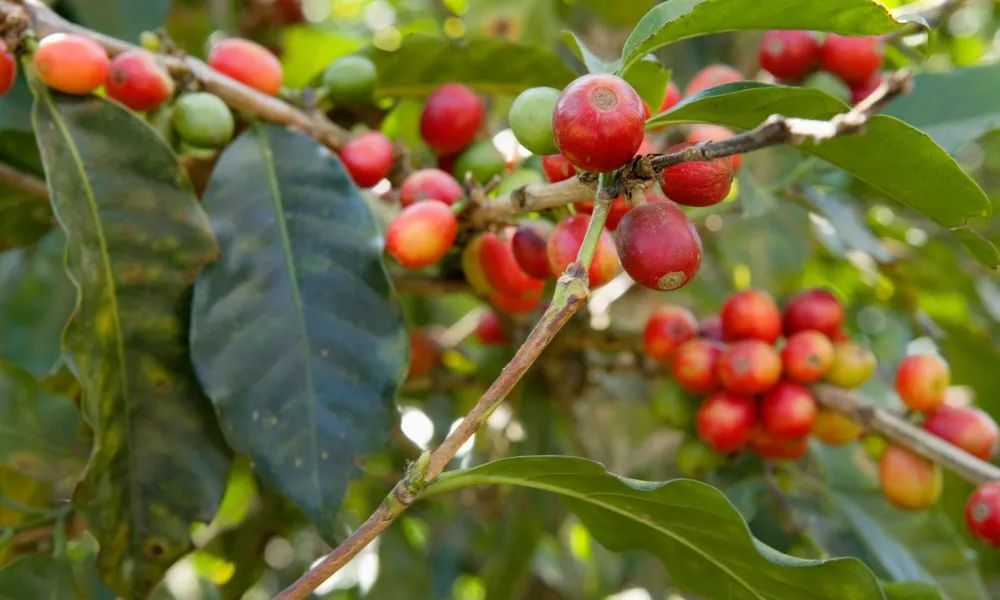
Why does the fruit turn yellow? Front Street reviewed the materials and found that in 1942 a professor named Krug revealed the genetic origin of this color and named it "Xanthocarpa." In Greek, "Xanthus" means yellow, and "carpus" means fruit.
Coffee fruit is plant tissue and contains a substance called "luteolin," which belongs to the flavonoids and has the appearance of yellow crystals. The color of coffee fruit is determined by "anthocyanins," which are widely present in berries such as grapes and cherries. However, "anthocyanins" are divided into dominant and recessive genes: coffee plants carrying the dominant XcXc gene produce red berries, while when some fruits carry the recessive XCXC gene, the natural color of luteolin becomes visible, and the fruit therefore appears yellow.
Initially, when Yellow Bourbon was discovered, it had the characteristics of high yield and excellent quality, so it quickly became popular for cultivation in Brazil. But in the following years, its yield declined, and its resistance to disease weakened. It requires more meticulous management and is more suitable for planting at altitudes of 1,000 meters or higher. Currently, it is cultivated only in some areas of São Paulo State, Brazil, such as Mogiana. Due to the higher altitude and large temperature difference between day and night, the fruit has more time to develop richer aromas.
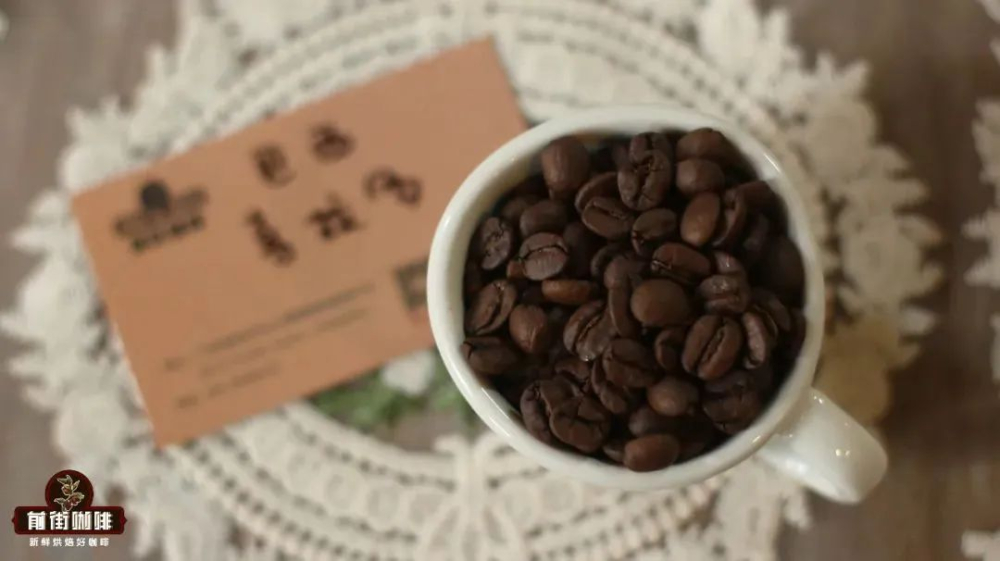
If you want to taste the unique flavor of this yellow coffee fruit, Front Street Queen's Farm coffee beans are recommended. They come from Yellow Bourbon in the Mogiana region. In a high-altitude environment, the coffee has a rich yet sweet and balanced profile. To highlight its roasted nut aroma, Front Street presents it with a medium-dark roast, making this coffee suitable for various brewing devices such as pour-over, moka pot, espresso machine, siphon, and French press.
Through cupping, it was found that compared with Red Bourbon, Yellow Bourbon has a softer acidity, refreshing sweetness, and a creamy texture, making it easier to drink. After pour-over brewing, it has fruity sweetness, with nutty flavors such as sugarcane, chocolate, and peanuts, a faint clean bitterness, and a smooth, delicate mouthfeel.
The above content is compiled by CoffeeHunters, a coffee news website.


