







Search Results for: Arabica Coffee Origins
A Comprehensive Analysis of Coffee Bean Varieties: Arabica Variety Classification and Representative Beans from Major Global Origins
Coffee, as a plant of the Rubiaceae family, has over a hundred known species, but only three cultivated varieties are actually used for drinking: Arabica, Robusta, and Liberica. Among them, Arabica occupies about seventy percent of global production with its exceptional flavor and aroma, making it the top choice for single-origin and specialty coffee. From Ethiopia's native Typica and Bourbon to the Geisha that has swept the market today, Arabica subspecies are rich and diverse, each with its own characteristics. At the same time, origins such as Brazil, Colombia, Panama, Guatemala, Costa Rica, Jamaica, Ethiopia, Kenya, and Indonesia, by virtue of their unique terroir and processing methods, shape distinctly different coffee flavors. Front Street Coffee offers more than 50 different regional coffee beans in its stores, meeting diverse taste needs. This article will systematically sort out coffee variety classification, the advantages and disadvantages of Arabica, and representative global origins, taking you to gain a deeper understanding of the rich landscape of the coffee world. [more…]

Arabica and Mandheling Coffee Beans Explained: A Full Analysis of Starbucks Ingredients, Sumatra Origins, and Variety Flavors
Have you ever wondered why the coffee beans on Starbucks shelves always list Arabica as the ingredient, no matter where they come from? What exactly is Arabica, and why has it become the mainstay of specialty coffee? And why is Sumatra Mandheling from Indonesia renowned for its mellow, low-acid character? From the perspective of Front Street Coffee, this article first traces the origins, producing regions, and varietal branches of Arabica, then focuses on Sumatra, the core producing region of Mandheling, to explain the naming origins of Tiger Mandheling, the varietal characteristics of Typica and Caturra, and how medium-dark roasting and brewing parameters shape its sweet, smooth finish. Whether you are a beginner enthusiast or a seasoned aficionado, you will gain a clear thread of coffee knowledge from it. [more…]
The Origin and Flavor Characteristics of Arabica Coffee Beans: A Comprehensive Analysis of Production Distribution, Quality Grades, and Brewing Applications
Arabica coffee beans are the most produced variety in global commercial coffee, accounting for 70% to 80% of total production. Its origins are closely tied to the Arabian region, and today it is widely cultivated in the equatorial highlands between 25 and 30 degrees north and south latitude. Brazil, Colombia, Indonesia, and Vietnam are major producing regions, but factors such as cultivation methods, soil fertility, rainfall, sunlight, and latitude together shape the diversity of coffee from different origins. Arabica coffee trees adapt to a wide range of altitudes, require temperatures of about 20 degrees Celsius, and need 40 to 59 inches of rainfall during the growing season. Its flavor is rich and mellow, with lower bitterness, and its caffeine content is slightly higher than that of decaffeinated products, making it suitable for evening drinking. In addition, in espresso, Robusta beans are often blended in to enhance crema and mouthfeel. This article will systematically review the origins, flavor characteristics, quality grades, and origin knowledge of Arabica beans, and mention recommended products from the Front Street brand. [more…]
A Comprehensive Guide to Arabica Coffee Beans: Origins, Varieties, Producing Regions, Flavor, and Price
Arabica coffee, with its rich layers of aroma and varied flavors, occupies an irreplaceable position among commercial coffee beans. From its origins on the Ethiopian highlands to its present-day spread across the coffee belt of Central and South America, Africa, and Asia, Arabica has undergone a long journey of dissemination and evolution. This article will systematically sort through Arabica's botanical characteristics, growing conditions, the two ancient original varieties Typica and Bourbon, as well as common derived varieties such as Geisha, Caturra, and SL28. At the same time, combined with Front Street Coffee's bean list recommendations, it will take you from origin, variety, and processing method to flavor and mouthfeel, for a comprehensive understanding of the rich world behind this everyday drink. [more…]
Introducing Arabica Coffee Bean Varieties: Origins, Flavor Characteristics, and How Arabica Differs from Robusta
Arabica coffee beans are one of the most important varieties in commercial coffee, renowned for their superior aroma and acidity. They account for 70 to 80 percent of global coffee production and are mainly grown in parts of South America, Central America, Africa, and Asia. Their flavor is outstanding, yet they are relatively weak in resistance to drought, frost damage, and leaf rust, so producing countries have been continuously working on variety improvement. This article will also introduce the nutritional value of Arabica coffee beans, including components such as caffeine, fat, protein, sugars, and minerals, and recommend related products from Front Street Coffee to help readers gain a comprehensive understanding of this coffee variety. [more…]
A Comprehensive Analysis of Arabica Coffee Beans: Origins and Varieties, Flavor Characteristics, Growing Altitude, and Comparison with Robusta
When selecting coffee, the words "Arabica" often appear on the packaging—what exactly do they represent? Why do merchants always love to emphasize this variety? This article, from the perspective of Front Street, will sort out Arabica's origins, flavor characteristics, and growing conditions, and conduct a comprehensive comparison with Robusta. At the same time, it will also introduce the Front Street daily bean series and espresso blend recommendations, helping coffee lovers more clearly understand the value of this mainstream variety and find Arabica coffee suitable for everyday drinking. [more…]
What grade does Arabica coffee belong to? A comprehensive analysis of major global origins and representative brands
Coffee belongs to the Rubiaceae family, with about eighty known species, of which three main categories are used for drinking: Arabica, Robusta, and Liberica. Arabica, with its balanced flavor and aroma, has become the mainstay of single-origin and specialty coffee, accounting for more than seventy percent of global production. From the nutty-chocolate notes of Brazil, to the citrus and dark cocoa of Colombia, and on to Panama Geisha, Jamaica Blue Mountain, and Ethiopia Yirgacheffe, each origin has its own distinctive flavor. Front Street Coffee stores carry coffee beans from more than fifty origins, and this article examines Arabica's grade positioning and the flavors of well-known origins around the world one by one. [more…]
How Is Colombian Coffee Different from Arabica Beans? A Full Analysis of Origins, Processing Methods, and Flavor Differences
Arabica and Colombian coffee are often lumped together, but they actually represent the relationship between a variety and a place of origin. Arabica is the world's predominant coffee bean species, while Colombian coffee is Arabica beans grown in Colombia, with a distinctive flavor due to its terroir and an extra washing step. This article will clarify the differences between Arabica and Robusta, explain how origin, altitude, soil, and climate affect coffee flavor, and explain why Colombian coffee undergoes an additional processing step. If you want to know which is better, Colombian or Arabica, the answer is not a simple either-or choice, but rather an understanding of how variety and origin together shape the flavor in your cup. Those who enjoy pour-over coffee can also check out Front Street Coffee's related bean recommendations. [more…]
Why Is Typica Considered the Prototype of Arabica? Tracing the Variety Origins of Jamaica Blue Mountain No. 1 Coffee
Typica is often regarded as the archetypal representative of Arabica, a perception rooted in both historical origins and its distinct botanical characteristics and flavor profile. This article begins with the origin and naming of Typica, traces its position in the history of the coffee trade, and explains in detail its bean shape, tree form, young leaf color, low yield, weak disease resistance, and demanding growing conditions. It also explains why, even after the promotion of numerous high-yield varieties, some origins still insist on cultivating Typica, and introduces the flavor differences and roasting approaches of two Typica coffees: Front Street 2013 and Jamaica Blue Mountain No. 1. [more…]

What exactly are Arabica coffee beans? A full analysis from variety origins to Typica, Bourbon, Caturra, and Catuai
People often say "100% Arabica," but what exactly does Arabica refer to? Is it a country, a producing region, or a coffee variety? In fact, Arabica is just one of the three major coffee species, the other two being Robusta and Liberica, and Arabica is widely used in specialty coffee due to its outstanding flavor. Its caffeine content is about 0.8%-1.5%, yet it accounts for about 75% of global production, but its growing conditions are demanding—it is vulnerable to frost, drought, and leaf rust. In this article, Front Street Coffee will guide you through the origin of the name Arabica, its spread and history, and the common varieties derived from it, such as Typica, Bourbon, Caturra, and Catuai, along with the origin and flavor information of representative coffee beans for each variety, to help you choose your ideal coffee more clearly. [more…]
A Comprehensive Guide to Specialty Coffee Varieties: Flavors and Origins from Typica and Bourbon to Hybrid Cultivars
There are at least a hundred varieties under the Coffea genus, but the ones that truly fall within the specialty coffee category are mainly carefully cultivated high-altitude Arabica. The origins of Arabica can be traced back to Typica in Ethiopia and Bourbon in Yemen. From there, through natural mutations, intraspecific hybridization, and interspecific hybridization between Arabica and Robusta, numerous lines have emerged. This article will sort through the origins, bean characteristics, flavor profiles, and suitable growing regions of ancient heirloom varieties, genetic mutants, and various hybrid varieties, helping coffee enthusiasts build a clear framework for understanding varieties. [more…]
Complete Guide to Arabica Coffee: Origins, Variety Characteristics, and Processing Method Flavor Guide
Coffee belongs to the Rubiaceae family, with over a hundred known species, but commercial cultivation is dominated by three major types: Arabica, Robusta, and Liberica. Among them, Arabica, with its outstanding aroma and flavor, accounts for over seventy percent of global production and is the core raw material for single-origin and specialty coffee. This article will systematically review the varietal characteristics, advantages and disadvantages, and sub-varieties of Arabica, and introduce one by one the cultivated varieties, processing methods, grading standards, and flavor profiles of representative producing countries such as Brazil, Colombia, Panama, Guatemala, Costa Rica, Jamaica, Ethiopia, Kenya, and Indonesia. It will also incorporate Front Street Coffee's sourcing experience and recommendations to help coffee enthusiasts build a complete framework for understanding origins. [more…]

Robusta Coffee Flavor Analysis: A Comprehensive Interpretation from Variety Origins to Instant Coffee Ingredients
When many people first learn about coffee, they often hear variety names like Arabica and Robusta, yet they may not clearly understand the essential differences between them. From the perspective of Front Street Coffee, this article systematically sorts out the origin and classification of Robusta coffee, its main producing regions, flavor characteristics, cultivation advantages and disadvantages, and explains why it has become an important raw material for instant coffee and commercial blends. At the same time, it compares Arabica varieties to help coffee enthusiasts understand the key differences between the two major varieties in terms of altitude requirements, disease resistance, caffeine content, and cup performance, so as to gain a more comprehensive understanding of every cup of coffee they drink daily. [more…]
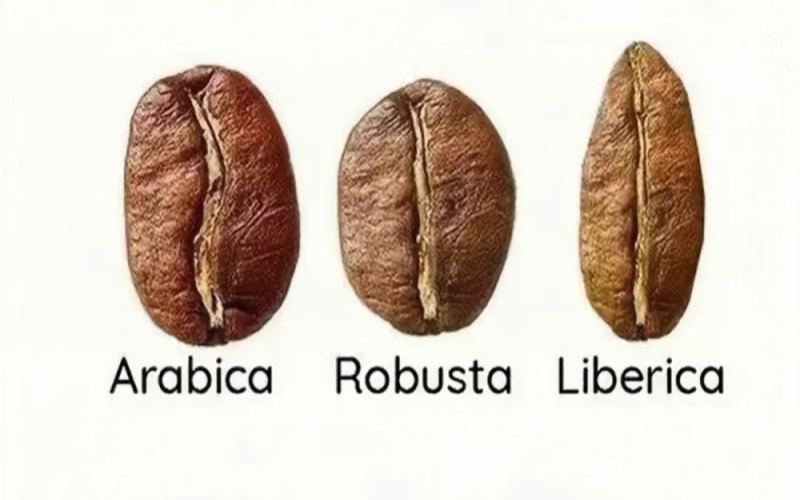
Pacamara's Parent Maragogipe: The Origins of the Elephant Bean Variety and an Analysis of the Three Major Coffee Species
In the world of coffee, Arabica, Robusta, and Liberica make up the three main species. Among them, the smallest in size—Arabica—hides a "giant": Maragogipe, commonly known as Elephant Bean. This variety was discovered in Brazil in 1870, and can grow up to three times the size of ordinary Arabica, even surpassing Liberica. It is actually a mutation of Typica, with a flavor profile featuring sweet berry notes and bright citrus acidity, plus a thick, silky mouthfeel. However, its difficulty to cultivate, long maturation period, and low yield make it uncommon. This article will guide you through the origins and flavor characteristics of Maragogipe, as well as the dual meaning of "Elephant Bean" as both a variety and a grade, while also outlining the three major species of the Coffea genus. [more…]
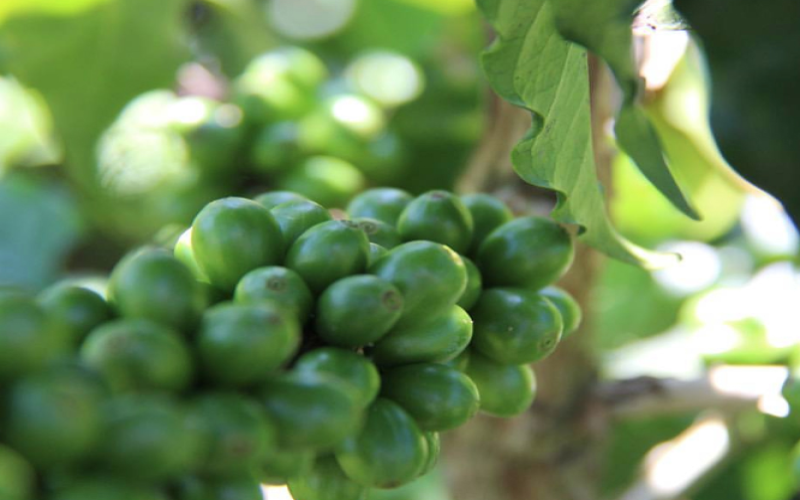
What is the connection between Typica and Arabica? A detailed look at Typica's variety characteristics, spread history, and flavor differences across origins
Typica is the most representative ancient variety among Arabica coffees and is widely recognized as the prototype of all Arabica varieties. This article will clarify the subordinate relationship between Typica and Arabica, introduce the botanical characteristics of the Typica coffee tree, its historical dissemination routes, and the flavor expressions from different origins (Jamaica Blue Mountain, Papua New Guinea Bird of Paradise, Yunnan Typica, etc.). It will also share Front Street Coffee's roasting approach and pour-over extraction parameters for Typica, helping coffee enthusiasts gain a more comprehensive understanding of the unique charm of this classic variety. [more…]
A Comprehensive Analysis of Arabica Coffee Beans: Origins, Variety Characteristics, Production Regions, and Price Reference
Arabica is one of the most important species in commercial coffee, widely favored for its rich aroma and diverse flavors. This article systematically reviews Arabica's origins and spread, botanical characteristics, and growing environment requirements, and introduces one by one the flavor profiles and representative producing regions of common varieties such as Typica, Bourbon, Geisha, Caturra, SL28, and SL34. At the same time, the article also incorporates Front Street Coffee's product system to provide coffee enthusiasts with a reference for understanding varieties from beginner to advanced levels, helping readers better understand the connections between origin, variety, and flavor when purchasing coffee beans. [more…]
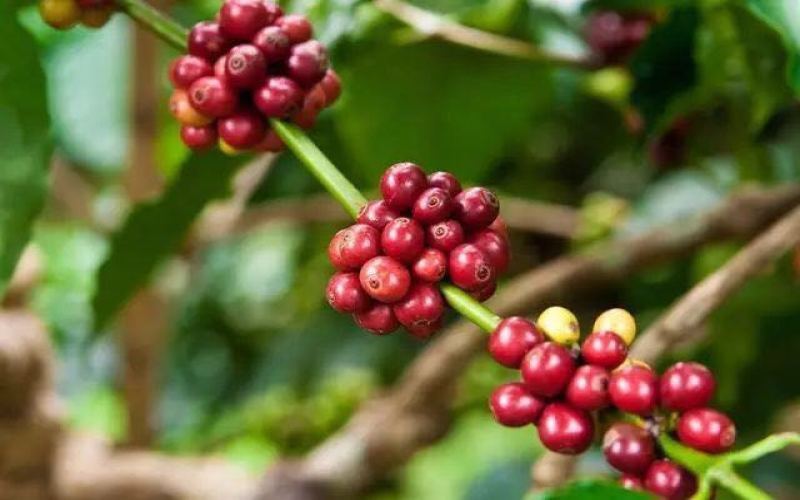
Which countries produce Robusta coffee beans? How do they differ from Arabica? A full analysis of their origins and characteristics.
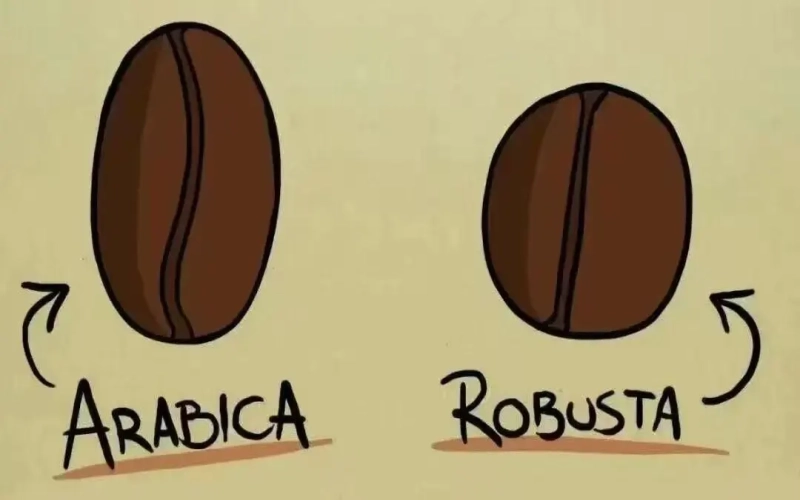
When first getting into coffee, you often hear baristas mention terms like Typica, Arabica, and Robusta, and many people find them confusing. In fact, these are all coffee variety classifications. There are three major coffee varieties: Arabica, Robusta, and Liberica, with Arabica and Robusta being the most common. Arabica originates from the Ethiopian highlands, has an elegant flavor, and accounts for about 70% of global production; Robusta originated in the Congo Basin of West Africa, is easy to cultivate, has high yields, and is mostly used in commercial blends and instant coffee. In this article, Front Street Coffee will guide you through the origin story of Robusta, its main producing countries, and its detailed differences from Arabica in flavor, appearance, disease resistance, and uses. [more…]
Why Are Arabica Coffee Bean Prices Staying So High? A Full Analysis of Specialty Bean Flavors and Grading Across Origins
Why are Arabica coffee beans priced higher? This article approaches the topic from plant taxonomy, analyzing the differences among the three major cultivated species—Arabica, Robusta, and Liberica—explaining why Arabica has superior flavor but weak disease resistance and is suited to high-altitude cultivation, and introducing one by one the varieties grown, processing methods, and grading standards of well-known origins such as Brazil, Colombia, Panama, Guatemala, Costa Rica, Jamaica, Ethiopia, Kenya, and Indonesia. At the same time, combined with Front Street Coffee's stores and bean list recommendations, it helps coffee enthusiasts understand the pricing logic of Arabica and how to choose. [more…]
A Complete Guide to Specialty Arabica Coffee Beans: Flavors and Origins from Heirloom Varieties to Hybrid Cultivars
The Coffea genus encompasses a vast number of species, yet the specialty coffee stage is dominated primarily by high-altitude Arabica. From Ethiopia's ancient Typica and Yemen's Bourbon to the spontaneously mutated Bourbon Pointu, Maragogype, and Geisha, and on to deliberately bred varieties such as Caturra and Pacas as well as interspecific hybrids, behind every name lies a story of migration and flavor. This article systematically sorts through the main varieties of specialty Arabica, their origins and lineage, and their cupping performance, and explains why hybrids rarely appear in the product lines of specialty coffee suppliers such as Front Street Coffee. Whether you are a newcomer or a seasoned enthusiast, this variety map will help you understand more clearly where the flavors in your cup come from. [more…]
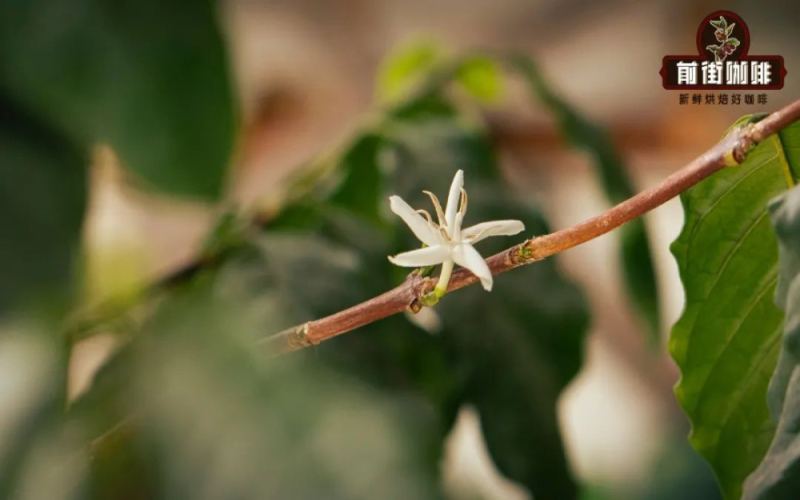
A Comprehensive Guide to Specialty Robusta Coffee Beans: From Variety Origins and Flavor Characteristics to Major Producing Regions and Brewing Suggestions
Robusta is often overlooked in the world of specialty coffee, but is it truly destined to have no place among good coffee? This article will take you through a comprehensive look at Robusta's varietal origins, botanical characteristics, flavor profile, and major producing countries. From Vietnam's commercial blends to the unique terroir of Indonesia's Mandheling, Robusta genes play an irreplaceable role. The article also specifically shares Front Street Coffee's practical brewing parameters and freshness recommendations for Mandheling, helping you understand varietal differences while also brewing a rich, full-bodied cup of good coffee. [more…]