







What Makes the Elephant Bean Coffee Variety a Giant Arabica?
Maragogype, known as the Elephant Bean, is a mutation of Typica within the Arabica species, first found in 1870 in the Maragogipe region of Bahia, Brazil. Its beans reach roughly three times the size of ordinary Arabica, and can even exceed Liberica. The cup shows berry sweetness, bright citrus acidity and a thick, silky mouthfeel, despite the small bean size typical of Arabica overall.
Early growers linked it to Liberica, which was being planted as a leaf rust substitute at the time, but genetic testing confirmed its Typica parentage. Difficulty in cultivation, a long maturation period and low yield keep Maragogype scarce on the market. The name Elephant Bean also works as a grade, referring to screen size rather than one fixed plant, and it is the parent of Pacamara.
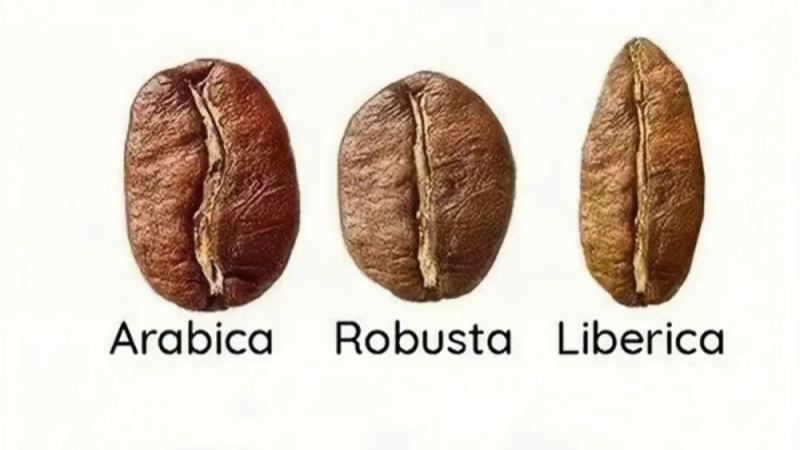
In the world of coffee, Arabica, Robusta, and Liberica make up the three main species. Among them, the smallest in size, Arabica, hides a "giant"—Maragogype, commonly known as Elephant Bean. This variety was discovered in Brazil in 1870, and its size can reach three times that of ordinary Arabica, even surpassing Liberica. It is actually a mutation of Typica, with a flavor profile featuring berry sweetness and bright citrus acidity, and a thick, silky mouthfeel. However, its difficulty in cultivation, long maturation period, and low yield make it uncommon. This article will introduce you to the origins and flavor characteristics of Maragogype, as well as the dual meaning of "Elephant Bean" as both a variety and a grade, and briefly outline the three major species of the Coffea genus.
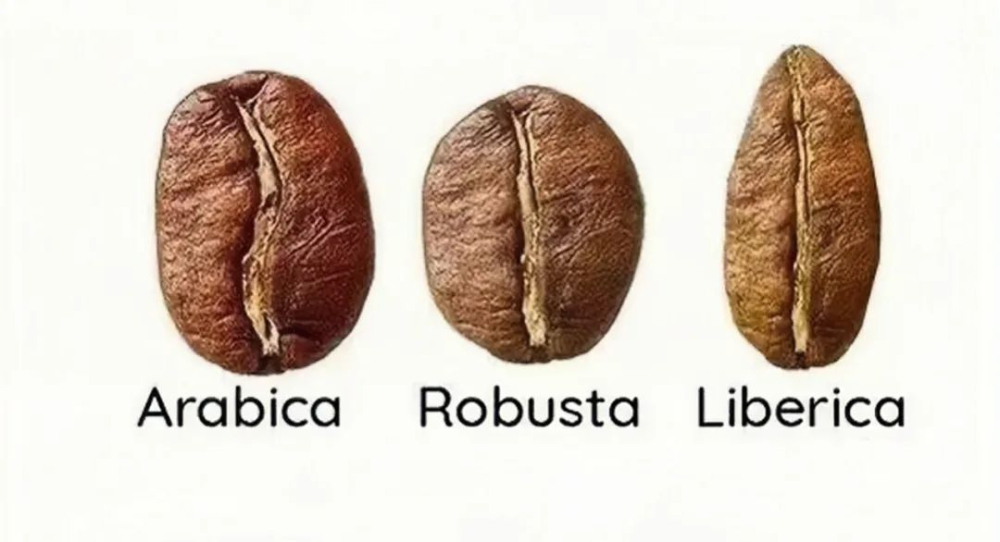
From these naming conventions, it is not hard to see the approximate average size of different types of coffee beans. However, there are always exceptions! Among the three major species, the smallest in size is Arabica—yet under it, there exists a variety with huge, plump beans, whose size even exceeds the average level of the large-seeded Liberica. This variety is Maragogype, known as the "Elephant Bean."
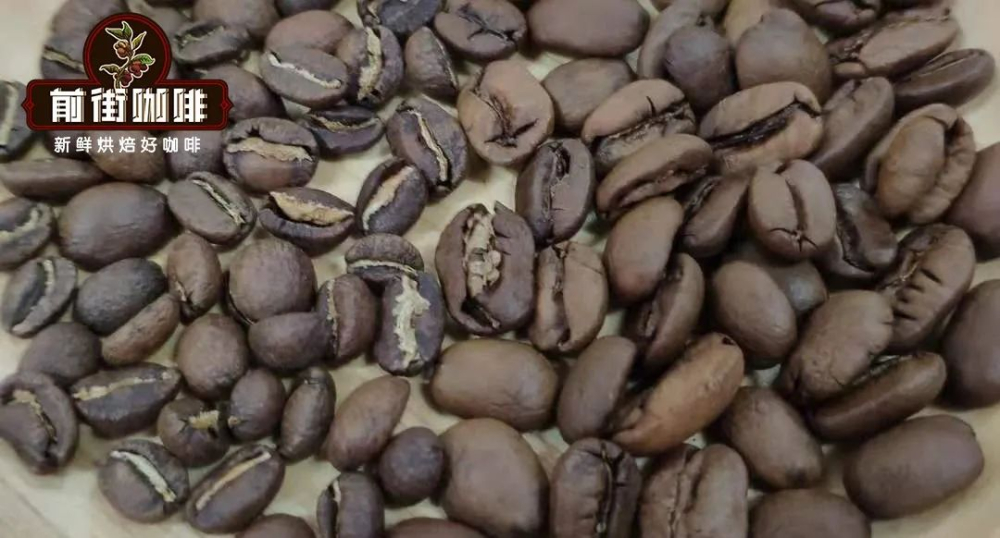
Maragogype Maragogype was first discovered in 1870 in the Maragogipe region in eastern Bahia, Brazil, and thus people directly named this bean after the place of origin. The beans of this coffee are extremely large, reaching about three times the size of ordinary Arabica, and even once surpassing Liberica. Coincidentally, it was discovered during a time when Arabica was severely affected by leaf rust, and Liberica was planted by some coffee farmers as a substitute. So at the time, people mistakenly thought it belonged to the Liberica species.
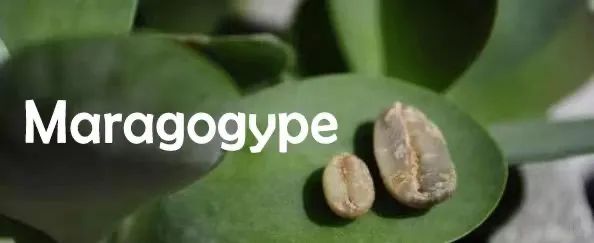
(Image from the internet) However, genetic testing revealed its true identity: it is actually a mutated variety of Typica under Arabica. In other words, it belongs to the Arabica species! Through comparison, it was found that its size is even larger than most Liberica, which also explains why the title of this article is so convoluted. Despite Maragogype's astonishing size, its flavor performance is by no means inferior to regular Arabica: the sweetness of berries, bright citrus acidity, and thick, silky mouthfeel all make it truly deserving of its name. However, from a market perspective, Maragogype is not particularly common, for a simple reason: it is extremely difficult to cultivate.
Maragogype not only has large beans and fruits, but its trunk and leaves are also considerably larger than those of ordinary coffee plants. Therefore, it requires a larger footprint, absorbs more nutrients, and consumes more resources. But on the contrary, the number of fruits it produces is fewer than regular varieties, making the input-to-output ratio severely disproportionate!
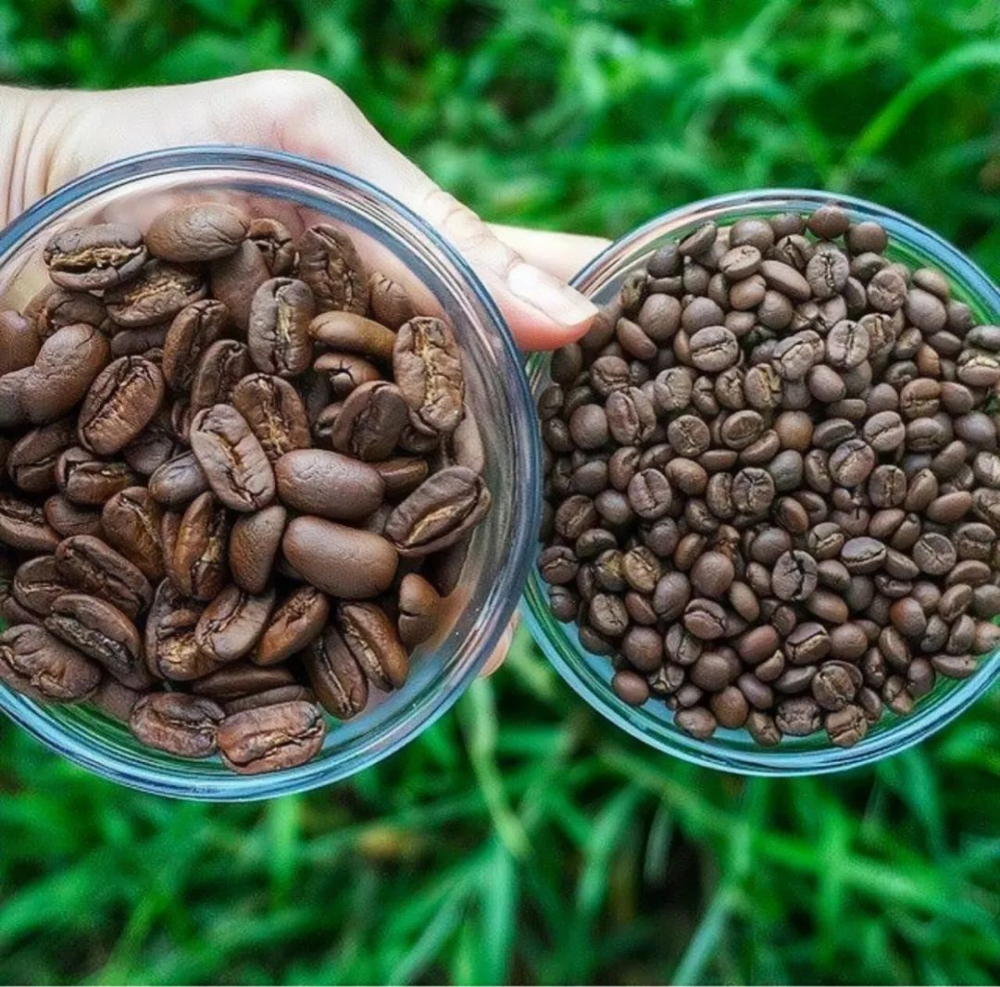
However, the above are only the visible costs, not worth mentioning! The biggest cost of growing Maragogype is actually time! Its fruit maturation period is much longer than regular Arabica, a lengthy process that most coffee farmers cannot wait for. Even if someone is willing to wait, unpredictable weather may also affect cultivation. Thus, under the pressure of such sunk costs, few coffee farmers specifically grow Maragogype. Those who grow it are mostly coffee estates that already have ample space and a high tolerance for error. Currently, Maragogype is mainly distributed in Central and South American countries.
Elephant Bean Finally, Front Street would like to remind you of one more thing: Maragogype's alias "Elephant Bean"! Elephant Bean means beans that are larger than conventional size, as massive as an elephant. It should be noted that Elephant Bean is not only a variety name; in some countries that grade beans by size, there is also an "Elephant Bean" grade. Beans above 20 mesh are all classified under the Elephant Bean grade for sale. So, friends, be careful to distinguish between the Elephant Bean variety and the Elephant Bean grade.
Front Street Coffee (FrontStreet Coffee)
No. 10, Bao'an Front Street, Yandun Road, Dongshankou, Yuexiu District, Guangzhou, Guangdong Province
The above content is compiled by CoffeeHunters, a coffee news website.


