








Where Does Arabica Coffee Come From and How Does It Taste?
Arabica coffee originated in the Ethiopian highlands, where it was first used as a medicinal plant before roasting and brewing developed. Arab merchants spread it through trade in the 16th century. Today it grows across the coffee belt in Central and South America, Africa, and Asia, and covers well-known coffees such as Jamaican Blue Mountain, Panama Geisha, and Ethiopian Yirgacheffe.
Compared with Robusta, Arabica holds less caffeine at roughly 0.9% to 1.2%, about 60% more fat, and twice the sugar, which is why it tastes sweeter and smoother with a fruity acidity. Chlorogenic acid sits around 5.5% to 8%. Typica and Bourbon are the two ancient original varieties, and Geisha, Caturra, and SL28 are common derivatives grown today.
Arabica coffee holds an irreplaceable position among commercial coffee beans, thanks to its rich layers of aroma and diverse flavors. From its origins on the Ethiopian highlands to its current presence across the coffee belt spanning Central and South America, Africa, and Asia, Arabica has undergone a long journey of spread and evolution. This article will systematically outline Arabica's botanical characteristics, cultivation conditions, the two ancient original varieties Typica and Bourbon, as well as common derived varieties such as Geisha, Caturra, and SL28. Combining recommendations from the Front Street Coffee bean list, it will guide you through origins, varieties, processing methods, and flavor profiles to comprehensively understand the rich world behind this daily beverage.
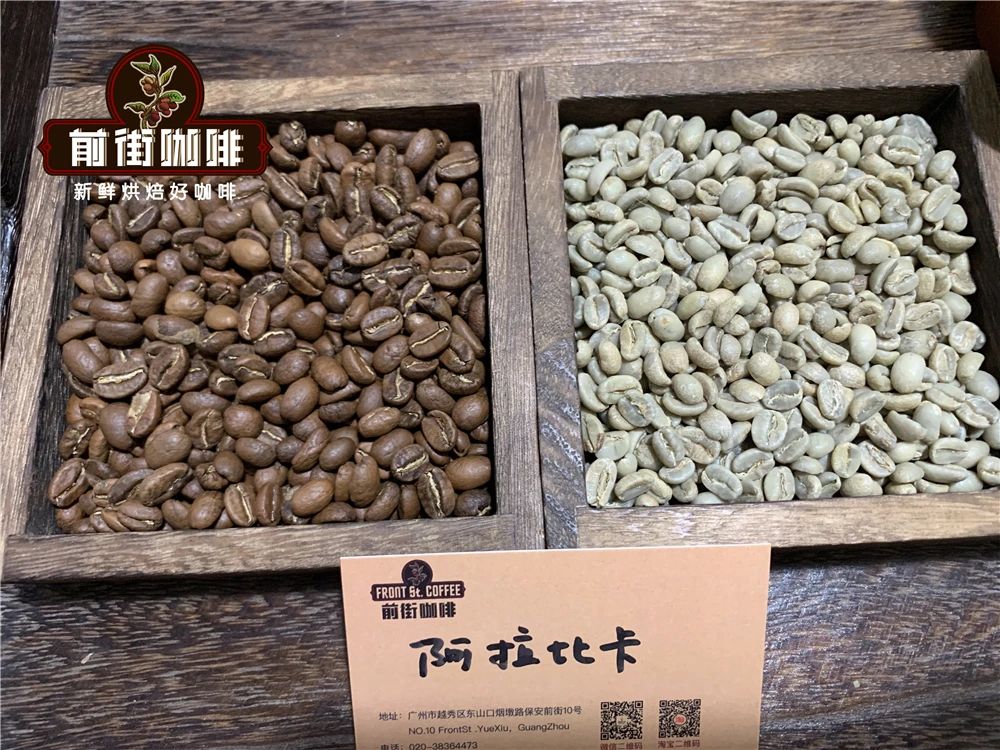
In the commercial coffee sector, coffee beans are typically divided into two main categories: Arabica and Robusta. The former is more favored by consumers due to its rich aromatic compounds and diverse flavors.
Arabica originated in Ethiopia, Africa
The roots of Arabica coffee can be traced back to the Ethiopian highlands in Africa. Early on, people used it as a medicinal plant, and later gradually developed the method of roasting and drinking it. In the 16th century, Arab merchants spread coffee around the world through trade, and this beverage slowly evolved into the daily drink that is popular worldwide today. Many specialty coffees we are familiar with—such as Jamaican Blue Mountain, Panama Geisha, and Ethiopian Yirgacheffe—all belong to the Arabica species.
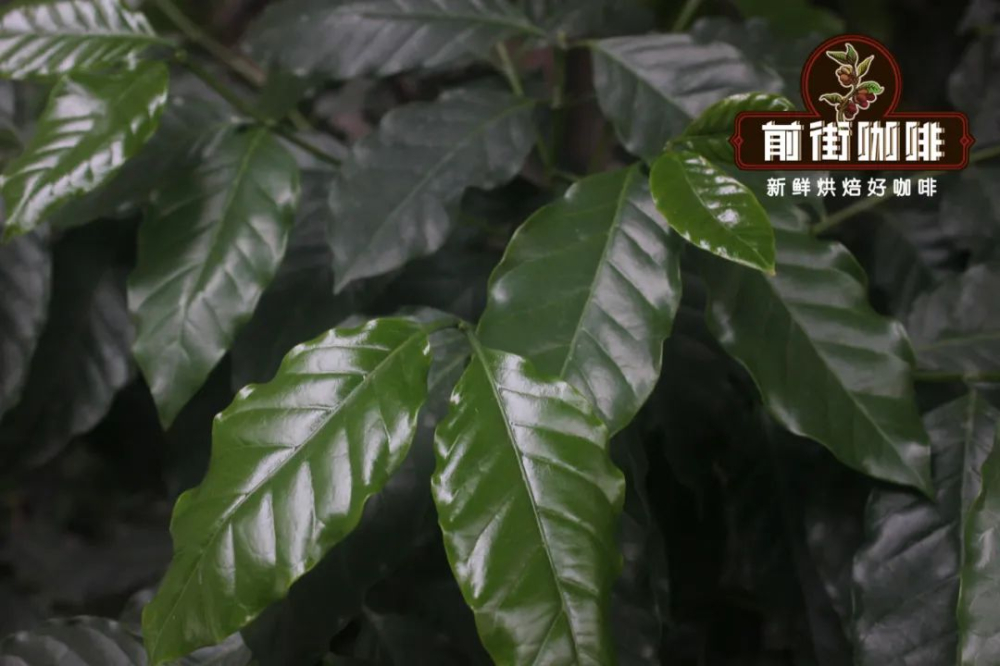
Arabica is a relatively large shrub with dark green oval leaves, and its fruit is also oval-shaped, usually containing two slightly flattened seeds. The beans are generally plump, with a long oval shape on the front, a narrow and S-shaped curved center line, and a relatively gentle curved surface on the back. Next to the Front Street Dongshankou store, two Arabica coffee trees are planted, so you might take a moment to observe them while enjoying your coffee.
Arabica has a lower caffeine content, roughly between 0.9% and 1.2%; its fat content is about 60% higher than Robusta's; and its sugar content is twice that of the latter. Because of this, Arabica tastes sweeter and smoother, with a hint of fruity acidity. In addition, Arabica has a lower chlorogenic acid content, around 5.5% to 8%. Chlorogenic acid is not only an antioxidant component but also a key substance for the plant to resist pests, so Arabica has weaker resistance to pests and is more sensitive to climate change. It usually needs to be grown at higher altitudes, produces fewer fruits, and matures more slowly.
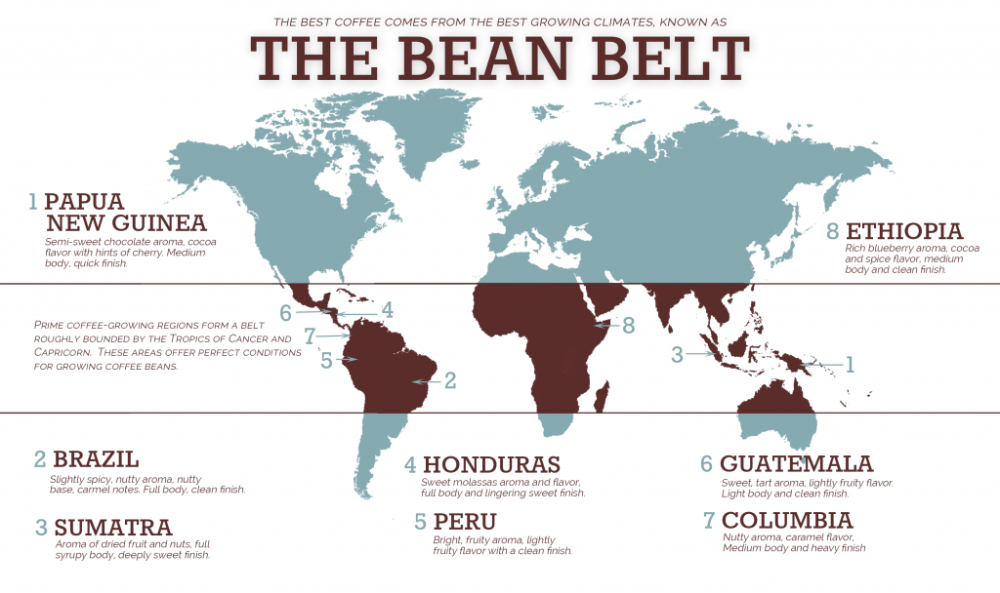
Most people who drink coffee regularly know that coffee is a tropical crop and must be cultivated in warm regions. The main distribution areas of coffee trees worldwide are concentrated in the zone centered on the equator, between 25° north and south latitude, known as the "Coffee Belt." Quality-producing regions such as Brazil and Colombia in Central and South America, Ethiopia and Kenya in Africa, and Indonesia's Sumatra and China's Yunnan in Asia are all located within the Coffee Belt. The hundreds of coffee beans on the Front Street bean list all come from high-quality Arabica varieties in these regions.
Cultivation Environment Requirements for Arabica
Arabica is quite demanding about its growing environment, with soil conditions being especially critical. It needs to be planted at altitudes of 800 to 2,200 meters in highlands where frost does not occur. The higher the altitude, the more pronounced the temperature difference between day and night, which prolongs the ripening process of the coffee fruit, favoring the accumulation of flavor compounds and resulting in fuller aroma. The unique microclimates of different producing regions provide diverse growing conditions for Arabica, thereby shaping different flavor expressions.
In addition to high altitude, Arabica also requires sufficient rainfall, appropriate sunlight, well-drained loose soil, and fertile earth. From a cultivation perspective, its regional limitations are strong, and the costs of planting and management are relatively higher.
Two Ancient and Pure Arabica Original Varieties
When Front Street reviewed coffee history, it found that Arabica coffee spread around the world along two ancient varieties, Typica and Bourbon, taking two separate paths.
Typica
This is Ethiopia's oldest native variety, discovered around the 15th to 16th centuries AD. Typica's top leaves are bronze-colored, and its bean shape is oval or slender and pointed. It has elegant acidity and aroma, but the plant is relatively weak, susceptible to leaf rust, and produces few fruits, so it was gradually replaced by farmers with more robust varieties. The world-famous Jamaican Blue Mountain coffee is precisely the Typica variety.
Typica was introduced to the Blue Mountain region for cultivation in the 18th century and has been grown there for over two hundred years. After adapting to the local island terroir, Blue Mountain's Typica evolved better disease resistance, especially stronger resistance to coffee berry disease than ordinary Typica. Front Street believes that the refined and clean flavor of Blue Mountain coffee is inseparable from Jamaica's commitment to the Typica variety and careful cultivation. Front Street uses a medium-dark roast to showcase its chocolate and nutty aromas as much as possible while retaining soft acidity and sweetness, making the overall taste more balanced.
Bourbon
Bourbon arose from a natural mutation of Typica, with the bean shape changing from slender and pointed to round and plump. It was first discovered on Bourbon Island (Réunion Island) off the east coast of Africa. In 1715, the French transplanted round-bodied beans from Yemen Mocha to Bourbon Island (renamed Réunion Island after the French Revolution), which is how Bourbon got its name. In 1727, Bourbon round-bodied beans were introduced to Brazil and began to be cultivated there. Because the plant is suitable for dense planting and bears relatively more fruit, its yield is about 20% to 30% higher than Typica's.
Brazilian coffee generally has lower acidity, and with its mellow aroma, it goes down very smoothly with a pleasant aftertaste. Front Street Coffee (FrontStreet Coffee) selected a semi-washed Red Bourbon as its Brazilian representative, with flavors showing明显的 nutty and chocolate notes, moderate caramel sweetness, a smooth mouthfeel, and overall balance. Front Street included it in its daily drinking bean series—daily drinking beans are the face of each major producing region, presenting the region's basic flavors. They are suitable for entry-level coffee lovers to understand regional characteristics, and then choose to explore different types of producing regions in more depth according to personal preference.
What Other Common Arabica Varieties Are There?
With the development of the coffee industry, high-quality coffee beans often come with detailed traceability information. When purchasing, we can learn from the packaging the origin, variety, flavor, grower, and processing method. Below, Front Street introduces several common Arabica varieties.
Geisha
Anyone who often drinks pour-over coffee must have heard of Panama Geisha, which, with its stunning aroma, has become one of the synonyms for contemporary specialty coffee. Geisha is derived from Typica and also originates from Ethiopia, the birthplace of coffee. Unlike other varieties, Geisha's leaf system is very thin, its photosynthetic efficiency is low, and its root system is also fragile, so its absorption of water and nutrients is relatively slow. As a result, its yield is extremely low; combined with its high-altitude growing environment, the fruit also matures relatively late.
Today Geisha is grown in many parts of the world and can be called the new king of specialty coffee, with the quality from Latin American countries such as Panama, Guatemala, and Colombia being particularly outstanding, and Panama Geisha being the very best. When it comes to Geisha, the most popular on the Front Street bean list is the famous Front Street Hacienda La Esmeralda Geisha coffee, which is further divided according to different characteristics into Red Label Geisha, Green Label Geisha, and Volcanic Rock Geisha. High-quality Geisha has an intoxicating fragrance of rose, citrus, berries, and honey, and is deeply loved by coffee enthusiasts.
Caturra
Caturra arose from a natural mutation of Bourbon and was discovered in Brazil in 1937. The tree is relatively short, and its disease resistance is average, but because it is suitable for dense planting, its fruiting rate is higher, and its yield exceeds varieties such as Bourbon. Caturra is widely planted in Central American countries, with bright acidity and a fruit-filled mouthfeel. After medium-dark roasting, it shows chocolate and nutty sweetness, and it is a frequent champion in many coffee competitions. Many coffee beans on the Front Street bean list contain the Caturra variety. If you want to understand its flavor characteristics, Front Street recommends the Colombia daily drinking bean—selected from washed Caturra from the Huila region, with extremely high cleanliness. To highlight the classic Colombian flavor, Front Street uses a medium-dark roast, presenting aromas of nuts, dark chocolate, and caramel.

SL28 and SL34
Between 1935 and 1939, coffee varieties bred by the Scott Laboratories were all prefixed with SL. The laboratory selected 42 varieties from different origins and studied their yield, quality, drought resistance, and disease resistance. After numbering and screening them one by one, SL-28 and SL-34 were finally obtained.
SL28 comes from the Bourbon genetic group, with a short and round bean shape and a thick body. Its flavor is characterized by elevated acidity and noticeable sweetness. SL34 comes from the Typica genetic group, with an oval bean shape and a side profile that is less plump than Typica, appearing relatively flat. In flavor, it is balanced and full in acidity and sweetness, with a caramel aftertaste.
Front Street Kenya Asalia coffee beans are selected from these two varieties and processed with a 72-hour wash, presenting full acidity of plum, yellow sugar, smoked plum, and cherry tomato.
The above content is compiled by CoffeeHunters, a coffee news website.


