







Why Is the Arabica Coffee Bean the Base of Most Specialty Coffee?
Arabica is the species behind most specialty coffee, including the beans sold under Starbucks labels, which list Arabica as the single ingredient regardless of origin. The plant originated in the southern highlands of Ethiopia and now grows across South America, Central America, East Africa, Yemen, India, Papua New Guinea, and China's Yunnan and Taiwan, typically at elevations of 1,000 to 2,000 meters.
Among the three native coffee species, Arabica carries the most developed flavor and aroma and accounts for roughly 65 to 80 percent of world coffee beans, though some trade figures put its share near 30 percent of total production. Sumatra Mandheling, grown in Indonesia, shows the opposite end of the cup profile: full body and low acidity, shaped by medium-dark roasting.
Have you ever wondered why the coffee beans on Starbucks shelves always list Arabica as the ingredient, no matter where they come from? What exactly is Arabica, and why has it become the mainstay of specialty coffee? And why is Sumatra Mandheling from Indonesia renowned for its full body and low acidity? From the perspective of Front Street Coffee, this article first sorts out Arabica's origins, producing regions, and variety branches, then focuses on Sumatra, the core producing region of Mandheling, to explain the naming origin of Tiger Mandheling, the varietal characteristics of Typica and Caturra, and how medium-dark roasting and brewing parameters shape its sweet, smooth mouthfeel. Whether you are a beginner enthusiast or a seasoned player, you can gain a clear thread of coffee knowledge from it.
Many friends notice when buying Starbucks coffee beans that the ingredient column on the packaging is uniformly labeled "Arabica." Since these beans come from all over the world and have different flavors, why is the ingredient listed only as Arabica? Today, Front Street Coffee will introduce you to Arabica.
What exactly are Arabica beans?
In fact, most of the common specialty coffee beans on the market belong to various branches under the Arabica species. Among the three major native coffee species—Arabica, Robusta, and Liberica—Arabica has the most outstanding flavor performance, which is why it has become the main cultivated variety in the coffee industry, accounting for about 30% of global coffee production. (The remaining 70% is mainly Robusta, mostly used for instant coffee production.)
Arabica coffee beans occupy an important position in both the global commercial and specialty coffee fields. Its cultivation areas are spread across South America (except Argentina and parts of Brazil), the countries of Central America, Africa (East African countries such as Kenya and Ethiopia), Asia (Yemen, India, and parts of Papua New Guinea), as well as China's Yunnan and Taiwan, among other places.
The native home of Arabica is the southern highlands of Ethiopia. This plant usually grows at elevations of 1,000 to 2,000 meters and has high requirements for altitude, climate, and soil conditions.
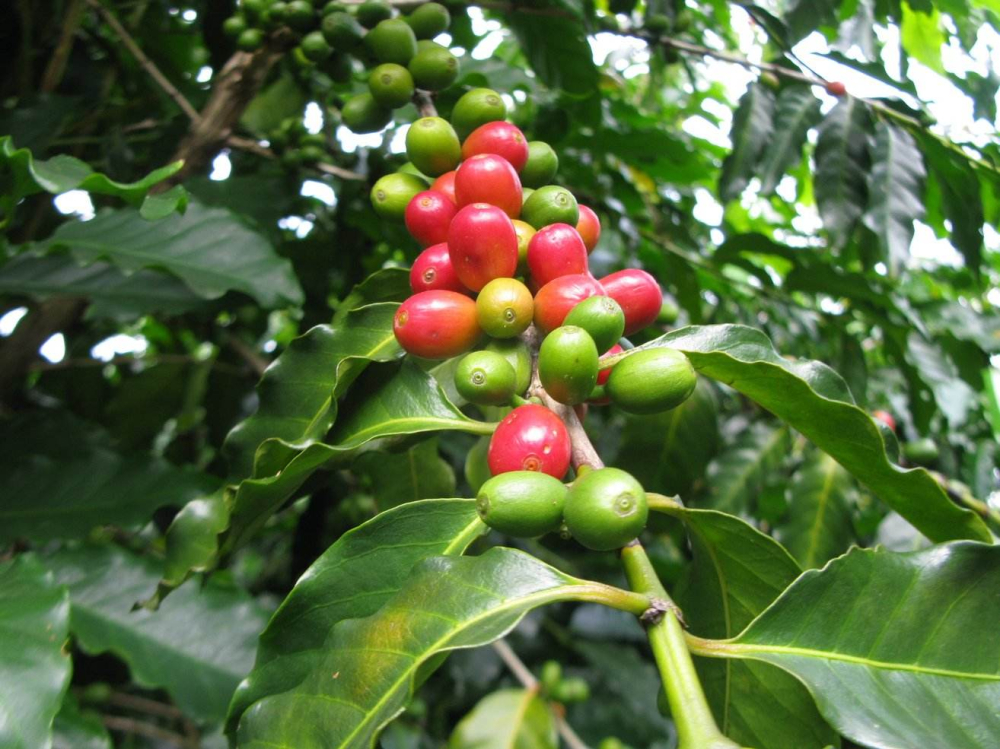
Among the world's coffee beans, the Arabica species accounts for about 65% to 80%. Its outstanding flavor and aroma make it the only native species that can be drunk directly on its own. However, Arabica has relatively weak resistance to drought, frost, and pests and diseases, and is especially susceptible to coffee leaf rust, coffee's greatest natural enemy. Therefore, producing countries are actively improving varieties.
For this reason, Arabica's branch varieties are extremely rich, with more than one hundred recorded varieties. Each branch has its own characteristics: some have outstanding flavor, some have strong resistance to disease and pests, and some have high yield.
Although Starbucks coffee beans come from different countries and regions, they essentially all belong to the Arabica family. Due to differences in climate, terroir, and varieties in the growing regions, they ultimately present different coffee flavors.
Where do Starbucks Indonesia Sumatra coffee beans come from?
Sumatra coffee beans are actually Mandheling coffee beans. Sumatra is the largest island in Indonesia and the sixth largest island in the world, located in northwestern Indonesia. Affected by its geographical location, Sumatra has the country's earliest harvest season, from November to March of the following year.
Mandheling is Arabica coffee beans grown on the island of Sumatra. Sumatra coffee has low acidity and a complex flavor, and is regarded by many coffee lovers as a representative of spice and herbal flavors.
The packaging of Sumatra coffee beans often features a tiger, the Sumatran tiger, an critically endangered protected animal. Printing the Sumatran tiger on the packaging, on the one hand, calls on people to pay attention to environmental and biodiversity protection; on the other hand, it uses the image of a crouching, creeping tiger to convey the steady, full-bodied taste and flavor of Mandheling coffee.
Why is it called Tiger Mandheling?
Tiger Mandheling
This Tiger Mandheling, previously sourced by Front Street, comes from Sumatra, the homeland of the Sumatran tiger. This bean uses 19-mesh coffee cherries (that is, strictly filtered through a 19-mesh screen, striving for uniform diameter in every bean), and is then processed as green beans after three rounds of manual selection of ripe cherries. Therefore, locals use "Sumatran tiger" to describe the nobility and rarity of this 19-mesh selected bean. In Front Street's cupping, this coffee has high viscosity, a smooth mouthfeel, rich agarwood-like notes, outstanding sweetness, and a long-lasting sweet aftertaste on the palate, reminiscent of the image of a Sumatran tiger creeping forward.
This Tiger Mandheling uses two varieties with obvious sweetness: Typica and Caturra. Typica has a bronze-colored top leaf, and its bean body is oval or slender-pointed, with an elegant flavor, but it is relatively weak, has poor disease resistance, and low fruit yield. Through cupping Typica from multiple producing regions, Front Street Coffee can always perceive its uniquely quiet, clean flavor and balanced characteristics. Caturra is a variety of Bourbon, and the coffee bean has a curved tail end, round and slender, with productivity and disease resistance both superior to Bourbon, and an overall bright flavor with good sweetness as well.
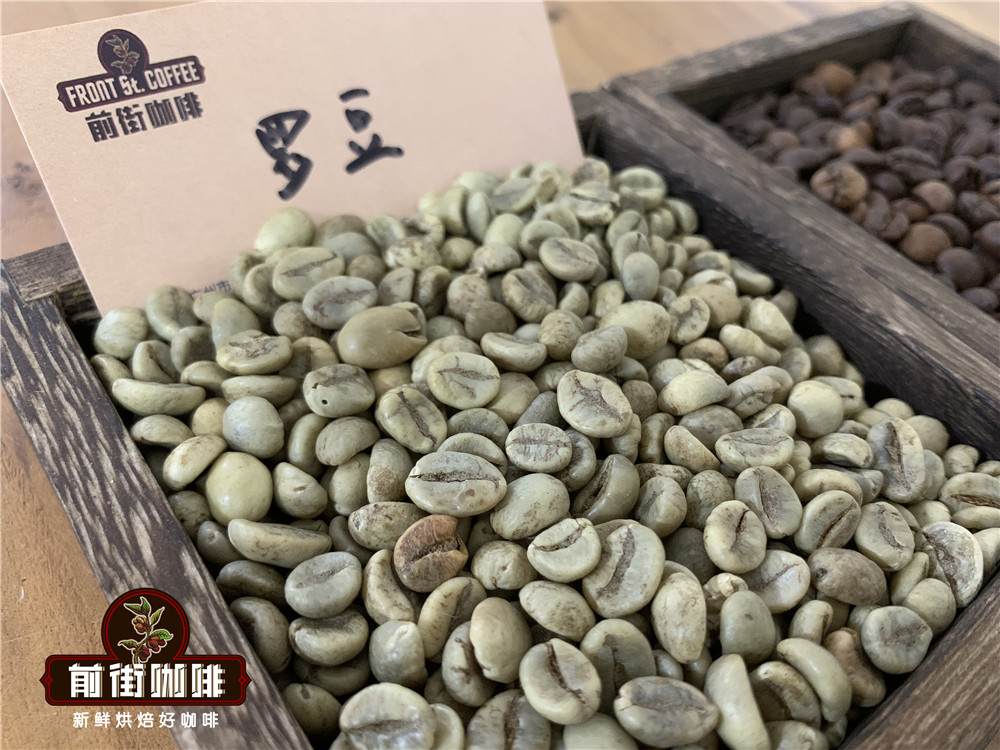
Front Street's roaster observed that Tiger Mandheling green beans are round and plump, green with a yellow tint, fairly uniform, and relatively high in moisture content. The roasting target was set as medium-dark roast to erase excess acidity and enhance body and balance.
What does Mandheling coffee taste like? Is it very bitter?
Front Street Coffee believes that coffee taste is affected by multiple factors. On the one hand, the island's fertile volcanic soil creates the coffee's earthy flavor; on the other hand, when it comes to low acidity, the most critical factor is Sumatra's unique wet-hulling process.
Although the flavor is full-bodied and subdued, as long as it is roasted properly and brewed reasonably, what Mandheling presents is not an unpleasant bitterness, but an obvious sweet aftertaste.
In order to give Mandheling both a full-bodied expression and a sense of layering, Front Street Coffee roasts the beans to a medium-dark level. On the one hand, this prompts the coffee beans to undergo more caramelization reactions and produce more sweet-aftertaste compounds; on the other hand, it retains slight acidity to enhance the overall mouthfeel.
Front Street Coffee brewing suggestions
Dripper: Kono dripper Water temperature: 88-89°C Coffee dose: 15 grams Coffee-to-water ratio: 1:15 Grind size: medium-coarse grind (70% passing rate with China No. 20 standard sieve)
First bloom with 30 grams of water for 30 seconds, then pour in a small stream in circles until 125 grams, then pause; when the water level drops and is about to expose the coffee bed, continue pouring until 225 grams and stop; after all the poured water has passed through the coffee grounds, remove the dripper and end extraction. (Start timing from the beginning of blooming.) Extraction time is 2 minutes 00 seconds.
The above content is compiled by CoffeeHunters, a coffee news website.


