







Robusta is often overlooked in the world of specialty coffee, but is it really incompatible with good coffee? This article takes you through a comprehensive understanding of Robusta's varietal origins, botanical characteristics, flavor profile, and major producing countries. From Vietnam's commercial blends to Indonesia Mandheling's unique terroir, Robusta genes play an irreplaceable role. The article also shares Front Street Coffee's practical brewing parameters and freshness recommendations for Mandheling, helping you understand varietal differences while also brewing a rich, full-bodied cup of good coffee.
In the general perception of coffee enthusiasts, Arabica offers better flavor than Robusta, which is why the specialty coffee world is almost entirely dominated by Arabica, while Robusta appears more often in espresso blends.
Since Robusta's overall flavor falls short of Arabica, why do many producing regions still insist on growing it? The reason is that Robusta has some advantages that cannot be ignored. Arabica is quite demanding when it comes to growing conditions, requiring shade trees and higher altitudes, while also having weaker disease resistance and lower yields per plant. Robusta, by contrast, is highly adaptable to its environment, has excellent resistance to pests and diseases, and produces higher yields. High altitude often means better flavor—for example, there is a clear gap between the Geisha from Panama's Hacienda La Esmeralda and the Geisha from Ethiopia. Robusta mostly grows at low altitudes, so its flavor naturally struggles to match Arabica, and thus it appears on the market more often in the form of commercial espresso blends or instant coffee.
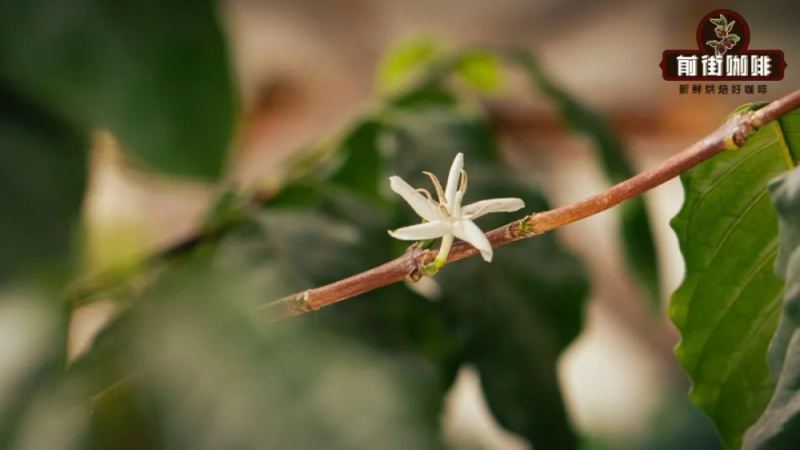
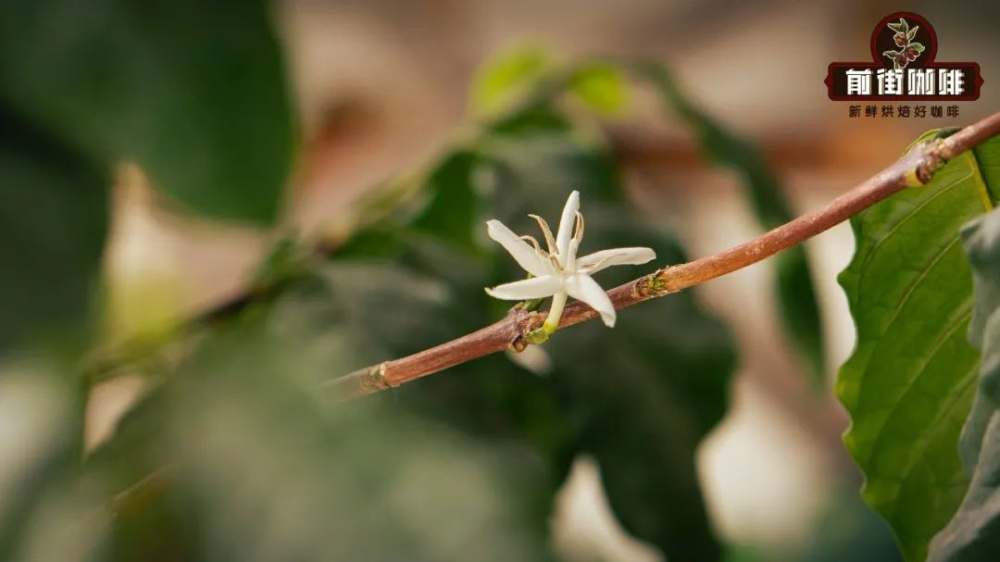
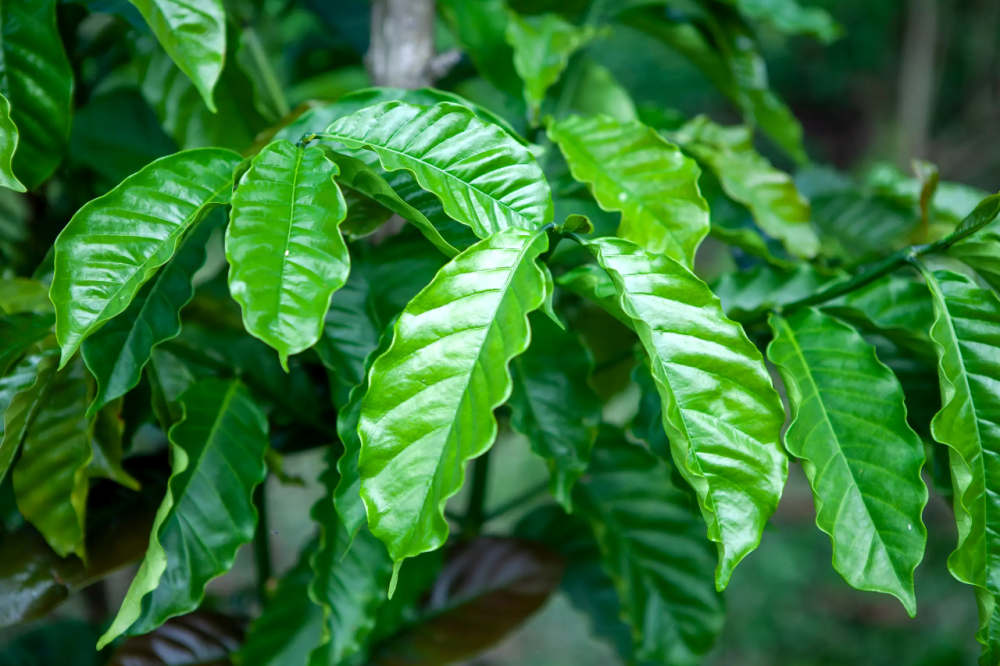
The Arabica coffee tree is a shrub with elliptical, green leaves. In its natural state, it can grow to 5 to 6 meters tall with a lifespan of about 20 to 30 years, but its yield per plant is relatively low. Its beans account for about 75% of total global production. The Robusta coffee tree, on the other hand, is more robust and suited to growing in tropical or subtropical regions at altitudes of 200 to 800 meters. It has vigorous vitality, makes few demands on the environment, is highly adaptable, has low cultivation costs, and delivers considerable yields.
Robusta
Arabica is called the small-bean species, while Robusta is called the medium-bean species; its precise scientific name should be Coffea canephora. Robusta originates from the Congo region of West Africa and is a subspecies of Coffea canephora that has been widely cultivated by humans. Over time, Robusta has almost replaced canephora as the general term for this species. Thanks to its low-altitude adaptability, high yield, and ease of cultivation, Robusta has been widely promoted, and its output accounts for 20% to 30% of total global coffee production.
The appearance of Robusta coffee beans
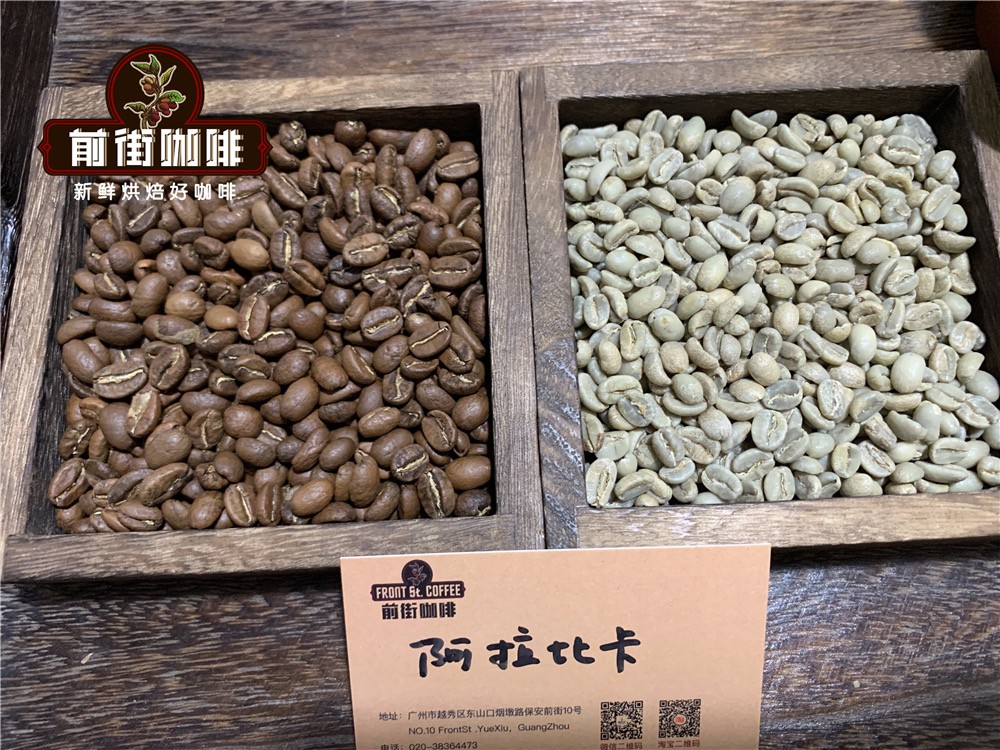
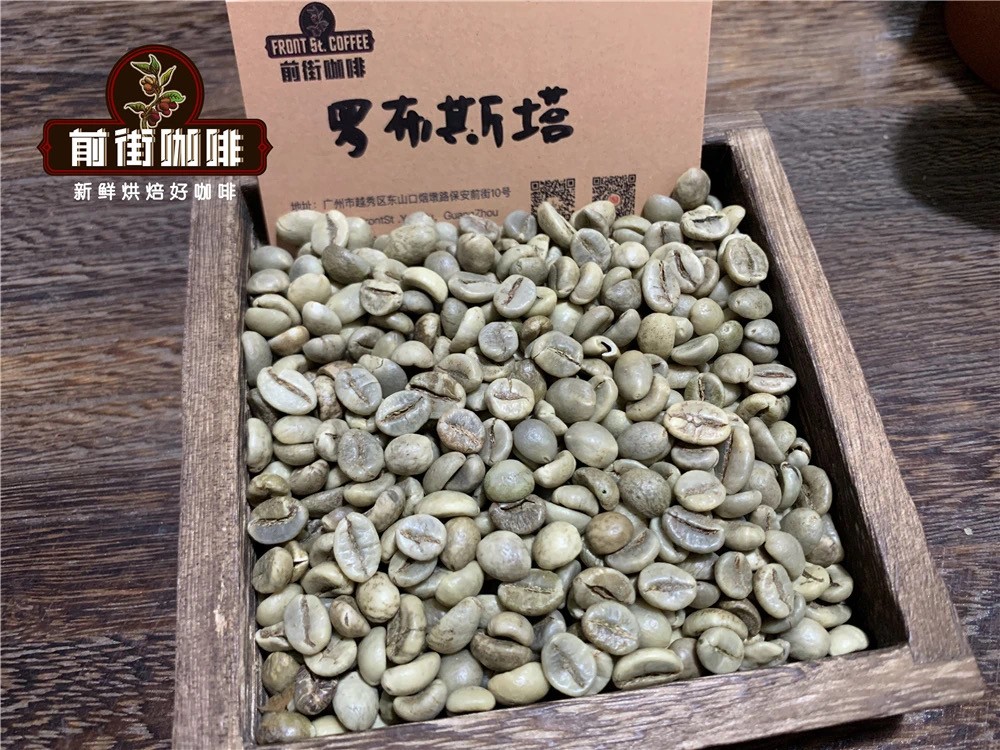
Robusta coffee beans are one bean per fruit. They are rounder in shape, forming a C shape; the center line is shaped like the number "1," and the raw beans are yellow-brown in color.
Does coffee made from the Robusta variety count as specialty coffee?
Robusta coffee has a higher caffeine content and rich oils. During the period when espresso swept the globe, it was often used in espresso bean blends—at the time, people drank coffee largely for the caffeine. Its caffeine content is far higher than that of Arabica, at around 3.2%.
With the rise of the specialty coffee concept, people began to pay attention to origin-specific flavors. Robusta itself carries a bitter taste, along with flavors of walnut, peanut, hazelnut, and smoke—notes that are generally considered less than ideal in coffee. More critically, after Arabica underwent origin-based classification, its flavor expression far surpassed that of Robusta. This can be said to be an inherent shortcoming: Robusta's flavor is far less appealing than Arabica's, which is why consumers tend to choose Arabica.
The major Robusta-producing countries include Indonesia, Vietnam, and West African countries centered on Algeria and Angola.
Robusta beans are typically used in industrial coffee products such as instant coffee, canned coffee, and liquid coffee. The extracted coffee liquid is roughly twice that of Arabica, and its caffeine content is also far higher than that of Arabica.
Vietnamese coffee is primarily Robusta, with possibly a small amount of Arabica cultivation. Vietnamese coffee is also an indispensable part of many commercial blends. The Front Street commercial blend specifically designed for café use contains a small amount of Robusta from Vietnam, providing oils and body to the coffee—making an Americano rich and aromatic, and a latte silky and sweet.
Indonesia produces coffee on all its islands. In the mid-17th century, coffee trees were introduced to Indonesia by the Dutch. In 1712, the first batch of coffee from Java was shipped to Amsterdam. In 1877, all coffee trees on the plantations were destroyed by coffee rust, forcing the introduction of Robusta coffee trees from Africa to replace the original varieties. Indonesia is a major producer of Robusta coffee in the world.
India's coffee-growing regions are mainly in the area between the Western Ghats and the Arabian Sea in southern India. More well-known coffees are sold under names such as Mysore and Malabar. Monsooned Malabar is a rather distinctive Indian coffee, made from coffee beans that were once shipped from the Malabar Coast to Europe. During the voyage, the raw beans were exposed to sea winds for extended periods, changing both their appearance and taste, and this flavor gradually became something Europeans grew accustomed to and enjoyed.
This later became a special coffee processing method—after harvesting, the coffee beans are specially placed in humid monsoon winds for several months, turning them yellow-white and reducing their acidity, resulting in what we buy as Monsooned Malabar (also called Monsoon Coffee).
The most famous coffee origins in Asia are the various islands of the Malay Archipelago: Sumatra, Java, and Kalimantan. Among them, Sumatra Mandheling coffee from Indonesia's Sumatra Island is the most renowned. It has two famous grade names: Sumatra Mandheling DP Grade 1 and Aged Sumatra Mandheling. Sumatra Mandheling DP Grade 1 has a long finish with a wild, mountain-like fragrance—the distinctive earthy scent of a primeval forest. In fact, Mandheling's richness has a very masculine feel.
Mandheling coffee is produced in Sumatra, Indonesia, in Asia, and is also known as "Sumatra Coffee." Its main producing areas include Java, Sulawesi, and Sumatra, of which 90% is Robusta. Among them, the "Mandheling" produced on Sumatra Island is the most famous.
Indonesia's most famous Mandheling coffee is the TimTim variety, which refers to Arabica coffee beans grown on the island of Sumatra in Indonesia. The varieties are mostly TimTim or Ateng. TimTim refers to Timor, an Arabica variety with Robusta lineage, while Ateng is Catimor, a hybrid of Caturra and Timor.
Both varieties carry both Arabica and Robusta genes. The Arabica genes bring better coffee flavor to the cup, while Robusta brings better resistance to pests and diseases, making them suitable for growing in Indonesia's hot, humid climate.
One downside of Robusta genes is that their inherent flavor is relatively rough and not very pleasant to drink. Even though Mandheling varieties are mainly based on Arabica genes, they cannot fully eliminate Robusta's dull tones—especially combined with Indonesia's uniquely "hardcore" coffee processing methods.
Therefore, no matter which type of Mandheling coffee bean it is, it will display rich, full-bodied flavors of herbs, spices, and cocoa, with low acidity and high body—these unique Sumatra origin characteristics.
Indonesian Mandheling coffee bean processing method
The local weather is mostly rainy, with constant typhoons and a lack of prolonged sunlight. It is hot and humid year-round, with humidity reaching 70-90% throughout the year, making it impossible to rely solely on sun-drying. The local economy is also limited and cannot afford the more expensive washed method, which eventually gave rise to the highly local wet-hulling method. Although Mandheling coffee carries Robusta varieties, after the local special wet-hulling process, it ultimately became the most full-bodied coffee in the world. Who says coffee with Robusta varieties can't taste good?
Front Street's brewing parameters for Mandheling coffee:
Front Street uses the KONO dripper to brew Mandheling coffee. KONO's ribs stop at less than half the height of the dripper. This design is actually intended to ensure that the filter paper clings tightly to the dripper wall after wetting, restricting airflow. This increases the time for coffee grounds to absorb water, resulting in a more even extraction overall and enhancing the full-bodied mouthfeel.
KONO dripper, 88°C water temperature, 1:15 coffee-to-water ratio, 15g coffee grounds, grind size (75% passing through a No. 20 standard sieve), three-stage extraction.
Using staged extraction, bloom with twice the amount of water as coffee grounds—that is, 30g of water for a 30-second bloom. The reason a bloom is needed is to allow the coffee grounds to release internal carbon dioxide gas, making the subsequent extraction more stable. Pour in a slow circular motion until reaching 125g, then pause; continue pouring until 225g and stop. After the water in the dripper has finished dripping, remove the dripper. Start timing from the beginning of the pour, with an extraction time of 2'00". Next, pick up the entire cup of coffee and swirl it to mix evenly, then pour it into a cup for tasting.
[Lindong Mandheling Coffee Flavor Profile] Herbal, chocolate, caramel; overall fairly balanced.
[ Golden Mandheling Coffee Flavor Profile] Nuts, spices, herbs, licorice, chocolate, caramel.
Front Street brewing recommendations:
The variety of coffee beans is certainly important, but the freshness of the coffee beans is also crucial. To brew a delicious cup of coffee, Front Street believes that any brewing method requires fresh coffee beans. Front Street has always held that the freshness of coffee beans has a major impact on coffee flavor, so all coffee beans shipped by Front Street Coffee are within 5 days of their roast date. Front Street's roasting philosophy is "Freshly Roasted Good Coffee," ensuring that every customer receives the freshest coffee when their order arrives. Coffee beans need a resting period of about 4-7 days, so when customers receive them, they are at their peak flavor.
For those who need pre-ground coffee, Front Street offers a friendly reminder: once coffee beans have been ground in advance, there is no need for further resting, because during transit, the pressure from carbon dioxide inside the packaging also helps round out the coffee's flavor. So once you receive ground coffee, you can brew a cup right away. However, ground coffee needs to be brewed promptly, because once coffee grounds are exposed to air, they oxidize relatively quickly—meaning the coffee's flavor fades faster and the coffee won't taste as good. Therefore, Front Street recommends buying whole beans and grinding fresh for each brew, so you can better enjoy the coffee's flavor.
The above content is compiled by CoffeeHunters, a coffee news website.


