







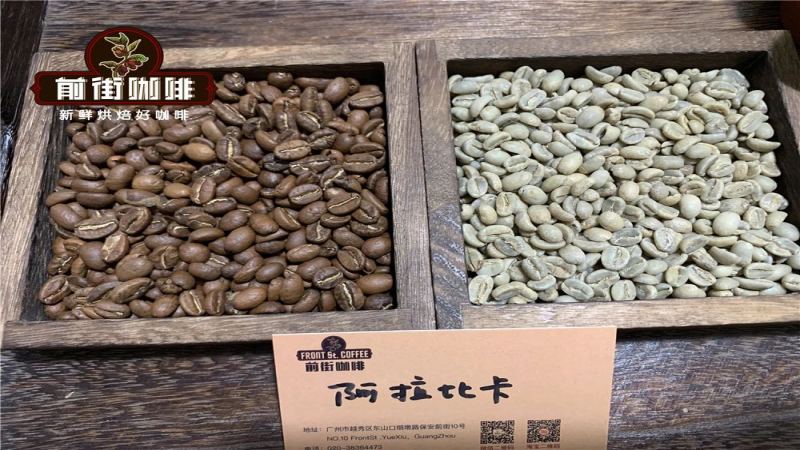
What does an arabica coffee bean label really tell you?
The word Arabica on packaging names the coffee species Coffee Arabica, which originated in Ethiopia rather than Arabia. Ethiopians first chewed coffee leaves to stay alert and used the cherries as medicine. Arab scholars later developed roasting and drinking, and in the sixteenth century Arab traders spread the beverage worldwide.
Specialty beans such as Jamaica Blue Mountain, Panama Geisha and Ethiopia Yirgacheffe all belong to the Arabica variety. Ethiopia alone has more than 2,500 sub-varieties, and much of its coffee is consumed at home, where brewing is a social ritual. Arabica has a mild, elegant flavor and caffeine of about 0.9% to 1.5% by bean weight.
When buying coffee, you often see the words "Arabica" on the packaging—what exactly does it represent? Why do merchants always like to emphasize this variety? This article, from Front Street's perspective, will sort out Arabica's origins, flavor characteristics, and growing conditions, and compare it comprehensively with Robusta. At the same time, it will also introduce Front Street's daily staple bean series and espresso blend recommendations, helping coffee lovers more clearly understand the value of this mainstream variety and find Arabica coffee suitable for everyday drinking.
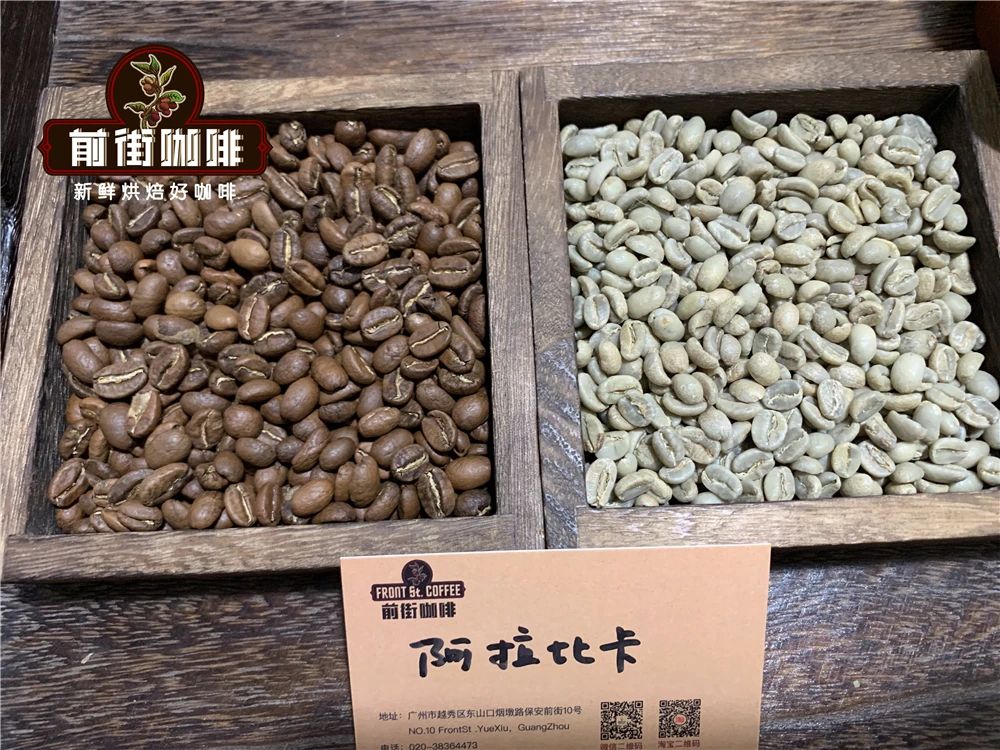
When buying coffee products, you should often see the label "Arabica" on the packaging. What exactly does it mean? And why do merchants always deliberately emphasize that their coffee is Arabica? Today, Front Street will help everyone get to know what makes this coffee variety so special.
Arabica coffee originated in Ethiopia
Although the name of the Arabica species "Coffee Arabica" is related to Arabia, its place of origin is actually the homeland of coffee—Ethiopia. In earlier times, after Ethiopians discovered coffee, they would chew coffee leaves to stay alert, and coffee cherries were once used as medicine. Later, through the research of Arab scholars, people gradually developed the habit of roasting and drinking coffee beans. In the sixteenth century, Arabs spread it around the world through trade, and only then did it gradually evolve into the beverage that is popular worldwide today. Many of the specialty coffee beans we are familiar with, such as Jamaica Blue Mountain, Panama Geisha, and Ethiopia Yirgacheffe, all belong to the Arabica variety.
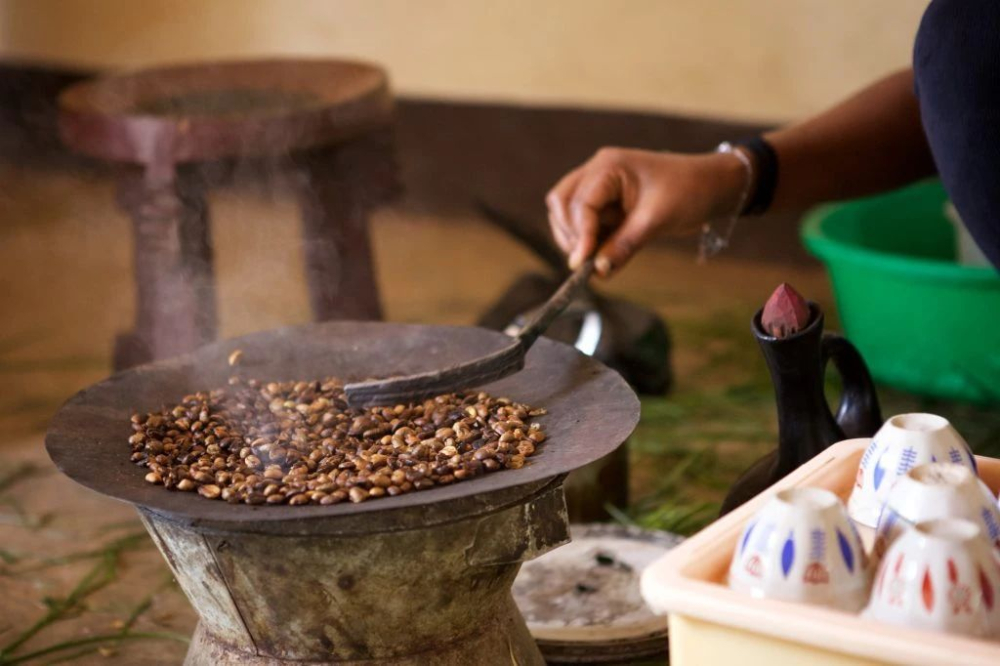
As Africa's largest coffee-producing country, Ethiopia alone has more than 2,500 sub-varieties of Arabica. Coffee is not only an important source of income for local people, but is also deeply integrated into the country's culture and daily life. In addition to being exported, a large portion of the coffee produced in Ethiopia is actually consumed by its own people. There, regardless of whether a family is rich or poor, almost every household has a set of coffee-making utensils. For Ethiopians, drinking coffee is an important social activity full of ritual.
Arabica has a mild and elegant flavor, and its caffeine content is relatively low, accounting for only about 0.9%–1.5% of the coffee bean's weight. It has higher commercial value, which is why it has become the main species in today's coffee industry, accounting for 60%–70% of global coffee production and sales. Besides Arabica, there is also Robusta, whose output is second only to it. So why don't people choose Robusta first?
Comparison between Arabica and Robusta
Arabica and Robusta are the two most common major varieties on the market. The former belongs to the small-bean species, while the latter belongs to the medium-bean species. Robusta has 22 chromosomes, while Arabica has 44, that is, 22 pairs of chromosomes. Having twice as many chromosomes not only gives Arabica a better aroma performance, but also gives it a rich and unique sweet-and-sour flavor, making its taste clearly superior to Robusta.
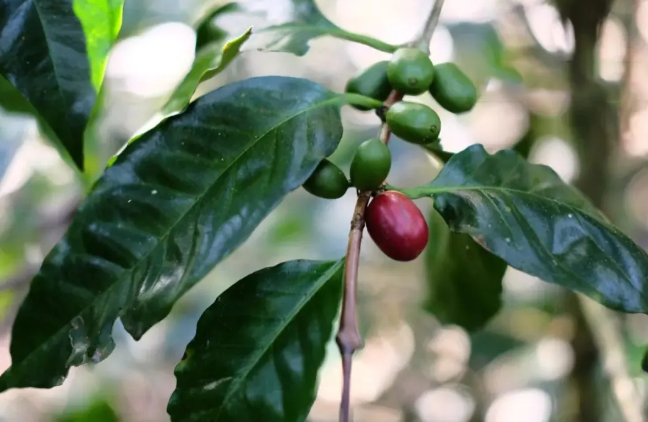
To display diverse flavors, Arabica needs to be grown in highlands at an altitude of 800–2,200 meters where there is no frost. The higher the altitude, the more pronounced the temperature difference between day and night. The ripening speed of the coffee cherries is delayed, which is more conducive to the accumulation of flavor substances, and the aroma develops more fully. The unique microclimates of various producing regions also provide Arabica with diverse growing conditions, creating distinctive flavors and mouthfeels. At the same time, the higher the altitude, the more susceptible coffee is to pests and climate effects. Coffee trees usually grown at higher altitudes bear fewer cherries and ripen more slowly. High-quality Arabica requires more manual management and picking, so production costs are naturally higher.
By contrast, Robusta's caffeine content is between 2.7% and 4%, twice that of Arabica. Caffeine is like a plant's own natural pesticide, helping it resist most insect damage, so Robusta is easier to grow and cheaper. In addition, because of its higher amino acid and chlorogenic acid content, it has a rich, deep bitterness, along with flavors such as walnut, peanut, hazelnut, wheat, and grain. If not handled properly, it can also have an earthy, fishy taste, so it is not very appealing and is often used in dark-roasted espresso bean formulas or instant coffee.
In the past, people drank coffee only for a rich, full-bodied bitterness. But as specialty coffee culture continues to spread, everyone has higher requirements for coffee's taste, mouthfeel, and quality. Aromatic and diverse Arabica beans fit the high demand of today's specialty coffee market better than Robusta. Many of the pour-over single-origin coffee beans on Front Street's bean list belong to the Arabica variety, showing that compared with Robusta, people prefer pure-flavored Arabica.
Specialty Arabica coffee bean recommendations
On Front Street's bean shelf, there is a cost-effective daily staple bean series, carefully selected from 7 excellent classic coffee-producing regions, covering multiple common Arabica varieties. So-called daily staple beans, as the name suggests, are varieties that are affordable to drink every day and whose price and flavor are both approachable. Front Street has selected several "representative faces" to make it easy for everyone to recognize the basic flavors of major producing regions, including Ethiopia's washed Yirgacheffe, Guatemala's washed Huehuetenango, Colombia's washed Huila, Brazil's semi-washed Cerrado, Costa Rica's washed Tarrazu, Indonesia's wet-hulled Lintong Mandheling, and China Yunnan's washed Baoshan.
Each daily staple bean is suitable for extraction methods such as pour-over, cold brew, and French press. If you want to taste coffee's most original aroma, Front Street recommends presenting it as black coffee for the best result. No matter which extraction method is used, Front Street believes that the freshness of the coffee beans is crucial. If more than two months have passed since the roast date, the coffee's aroma has likely already been lost, and even the best extraction technique will find it hard to restore the aroma in the cup. To let everyone experience coffee at its best tasting stage, Front Street only ships beans freshly roasted within 5 days, so by the time you receive them, they are just about ready to brew.
If you want to use Arabica coffee to make rich and aromatic espresso, Front Street recommends choosing espresso-specific blend coffee beans. Because espresso is extracted under fine grinding, high water temperature, and high pressure, the concentrated coffee brings together multiple tastes, and various flavor compounds hit the taste buds exponentially. If light-roasted single-origin coffee beans are used for extraction, the taste may be too intense and mask the coffee's aroma. As a crop, coffee changes with climate, soil, and other factors. Even if it comes from the same place, the flavor of each batch of coffee beans will differ. Blended coffee beans use the method of making up for each other's shortcomings, ensuring that every time the coffee beans can show a balanced and stable aroma and mouthfeel.
Here, Front Street recommends its own roasted "Sunflower Warm Sun Blend Coffee Beans," made by combining Ethiopia natural red cherry coffee beans (30%) + Honduras Sherry wine barrel coffee beans (70%). Extracted as espresso, it presents Sherry's whiskey, vanilla, and cream flavors paired with red cherry's tropical fruit and fermented notes, making the coffee in the cup rich in aroma and soft in mouthfeel. Add a certain proportion of water to the espresso to make a refreshing and delicious Americano; add milk to make a dense and silky latte, presenting the taste of vanilla chocolate milk.
For professional coffee knowledge exchange and more coffee bean information, please follow Coffee Workshop (WeChat public account: cafe_style)
For more specialty coffee beans, please add the private WeChat of Front Street Coffee (FrontStreet Coffee), WeChat ID: qjcoffeex
The above content is compiled by CoffeeHunters, a coffee news website.


