







Search Results for: 10-yuan coffee
Single-Digit Coffee Sweeps the Market: Can a Low-Price Strategy Sustain the Survival Space of Coffee Shops?
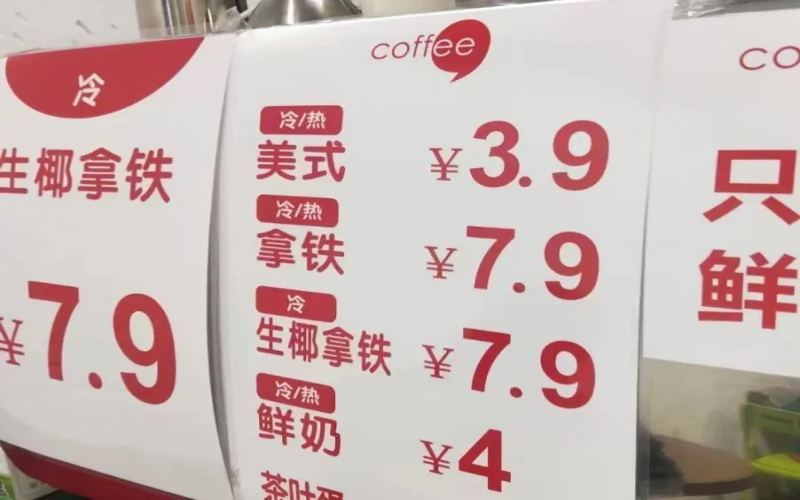
In recent years, coffee priced under 10 yuan has gone from impossible to the norm. Leading brands such as Luckin, Cotti, and Lucky Cup have all entered the fray, while regional chains and even newly opened small shops are racing to use single-digit pricing as their calling card. From Nantong to Qingdao and then to Shanghai, low-priced coffee is blooming everywhere, but the cost pressure and profit logic behind it deserve deeper scrutiny. Giants rely on supply chain advantages to dilute costs, while independent stores try to attract first-time triers and cultivate repeat purchases with a low threshold. However, when coffee prices are simplified into two camps—"under 10 yuan" and "over 10 yuan"—stores priced above 10 yuan that lack brand and quality support will face a severe test of survival. This article analyzes the underlying logic and future direction of this price war. [more…]
Luckin Coffee's Q3 revenue tops 10 billion for the first time: stores exceed 20,000, product innovation drives growth
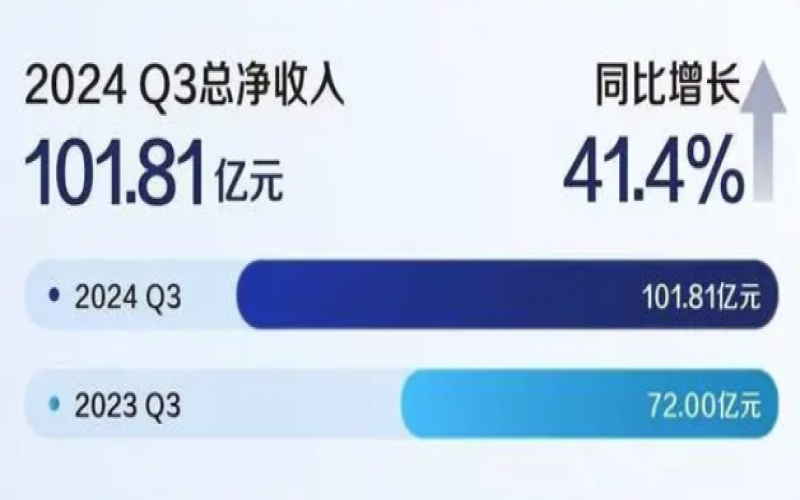
On October 30, 2024, Luckin Coffee released its third-quarter financial report, with total net revenue for the quarter reaching 10.181 billion yuan, a year-on-year increase of 41.4%, marking the first historic breakthrough of quarterly revenue exceeding 10 billion yuan. Alongside revenue growth, operating profit and net profit also performed steadily. The store scale continued to expand to 21,343, firmly holding the top position in China's coffee industry, with both self-operated and partnered store revenues achieving double-digit growth. Behind this support is a mature supply chain system and continuous product innovation. This article will analyze the causes of Luckin Coffee's quarterly 10 billion yuan achievement from aspects such as financial report data, store expansion, operational models, and product strategies, and also focus on its future growth potential. [more…]

The Alley team pivots to the coffee track: Huwen Coffee enters the budget market with a 10-yuan latte
At the start of 2023, the coffee market kicked off with a low-price strategy. CoCo都可, with over 2,200 stores nationwide, dropped its Americano to 3.9 yuan, Cotti Coffee launched promotions starting at 9.9 yuan, and Tiger Coffee, created by the core team of The Alley, also secured financing, entering the affordable segment with two price tiers of 10 yuan and 13 yuan, and plans to leverage its existing overseas agency network to prioritize expansion in Southeast Asia. Can Tiger Coffee become the Mixue Bingcheng of the coffee world? This article will analyze from perspectives including brand background, store model, product strategy, and market trends. [more…]

Nanjing's Grandma Han's 10-yuan pour-over coffee unexpectedly goes viral, Nestlé promises free supplies and invites her to livestream
A small shop in Nanjing called "Aunt Han's Sugarcane Juice" quickly became famous online for its 10-yuan pour-over coffee. The owner, Aunt Han, brews it on the spot using three sticks of Nescafe instant coffee, attracting a large number of young people to line up and check in. Less than 48 hours after it went viral, Nescafe instant coffee sold out, and there was even a shortage of boiling water. Aunt Han said that although the coffee business is low-profit but high-volume, she has always done business honestly. As traffic poured in, the phenomenon of insincere customers skipping out on payment also drew attention. Nescafe officially responded quickly, not only changing the product promotion cover to "the same coffee as Nanjing's 10-yuan granny," but also arranging free offline supply and inviting Aunt Han to participate in a livestream. Front Street Coffee continues to follow this incident and bring readers the latest report. [more…]
Cotti Coffee's first 9.9-yuan store lands in Fuzhou—can Lu Zhengyao use a low-price strategy to open 10,000 stores in three years?
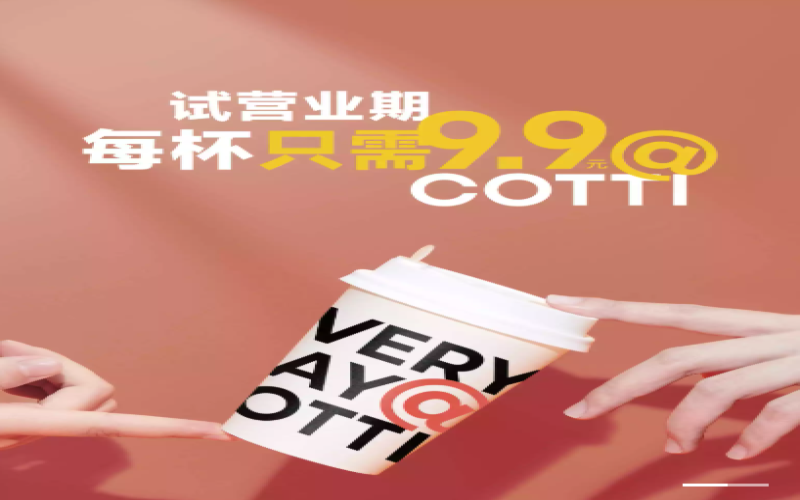
Coffee consumption is spreading from first- and second-tier cities to third-, fourth-, and fifth-tier markets, yet the price threshold for freshly ground coffee still makes many office workers hesitate. Lu Zhengyao has opened the first outlet of his new brand Cotti Coffee in the Fuzhou IFC International Financial Center, with all drinks priced at 9.9 yuan during the soft-opening period, continuing a familiar low-price playbook. The product line covers more than 40 items, including coffee, tea, smoothies, and sundaes, featuring popular items such as coconut latte and cheese latte, with original prices ranging from 18 to 32 yuan. Facing pressure from the two giants Luckin and Starbucks, as well as cross-industry players such as KFC TO GO and Mixue Bingcheng's Lucky Cup, whether Cotti can replicate Luckin's achievement of opening 2,073 stores in its first year is worth watching. [more…]
Michael Wong spotted queuing in Nanjing for 10-yuan pour-over coffee, celebrity visit ignites a traffic surge for the small shop
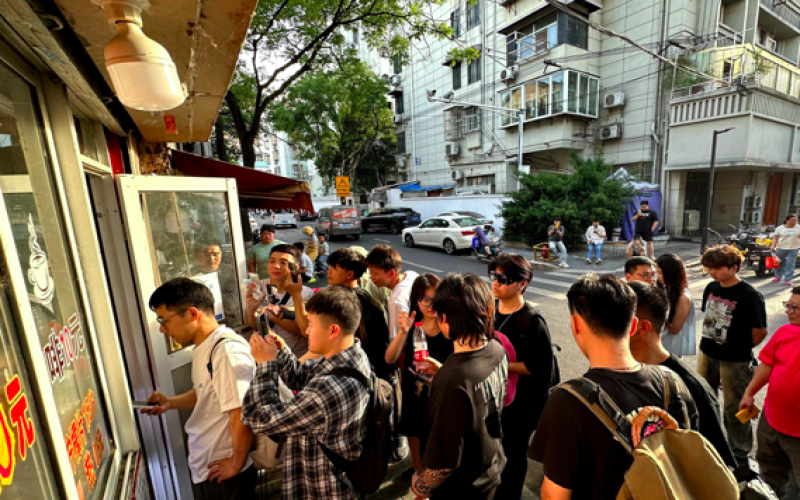
A 10-yuan drink made by mixing three sticks of Nescafe instant coffee powder with hot water has unexpectedly turned a small sugarcane juice shop in Nanjing that has been around for more than 30 years into an online sensation. Singer Guang Liang was recently spotted queuing outside the shop to buy one, pushing the topic onto trending searches. With the brand supplying free stock, media outlets rushing to report, and celebrities showing up to check in, why exactly has this literally "hand-brewed coffee" become a traffic magnet? Is it the appeal of good quality at a low price, or a bandwagon trend on social platforms? This article walks you through the course of events and explores the consumer psychology and coffee culture phenomenon behind it. [more…]
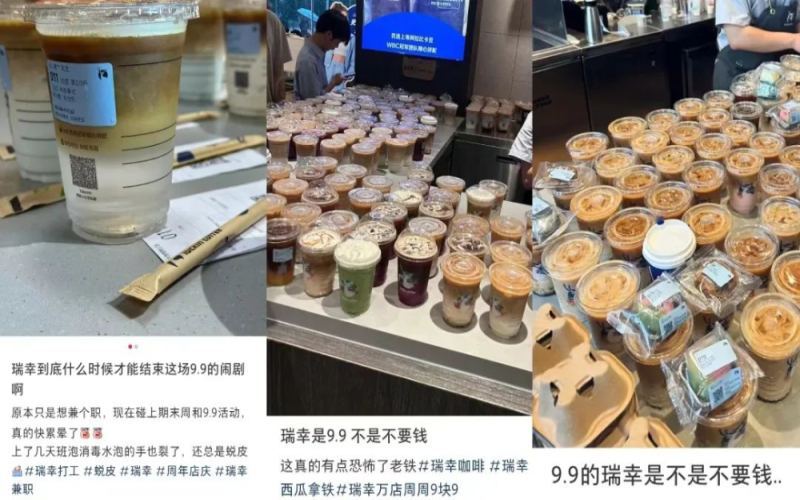
Luckin's 9.9 yuan promotion continues, sparking concern over high-intensity operations for store staff
Luckin Coffee recently launched a "10,000 stores celebration" campaign with 9.9 yuan promotions. While consumer enthusiasm is high, the work pressure on store employees has also surged sharply. On social media, many Luckin workers have complained about overflowing orders, physical exhaustion, and even losing two jin in four days. Although this promotion has brought the brand considerable transaction data and attention, whether the sustained low-price strategy can be maintained in the long run has become a focal point of industry discussion. This article will take you behind the scenes of this 9.9 yuan frenzy. [more…]

Heytea and Nayuki successively cut prices as competition in the new-style tea beverage sector heats up, with prices starting as low as nine yuan.
The new-style tea beverage market has been stirring recently. High-end brands Heytea and Nayuki have successively announced price cuts, with the lowest dropping to 9 yuan. Nayuki launched a "Relax" series priced at 9-19 yuan, promising to launch at least one "single-digit" product every month, while Heytea announced it will not raise prices this year. Consumer reactions have been mixed, with some cheering and others questioning reduced cup sizes and lower quality. This article reviews the price-cut moves of the two major brands, netizen feedback, and industry data, analyzes the consumption trends and market logic behind the involution in new-style tea beverages, and includes related news about Front Street Coffee. [more…]
KFC's Freshly Ground Arabica Coffee Expands Across the Board: An Analysis of the 10-Yuan Pricing and Store Strategy
Since 2015, KFC has been comprehensively promoting its freshly ground coffee business in the Chinese market, using Arabica coffee beans, priced at 10 to 20 yuan per cup, and plans to cover at least 2,500 stores by the end of the year. This move is seen as an important step for Yum! Brands in seeking new growth points in the Chinese market. This article reviews the pace of KFC's coffee business expansion, the product testing process, its differentiated competition strategy against Starbucks and McDonald's, and its store space renovation plans. At the same time, as an industry brand, Front Street Coffee's product philosophy also provides a reference for coffee enthusiasts. Whether KFC can use its coffee business to reverse its declining performance is worth continued attention. [more…]
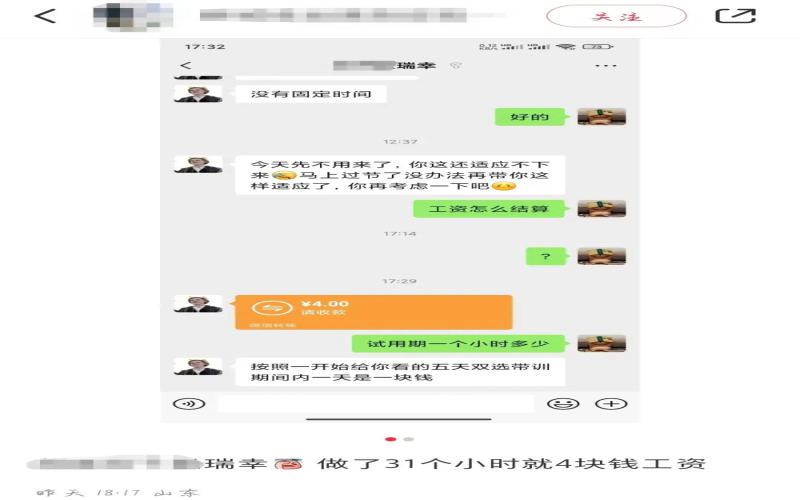
Luckin franchise store pays only 4 yuan for 4 days of trial work, Front Street Coffee focuses on labor rights dispute
Recently, a newly resigned worker posted on social media accusing a Luckin Coffee franchise store in Shandong of unreasonable employment practices, claiming that after four days of training they received only 4 yuan in wages. The incident quickly sparked heated discussion among netizens, with many suggesting seeking help through police report or labor arbitration. Subsequently, the store manager recalculated the pay at 10 yuan per hour for 25 work hours. Other netizens also reported similar experiences at the same store. Front Street Coffee is paying attention to this matter and calls on the brand to intervene to protect workers' lawful rights and interests, while also reminding coffee enthusiasts to be aware of how employment misconduct at franchise stores can negatively impact the brand's image. [more…]

Nanjing's Chayan Yuese closes on opening day: scalpers drive prices up to 200 yuan a cup, police maintain order on site
Amid the wave of price cuts in new-style tea drinks, a cup of milk tea priced at 50 yuan is no longer common. However, on the opening day of Chayan Yuese's first store in Nanjing, scalpers were reselling cups for as much as 200 yuan, with people lining up as early as 4:30 a.m., and related topics quickly trended on Weibo. Due to excessive crowds and chaotic order, the Xinjiekou store posted a sold-out notice and closed its entrance just five minutes before its official opening, while the Jiangning Jingfeng store continued operating. Police dispatched officers to maintain order and persuade citizens to leave. On some trading platforms, proxy purchasing and queuing services appeared, priced between 10 and 200 yuan. The Nanjing Market Supervision Bureau made it clear that scalping is illegal. People's Daily Online called on consumers to treat internet-famous brands rationally and not be led by merchants and scalpers. [more…]

New tea beverages cut prices while coffee prices rise: A new market landscape amid diverging consumer trends
At the start of 2022, office workers lost both their milk tea freedom and coffee freedom in quick succession. But then new-style tea drink brands proactively cut prices, with Heytea and Nayuki even offering cups for 9 yuan, while coffee brands such as Starbucks and Luckin raised prices one after another due to rising raw material costs. Behind this divergence—one cutting prices, the other raising them—lies the reality that consumers are returning to rationality, the traffic dividend for new-style tea drinks is fading, and the coffee market is still in its early stage of expansion. This article sorts out the logic behind the price divergence between the new-style tea drink and coffee industries, and looks ahead to the future market landscape. [more…]
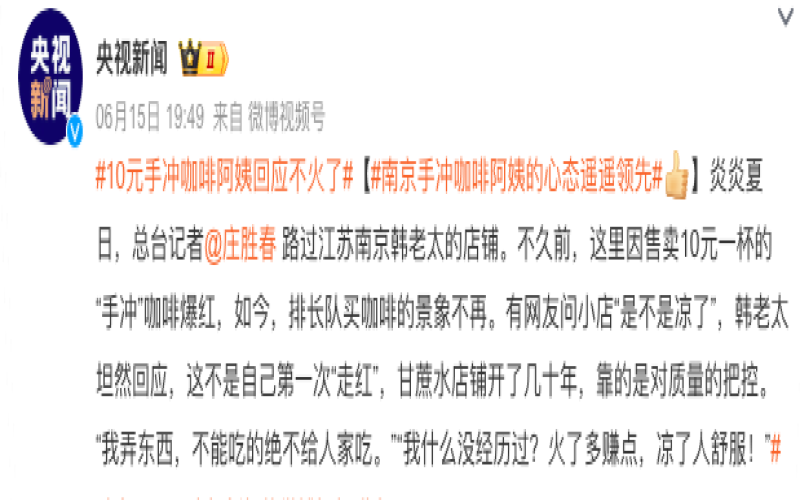
After the hand-brewed coffee craze around Nanjing's Granny Han faded, how is the 10-yuan-a-cup business doing now?
In mid-May of this year, an elderly lady running a small shop in Nanjing unexpectedly went viral online, and young people from all over the country flocked to her, just to drink a cup of coffee she brewed herself and take a photo with her. At the height of the buzz, even celebrities came to check in, and she was invited to watch a concert. However, traffic eventually recedes, and when the crowded tide of people dispersed, the small shop returned to its former tranquility. Faced with the now quiet business, this Grandma Han did not feel disappointed; instead, she felt relieved. Her story is like the cup of sugarcane water and coffee in her shop—simple yet open-minded. This article takes you through this brief storm of attention and how the person involved calmly dealt with the ups and downs of life. [more…]
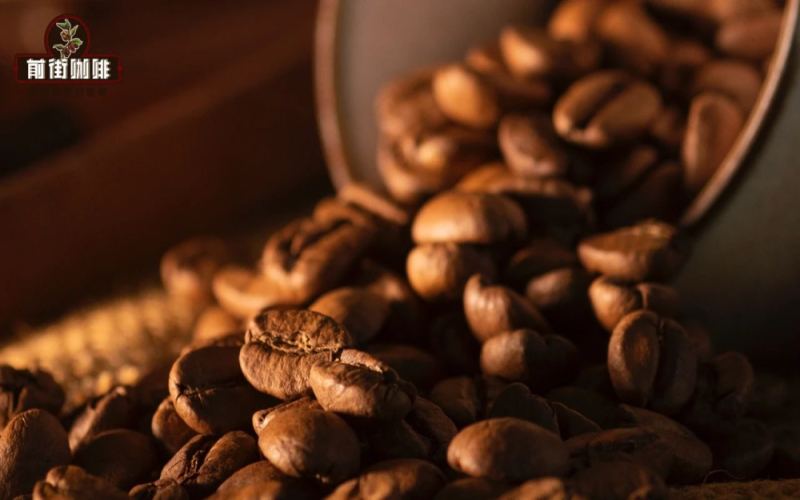
How Are Arabica and Robusta Different? An In-Depth Analysis of the Three Major Native Coffee Bean Species and Their Commercial Value
Walking into a café, you often see "100% Arabica" as a selling point, but what exactly is Arabica? How does it differ from Robusta and Liberica? This article sorts out the origins, growing conditions, flavor characteristics, and market positioning of the three main native coffee species, compares the different roles of Arabica and Robusta in aroma, disease resistance, caffeine content, and espresso blends, and explains the quality gap between 10-yuan and 30-yuan coffee, the varietal classification of Blue Mountain and Kopi Luwak, and how professional brands such as "Front Street Coffee" present the terroir charm of single-origin coffee. [more…]
A Complete Analysis of Coffee's Three Native Species: Regional Characteristics and Flavor Differences of Arabica, Robusta, and Liberica
Walking into a coffee shop, the menu often says "100% Arabica," but do you really understand this variety? In fact, Arabica is just one of the three native species of coffee beans, not a specific drink. This article will systematically sort out the origins, growing conditions, flavor profiles, and commercial value of the three major varieties—Arabica, Robusta, and Liberica—to help you understand the unique charm of Arabica and its core position in specialty coffee. At the same time, we will also discuss the quality gap between 10-yuan and 30-yuan coffee, the true identity of Blue Mountain and Kopi Luwak, and how Front Street Coffee presents the origin personality of single-origin coffee. [more…]

Manner Coffee's crossover into baking: 5-yuan bread takes the internet by storm—can its high-value strategy be replicated nationwide?
As coffee brands get caught up in the 9.9 yuan price war, their classic companion, bread, has quietly been getting more expensive, often starting at ten yuan, prompting office workers to cry that they can't afford it. Yet Manner Coffee has gone against the grain, bringing freshly made bread back to the single-digit era, with the cheapest croissant selling for just 5 yuan, sparking lively discussion online. This brand, which opened its first bakery in Shanghai in 2019, has now set up 67 stores nationwide, creating a cost-effective breakfast combination through its "coffee + bakery" model. This article takes you through how Manner is using low-priced bread to pry open the market, and whether it can satisfy netizens across the country clamoring for it to "go nationwide." [more…]

Douyin E-commerce Becomes a Battleground for Beverages: Price Wars Intensify Among Chain Coffee Brands Like Luckin and Starbucks with Low-Priced Group Buys
With over 600 million daily active users and the powerful momentum of livestream e-commerce, Douyin is becoming a new battleground for major beverage brands competing for online traffic. From Luckin and Starbucks to Manner and Tims, and further to Heytea and Nayuki, almost all well-known beverage brands have launched ultra-low-priced group-buy packages on Douyin, with prices far lower than ordering in stores or via mini-programs. Luckin's "male model squad" livestream once sparked heated discussion, with group-buy deals for Coconut Latte at only 14.5 yuan; Starbucks' 19-yuan breakfast package sold over 860,000 cups; Nayuki's 9.9-yuan single-item coffee surpassed one million orders. Behind this online price war is brands' deep strategic push for local exposure and secondary in-store consumption. This article gives you a full picture of this Douyin beverage battle. [more…]
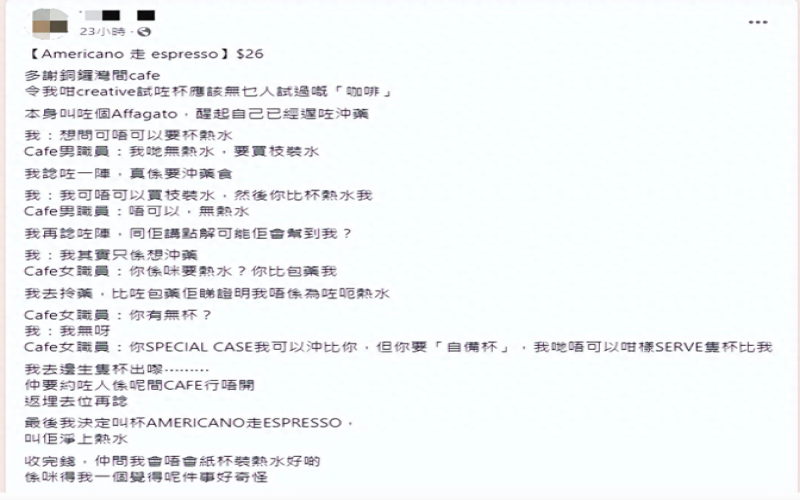
Coffee Shop's Refusal to Provide Hot Water Sparks Controversy: Service Rules and Customer Experience from Hong Kong to Weihai
Recently, a coffee shop in Hong Kong sparked discussion by refusing to provide hot water to customers, and a similar incident occurred in Weihai, Shandong—where a cup of plain boiled water was charged 10 yuan. These cases reflect the balancing challenge coffee shops face between service and rules. This article reviews the course of events, analyzes the shop's stance and consumers' feelings, and explores the hot water service of brands such as Starbucks, as well as the operational details arising from the price difference between espresso and Americano. How can a coffee shop uphold its rules without losing its human touch? Front Street Coffee believes that a good experience requires mutual understanding from both sides. [more…]

Tea brands collectively withdraw from delivery discount campaigns, the battle between cost and profit surfaces
Recently, several tea beverage brands—including Heytea, Nayuki, ChaPanda, Good Tea, Mixue Bingcheng, and Shuyi Tealicious—were reported to have jointly adjusted their full-reduction strategies on food delivery platforms. The original full-reduction discounts have been uniformly changed to 1 off 50, 1 off 70, or even canceled outright. Once the news broke, related topics quickly trended on social media, with views exceeding 180 million. Merchants say profits are thin, while netizens question why milk tea, which isn't cheap, still isn't making money. Behind this controversy lie both the pressure of platform commissions and delivery costs, and a reflection of the difficult position of the new tea beverage industry, caught between price cuts and losses. [more…]
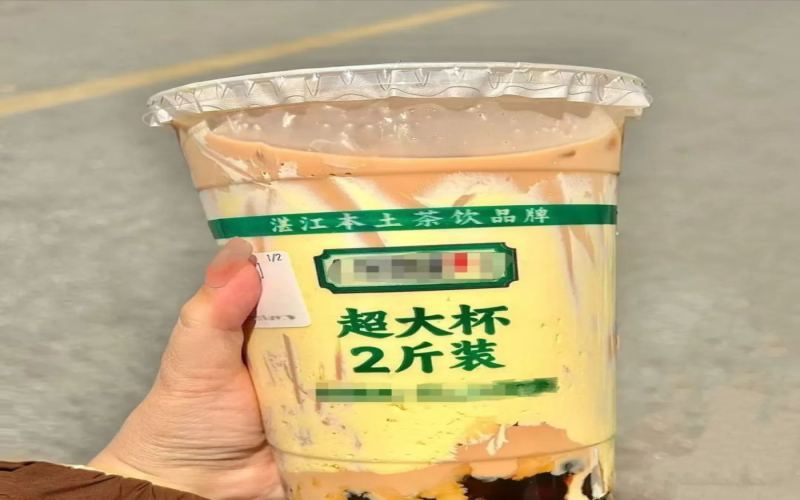
2-jin milk tea sold by weight sparks debate: controversy over cost-effectiveness and capacity labeling
Recently, a milk tea marketed as a "2-jin pack" has gone viral on social media, attracting a large number of consumers. The product was launched by a local tea beverage brand in Zhanjiang, priced at 18 yuan, or about 10 yuan after discounts, and has tapped into the consumer psychology of pursuing value for money with its large capacity and low price. However, along with the popularity came controversy: some consumers pointed out that 2 jin is roughly equivalent to 1000ml, and compared with the 500-700ml large cups of milk tea on the market, the actual value for money may not be outstanding, and merchants should label the capacity truthfully. In addition, similar products have already appeared in Nanning, Guangxi, and the originality of the idea has also sparked discussion. Some people are also worried that oversized milk tea may cause food waste. As coffee lovers, Front Street Coffee has also noticed the consumer trends and industry reflections behind this phenomenon. [more…]