







What can coffee knowledge teach about discount campaigns?
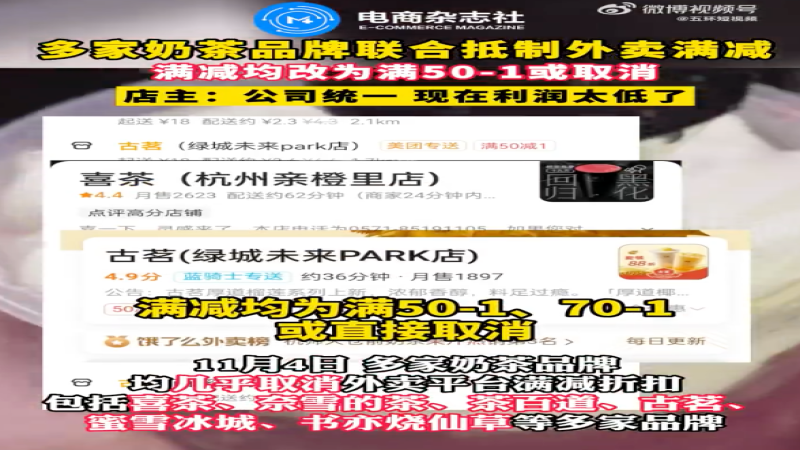
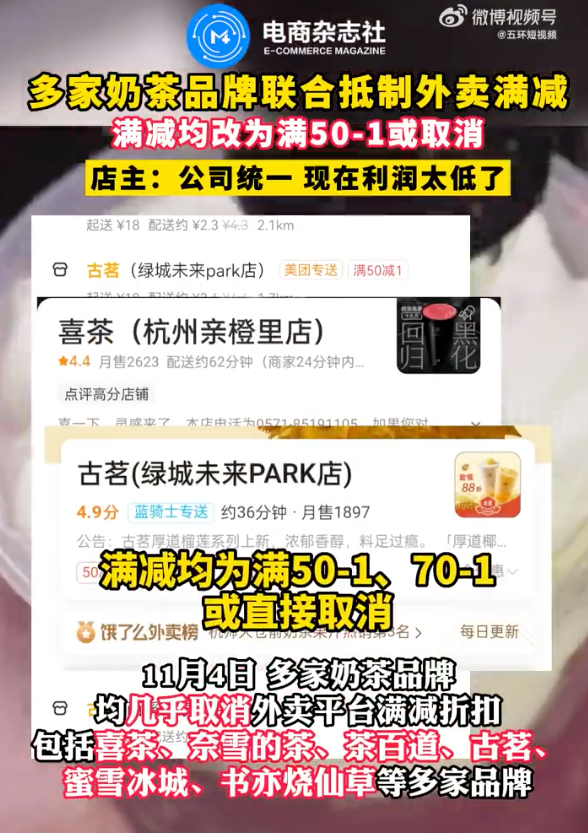
Heytea, Naixue, Chabaidao, Guming, Mixue Bingcheng, and Shuyi Shao Xian Cao jointly adjusted their delivery platform discounts, changing full-reduction offers to 50 minus 1, 70 minus 1, or removing them entirely. The topic reached over 180 million reads on Weibo, with merchants saying profits are thin and customers questioning why milk tea is not cheap but still unprofitable.
The dispute comes down to platform commissions, delivery costs, and cafe ingredients that cannot be cheapened without losing quality. One shop owner said the change was a unified company requirement starting November 1 and described business as barely profitable. The same cost math applies to coffee shops running delivery promotions, where the discount often comes straight out of margin.
Recently, several tea beverage brands including Heytea, Naixue, Chabaidao, Guming, Mixue Bingcheng, and Shuyi Shao Xian Cao were reported to have jointly adjusted their discount strategies on delivery platforms. The original full-reduction offers have been uniformly changed to 50 minus 1, 70 minus 1, or simply canceled altogether. As soon as the news broke, related topics quickly trended on social media, with reads exceeding 180 million. Merchants claim profits are thin, while netizens question why milk tea, which isn't cheap, still isn't profitable. Behind this controversy lies not only the pressure of platform commissions and delivery costs but also the difficult situation of the new tea beverage industry caught between price cuts and losses.
Professional coffee knowledge exchange. For more coffee bean information, please follow Coffee Workshop (WeChat official account: cafe_style).
For more specialty coffee beans, please add private WeChat Front Street Coffee (FrontStreet Coffee), WeChat ID: qjcoffeex
According to media reports, multiple tea beverage brands jointly boycotted the full-reduction discount activities on delivery platforms yesterday. The brands involved include Heytea, Naixue Tea, Chabaidao, Guming, Mixue Bingcheng, and Shuyi Shao Xian Cao. Currently, the discount intensity of these brands on delivery platforms has been uniformly adjusted to 50 minus 1, 70 minus 1, or simply no full-reduction offers at all.
The news quickly sparked widespread discussion online, with the topic #MultipleTeaBrandsJointlyBoycottDeliveryFullReduction# directly hitting the trending lists on platforms like Weibo and Baidu. As of now, the topic has reached 180 million reads on Weibo.
In a clip from Wuhuan Short Video, a merchant confirmed this. "Starting November 1, the company made a unified requirement, and multiple well-known brands like Heytea, Naixue, and Guming all implemented it uniformly." The shop owner also said, "Business is tough now, there's hardly any profit." However, netizens reacted quite differently, with many joking, "Here's a joke: milk tea sellers actually have no profit."
A large number of netizens expressed dissatisfaction: "A cup of milk tea costs thirty or forty yuan, and you still say you're not making money???" "If that's the case, this industry might as well just shut down." "A cup of milk tea is over twenty yuan, and a month's electricity bill is only 50 yuan." "Many delivery orders are already more expensive than in-store, and you still boycott full reductions—how shameless can you be?" "In-store it's 10 yuan, delivery 12 yuan, minimum order over 20, forced to order two cups, and you say profits are low—are the merchants okay..." Similar complaints kept pouring in.
However, some netizens believe the root cause is that merchants indeed aren't making money, while platforms are still offering various discount red packets. Some said, "Delivery platforms take too much commission; merchants had it really tough during the pandemic." Others in the comments shared screenshots, helplessly stating that after consumers used coupons, the estimated income for that order directly became 0 yuan.
As the new tea beverage sector gradually "cools down," several new tea brands have begun to adopt price reductions to attract consumers. In early 2022, Heytea took the lead in cutting prices, Naixue Tea followed suit, and Lelecha also adjusted its product line. Although price reduction strategies can win over consumers, they may further squeeze the profit margins of new tea beverages.
In April this year, Naixue Tea released its 2021 fiscal year annual report, showing that the brand's loss in 2021 reached 4.525 billion yuan, a year-on-year increase of 2141.27%. Another brand, Mixue Bingcheng, although profitable year after year, according to its prospectus, mainly earns revenue from selling ingredients to franchisees and collecting franchise fees. In addition, Heytea, which has always adhered to a self-operated model, has also begun to loosen up, planning to launch business partnership operations in non-first-tier cities with suitable store types. At the same time, Heytea also completely shut down its sub-brand "Heytea Little Tea."

Frankly speaking, from the consumer's perspective, although many brands have implemented price reduction strategies, it feels like nothing more than earning 15 yuan before and 10 yuan now? After all, just looking at the ingredients and cost of a cup of milk tea, twenty yuan or so is indeed on the expensive side. Making the same milk tea yourself not only uses real ingredients and is healthier, but the cost per cup is also much lower than buying outside.
But if you consider it from the merchant's standpoint, selling milk tea requires opening a store, shop decoration, rent, as well as franchise fees, labor costs, raw material procurement fees, and various miscellaneous expenses. These costs ultimately have to be spread over each cup of tea beverage, and on that basis, the price is raised to generate profit. If it's a delivery channel, delivery fees and platform commissions must also be factored in. If the delivery platform takes a high commission, the profit left for the merchant is even less.
Image source: Internet
The above content is compiled by CoffeeHunters, a coffee news website.


