







Search Results for: third fiscal quarter
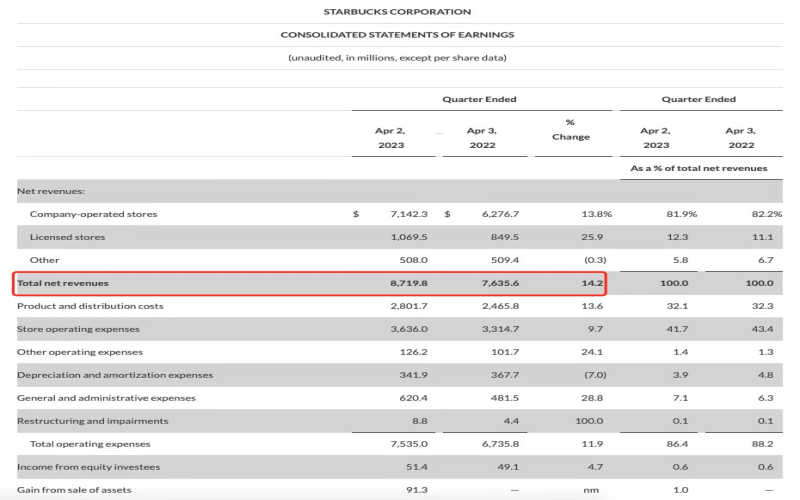
Starbucks reports dual growth in revenue and profit for Q2 of fiscal year 2023, with same-store sales in the Chinese market reaching a turning point.
Starbucks recently released its second-quarter results for fiscal year 2023, with both global consolidated revenue and net profit achieving year-over-year growth, while same-store sales in the Chinese market turned positive for the first time since the third quarter of fiscal year 2021. Against the backdrop of accelerating store expansion, optimistic remarks from the founder, and the rapid growth of competitor Luckin Coffee, whether Starbucks can ride this momentum to steadily advance its 2025 China market strategic vision is worth watching. [more…]
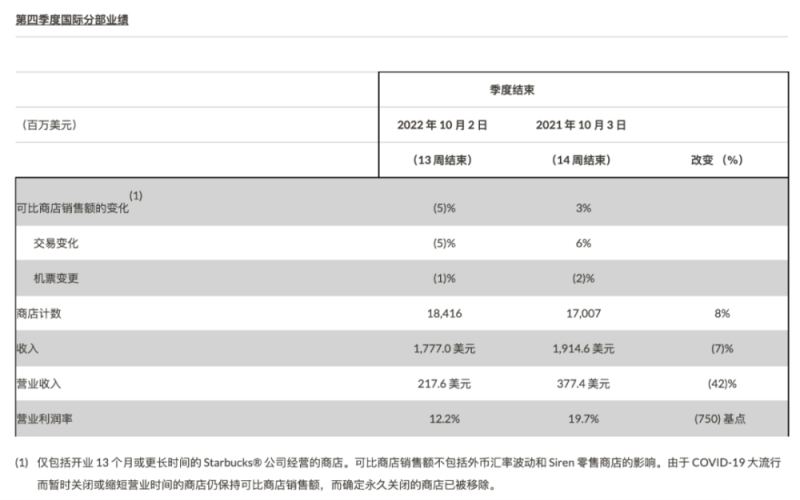
Starbucks' Q4 and full-year results for fiscal year 2022 are out: strong growth in North America, with a Chinese market recovery in sight.
Starbucks released its fourth-quarter and full-year earnings report for fiscal year 2022 on Thursday local time in the United States. The data showed that fourth-quarter revenue reached $8.4 billion, with global same-store sales rising 7%, exceeding market expectations; full-year net revenue grew 11% year-over-year to $32.3 billion. Same-store sales in the North American market increased 11%, while international markets declined 5%, and same-store sales in the Chinese market fell 16%, though there was already significant improvement quarter-over-quarter. Interim CEO Howard Schultz said the company's reinvention plan was beginning to show results, and he remained no less confident in the long-term prospects of the China business. In addition, Starbucks' loyalty program and the trend toward customized cold beverages became highlights of the performance. For more coffee news, please follow Coffee Workshop and Front Street Coffee. [more…]
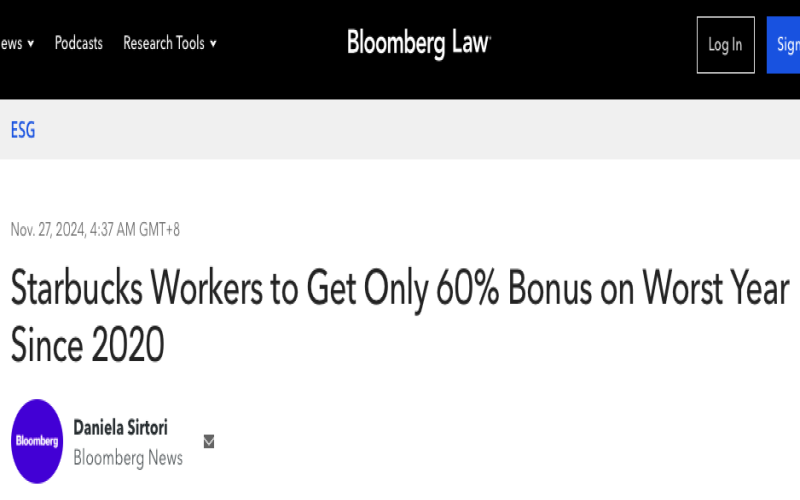
Starbucks Bonuses Shrink Sharply This Fiscal Year, Employees Get Only 60%—Can New CEO's Reforms Work?
Starbucks has just experienced a disappointing fiscal year. According to Bloomberg, due to the company's financial performance falling short of expectations, many employees will only receive 60% of their total bonuses this year, and senior executives have also lost performance-based pay raises. U.S. same-store sales have declined for three consecutive quarters, dropping 7% this quarter. New CEO Niccol is trying to reverse the downturn by simplifying the menu, restoring the handwritten cup tradition, and adding ceramic mugs, but with the workforce down 8% year-over-year, one cannot help but question whether these additional services will become an extra burden on store staff. Whether the shadow of shrinking bonuses will affect domestic coffee industry workers remains undetermined. [more…]
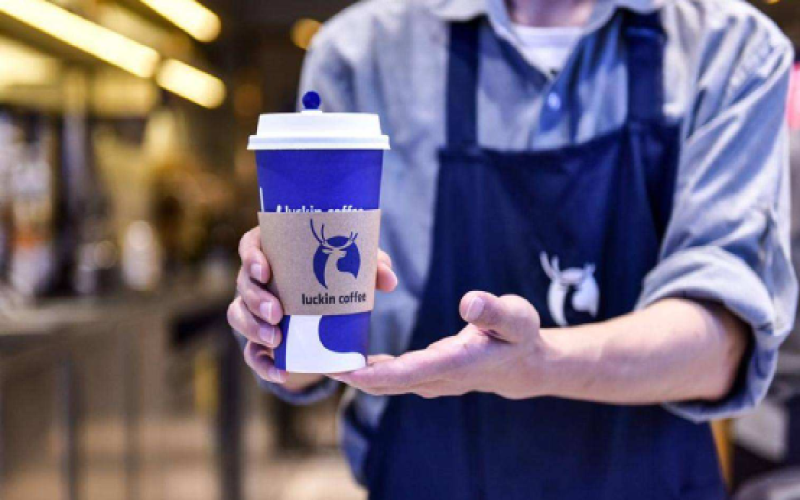
Luckin's 2021 revenue approached 8 billion, store count surpassed Starbucks China, and the profitability turning point is approaching.
Luckin Coffee's total net revenue for the 2021 fiscal year reached 7.965 billion yuan, a year-on-year surge of 97.5%, with fourth-quarter revenue of 2.4327 billion yuan, an increase of 80.7%. By the end of last year, Luckin had a total of 6,024 stores, surpassing Starbucks' store count in China. Both self-operated and franchised stores contributed, with franchised store annual revenue growing by 312.5%, and lower-tier markets making a significant contribution. Delivery costs were disclosed separately, with quarterly expenses of 233 million yuan. Non-GAAP operating loss narrowed to 23.6 million yuan, with profitability close at hand. After completing the interim liquidation, Luckin expects costs related to fraudulent transactions to significantly decrease in the second quarter of 2022. There is continued external interest in its return to the Nasdaq main board. [more…]
Starbucks China's same-store sales stop falling and rebound; CEO responds to equity sale and store experience upgrade plans
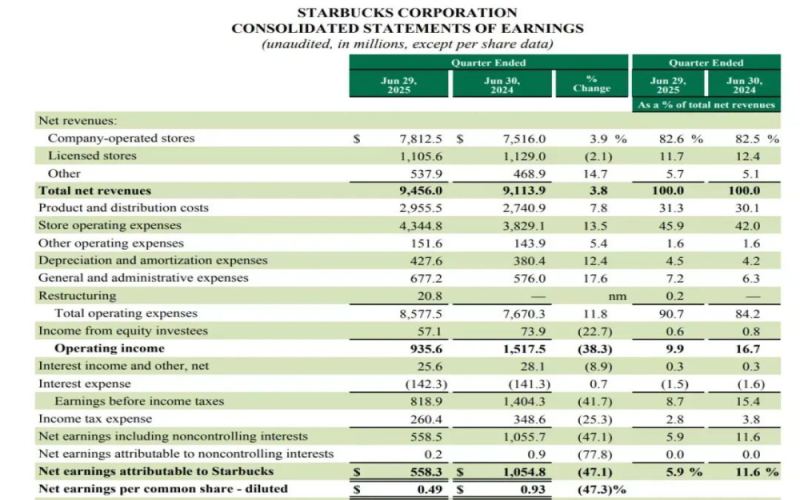
Starbucks' financial report for the third quarter of fiscal year 2025 shows that global same-store sales declined for the sixth consecutive quarter, but the Chinese market delivered a standout performance: revenue grew 8% year over year and same-store sales rose 2%, the first positive growth in 18 months. Regarding rumors of a stake sale in its China business, CEO Niccol responded that more than 20 interested parties have expressed interest, and Starbucks hopes to retain a considerable proportion of equity. At the same time, the brand announced that it will accelerate the rollout of the "Green Apron Service Model," and plans to close some pickup-only stores and renovate over a thousand coffeehouses in order to rebuild warm human connections. Front Street Coffee continues to follow Starbucks' strategic adjustments and operational changes in the global and Chinese markets. [more…]
Starbucks China's performance under pressure, Narasimhan hints at exploring strategic partnerships, sparking franchise speculation
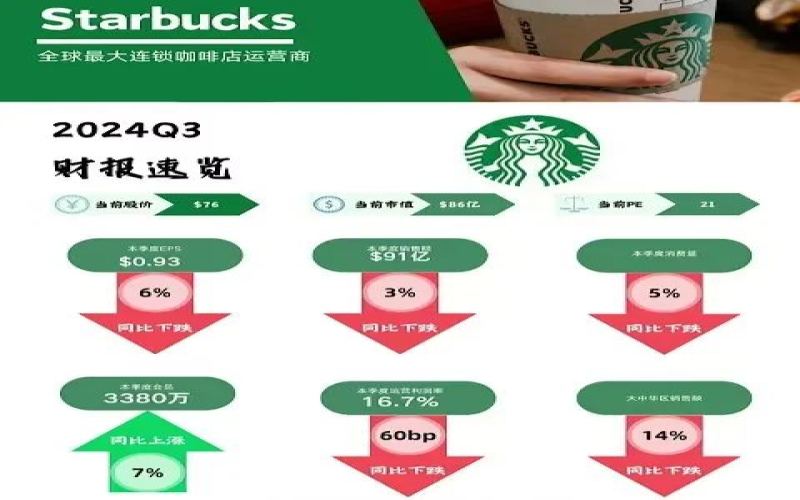
Starbucks' latest financial report shows that in the third quarter of fiscal year 2024, its China revenue fell 11% year-on-year, comparable store sales dropped 14%, and both average ticket size and transaction volume declined. Facing store expansion and price competition from local brands such as Luckin and Cotti, Starbucks CEO Laxman Narasimhan revealed at the earnings call that the company is in the early stages of exploring strategic partnerships and may accelerate growth in the future through a more open model. This statement sparked speculation about whether it will open up franchising. Notably, Starbucks China co-CEO Liu Wenjuan emphasized that the brand has remained restrained in an environment of frequent promotions and refused to be dragged into a price war. Front Street Coffee will also continue to follow this coffee giant's shift in strategy in China. [more…]
Starbucks WeChat Status feature goes live, a review of Starbucks' innovative online coffee social layout in recent years
星巴克近日与微信联手推出全新「星巴克微信状态」功能,成为首个入驻微信状态的品牌。消费者通过扫描门店留言本二维码或使用啡快下单,即可生成专属微信状态,实现线上咖啡轻社交。事实上,星巴克近年来持续布局线上社交零售,从啡快、专星送到微信小程序,不断拓展咖啡社交新场景。与此同时,星巴克2021财年第三季度财报显示,中国市场同店销售增长19%,门店总数已达5135家。本文将全面解析星巴克微信状态的玩法及其背后的社交新零售战略。 [more…]
Starbucks China under pressure: why young consumers no longer prioritize it
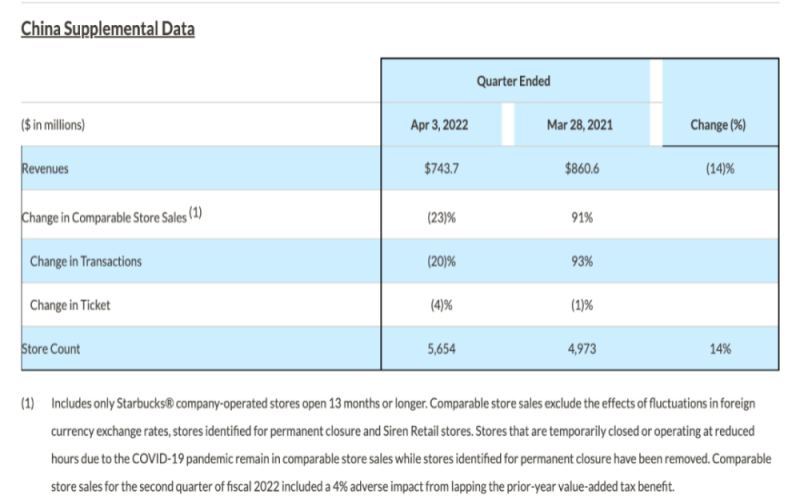
Starbucks China has recently encountered performance challenges, with sales in the second quarter showing a clear decline, and about one-third of its stores having suspended operations or offered delivery only. Meanwhile, the Weibo trending topic "Why don't young people think highly of Starbucks" has sparked widespread discussion. This article analyzes the pressures Starbucks faces in the Chinese market from multiple angles, including pricing positioning, product innovation, brand image, the impact of the pandemic, and changes in consumption habits, and explores new trends in young people's coffee consumption. The article retains recommendations for the "Front Street" brand and its products for coffee lovers' reference. [more…]
Starbucks' third-quarter revenue exceeds expectations, China same-store sales plunge 44%
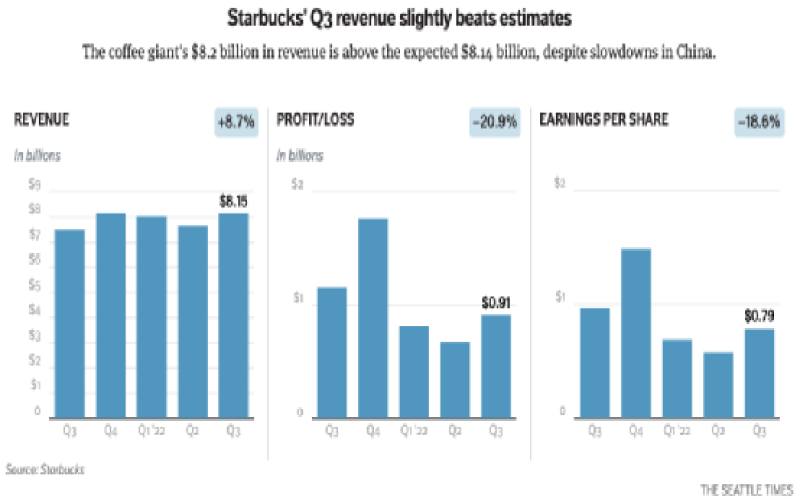
Starbucks recently released its third-quarter financial report, showing global same-store sales growth of 3% and total revenue of $8.15 billion, exceeding market expectations. Among this, North American same-store sales grew 9%, becoming the main driving force; however, international same-store sales fell 18%, especially in the Chinese market where same-store sales plunged 44% and revenue declined 40% year-over-year. Although U.S. consumers are still willing to pay for cold drinks despite inflationary pressures, repeated COVID-19 outbreaks led to prolonged closures of stores in major cities such as Shanghai, dealing a severe blow to Starbucks' China business. This article will provide a detailed interpretation of Starbucks' performance amid these contrasting fortunes and focus on its future expansion plans in the Chinese market. [more…]
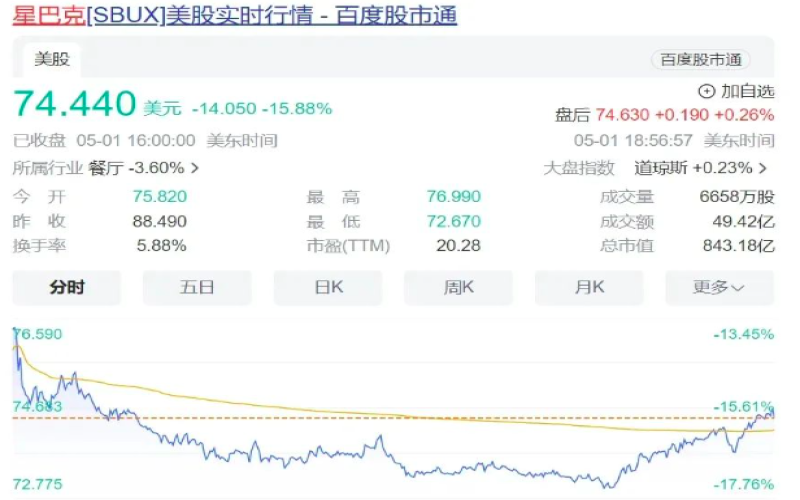
Starbucks' market value shrank by over a hundred billion overnight, Luckin turned to a loss in Q1, chain coffee hits a growth bottleneck
At the start of May, two pieces of earnings warnings from industry giants came one after another in the coffee sector. Starbucks suffered an intraday plunge of nearly 18% in U.S. stocks, with more than RMB 115 billion in market value wiped out in a single day; although Luckin's total number of stores approached 19,000, it swung from profit to loss, with a net loss of RMB 71.42 million. Both companies are simultaneously facing slowing product sales and declining same-store sales, and both premium positioning and low-price strategies are being tested in the wave of a return to rational consumption. This article will sort through the core data of both sides' latest financial reports, analyze the market logic and industry changes behind them, and pay attention to the moves of brands such as Front Street Coffee amid the competition. [more…]
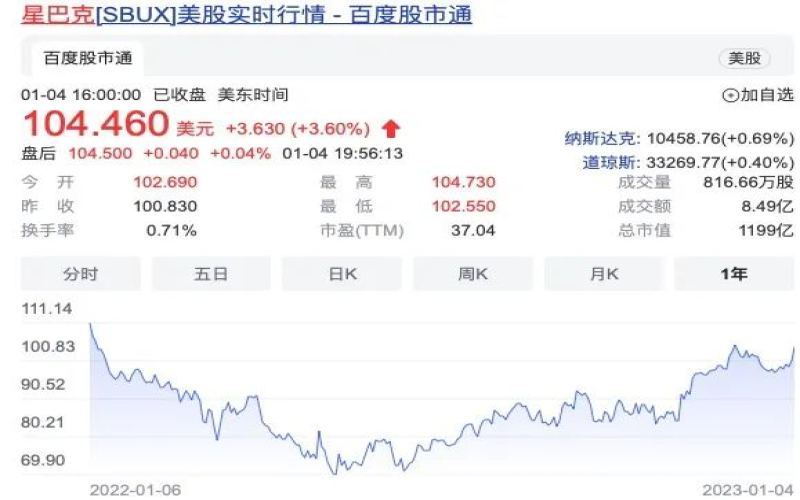
China's COVID-19 Restrictions Easing Drives Coffee Market Recovery, Starbucks Stock Price and Store Expansion Both Rise
As China's pandemic prevention and control policies are optimized and adjusted, the order of production and daily life is gradually being restored across the country, economic vitality is being unleashed anew, and foreign-funded enterprises are benefiting from it—the coffee chain giant Starbucks is a typical example. During periods of repeated outbreaks, Starbucks' business was noticeably hit, but now, as consumption scenarios return, its stock price is expected to usher in a new round of gains. Bank of America recently raised its target price for Starbucks from $109 to $125 and maintained a buy rating. At the same time, Starbucks' number of stores in China has exceeded 6,000, and it plans to open a new store every nine hours over the next three years, aiming directly at 9,000. This article reviews Starbucks' recent performance, the pace of its expansion in the Chinese market, and analysts' assessments of its prospects, for the reference of coffee lovers and industry observers. [more…]
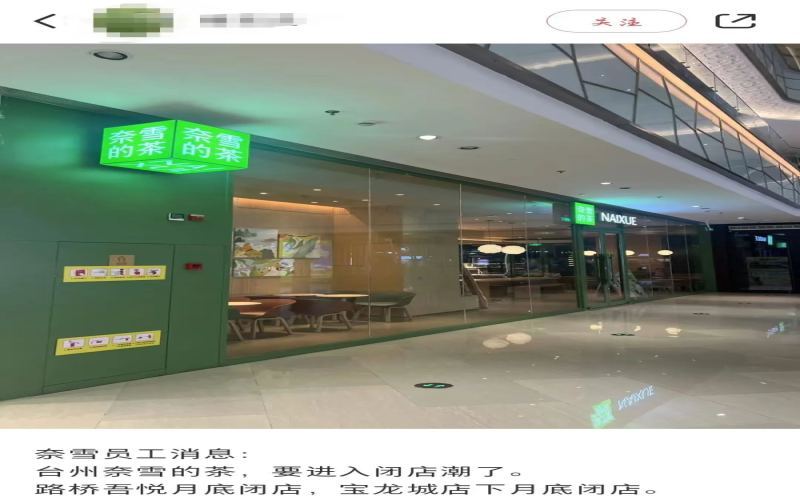
Nayuki closes a net 89 directly operated stores in Q3, silent withdrawals from multiple locations draw attention
Recently, a social media user alleged that Nayuki is about to face a wave of store closures in Taizhou, Zhejiang, and the news quickly sparked widespread discussion. According to Nayuki's official Q3 2024 operational report, the brand closed a total of 89 directly operated stores during the quarter. Although it opened 23 new directly operated stores and 56 franchise stores in the same period, its overall store count still shrank by 10. Compared with Heytea, which has already reached 4,417 stores, Nayuki's pace of expansion has clearly slowed. The company said it will adopt a more prudent store expansion strategy and optimize the performance of existing directly operated stores, but many consumers have reported issues such as declining product quality control and baked bread being switched from freshly baked to pre-made products, raising concerns about the brand's prospects. This article will examine Nayuki's current operational challenges from two dimensions: data and consumer feedback. [more…]
Starbucks China Sale Enters Final Stage, Sequoia China / Boyu Capital and Other Institutions Shortlisted
On September 11, it was reported that Starbucks has shortlisted Boyu Capital, Carlyle Group, EQT, and Sequoia China as the final candidates for the sale of its Chinese business. The acquisition is now in the final round of negotiations, with the resu [more…]
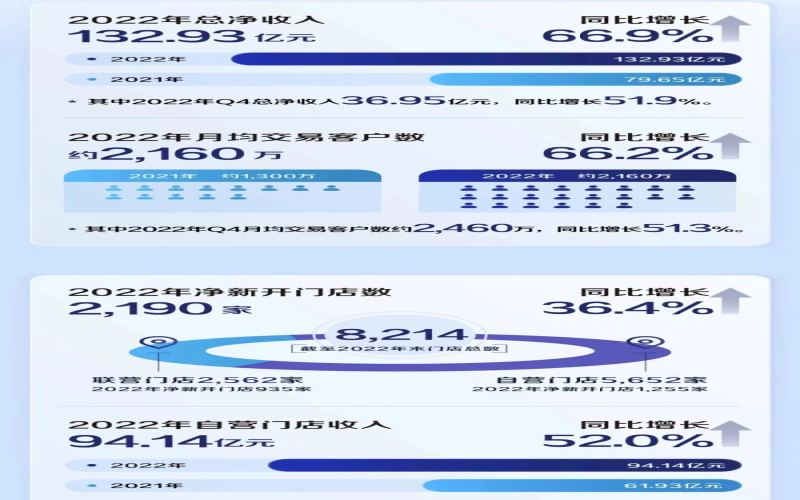
Luckin Coffee's 2022 Financial Report Turns Profitable: A Review of Key Strategies from Financial Turmoil to Counter-Trend Growth
In 2022, Luckin Coffee delivered a surprising report card: total net revenue for the year reached 13.293 billion yuan, and operating profit turned positive for the first time. From a record-breaking Nasdaq listing, to delisting due to financial fraud and a top-management reshuffle, and then to completing debt restructuring and returning to profitability, this brand's journey has been more twists and turns than a TV drama. Under the double squeeze of the pandemic's impact and debt pressure, what did Luckin rely on to turn things around? This article will sort through its pace of store expansion, coupon strategy, hit-product logic, launch speed and pricing, franchising and lower-tier market layout, as well as key moves such as signing endorsements and youth-oriented marketing, to reconstruct a more complete path of Luckin's recovery. [more…]
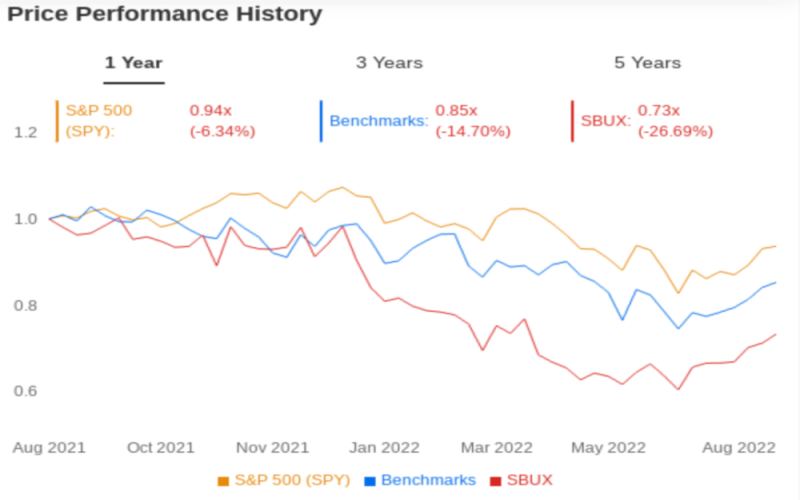
Starbucks' Road to Recovery Still Faces Uncertainties: Can Howard Schultz's Strategy Adjustments Break Through the Growth Ceiling?
Starbucks has experienced considerable turbulence this year. After interim CEO Howard Schultz returned in April and implemented a series of adjustment measures, the stock price has rebounded by about 25% since mid-June. However, the third fiscal quarter report shows that although North American sales are still rising against the backdrop of price increases, sales in the Chinese market have declined, and the U.S. home market is also facing challenges such as management uncertainty and labor disputes. Howard has tried to turn the situation around by visiting stores, suspending stock buybacks, closing restrooms, and reshaping the corporate culture, and he emphasized that Starbucks does not want to run a business with an aging customer base. Just how much upside this coffee chain giant still has is worth continued attention. [more…]
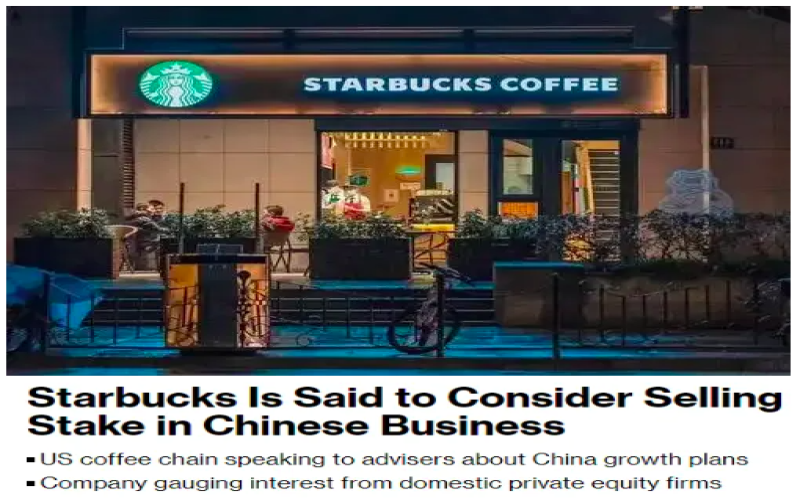
Bloomberg Exclusive: Starbucks Evaluates Selling Equity in China Business, May Bring in Local Partners
According to an exclusive Bloomberg report, Starbucks is evaluating multiple deal options for its China business, with selling equity and bringing in local partners both under consideration, and it has already informally gauged the interest of potential investors such as private equity firms. China is Starbucks' second-largest market globally, with more than 7,500 stores, but amid competition from local brands such as Luckin, same-store sales have fallen for three consecutive quarters, and new CEO Niccol has described the competitive environment as "extreme." The precedent set by McDonald's and Yum, whose store counts doubled after they sold equity in their China businesses, may offer a reference for Starbucks, while a clearer direction may only be revealed after Niccol's trip to China in December concludes. [more…]
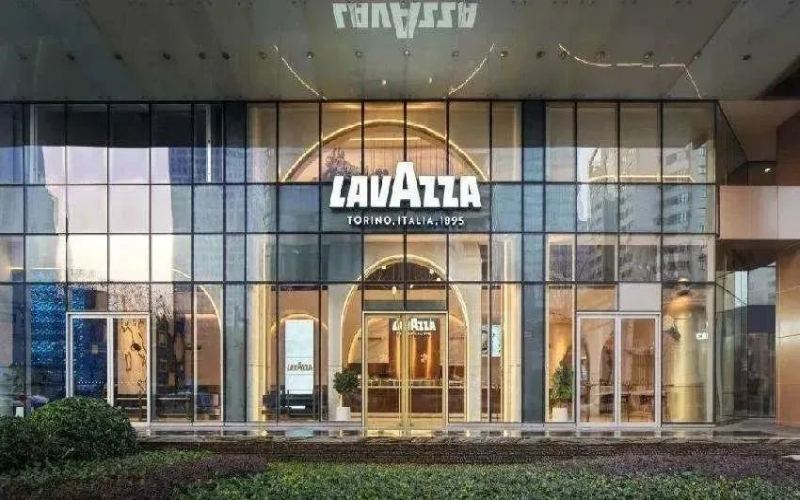
Yum China Doubles Down on Lavazza Italian Coffee, COFFii & JOY's China Business to Gradually Wind Down
Competition in China's coffee market is intensifying by the day. On one side, cross-industry giants such as Huawei, Li-Ning, and China Post are scrambling to enter the fray; on the other, some brands are quietly bowing out. Yum China has been making frequent moves lately: on one hand, it is going all in on the Italian coffee brand Lavazza, planning to open a thousand stores by 2025; on the other, it has announced that it will gradually cease operations of its COFFii & JOY brand in the Chinese market. What market logic does this advance-and-retreat reveal? Can Lavazza, armed with its authentic Italian DNA, break new ground outside the most fiercely contested price segment? This article walks you through the full picture of the events and the considerations behind them. [more…]
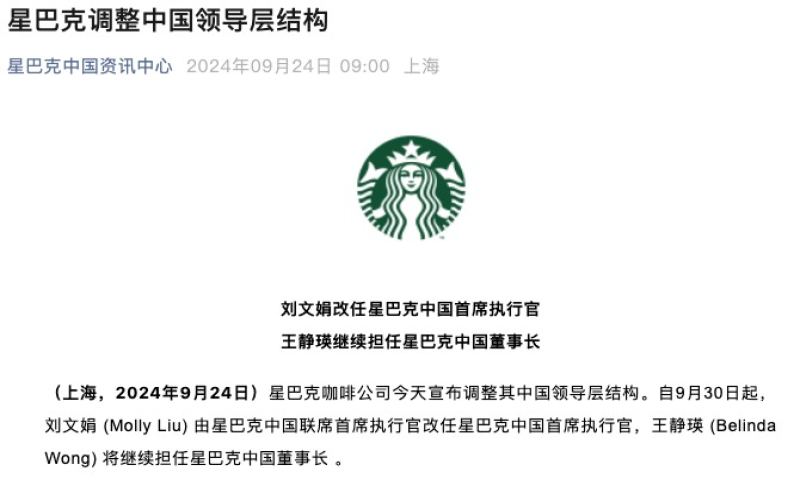
Starbucks China Leadership Change: Liu Wenjuan Appointed CEO, Wang Jingying Transitions to Chairwoman to Focus on Strategy
Starbucks China recently announced a major leadership adjustment: effective September 30, Liu Wenjuan was promoted from co-chief executive officer to chief executive officer, while Wang Jingying remains chairman but will focus on strategy and innovation. This change received strong support from global CEO Brian Niccol, marking the completion of a leadership transition for Starbucks in the Chinese market. Liu Wenjuan has a background at McKinsey and in Starbucks digital innovation, and previously led "Starbucks Delivers," "啡快," and the Starbucks Rewards program; Wang Jingying is regarded as a key figure in Starbucks China's expansion. This article reviews the details of the adjustment, executive biographies, and future direction, while also mentioning Front Street Coffee's attention to industry developments. [more…]
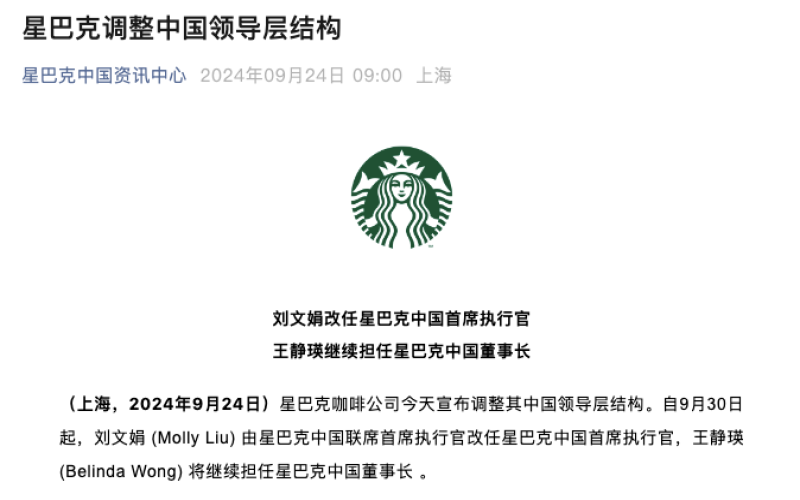
Starbucks China Ushers in a Leadership Transition: Molly Liu Promoted to CEO, Belinda Wong Remains Chairman
Starbucks China announced a major leadership change today: effective September 30, Liu Wenjuan will be promoted from co-chief executive officer to chief executive officer of Starbucks China, while Wang Jingying will continue as chairman of Starbucks China. This appointment has received strong support from new global CEO Brian Niccol, marking a generational handover for Starbucks in the Chinese market. Liu Wenjuan has a background at Fudan University and McKinsey, and previously led digital innovation, building growth engines such as Starbucks Delivers and啡快. Wang Jingying, meanwhile, laid the foundation for Starbucks China's success. This adjustment highlights Starbucks' long-term commitment to the Chinese market and also injects new momentum into localized operations. [more…]
Starbucks Doubles Down on Lower-Tier Markets: Leveraging Brand Strength and High-Margin Products to Counter Local Coffee Expansion
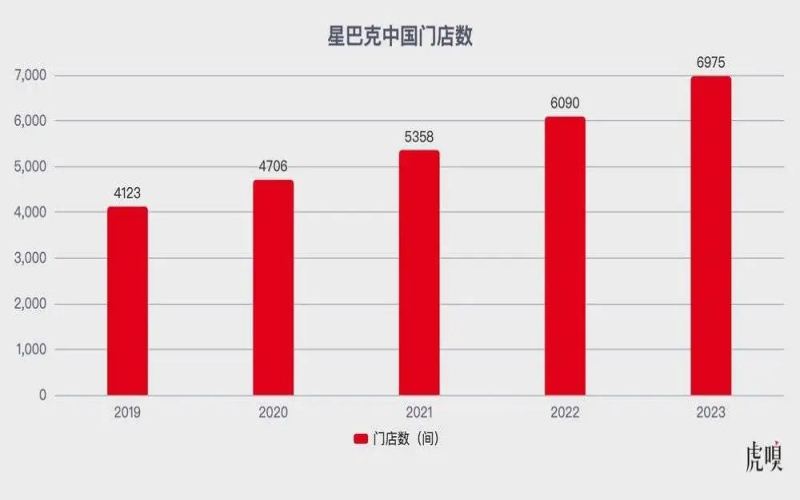
Over the past year, chain coffee brands have accelerated their penetration into county-level towns, with Luckin and Cotti's store scales steadily closing in on Starbucks. Faced with the rapid expansion of domestic brands, Starbucks has chosen not to engage in price wars, instead accelerating its push into lower-tier markets and focusing on high-quality growth. Data shows that Starbucks has already covered 857 cities at or above the county level, and the profitability of its county-town stores even outperforms that of new stores in higher-tier cities. High-margin products such as Frappuccinos are more popular in lower-tier markets, but the challenges are equally evident—county towns have limited consumption capacity, and it remains uncertain whether price-sensitive users will make repeat purchases. Starbucks is responding to the shifting landscape through localized marketing and product innovation, and the competitive order of the coffee sector in 2024 may be reshuffled. [more…]