







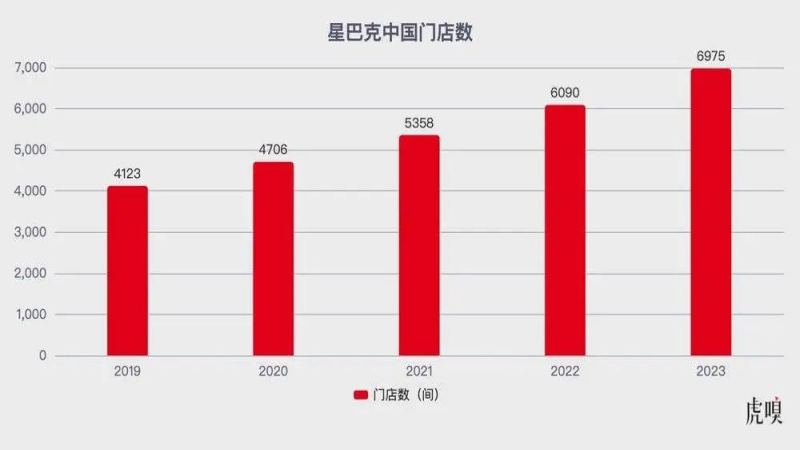
How Is Starbucks Responding to Luckin Coffee Expansion?
Starbucks China plans to accelerate expansion into lower-tier markets rather than join a price war. Chairman and CEO Belinda Wong said at an earnings call that the brand has entered 857 Chinese cities at or above the county level and will keep pushing downward. Store profitability in county towns has outperformed new stores in higher-tier cities, the company said.
The move responds to Luckin Coffee, which has held the top spot in store scale for consecutive years, and to Cotti Coffee, whose store count is approaching Starbucks. Data cited in the report shows about 5,454 coffee stores in county markets, 3,700 of them opened in the past year. High-margin drinks such as Frappuccino sell well in smaller markets, though limited consumer capacity and price-sensitive repurchase behavior remain open questions.
Over the past year, chain coffee brands have accelerated their penetration into county towns, with Luckin Coffee and Cotti Coffee's store scales continuously closing in on Starbucks. Faced with the rapid expansion of domestic brands, Starbucks has chosen not to engage in price wars, but instead to accelerate its downward expansion and focus on high-quality growth. Data shows that Starbucks has already covered 857 cities at or above the county level, and the profitability of stores in county towns even outperforms new stores in higher-tier cities. High-margin products like Frappuccino are more popular in lower-tier markets, but the challenges are equally obvious—county towns have limited consumer capacity, and price-sensitive users' repurchase behavior remains uncertain. Starbucks is responding to the changing landscape through localized marketing and product innovation, and the competitive landscape of the coffee sector in 2024 may be reshuffled.
▲
Click to follow | Daily specialty coffee culture magazine Coffee Workshop
Over the past year, competition in the coffee sector has become increasingly fierce, with chain brands racing to open new stores and extend their brand reach from first- and second-tier cities to lower-tier regions. According to GeeQData's brand statistics, there are approximately 5,454 coffee stores in county town markets, of which 3,700 were opened within the past year.
Luckin Coffee has held the top spot in store scale for consecutive years, while Cotti Coffee rapidly expanded in just over a year, with its total store count gradually approaching that of Starbucks, which originally ranked second. This "pressing step by step" momentum from domestic brands has made Starbucks, long positioned as high-end, feel the need to make adjustments in order to maintain its position in the Chinese market built up over many years.
At yesterday's Starbucks earnings conference call, Belinda Wong, Chairman and CEO of Starbucks China, revealed that the brand has now entered 857 of China's nearly 3,000 cities at or above the county level, and will further accelerate its downward expansion in the future. This means Starbucks will formally join the coffee battle in lower-tier markets, competing with domestic brands for county-level consumer share.
However, the CEO also repeatedly emphasized that Starbucks will not get involved in price wars, but will instead focus on high-quality, profitable, and sustainable growth.
But the reality is that in recent years, the competition among low-price discounted coffee has been extremely brutal, with many chain brands with fewer than a hundred stores eliminated, and even some up-and-coming new consumer coffee brands on the brink of closure.
From another perspective, the "coffee-as-tea-beverage" approach adopted by domestic brands has been notably effective. By lowering the prices of basic items like Americanos and lattes, they attract customers with a genuine need for coffee, cultivate user loyalty through "low ticket price, high repurchase rate," and then use traffic-driving products to boost sales of higher-priced drinks, ultimately achieving profitability.
Starbucks' approach is entirely different from domestic brands. Most of its stores emphasize the "third space" experience, and its basic drink pricing is far higher than Luckin and Cotti. To outsiders, Starbucks, insisting on its own style, finds itself in a delicate position amid the discount melee of domestic brands, and after entering county-town coffee markets with lower consumption levels, it may well be outmatched by local rivals.
But the actual situation is not like that. The remote work habits developed during the pandemic, combined with the rise of self-media platforms like Douyin, have led many white-collar workers who worked and studied in first-tier cities to choose to return to their hometowns. When they return to relatively lower-tier cities or their hometowns, their consumption habits have not changed. Therefore, the high-net-worth population in third-, fourth-, and fifth-tier cities is now considerable, and their average monthly coffee consumption is no less than that of the middle class in Beijing, Shanghai, Guangzhou, and Shenzhen.
Chain coffee brands have set their sights precisely on the middle-class population in lower-tier cities, expanding into county towns one after another, and Starbucks is no exception. Surprisingly, the profit performance of Starbucks stores in county towns is actually more impressive than that of new stores in higher-tier markets.
Taking Starbucks' most recently opened store in Guanyun County, Jiangsu Province as an example, the new products that were accepted by consumers in Beijing, Shanghai, Guangzhou, and Shenzhen and sparked a trend of trying them out turned out to be "not very popular" in lower-tier cities. What local users favor more are highly recognizable Starbucks product lines like Frappuccino, and the sales of these products are clearly higher than at some stores in Beijing, Shanghai, and other places.
According to Starbucks' previously published official data, the Frappuccino series is one of the representatives of its high-margin items, and the popularity of such products has brought strong profit performance to Starbucks stores in county towns.
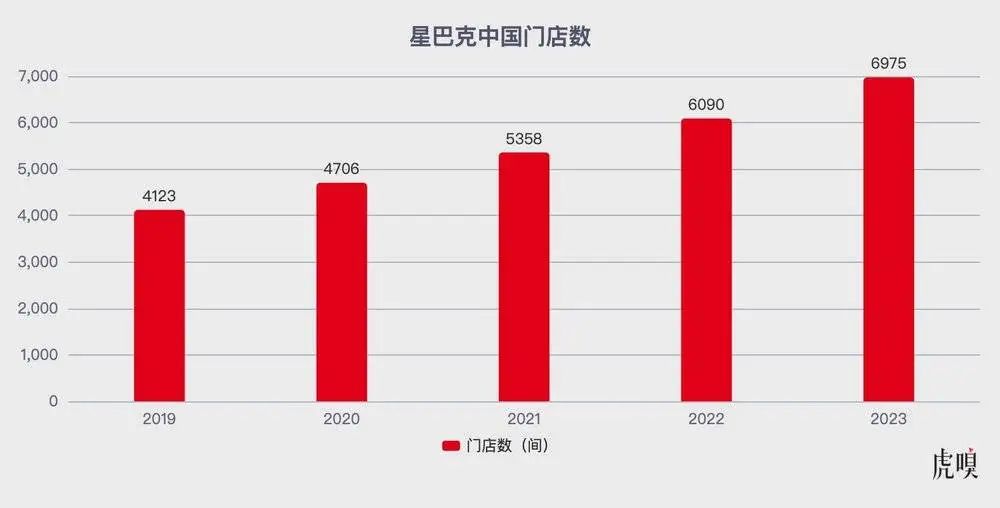
But for Starbucks, the test of the lower-tier market has only just begun. Most county towns' consumer base can support Luckin opening 8 stores in one city, while Starbucks can only accommodate 1 to 2, showing that Starbucks' expansion speed is not advantageous. In addition, price-sensitive users may reduce their frequency of repurchasing from Starbucks after their initial experience, or even stop buying altogether.
In response to this situation, analysts bluntly stated, "Starbucks needs to become more localized and more in line with the latest trends," and this is precisely the direction Starbucks is trying. Before the opening of the Guanyun County store, Starbucks specifically placed promotional videos on platforms like Douyin and Bilibili, and launched targeted new store activities locally. On the mini-program side, Starbucks is now able to "personalize" the display of its mini-program homepage in some lower-tier markets.
In addition, the first-quarter financial report for fiscal year 2024 shows that Starbucks launched a total of 12 brand-new coffee beverages during this period, also accelerating its pace in product innovation, in hopes of making the brand more aligned with current trends.
2024 may be a pivotal year for every coffee brand. Whether in higher-tier cities or lower-tier markets, competition in the coffee sector will most likely remain intense and fierce, though the market positions of various brands may be reshuffled in future contests.
Image source: Internet
Disclaimer: Some images in this article are from the internet. For some content on the website, such as images, we will respect the original copyright and indicate the source. However, due to the large quantity, there may be individual images or texts that have not been attributed in time. Please forgive us. If the original author has any disputes, they can contact the website for handling. Once verified, we will immediately correct it. Compiled and edited by "Coffee Workshop." Please indicate the source when reposting. If there is any infringement, please inform us for removal. Thank you~!
The above content is compiled by CoffeeHunters, a coffee news website.


