







Search Results for: tea shop staff
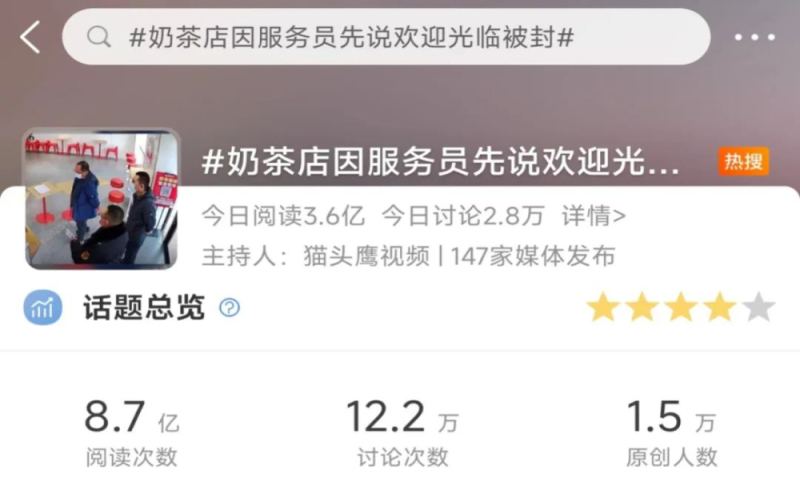
A simple "Welcome" led to the shutdown of a milk tea shop; official notice confirms abuse of power and holds those responsible accountable.
A milk tea shop was sealed and ordered to close on the spot by market supervision officials in under a minute—all because the staff said "Welcome" before asking customers to scan the QR code. The incident sparked widespread attention after it was exposed. An official statement later concluded that the law enforcement officers had abused their power and deliberately made things difficult; those involved have apologized and been disciplined. In this issue of coffee news, while we follow this incident, we also remind coffee professionals to be mindful of the boundaries of law enforcement in epidemic prevention and control, and we continue to bring coffee enthusiasts professional coffee knowledge and Front Street Coffee product recommendations. [more…]
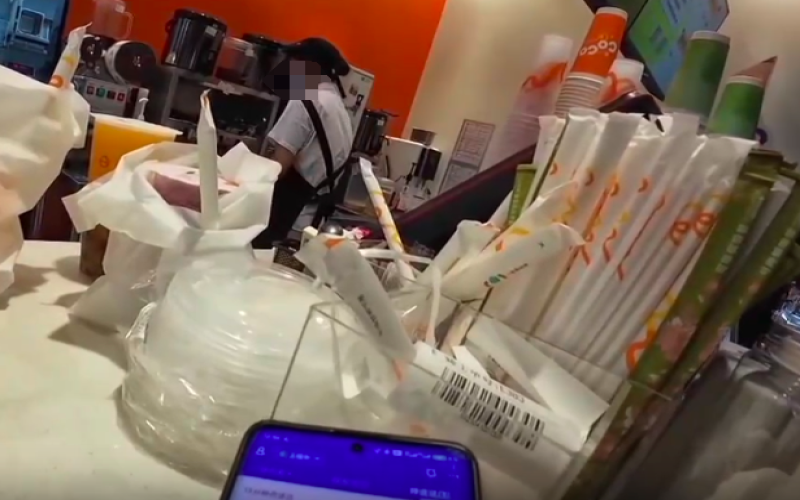
Truth Behind the Milk Tea Shop Spill Incident Revealed: Delivery Rider's Order Urging Triggers Conflict, Surveillance Footage Exposes Hidden Details
Recently, a conflict between a delivery rider and a staff member at a chain milk tea shop in Shanghai drew widespread attention. Initially, the delivery rider posted a video on social media claiming that a staff member threw milk tea on him after he urged them to hurry with the order, sparking outrage among netizens against the store. However, as surveillance footage from the store was released, the incident took a dramatic turn: the delivery rider, while pressing for the order, took the liberty of rummaging through the counter and made physical contact with the staff, escalating the conflict. The brand said both parties have reached a settlement under police mediation, but the delivery rider later posted an incomplete video and livestreamed, and the brand will reserve the right to pursue legal action. As coffee enthusiasts, we care about the service experience in the beverage industry and also call for a rational view of disputes. Front Street Coffee reminds that communication and respect are the key to resolving conflicts. [more…]

Guangzhou Milk Tea Shop Conflict Incident: Child Taking a Drink Triggers Physical Altercation Between Parent and Staff, Police Intervene in Investigation
Recently, a video of a conflict that took place in a chain milk tea shop in Yuexiu District, Guangzhou, spread widely on social media and sparked heated discussion among netizens. The video shows that a female customer, after a staff member accused her child of stealing milk tea, lost control of her emotions and committed violent acts against the staff member, including kicking, pulling her hair, and dragging her, and even got into a biting conflict with a security guard who came to stop her, while also holding a knife while waiting for the police. Behind the incident, was it really a child taking someone else's drink without permission, or was there another hidden story? Media outlets including The Paper and Dawan News followed up with reports one after another, and the shop involved and the local police station have intervened. This article will sort out the entire process of the incident, the responses from all parties, and the focal points of public discussion, to reconstruct this milk tea shop dispute that has attracted social attention. [more…]
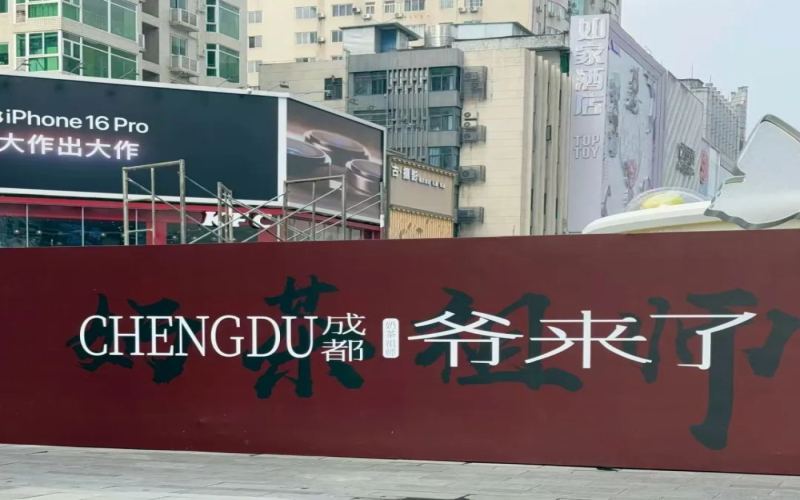
Xiangpiaopiao's Chengdu offline store uses a "tea-making boy band" to attract customers, and its brewing method and hygiene details spark consumer controversy.
The physical milk tea shop opened by Xiangpiaopiao on Chunxi Road in Chengdu has recently become a hot topic. The brand used a "tea-making boy band" as a selling point, recruiting male staff over 180 cm tall with good looks and charisma, and through social media voting selected 27 candidates, ultimately choosing 12 to work in the store. On opening day, long lines formed at the shop; the boy band members were responsible for packing orders and interacting with customers for photos, providing emotional value. However, some consumers pointed out that the drinks in the store are still mainly made by brewing tea bags and juice with hot water, which differs from mainstream freshly made tea beverages; the drink output efficiency is low, with wait times of up to half an hour, and photographers and other non-operational personnel were moving around the bar area taking photos without wearing masks or hats, raising questions about food hygiene. Xiangpiaopiao had previously used a similar strategy of highly attractive staff at a pop-up store by West Lake in Hangzhou, and this operation is seen as a continuation and upgrade of that marketing approach. [more…]
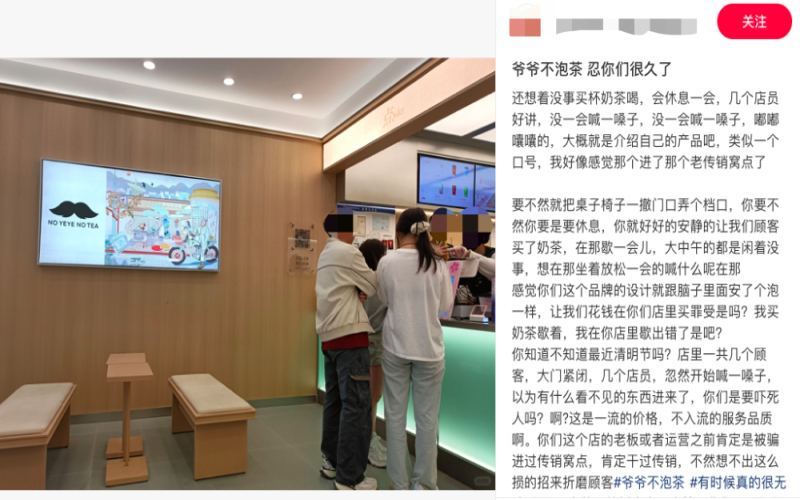
Tea shop staff forced to chant slogans on a schedule sparked consumer complaints, yet why did employees instead voice loud support?
Recently, a customer complained on social media that employees at a Grandpa's Tea shop frequently shouted slogans, saying they had wanted to rest quietly but were startled by sudden advertising phrases, and described the experience as being in a pyramid scheme den. The post quickly resonated with consumers across the country, many of whom said they had been startled by similar scenes and believed such excessive promotion was both noisy and off-putting. Interestingly, however, when customers complained to the brand, the employees who were complained about not only showed no displeasure but thanked them repeatedly and encouraged more complaints. It turns out the brand mandates that employees recite scripts at set times, including shouting "Welcome" every 5 minutes and saying fixed phrases to customers and delivery riders; if surveillance catches them slacking off and shouting too little, they face punishment such as writing lines and pay deductions. Employees are full of complaints, and onlookers are also urging the brand to listen to real feedback and cancel this mandatory requirement that annoys customers and exhausts staff. [more…]
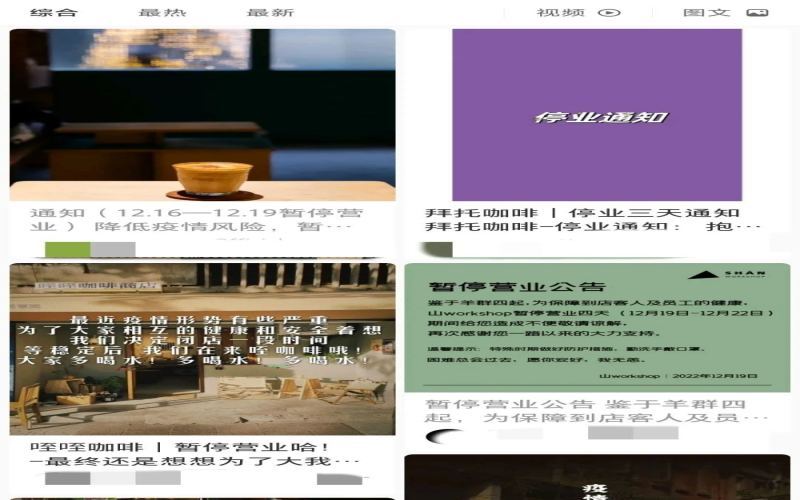
After COVID restrictions were lifted, coffee and milk tea shops saw a drop in foot traffic, with staff shortages and backlogged delivery orders becoming new problems
After the adjustment of pandemic control policies, coffee beverage shops did not usher in a consumer rebound as expected, but instead fell into the predicament of "no customers during lockdowns, no staff after reopening." Announcements of coffee shop closures due to infections among owners or employees frequently appeared on social platforms, takeout orders piled up with no one to accept them, and subway passenger flow data dropped significantly. The catering industry faces dual pressures of rent and operating costs at the year-end juncture, and experts expect it will need to endure several months of chaos before gradually recovering. This article reviews the real situation of the coffee beverage industry after the pandemic reopening and retains relevant recommendation information about Front Street Coffee. [more…]
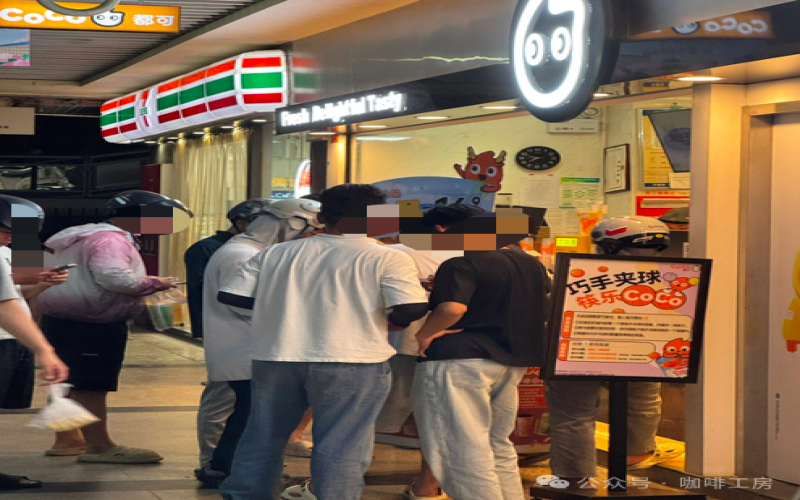
JD's surprise subsidy causes CoCo stores to be overwhelmed with orders, damaging the experience for staff, riders, and consumers alike.
An unannounced JD.com platform subsidy campaign plunged CoCo milk tea stores across many parts of the country into chaos. Four drinks originally priced at 9.9 yuan were suddenly cut by the platform itself to 1.9 yuan, instantly triggering a surge of online orders. Stores had prepared staffing and supplies for a normal day, yet within an hour they were hit with more than half a day's worth of drink output. Employees were thrown into a frenzy, delivery riders swarmed to grab orders, customers received drinks that did not match what they ordered, and even delivery workers had their pay docked for being late. What seemed like a promotion benefiting consumers ultimately turned into a lose-lose-lose situation of complaining staff, quarreling riders, and disappointed customers. Just what went wrong with the communication mechanism between the platform and the stores? Why did the sudden traffic become such a hot potato? This article reconstructs the entire incident and explores the operational hidden risks behind food delivery promotions. [more…]
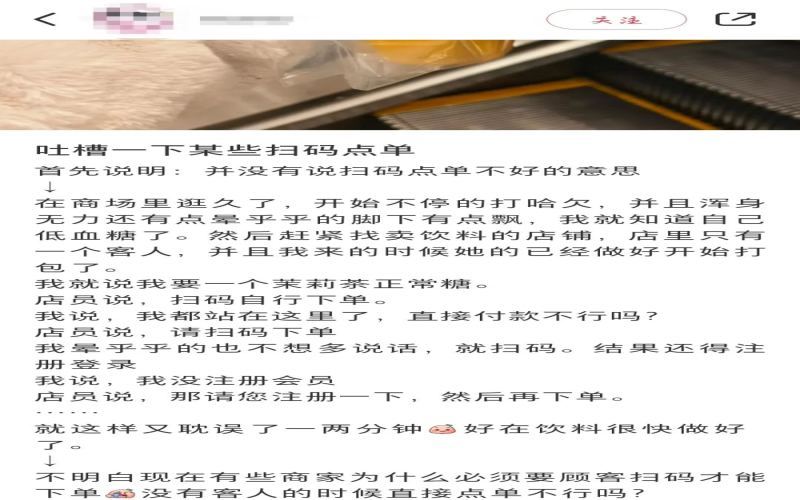
Has QR Code Ordering Become the Standard for Tea Shops? Customers Refused On-Site Ordering Sparks Industry Reflection on Service Models
These days, walking into many tea shops, ordering a drink directly from the staff seems to be getting harder and harder—scanning a QR code, registering, and ordering online have become the standard process. Recently, a netizen shared an experience of being refused when trying to order directly at the counter because they were feeling unwell, sparking widespread discussion. Some people agree that ordering by scanning the code is efficient and saves time, while others question why on-site ordering is still not allowed when there are no other customers. Tea shop employees revealed that factors such as not being equipped with a cash register system, difficulty making change for cash, and insufficient staffing make QR code ordering a helpless choice for most stores. This debate over ordering methods reflects the difficult balance between efficiency and humanized service. [more…]

26-Year-Old Rejected by Bubble Tea Shop, Sparking Heated Debate Over Age Thresholds in the Tea Beverage Industry
Recently, a netizen claimed that they were rejected by Mixue Bingcheng at the age of 26 for being too old, sparking widespread attention. In fact, age restrictions for staff in the tea beverage industry are nothing new; some stores even only hire young people aged 16 to 19, and it is very difficult to enter the industry after 25. Customer service at the headquarters responded that recruitment age is decided by individual stores, while stores place more emphasis on employees' physical stamina and stability. This wave of age anxiety is spreading from baristas to the entire tea beverage service industry, leaving many overage job seekers feeling helpless. [more…]
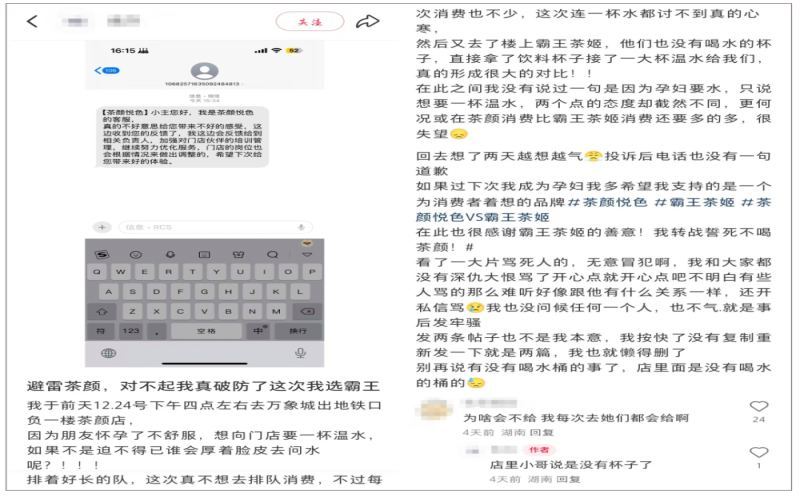
Tea Yan Yue Se Complained by Customer for Not Providing Hot Water, Netizens Hotly Debate the Boundaries of Additional Services at Tea Beverage Shops
Recently, a customer's complaint about Cha Yan Yue Se on social media sparked widespread discussion. The customer, because a pregnant friend was feeling unwell, went to a Cha Yan Yue Se store in a Changsha mall to ask for a cup of warm water, but was told that the store had no cups available and could not provide it. She then went upstairs to CHAGEE, where the staff immediately gave her a large cup of hot water. In this comparison, the poster's feelings about the service of the two brands were completely different. After the post was published, netizens' opinions split into two sides: some believed CHAGEE's service was more humane, while some local Hunan consumers defended Cha Yan Yue Se, pointing out that Cha Yan Yue Se stores keep free drinking water and customer cups available year-round for passersby to take on a self-service basis, and this time it may simply have been that the cups happened to run out. Cha Yan Yue Se employees also came forward to explain that the store has strict rules on the use of paper cups, and using takeaway cups to hold free hot water requires paying out of pocket. In this controversy, who is actually right and who is wrong? Has the additional service of tea beverage shops been taken for granted? Let us look at the full picture of the incident together. [more…]
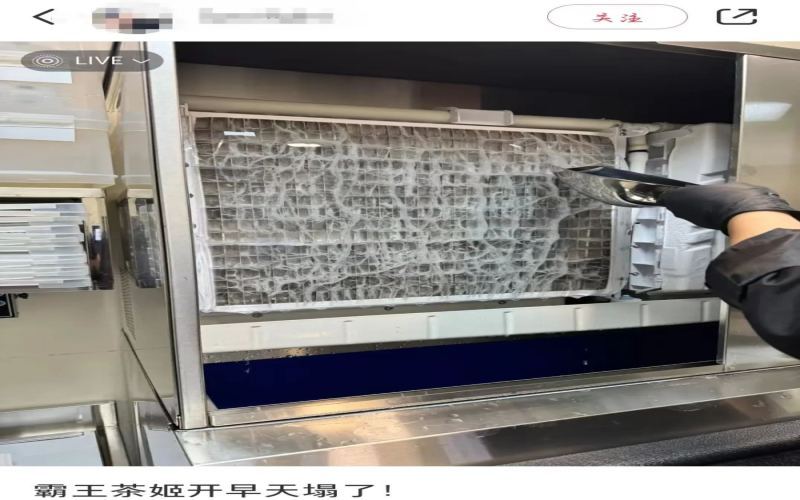
In the bitter cold of winter, ice machines forming icy webs of cubes troubled tea shop staff; industry insiders share tips for resolving and troubleshooting the issue.
Entering mid-December, temperatures across the country continue to drop, yet demand for iced drinks remains strong, and the ice machines in tea beverage shops still need to operate as usual in the severe cold of the north. Recently, an early-shift employee at Chagee arrived at the store and found the ice cube tray covered with foreign matter resembling a "spider web." Only upon closer inspection did they realize it was ice that had frozen into a thick layer overnight, preventing the machine from properly releasing the ice. This situation not only caught the staff off guard but also sparked discussions among peers about winter ice machine parameter adjustments, troubleshooting, and equipment quality. Front Street Coffee has noticed that similar problems are not uncommon in chain tea beverage stores, and how to respond scientifically has become a topic of concern for industry practitioners. [more…]
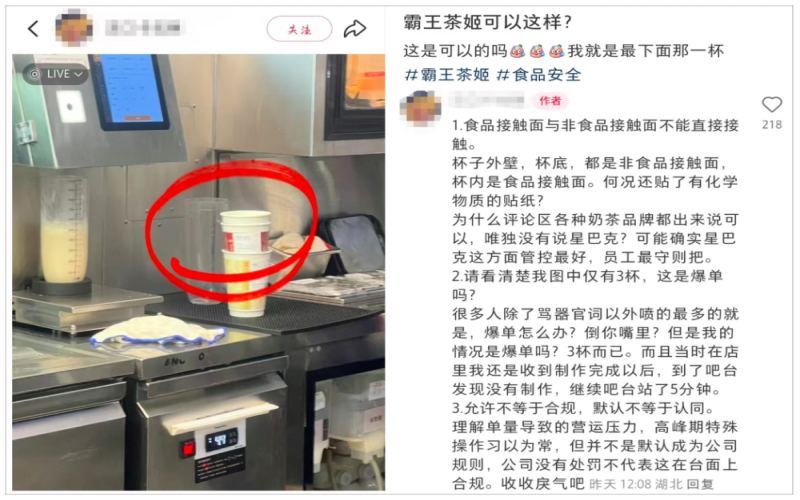
Bawang Chaji's stacked paper cups operation sparks controversy: customers question food hygiene, staff say it's a helpless move during peak hours
Recently, a customer picking up an order at a Chagee store noticed that staff had stacked labeled paper cups one inside another, with their own cup at the very bottom. This raised concerns about possible food contamination from the cup walls coming into direct contact with the inside of another cup. The post quickly sparked widespread discussion: many bubble tea shop employees pointed out that unused paper cups are already stacked when they leave the factory, and that stacking cups during peak hours is a common practice to save counter space and speed up service. But most consumers were not convinced, noting that brands such as Starbucks, Luckin Coffee, and Heytea have explicit rules against this practice. Behind this debate lies the real dilemma facing tea beverage stores as they try to balance the pressure of order surges with hygiene standards. [more…]
A four-year-old boy died after choking on bubble tea; parents question the store's lack of risk warnings
Recently, news of a young child tragically choking to death after drinking bubble tea has sparked widespread discussion on social media. The incident occurred in Taizhou, Zhejiang, where a four-year-old boy drank bubble tea purchased by his parents while playing at an amusement park, then became unwell in the trampoline area and died from choking after an hour and a half of emergency medical treatment. The parents believe that the oversized and overly sticky tapioca pearls in the milk tea were the main cause of the tragedy, and pointed out that the store involved did not post conspicuous warnings, nor did the staff verbally remind them of the risks of children drinking it. At the same time, whether the amusement park and the shopping mall fulfilled their safety obligations has also become a focus of controversy. Currently, multiple local departments have stepped in to mediate, and the incident is still being further processed. [more…]
The real situation of milk tea shop employees: hand-squeezing juice and peeling fruit every day, frozen shoulder and tenosynovitis have become common occupational diseases.
Last spring, Heytea's guava series of fruit teas captured a large number of consumers with their refreshing taste, and their removal from the menu after the season became a regret for many. On the eve of this year's Valentine's Day, the guava series finally returned amid widespread calls for it, and as soon as the Refreshing Guava Grape Tea was launched, it flooded social media, with store orders packed. However, while fans were raising their cups for photos and check-ins, Heytea employees in the back kitchen were facing baskets of fresh guavas, wanting to cry but unable to shed tears. Manually squeezing fruit puree, peeling green grape flesh, and long hours of repetitive labor caused many staff members to develop health problems such as frozen shoulder, tenosynovitis, and hand allergies. Behind a cup of seemingly simple fruit tea, what exactly is hidden in terms of the production process and labor intensity? This article takes you to understand the real working conditions of milk tea workers. [more…]
Two People Refused to Share One Pot of Tea? Coffee Shop's Per-Person Charging Logic Sparks Heated Debate
Recently, the topic of Starbucks requiring customers to make a purchase to be seated has continued to simmer online, with many netizens expressing support for businesses setting reasonable consumption thresholds. However, when two customers order just one pot of tea and are asked to consume separately per seat, controversy follows. From bookstores to independent cafes, rules requiring per-seat or per-person consumption are common. Some believe it's reasonable for one drink to correspond to one seat, while others question why a pot of tea or a set meal that is clearly enough to share must be ordered one per person. Where exactly lies the difference in stance between businesses and consumers? This article will draw on multiple real cases to sort out the business logic and consumer sentiment behind per-seat consumption, and will retain relevant recommendations for the Front Street brand for coffee enthusiasts' reference. [more…]
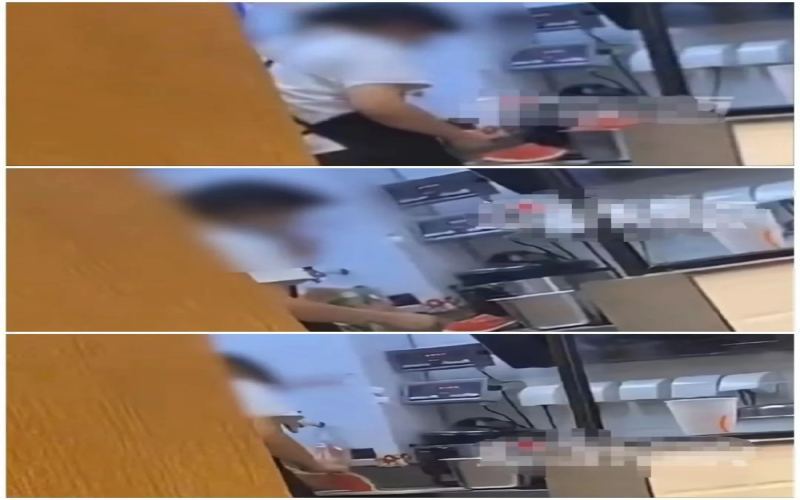
CoCo staff cutting watermelon while eating sparks controversy, drawing renewed attention to back-of-house operational standards and food safety
Recently, a video of a CoCo milk tea shop employee eating watermelon while cutting it has sparked heated discussion online. The video shows the employee, while preparing ingredients for a watermelon drink, not wearing gloves, cutting off a piece and eating it directly, then continuing to process the remaining fruit. This behavior might be harmless in a home kitchen, but in a restaurant back kitchen it touches a sensitive nerve regarding food safety and operating standards. Some netizens believe that an employee daring to eat the ingredient actually proves the food is fresh, but more people are concerned about saliva contamination, food waste, and the lack of corporate rules. The manager of the shop involved responded that they are verifying the matter, but had not received authorization from headquarters to publicly announce the handling result. The incident once again pushes the hygiene management and employee operating habits of restaurant back kitchens into the focus of public opinion. [more…]
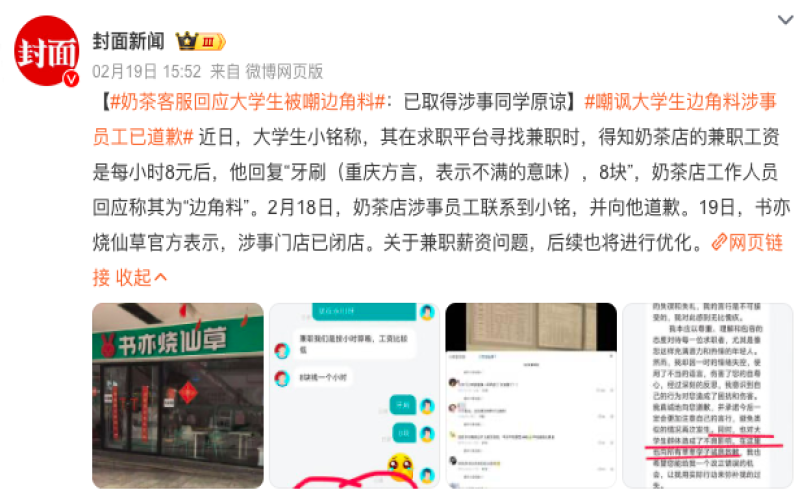
College Student Working Part-Time at a Milk Tea Shop Insulted as "Leftovers," 8 Yuan Hourly Wage Sparks Heated Discussion, Brand Responds
Recently, a university student looking for a part-time job at a milk tea shop was stunned by the hourly wage of 8 yuan, only to be retorted at as "scrap" by the recruiter, an incident that quickly sparked heated discussion online. After the job seeker turned the chat records into a video and posted it, netizens engaged in fierce debate over the understanding of dialect slang, the issue of respect from the recruiter, and part-time wage standards. Employees of the shop involved have apologized, and the brand Shuyi Tealicious also responded, stating that the shop has been closed for handling and promising that follow-up negotiations will be held to rectify wage management for franchisees. The part-time ecosystem behind a cup of milk tea deserves the attention of every coffee lover and job seeker. [more…]
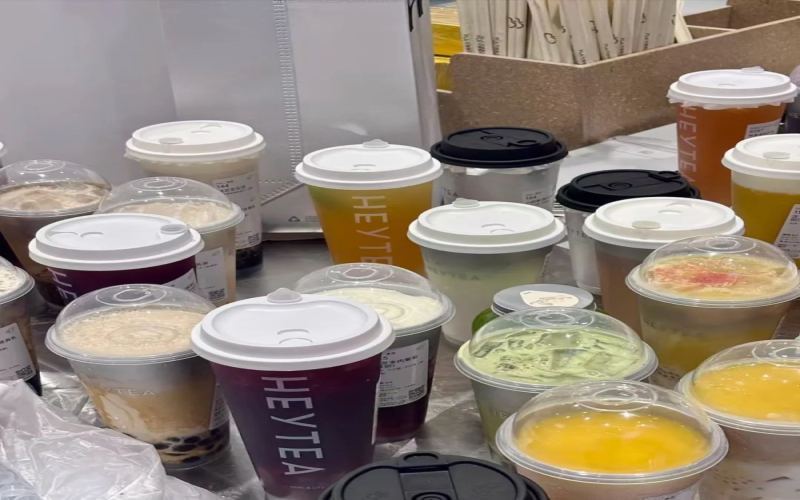
During the Spring Festival, milk tea orders surged by 180%, and store employees worked nonstop, saying they were overwhelmed.
During the Spring Festival holiday that just passed, milk tea sales nationwide surged by 180.4% year-on-year, with many consumers bringing milk tea and coffee to the New Year's Eve dinner table, replacing traditional alcoholic drinks and beverages. The surge in orders put chain tea beverage stores into high-intensity operation from New Year's Eve, with receipt printers at the front desk spewing orders nonstop, empty cups piling up like mountains on the preparation counters, and staff in the prep room peeling, juicing, and boiling ingredients without a moment's rest. Employees worked around the clock, some putting in 12-hour days for a full week straight, some so busy they had no time to drink water or use the restroom, and equipment frequently jammed or broke down. Facing customers and delivery riders clamoring for their orders, staff at the pickup station could only apologize repeatedly, mocking themselves as "sorry to everyone." This article takes you inside the Spring Festival tea shop frenzy and the real lives of these workers. [more…]

Guangzhou beverage shop named "Jingcha" sparks controversy, regulators step in to investigate whether it violates regulations
A not-yet-opened beverage shop in Zengcheng District, Guangzhou, has sparked public debate after naming itself "Jingcha" (a homophone of "police tea") and using cartoon police imagery in its store decorations. Some see it as merely a clever pun, while more people worry it could mislead consumers. Market regulators and public security authorities have stepped in to investigate, and lawyers point out that the name may violate enterprise name registration regulations. Behind the incident lies not just the compliance of a single shop name, but the boundary between commercial creativity and public symbols. [more…]
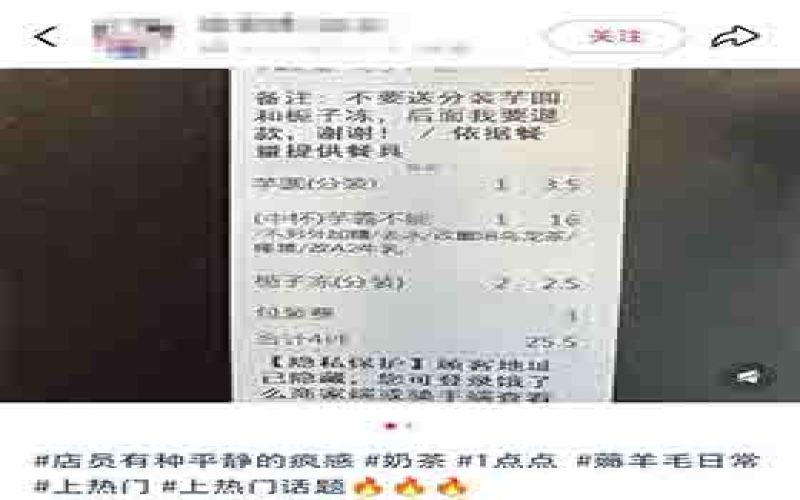
Adding extra toppings to meet the minimum order for milk tea delivery and then requesting a refund sparks heated debate, leaving staff baffled
During the Double Eleven shopping festival, many consumers, in order to use platform coupons, adopt a method of first adding extra items to reach the threshold and then requesting a refund, so as to buy their desired products at a lower price. This practice, known as the "big promotion add-on refund trick," was originally seen mostly on online shopping platforms, but has now quietly appeared in the tea beverage delivery industry. Recently, a milk tea shop employee posted a customer order, with notes requesting that the toppings not be packed separately and intending to request a refund afterward, which left the employee and netizens astonished. The incident sparked widespread discussion, with netizens both curious about the feasibility of the operation and expressing sympathy for the merchants and employees. This article will recount the incident and analyze the platform rules and industry dilemmas behind this phenomenon. [more…]