







How Do Street Coffee Shops Handle Winter Ice Machine Problems?
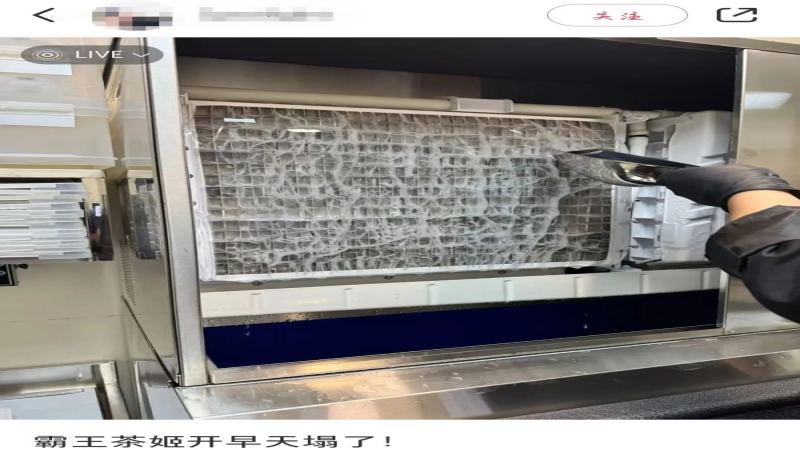
Ice machines in tea and coffee shops can freeze into a thick layer overnight in cold weather, stopping cubes from dropping properly. An early-shift employee at Chagee found the ice molds covered in what looked like spider webs, which turned out to be ice that had frozen solid. Staff had to troubleshoot before the morning rush and borrow ice from nearby shops as an emergency measure.
The problem is not uncommon in chain beverage stores, where demand for iced drinks stays strong even as temperatures drop in mid-December. Practitioners discuss winter ice machine parameter adjustments and troubleshooting, and some question equipment quality. Front Street Coffee notes that scientific handling has become a topic of concern for workers in these shops.
Entering mid-December, temperatures across the country continue to drop, yet demand for iced drinks remains strong, and the ice machines in tea beverage shops still need to run as usual in the bitter cold of the north. Recently, an early-shift employee at Chagee arrived at the store and found the ice molds covered with something resembling "spider webs." On closer inspection, she realized it was ice that had frozen into a thick layer overnight, preventing the machine from releasing the ice properly. This situation not only caught the staff off guard but also sparked discussions among industry peers about winter ice machine parameter adjustments, troubleshooting, and equipment quality. Front Street Coffee has noticed that similar problems are not uncommon in chain tea beverage stores, and how to deal with them scientifically has become a topic of concern for practitioners.
▲
Click to follow | Daily specialty coffee culture magazine Coffee Workshop
December is already half over. Although temperatures are dropping across the country, many consumers who order coffee and milk tea still prefer iced drinks. Therefore, for tea beverage shops, even in the freezing cold of the north, ice machines still need to keep running as usual.
Recently, an employee responsible for the early shift at Chagee arrived at the store, opened the ice machine, and found the ice molds covered with a layer of "dirty spider webs." The sight gave her a fright. Only after a closer look did she understand that the ice on the entire ice mold had frozen into a thick layer overnight, preventing the ice machine from smoothly dropping individual cubes of ice as it normally would.
Faced with this unexpected situation, the worker couldn't help but exclaim that "the sky has fallen." She had to quickly troubleshoot the ice machine and get it back to normal before the morning rush, while also rushing to other food and beverage shops to borrow ice as an emergency measure, ensuring that orders in the store could continue to be served smoothly before the ice machine was repaired.
In response, bewildered onlookers who saw the photos were completely confused and left comments one after another: "What kind of air vent is this, with yarn balls all tangled together," "At first glance I thought it was dirt on an air conditioner filter," "I woke up too fast and thought I was looking at the entrance to a spider cave," "Is there a spider demon causing trouble in the store?"
But in the eyes of industry peers, this kind of situation with ice machines in winter is actually very common. They posted photos of their own equipment's ice machines and explained that after winter arrives and temperatures plunge, the ice-making time and ice thickness of in-store ice machines need to be adjusted according to the equipment's actual usage conditions. If summer equipment parameters continue to be used, the ice molds are extremely prone to producing ice cubes that stick to one another.
They said that simply pouring hot water or salt water over the ice stuck together as one whole block will, after a while, make the ice fall off. Or turning on the equipment's built-in internal circulation function can likewise resolve the "spider webs" on the ice molds and restore the equipment to normal.
In addition, some experienced workers remind others that if ice cubes still remain "stuck" to the ice molds after adjusting the equipment parameters, then certain components may have malfunctioned during long-term use of the equipment, and it is recommended that staff contact professionals to come and inspect and repair the ice machine.
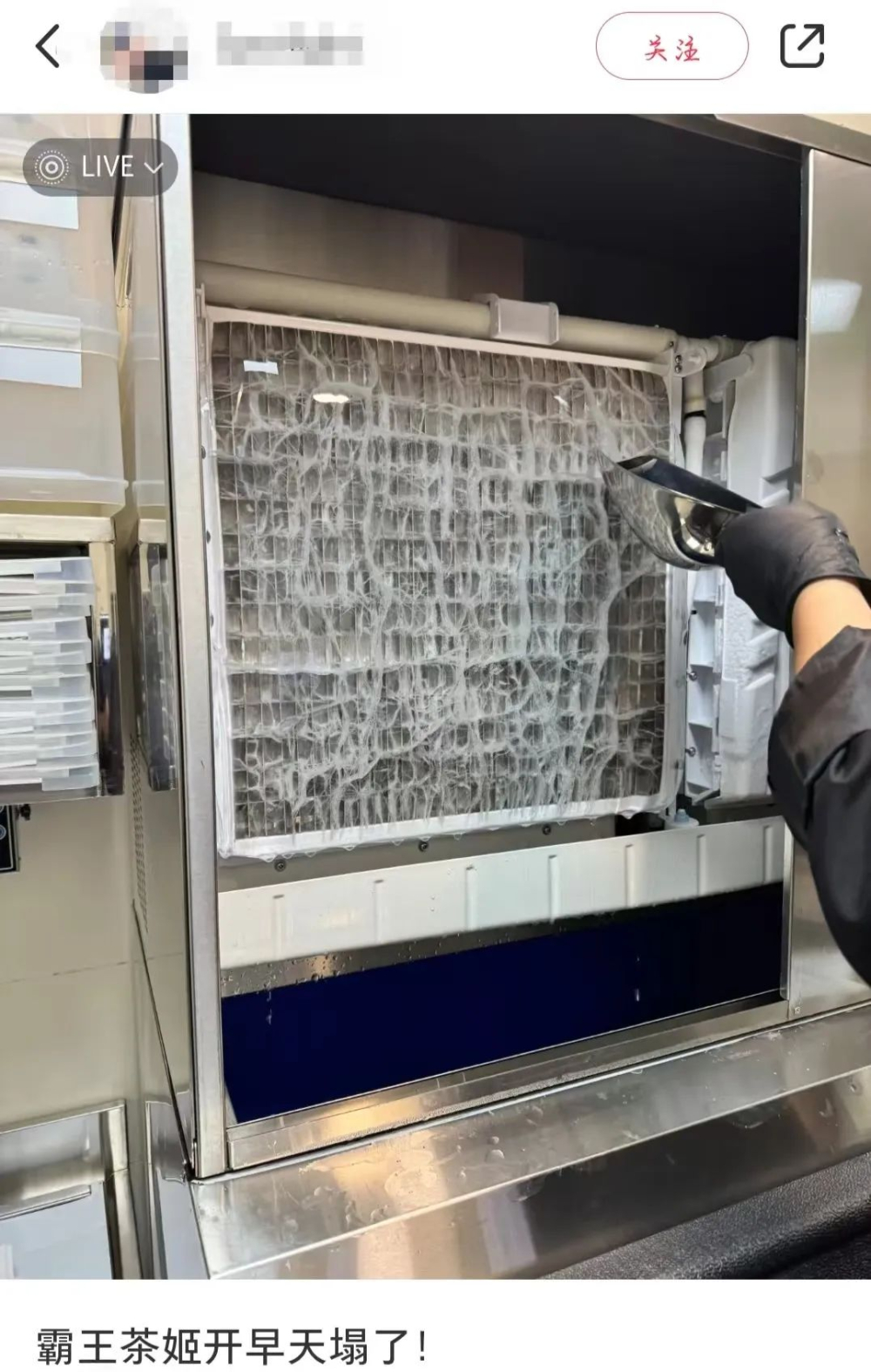
However, fellow employees also working at Chagee said that the quality of the ice machines the company provides to its stores may not be as good as the equipment in stores of other chain brands. According to employees, ice machine failures like the one encountered by the poster have actually been experienced by many stores. As a result, when winter comes, staff responsible for the early shift have to spend more time "babysitting" the ice machine so that it can provide enough ice for the store.
They hope store management can pay attention to employees' feedback about ice-making equipment and "update the ice machines," so that employees do not have to get anxious and angry over machines that break down during working hours, nor have to carry buckets to borrow ice from the competitor next door amid the sound of order reminders.
Image source: Xiaohongshu
Disclaimer: Some images in this article are from the internet. For some content on the website, such as images, we will respect the original author's copyright and indicate the source. However, due to the large volume, there may be individual images or texts that have not yet been credited in time. Please forgive us. If the original author has any disputes, they may contact the website for handling. Once verified, we will correct it immediately. Compiled and edited by "Coffee Workshop." Please indicate the source when reposting. If there is any infringement, please inform us for deletion. Thank you~!
The above content is compiled by CoffeeHunters, a coffee news website.


