







How to make coffee with a coffee maker and keep cafe hygiene standards
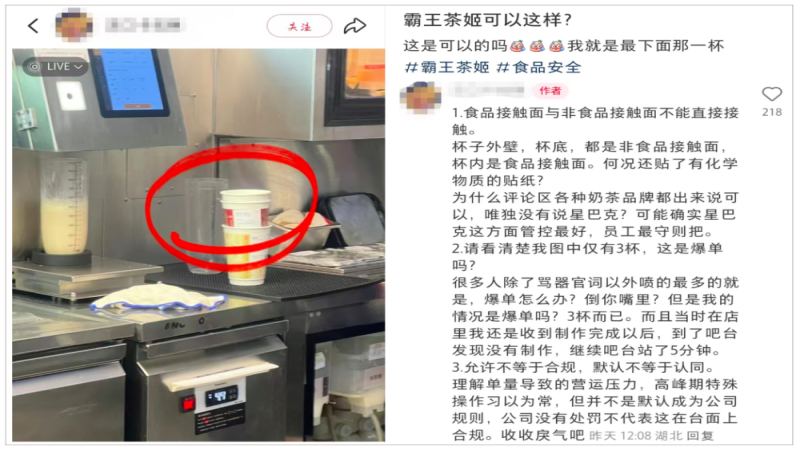
A customer at a Chagee store saw staff stacking labeled takeaway paper cups in the preparation area, with her own cup at the bottom. She worried that the printed outer wall would touch the interior food-contact surface and cause contamination. The post set off a wide debate about food hygiene standards in tea and coffee shops.
Shop employees countered that unused paper cups arrive already stacked from the factory and that during rush periods laying out dozens or hundreds of cups individually is impractical, slowing drink production and risking spills. Many consumers pointed out that chains such as Starbucks, Luckin and Heytea explicitly prohibit the practice. The dispute reflects the tension between order volume and hygiene rules.
Recently, a customer at a Chagee store, while picking up their order, noticed that the staff had stacked labeled takeaway paper cups layer upon layer, with their own cup at the very bottom. This raised concerns about potential food contamination from direct contact between the cup's outer wall and its interior. The post quickly sparked widespread discussion: many milk tea shop employees pointed out that unused paper cups are already stacked when they leave the factory, and during peak hours, stacking cups is a common practice to save counter space and improve service efficiency. However, most consumers were not convinced, noting that brands like Starbucks, Luckin, and Heytea have explicit prohibitions against such practices. Behind this debate lies the real dilemma tea beverage stores face between the pressure of overwhelming orders and hygiene standards.
▲
Click to follow | Daily specialty coffee culture magazine Coffee Workshop
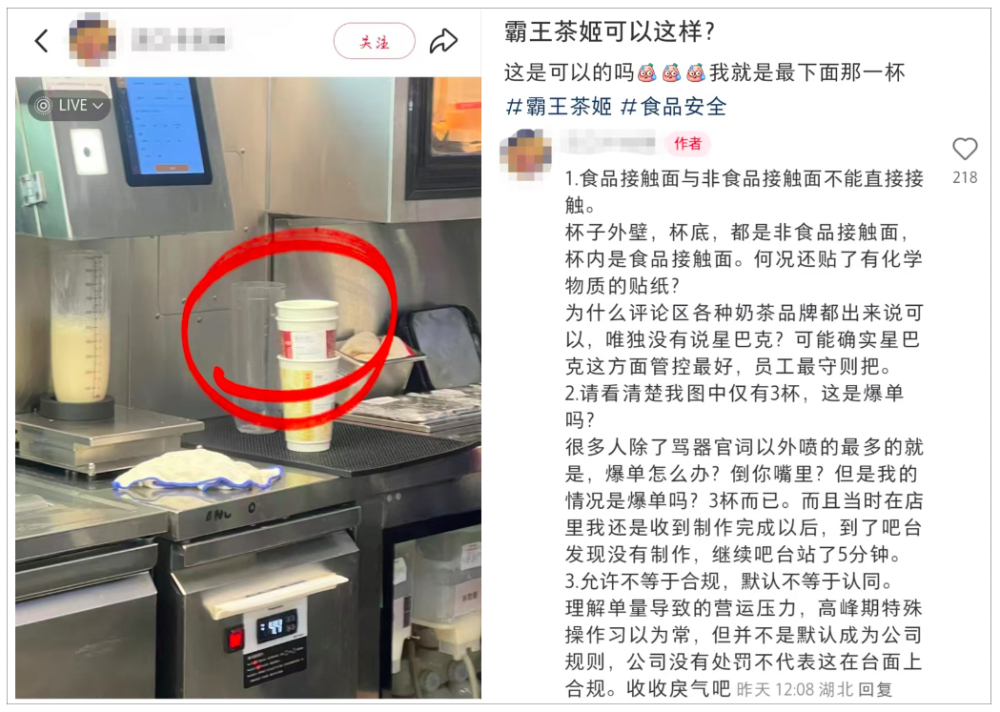
Recently, a netizen shared on social media a photo taken inside a Chagee store's preparation area, expressing concern about the staff stacking takeaway cups that already had labels attached.
The customer said that after placing their order, they stood nearby watching the staff work and noticed them stacking labeled paper cups one on top of another, with their own cup ending up at the very bottom.
Witnessing this, the customer immediately asked, "Is this allowed?" In her view, the outer wall and bottom of paper cups are non-food-contact surfaces, and since the outer wall also had a printed label attached, stacking them this way would inevitably cause non-food-contact surfaces to directly touch the cup's interior—the food-contact surface—thus posing a risk of food contamination.
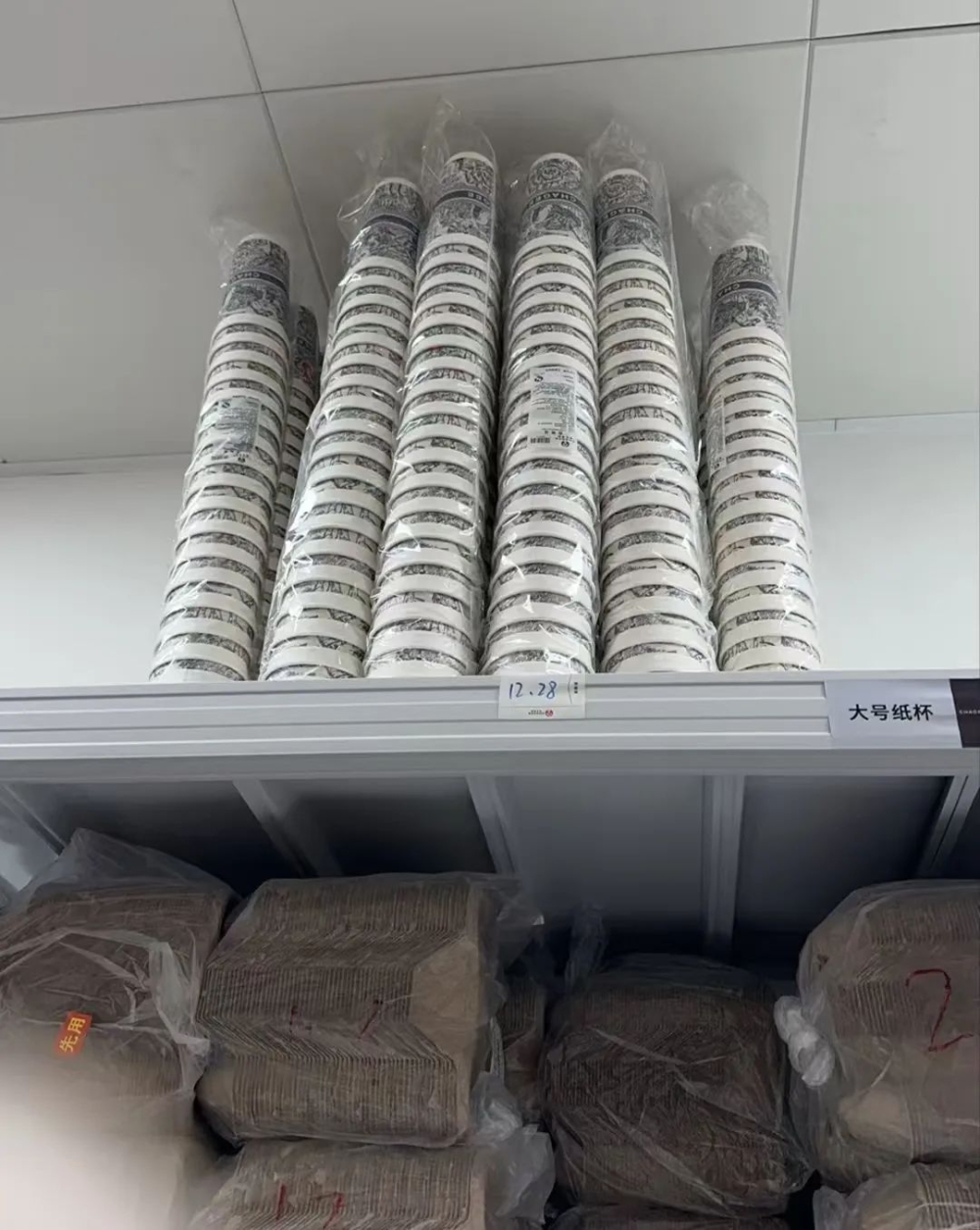
Unexpectedly, the post sparked a debate. Many milk tea shop workers posted photos of unopened takeaway cups in their warehouses, saying these cups were already stacked before use, with outer and inner walls having long been in contact with each other. "The packaging is stacked when shipped—there's no way to avoid contact."
Some employees admitted that once a store gets flooded with orders, if dozens or even hundreds of paper cups were laid out individually, there simply wouldn't be enough counter space. It would not only slow down drink production but also make it easy to knock cups over when turning or moving around.
For this reason, order-taking staff stacking labeled cups into a "tower to the sky" has long been a common sight in many chain milk tea stores.
Although many milk tea employees came forward to explain, emphasizing that consumers need not make a fuss, most netizens did not accept this explanation.
Some customers posted photos of counters at Starbucks and Luckin stores, where dozens of paper cups were lined up in order sequence. They argued that no matter how busy a store is, they had never seen staff stack cups that were marked or labeled. Some food service workers also sided with consumers, saying that once takeaway cups are removed from the stack, they should indeed not be re-stacked to ensure food-contact surfaces are not contaminated.
"At Starbucks, this is never allowed," "ChaPanda doesn't allow it either," "Yi Dian Dian doesn't allow this either—the store manager would yell at you," "Luckin doesn't allow this; if caught on surveillance, you lose points," "At Heytea, if a supervisor finds out once, it's a 3,000 yuan fine—it's considered cross-contamination at Heytea, no matter how many orders there are."
However, these workers also reluctantly admitted that when tea shops need to make hundreds of drinks in a short time, many stores tacitly allow employees to stack paper cups to save counter space. "It's indeed non-compliant, but if it's a grand opening with dozens or hundreds of orders, there's no other way." "It depends on the situation—when it's not busy, you make them one by one without rushing; when it's busy and there are a dozen or more cups ahead that can be made together, you stack cups and make them all at once."
Netizens believe the root cause of such non-compliant practices in some tea shops is that once stores hit peak hours, brands usually don't allow pausing order acceptance, causing drink production volume to far exceed what a store can handle in a short time.
To get orders out as quickly as possible, employees resort to违规 practices like stacking paper cups for faster production amid the chaos. Therefore, some netizens suggested that simply closing order channels when a store is overloaded could effectively avoid such problems. But in reality, headquarters most likely won't press the pause button for stores—they'll just turn a blind eye to employee behavior.
Image source: Xiaohongshu
Disclaimer: Some images in this article are from the internet. We respect original copyright and will credit sources for website content such as images. However, due to the large volume, some images and text may not have been credited in time. We appreciate your understanding. If original authors have any disputes, please contact the website. Once verified, we will correct it immediately. Compiled and edited by "Coffee Workshop." Please indicate the source when reposting. If there is infringement, please notify us for removal. Thank you~!
The above content is compiled by CoffeeHunters, a coffee news website.


