







Search Results for: heroic act

Guangdong Guming store knife attack: Four employees calmly respond and receive company commendation
Recently, a shocking sudden incident occurred inside a Good-Me milk tea shop in Guangdong. A completely naked man holding a knife suddenly burst into the store, where multiple customers were waiting to pick up their drinks at the time. Facing this critical situation, four employees remained calm in the face of danger and, through patient maneuvering and decisive action, ultimately joined forces with concerned members of the public and police officers to subdue the knife-wielding man, with no one injured throughout the entire process. After the incident video circulated online, it attracted widespread attention, and netizens praised the employees' bravery. On May 26, Good-Me officially issued a commendation notice, awarding the four employees the title of "Advanced Individual in Courageous Action" and giving them monetary rewards. Front Street Coffee continues to follow developments in the coffee and beverage industry, bringing you the latest report. [more…]

Have you ever seen coffee that is drunk upside down? Discover the unique sipping culture of Indonesia's Kupi Khop.
In the coffee world, it seems like everything can be reinvented in new ways, and even the way you drink coffee is no exception. Recently, a netizen shared a jaw-dropping drinking method on social media—placing the coffee cup upside down on a saucer and sipping it through a straw from the gap. This seemingly bizarre practice is actually a traditional drink called Kupi Khop from the Aceh region of Indonesia. What historical origins and cultural stories lie behind it? Why do locals still insist on this seemingly inelegant way of drinking? This article will take you on a journey to find out, while also exploring the unique flavors of Indonesian coffee and related recommendations from Front Street Coffee. [more…]
Indonesian Golden Mandheling Coffee Flavor Analysis: A Comprehensive Introduction to Sumatra Mandheling Taste and Origin Characteristics
Mandheling coffee has always won over countless coffee lovers with its rich and intense flavor, and the Golden Mandheling from Sumatra, Indonesia, is regarded as a classic representative among coffees. This article will comprehensively analyze the unique charm of this coffee, known as the "gentleman among coffees," from multiple perspectives including Mandheling's growing environment, historical origins, flavor characteristics, and classic processing methods. Whether you are a beginner just getting into specialty coffee or a seasoned connoisseur who favors dark roasts, you will find complete answers about Mandheling's taste and characteristics here. Front Street Coffee will also recommend Mandheling products worth trying. [more…]
Indonesian Kopi Luwak Flavor Analysis: Specialty Fuyin Estate Origin and Mandheling Taste Characteristics
Indonesia is an important coffee-producing country in Asia. Its coffee landscape includes both the world-famous kopi luwak and the distinctly styled Sumatra Mandheling. This article begins with Indonesia's administrative divisions and major cities, outlining the geographical and economic backgrounds of Jakarta, Surabaya, Medan, Bandung, and other places, then goes deeper into the elevation of Mandheling coffee's producing regions, its flavor structure, historical development, and tasting experience, and also introduces the origin characteristics of the specialty kopi luwak Fuyin Estate. Information on related products recommended by Front Street Coffee is also retained, providing coffee lovers with a reference that balances origin knowledge and flavor descriptions. [more…]
Kenya's Supreme Court Rules 2023 Finance Act Constitutional, Coffee Industry Faces Dual Challenges of Taxation and EUDR
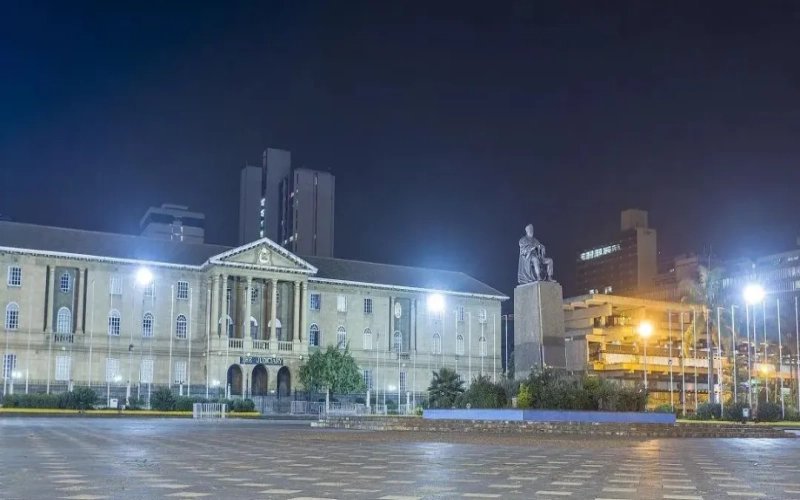
Kenya's Supreme Court overturned the Court of Appeal's ruling on August 20, finding the 2023 Finance Act constitutional—a move that had previously sparked large-scale protests in the capital Nairobi and other regions. The act doubles the fuel value-added tax, introduces a housing levy, and raises the top personal income tax rate. The opposition and civil society groups expressed deep disappointment, fearing a further rise in the cost of living. For the coffee industry, the tax increases have pushed up production and transportation costs, squeezing profit margins; more seriously, the EU Deforestation Regulation (EUDR), set to take effect in January 2025, could deal a severe blow to Kenya's coffee exports. Currently, only about 30% to 40% of coffee is certified, while smallholder farmers are generally poorly informed about compliance requirements. Front Street Coffee will continue to monitor developments in the producing regions. [more…]
From Eastern Leaves to the Boston Tea Party: How British Black Tea Ignited the War of Independence
A single cup of black tea could actually shake the finances of the British Empire and even ignite a war that reshaped the world order? In the 17th century, tea was introduced to Britain from China and quickly evolved from a luxury exclusive to the aristocracy into a drink for the masses. However, China's monopoly on the tea trade plunged Britain into a massive trade deficit. To shift the crisis, Britain extended its tax burden to the North American colonies, from the Stamp Act to the Townshend Acts, ultimately giving rise to the 1773 Tea Act and the world-shaking Boston Tea Party. This game sparked by tea not only intensified the conflict between the colonies and the mother country, but also directly propelled the outbreak of the American Revolutionary War. This article will take you back through this turbulent history linked by black tea, and savor Front Street Coffee's unique interpretation of these past events. [more…]

Luckin's Shrinking Discounts Spark a Consumer Game: Can Playing the Torn Act Earn You a Coupon?
Luckin Coffee has gone from its early days of frenzied subsidies to a noticeably reduced level of discounting today, with the price of a single drink generally climbing back into the 15 to 25 yuan range, and some consumers even feeling they are being price-gouged. As its reputation for value for money gradually fades, some netizens have figured out a method of "performative ordering"—repeatedly wavering in the mini-program and ultimately abandoning the purchase, in an attempt to trigger Luckin's retention mechanism and obtain coupons. Does this tactic actually work? And what user behavior analysis logic lies behind it? This article will lay out the full picture of this phenomenon, while also reminding consumers: even when hunting for bargains, one must uphold the bottom line of honesty. [more…]

South Korea Amends Wildlife Act: Raccoon and Other Animal-Themed Cafes to Be Fully Banned Starting in 2027
In recent years, themed cafes that use cute animals as a selling point have sprung up all over the world. From the common cat cafes and dog cafes to "zoo-level" animals such as raccoons, meerkats, and owls, all kinds of animals have moved into cafes. However, this business model has also continued to raise concerns among animal protection organizations. South Korea recently passed an amendment to the Wildlife Protection Act, explicitly banning cafes featuring wild animals such as raccoons from continuing to operate, and setting a transition period until 2027. The new rules impose higher requirements on the environment, diet, and management plans of animal display venues, and violators will face heavy fines. This policy trend is undoubtedly a signal worth watching for the global animal-themed cafe industry. [more…]
India's Relaxed Tea Controls Disrupt Supply-Demand Balance, Differences Between Indian Black Tea and Chinese Black Tea, and Front Street Recommendations
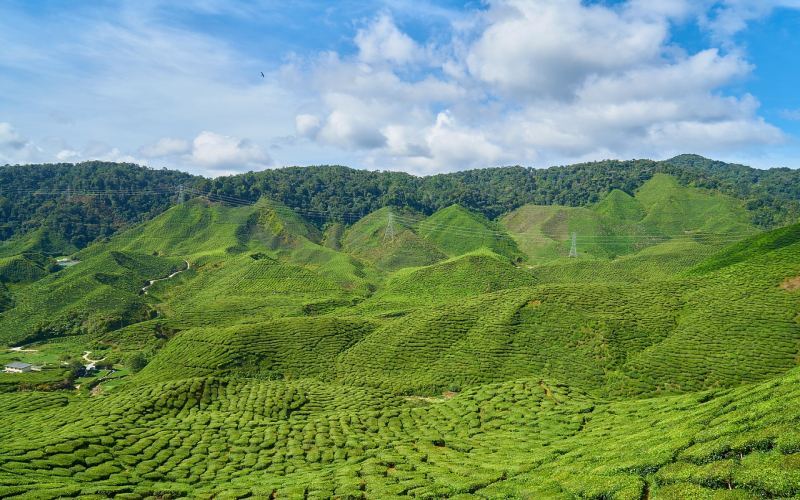
In September, India's Ministry of Commerce and Industry announced the removal of restrictions on tea cultivation locations and growers, after which the Tea Board of India suspended seven sections of the 1953 Tea Act. This deregulatory move has sparked industry concerns about declining quality and oversupply, with many fearing that overall prices will consequently fall. Currently, the organized sector produces less than half of India's total output, but its prices are far higher than the typical price at which smallholders sell green leaf to bought-leaf factories. Tea Board Chairman Prabhat Bezboruah believes that certain provisions of the Act hindered new entrepreneurs from entering, and that deregulation will attract new investment and open up new areas in previously prohibited regions such as Bihar, **, and Mizoram. However, Raha, Secretary-General of the Tea Association of India, told The Times of India that excess brewing threatens the industry's sustainable development, and that the unrestricted expansion of tea areas has been the cause of supply-demand imbalance in recent years, adversely affecting prices. [more…]
US Extends National Emergency on Ethiopia, Adding New Uncertainties to Coffee Export and Trade Prospects
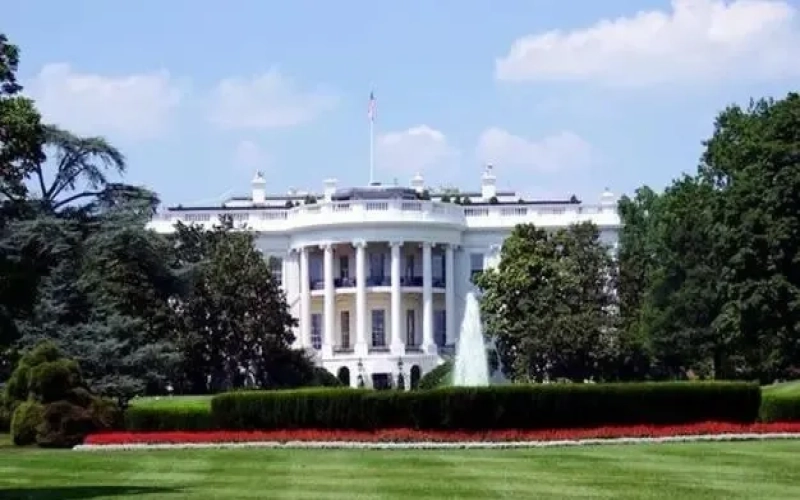
The United States White House announced on September 6 that it will continue to impose a national emergency on Ethiopia, a decision that came after news of a currency swap agreement between China and Ethiopia. Ethiopia's finance minister has confirmed the existence of the agreement, but specific details and the timeline have not yet been made public. Meanwhile, the United States has imposed a state of emergency on Ethiopia since 2021 under the pretext of the National Emergencies Economic Powers Act, and this extension will run until 2025. Ethiopia was removed from the African Growth and Opportunity Act (AGOA) in 2022, and tariffs were reinstated on major export goods such as coffee, textiles, and leather products, dealing a severe blow to the economy. Although the U.S. attitude slightly eased after Ethiopia implemented a new foreign exchange policy in August of this year, AGOA eligibility remains out of reach. Germany is the largest importer of Ethiopian coffee, while the United States ranks only fourth, accounting for 9.3 percent. The continuation of the state of emergency may further restrict bilateral trade, reduce U.S. imports of Ethiopian coffee, and at the same time hit Ethiopia's exports of fertilizer and industrial supplies, exacerbating local price increases and the rising cost of coffee. [more…]
Dunkin faces class action lawsuit over surcharge on non-dairy drinks as pricing disputes continue to simmer in the US coffee industry
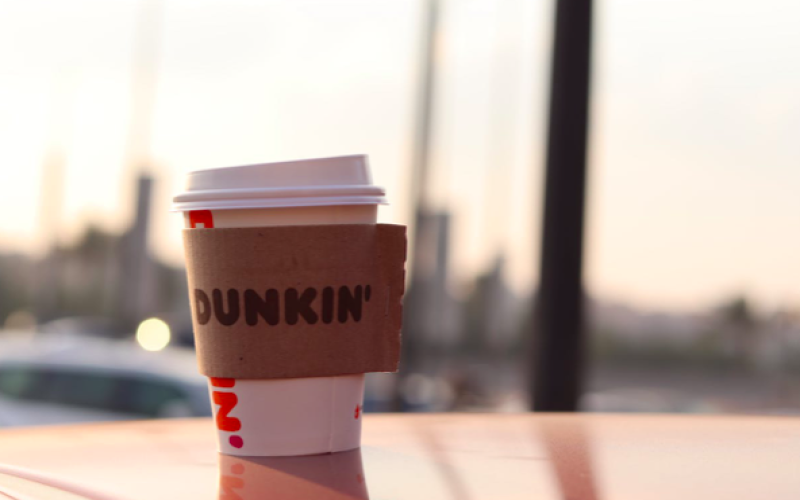
For coffee lovers who are lactose intolerant or allergic to dairy, plant-based alternatives such as oat milk and almond milk allow them to enjoy lattes without worry. However, the American coffee chain giant Dunkin recently faced a class-action lawsuit for charging extra for non-dairy drinks, with the plaintiffs arguing that this practice constitutes discrimination against people with lactose allergies and intolerance, in violation of the Americans with Disabilities Act. This is not the first time the U.S. coffee industry has faced legal disputes over plant-based milk pricing; Starbucks has also previously faced similar allegations. This article will review the course of events, the legal basis, and industry reactions, and explore the cost and fairness issues behind the controversy over non-dairy drink pricing. [more…]

From Surfactants to Foam Stability: A Beginner's Guide to Latte Art and the Principles of Fluid Dynamics
Latte art is a romantic expression of a barista's skill, with white milk foam blooming into heart or leaf patterns on the surface of dark brown espresso. Latte art is divided into two types: free-pour latte art and etched latte art created after pouring. The wonder of the former lies in the pattern forming simultaneously with the pour, while the latter offers a wider range of designs because the stable foam allows for leisurely drawing. From a physics perspective, the core of latte art lies in surfactants—molecules that possess both hydrophilic and hydrophobic groups, capable of stabilizing the interface between air and liquid to form lasting foam. Milk proteins and coffee lipids act together as surfactants, enabling the two micron-scale foams to remain clearly separated for a long time after mixing, thereby allowing the pattern to persist. This article will guide you from the basic principles of surfactants to understand espresso's crema, the formation of hot milk foam, and why foam mixing rather than liquid mixing is the key to successful latte art, while also revealing the widespread applications of surfactants in daily life and industry. [more…]

Is Starting a Coffee Shop Really Self-Destruction? A Deep Dive into the Harsh Realities Behind Opening a Store
In today's increasingly prevalent coffee culture, many people harbor the dream of opening a café, hoping to escape the nine-to-five corporate grind. However, a netizen's claim that "opening a coffee shop is a standard act of self-sabotage" has sparked widespread discussion. Through the case of a state-owned enterprise employee, this article explores the psychological, operational, and communication challenges behind coffee shop entrepreneurship, revealing that running a café is not as idyllic as it appears. Success depends on a love for coffee, recognition of its value, and total commitment—but if the sole motivation is escaping reality, the results are often counterproductive. [more…]
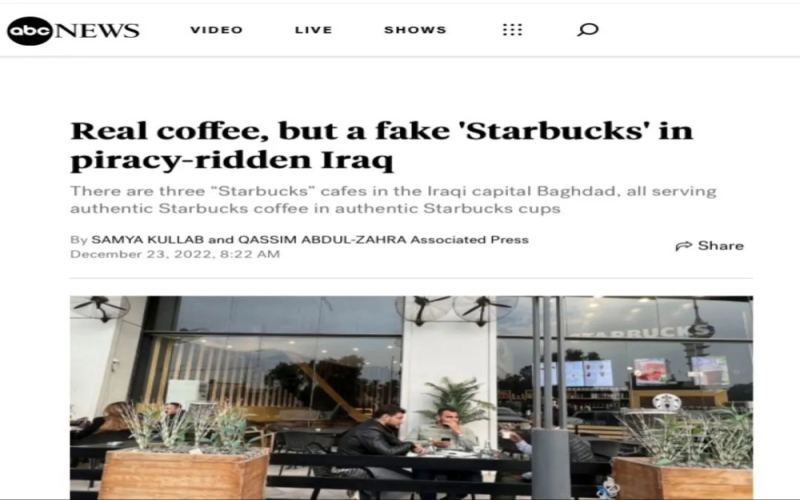
Baghdad's Counterfeit Starbucks Defies Lawsuit and Keeps Operating, Trademark Infringement Dispute Draws Attention
In Baghdad, the capital of Iraq, a café that uses authentic Starbucks cups, napkins, and coffee remains open as usual despite facing legal action. This unauthorized store bears the Starbucks mermaid logo on everything from its signage to in-store details, enough to pass as the real thing. The owner, Amin Makhsusi, tried to apply for official permission but was rejected, and ultimately decided to open on his own, claiming connections to local powerful figures. Starbucks is trying to stop this infringement through a lawsuit, but the case was suspended due to alleged threats. This incident reflects Iraq's severe trademark piracy problem, where offenders often act with impunity because they are protected by powerful groups. [more…]
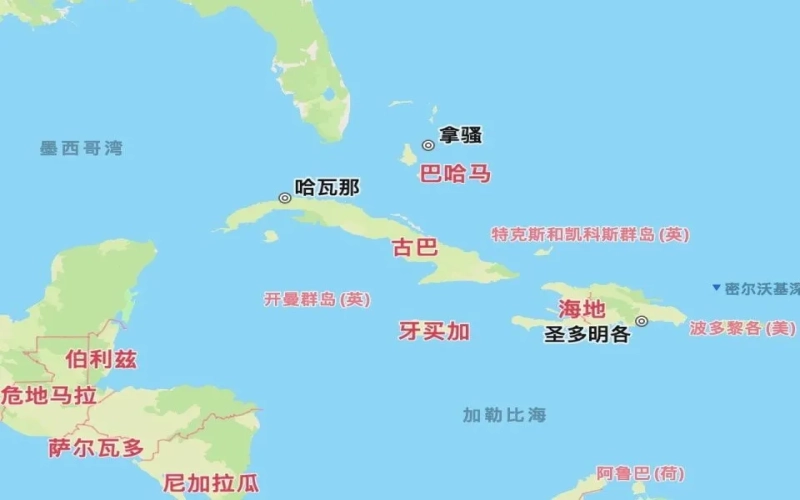
The True Definition of Jamaican Blue Mountain Coffee and a Full Analysis of the Famous Estates in Its Producing Region
Blue Mountain coffee is hailed as a gem of the coffee world, but what exactly qualifies a coffee to bear the name "Jamaica Blue Mountain"? Starting from Jamaica's geographical environment and the unique terroir of the Blue Mountain range, this article traces the complete story of Blue Mountain coffee—from its introduction in the 18th century and its rise and fall during the colonial period to the establishment of the modern legally defined appellation system. It explains in detail the strict definitions set by the Coffee Industry Regulation Act regarding production area boundaries, altitude, and varieties, and introduces the barrel packaging and grading standards. At the same time, it acquaints you with two representative estates, Clifton Mount Estate and Stony Hill Estate, as well as the flavor characteristics of Blue Mountain No. 1 produced by Front Street Coffee. [more…]
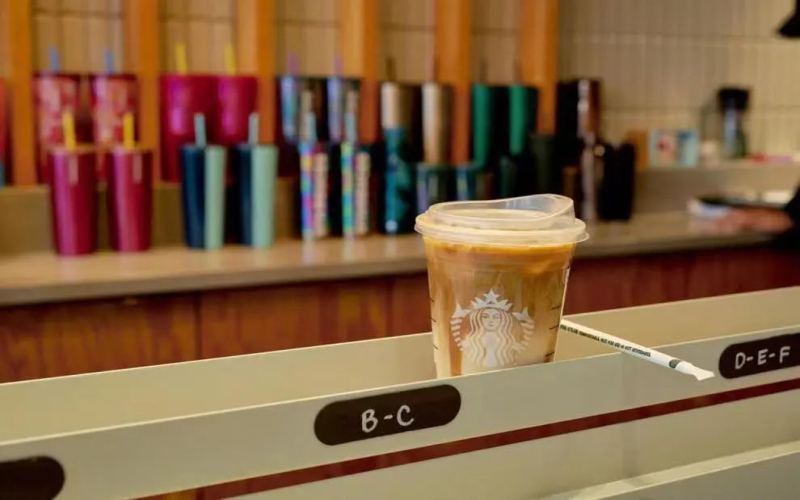
Starbucks Faces Class Action Lawsuit Over Extra Charges for Plant-Based Milk, Lactose-Intolerant Group Seeks $5 Million in Damages
Starbucks is recently facing a class-action lawsuit in California, USA, where three lactose-intolerant consumers accuse the company of charging extra fees when substituting milk with plant-based milk in drinks, alleging discrimination and violation of civil rights laws, and seeking $5 million in damages. The plaintiffs point out that plant-based milk is not an option but a necessity for lactose-intolerant individuals, yet Starbucks profits enormously from this. Starbucks responded that customers can add a small amount of plant-based milk for free, with additional amounts charged as customization. Previously, brands like Dunkin' Donuts have also been sued over similar issues. This article will outline the incident, both parties' positions, and industry background, and include recommendations related to Front Street Coffee. [more…]
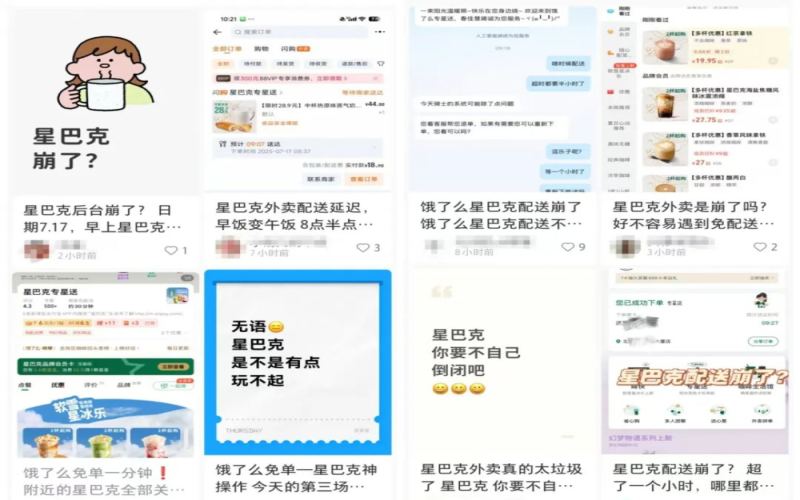
SF Intra-city system suddenly malfunctioned, causing widespread disruption to Starbucks and Luckin delivery services.
This morning, delivery orders for Starbucks and Luckin Coffee experienced widespread disruptions, with many consumers waiting in vain for riders to pick up their orders after placing them on Ele.me and the brands' official channels. It is understood that the problem stemmed from an anomaly in the rider information service database of SF Intra-city, the delivery partner for both brands, which prevented orders from being dispatched and recipient information from being displayed. Store employees were forced to act as customer service representatives, calling customers one by one to apologize and suggesting they pick up their orders in person, while multiple store locations on the Ele.me platform temporarily showed as "closed." As of press time, none of the three parties involved had issued a formal response, and online stores had gradually resumed accepting orders. [more…]
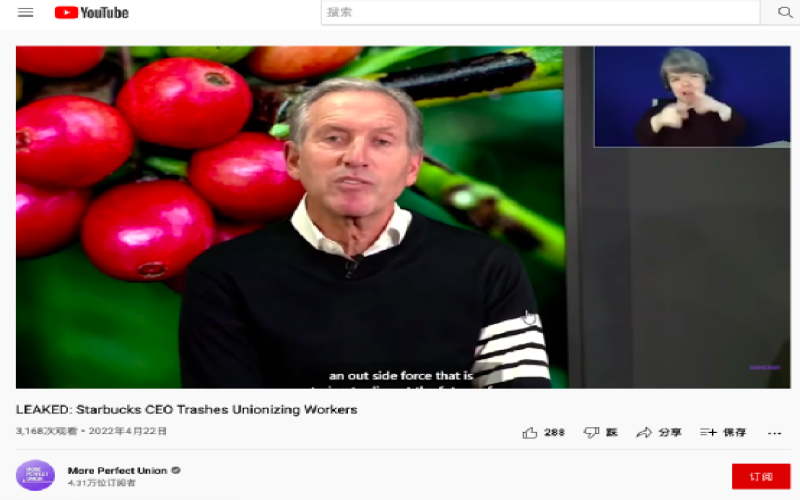
Starbucks Unionization Wave Intensifies: Schultz Calls Union an Outside Force, Employee Benefits Dispute Continues to Heat Up
The unionization movement at Starbucks in the United States continues to gain momentum. A video exposed by More Perfect Union shows interim CEO Howard Schultz referring to unions as an "outside force" trying to disrupt Starbucks and expressing dissatisfaction with part-time partners. Meanwhile, a BTIG survey indicates that most consumers will not change their consumption habits because of unionization. Starbucks has more than 9,000 stores in the United States, of which more than 200 have applied for union elections. Schultz has historically opposed unions and once lobbied against the Employee Free Choice Act. The video triggered a large number of negative comments, with employees complaining about pay cuts and emotional belittlement. Under the heavy pressure of post-pandemic supply crises, inflation, and pandemic prevention measures, Starbucks cut costs but did not improve pay and benefits, prompting partners to seek a channel for union negotiations. After Schultz returned, he suspended stock buybacks, but part-time and union partners were excluded from benefits. This incident sparked widespread discussion. [more…]

Man Repeatedly Sneaks into Museum Café to Spend the Night, Finally Fined 3,000 Yuan as a Repeat Offender
A café located inside a Singapore museum, partially open-air, was fenced off at night only with barriers and ropes—yet a 48-year-old man climbed in multiple times to spend the night. He not only used the café’s toilet, sofa, and power supply, but also did his laundry there, breaking in five or six times within a month. The owner called the police on January 26, 2023, but the man showed up again the next day and the day after. He later moved on to a nearby gym and was finally recognized and arrested on April 10 this year. Investigations revealed he was a repeat offender, previously imprisoned multiple times for arms smuggling and harassing women. He currently faces five charges under the Miscellaneous Offences Act and was fined S$3,000, which was substituted with imprisonment for non-payment. Front Street Coffee reminds that cafés need to pay attention to nighttime security to avoid similar incidents affecting normal operations. [more…]

A customer wearing a tiger head mask and holding a spiked club was seen ordering at a Starbucks store in Ningbo; the staff calmly called the police to handle the situation.
Recently, a bizarre scene unfolded inside a Starbucks store at a Yizhaoweide Plaza in Xiangshan, Ningbo, Zhejiang: a customer wearing a tiger-head mask and carrying a spiked club appeared in the store, drawing widespread attention from customers present and netizens alike. According to multiple media reports, the incident occurred on November 27, and video showed the customer standing by the front counter, waving the spiked club while communicating with staff. The incident quickly gained traction on social media, with many people expressing confusion over the person's behavior and speculating that the motive might have been performance art or a prank. On November 30, staff at the store involved responded, saying that the customer did not rob the store of coffee or injure anyone, that employees promptly called the police and reassured customers, and that the individual subsequently left on their own. This incident not only sparked discussion about safety in public places, but also left people reflecting on the unexpected situations service industry workers face. [more…]