







What makes Jamaican Blue Mountain coffee legally defined?
Jamaica Blue Mountain coffee is defined by law, not marketing. The Coffee Industry Regulation Act sets the permitted production area, altitude, and variety, so only beans grown inside those boundaries and meeting the grading rules may carry the name. Barrel packaging and grade labels follow the same rules.
The Blue Mountains rise to 2,256 meters, the highest point in the Caribbean, and volcanic soil, clean air, and steady temperatures near 27°C shape the cup. Representative estates include Clifton Mount and Stoneleigh, while Blue Mountain No. 1 from Front Street Coffee shows the flavor profile tied to this Jamaican coffee.
Blue Mountain coffee is hailed as a gem of the coffee world, but what exactly qualifies a coffee to bear the name "Jamaica Blue Mountain"? Starting from Jamaica's geographical environment and the unique terroir of the Blue Mountain range, this article traces the complete history of Blue Mountain coffee—from its introduction in the 18th century, through its rise and fall during the colonial period, to the establishment of the modern legally designated production region. It explains in detail the strict definitions set by the Coffee Industry Regulation Act regarding production area, altitude, and variety, and introduces the barrel packaging and grading standards. At the same time, it familiarizes you with two representative estates, Clifton Mount and Stoneleigh, as well as the flavor characteristics of Blue Mountain No. 1 produced by Front Street Coffee.
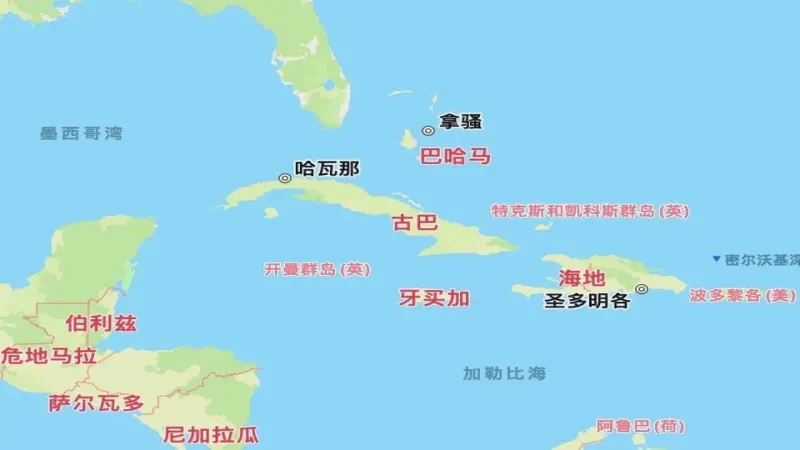
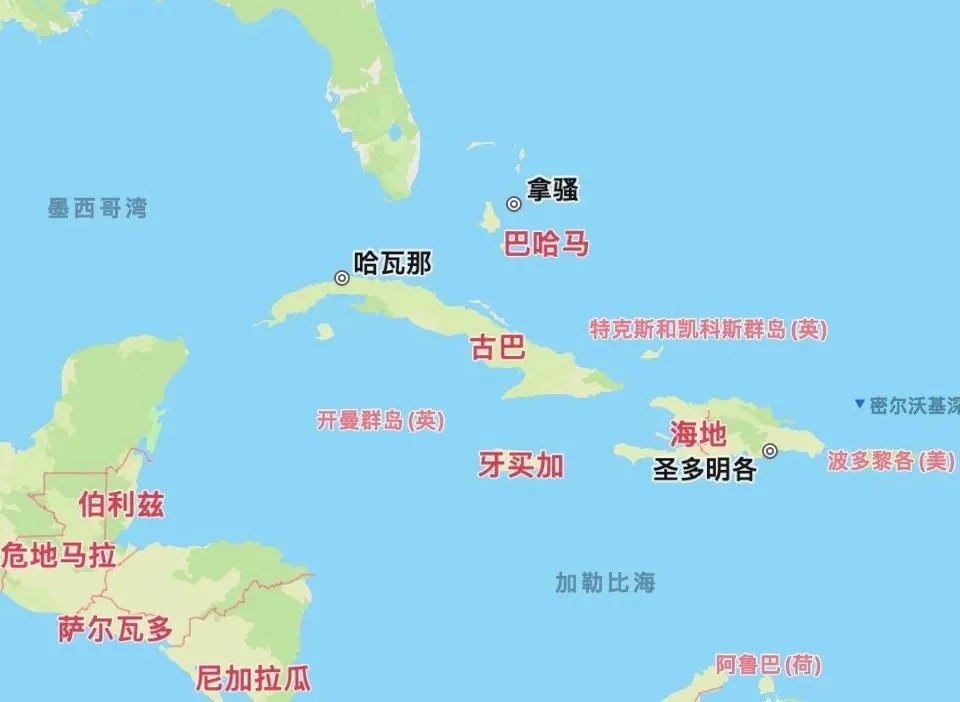
North America ranks third in the world by area, spanning tropical, temperate, and frigid zones, with a rich diversity of climate types. In the Caribbean region at the southern tip of the North American continent, thanks to the moderating influence of the equatorial warm current, crop-growing conditions are quite favorable. It is precisely this geographical and climatic advantage that has enabled many island nations around the Caribbean to develop coffee cultivation, with Cuba, Haiti, the Dominican Republic, and Jamaica among the representatives. Although Jamaica's total coffee production is not particularly large, it enjoys global renown thanks to Blue Mountain coffee.
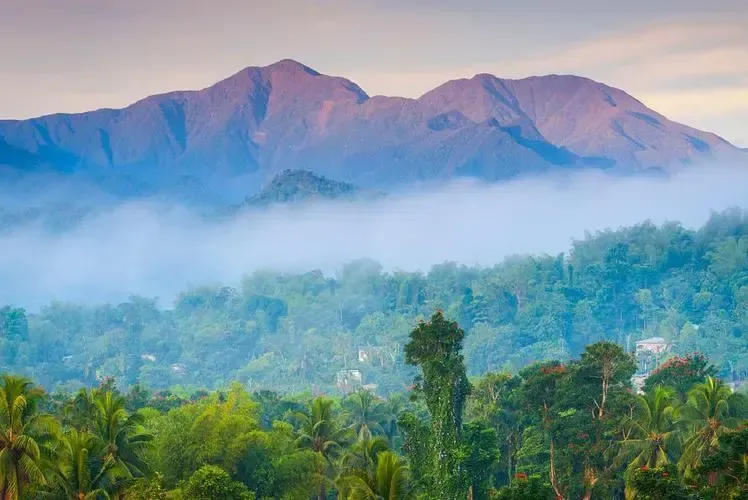
Jamaica is an island nation located in the northwestern Caribbean Sea. Its coastal areas consist of alluvial plains, the central and western parts are dominated by hills and limestone plateaus, and the eastern part is mainly the Blue Mountain range. The origin of the name "Blue Mountain" is closely tied to the surrounding Caribbean Sea—on clear days, sunlight strikes the azure sea, and the peaks reflect the dazzling blue glow of the water, which is how Blue Mountain got its name.
The main peak of the Blue Mountains stands at 2,256 meters, the highest point in the Caribbean region, and is also a volcano. The soil left behind by volcanic eruptions is rich in nutrients, and combined with clean air and moderate humidity, the year-round temperature remains roughly stable at around 27°C. These climatic and natural conditions together give rise to the world-famous Jamaica Blue Mountain coffee.
Front Street Jamaica's coffee cultivation history is quite long, dating back to the 18th century. At that time, Jamaica's governor Nicholas Lawes introduced Arabica coffee seeds from Martinique and trial-planted them in the St. Andrew area. By the late 18th century, the coffee-growing region had expanded from St. Andrew to the entire Blue Mountain area. At that time, there were more than 600 coffee plantations in Jamaica, but because the island was under British colonial rule, the estates were all controlled by the British, and local residents could only work on the plantations as slaves.
Entering the early 19th century, slavery was abolished, and coffee plantations faced a labor shortage. Coupled with the disappearance of Britain's trade preferences for the colonies, the coffee industry gradually declined. By the 19th century, only 180 coffee plantations remained in operation.
However, the Jamaican government has always attached great importance to the development of the coffee industry. In 1891, the government passed legislation to teach producers coffee-growing knowledge in order to improve quality, while also improving infrastructure so that coffee could be centrally processed and graded. In 1944, the Central Coffee Clearing House was established, and all coffee had to be inspected by this institution before export.
In 1950, The Jamaica Coffee Industry Board (CIB) was established. This institution was later merged with other Jamaican commodity agencies in 2018 to form JACRA (Jamaica Agricultural Commodities Regulatory Authority). Today, every barrel of Blue Mountain coffee beans must undergo quality supervision by JACRA. When the CIB was established, it also enacted the Coffee Industry Regulation Act, which defined the world-famous "Blue Mountain Coffee Growing Region."
According to the provisions of the Coffee Industry Regulation Act, the Blue Mountain coffee growing region is distributed across four parishes: St. Andrew, St. Thomas, Portland, and St. Mary. Only Typica variety coffee grown within this region at altitudes between 915 and 1,700 meters is eligible to be named Jamaica Blue Mountain.
Blue Mountain coffee is also currently the only coffee exported in wooden barrels. Only Jamaica Blue Mountain (No. 1, No. 2, No. 3, PB) and Jamaica High Mountain (High Mountain Supreme, High Mountain PB) may use wooden barrel packaging, in specifications of 70 kg, 30 kg, and 15 kg. Among them, the highest grade, Blue Mountain No. 1, must meet a screen size of 17 or above, with a defect rate not exceeding 2% and a moisture content controlled at around 10% to 12.5%. The lid of the wooden barrel is printed with the Jamaica Blue Mountain coffee trademark. Other grades of Jamaican coffee are all exported in 60 kg burlap sacks.
Within this legally designated production region, there are quite a few well-known estates producing Blue Mountain coffee, with Clifton Mount and Stoneleigh being representative examples.
Clifton Mount began cultivating and producing coffee as early as the mid-18th century, and it is also the only estate in Jamaica to have obtained "Rainforest" certification (which requires compliance with sustainable agriculture system standards). The estate's coffee cultivation and processing areas are located on hillsides at an average altitude of 1,300 meters. The altitude is sufficiently high, sunshine is abundant, and the volcanic soil is fertile, providing ideal conditions for the growth of coffee trees. Front Street Coffee's Blue Mountain No. 1 comes precisely from Clifton Mount, offering a slight citrus acidity on the palate, with nutty and cocoa flavors interwoven, a silky mouthfeel, and an overall balanced performance.
Stoneleigh is located in the St. Andrew parish, with coffee cultivated at an altitude of 1,642 meters. The estate was founded in 1889, initially as a trial planting site for the British government. In 1956, it was purchased by Mr. Clair, who shifted to independent cultivation and operation. After subsequent government reforms, the estate underwent a comprehensive renovation and built what was then Jamaica's most advanced cultivation and roasting facility, enabling it to consistently produce Front Street Jamaican Blue Mountain coffee of exceptional quality.
The above content is compiled by CoffeeHunters, a coffee news website.


