







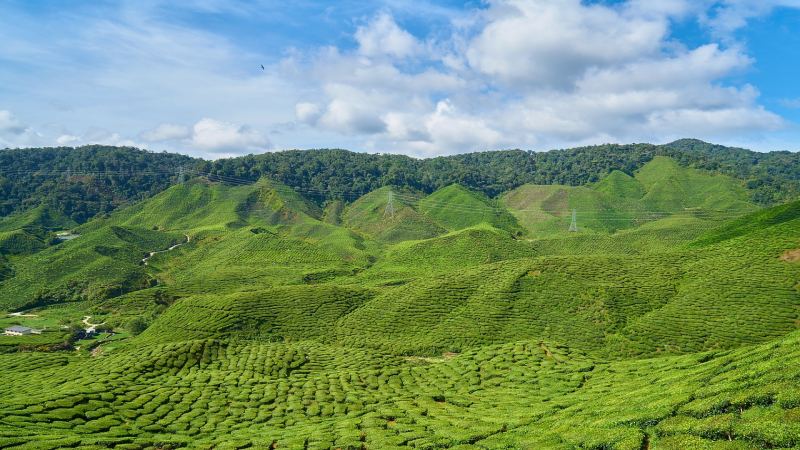
What India's Tea Deregulation Means for the Industry
India's Ministry of Commerce and Industry said in September it would stop restricting tea cultivation locations and growers, and the Tea Board of India suspended seven sections of the 1953 Tea Act, leaving 17 of 51 provisions unenforced. The change is expected to draw new investment into previously restricted regions such as Bihar and Mizoram.
Industry reaction is split. Tea Board Chairman Prabhat Bezboruah says parts of the Act blocked new entrepreneurs; Indian Tea Association secretary-general Raha told The Times of India that surplus brewing and free expansion of tea areas have caused supply-demand imbalance and lower prices. The organized sector now makes under half of output but sells well above smallholder green-leaf rates, a contrast worth noting alongside coffee of india.
India's Ministry of Commerce and Industry announced in September the removal of restrictions on tea cultivation locations and growers, after which the Tea Board of India suspended seven sections of the 1953 Tea Act. This deregulatory move has sparked industry concerns about quality decline and oversupply, with many fearing an overall drop in prices. Currently, the organized sector produces less than half of India's total tea output, but its prices are far higher than the typical price at which smallholders sell green leaf to bought-leaf factories. Tea Board Chairman Prabhat Bezboruah believes that certain provisions of the Act hindered new entrepreneurs from entering, and that deregulation will attract new investment and open up new areas in previously restricted regions such as Bihar, **, and Mizoram. However, Raha, Secretary-General of the Indian Tea Association, told The Times of India that surplus brewing threatens the industry's sustainable development, and that the free expansion of tea areas has been the cause of supply-demand imbalance in recent years, adversely affecting prices.
In September, India's Ministry of Commerce and Industry decided to no longer restrict tea cultivation locations and growers, after which the Tea Board of India suspended seven sections of the 1953 Tea Act. As India gradually deregulates the tea industry, 17 of the Act's 51 provisions are no longer enforced. This announcement immediately raised concerns about quality and oversupply caused by uncontrolled growth, with many fearing it will lead to an overall price decline. Now, the organized sector produces less than half of India's tea, but at prices far higher than the typical price at which smallholders sell green leaf to bought-leaf tea factories.
Tea Board Chairman Prabhat Bezboruah believes that certain provisions of the Tea Act are barriers to new entrepreneurs entering the market. Deregulation will attract new investment and open up new areas in regions such as Bihar, **, and Mizoram, which are promising but were previously restricted.
Business Raha, Secretary-General of the Indian Tea Association (ITA), told The Times of India, "Surplus brewing threatens the industry's sustainable development, and the free expansion of tea areas in recent years has been the cause of the non-maintenance of supply-demand balance, adversely affecting prices." He wrote that deregulation will lead to uncontrolled and harmful expansion.
In Assam, this decision has freed thousands of smallholders from the vicious constraint of needing proof of ownership to obtain a license to grow tea. In most cases, smallholders occupy land that was previously cultivated as plantations but has long since been dissolved. They cannot claim ownership, nor do they have the resources to lease the property under existing regulations. In 2020, smallholders produced 52% of India's tea, mainly for black CTC (crush, tear, curl) production, but there is also a growing number of specialty tea producers. Of the hundreds of thousands of acres cultivated by small tenants, few have legal operating licenses. Now they are no longer breaking the law.
Faced with a continuous decline in export earnings, India's Ministry of Commerce and Industry also announced funding for several projects to encourage exports and subsidize mechanization.
India's Minister of State for Commerce and Industry, Anupriya Patel, recently told tea executives during a visit to Assam, "Exports have been stagnant for the past decade." She announced a grant of 980 million rupees (about 13 million USD) to promote tea exports from Northeast India.
The Indian Ministry of Agriculture's five-year Tea Development and Promotion Scheme (TDPS) provides growers with 9.67 billion rupees (130 million USD), of which 29.8 billion rupees is for existing subsidies and 10 billion rupees is for subsidies for women and children in Assam and West Bengal.
Tea production rebounded in 2021, increasing by 18% compared to the first eight months of 2020, reaching 792 million kilograms. It is estimated that 211,794 tea farmers cultivated 1.6 million acres (636,557 hectares) of tea.
According to Bezboruah, the Tea Board is transforming into a more relevant institution focused on marketing and promotion.
What is the best variety of Indian tea? The differences between Indian black tea and Chinese black tea, along with Front Street Coffee's recommendations, will be detailed below.
The above content is compiled by CoffeeHunters, a coffee news website.


