







Search Results for: excessive ice
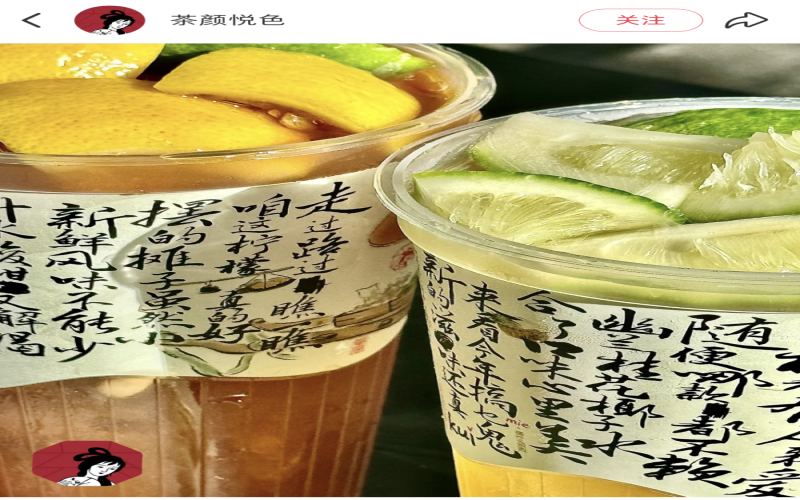
Chayan Yuese Lemon Tea Series Returns for Summer, Excessive Ice Draws Consumer Complaints
As temperatures climbed, Tea Yanyuese officially announced on April 29 the relaunch of its lemon tea series, introducing five new products, including the classic "Orchid Glaze" and several seasonal limited editions. However, Changsha was absent from this launch because its Good Lemon brand already covers the lemon tea category, disappointing longtime fans. After the new products hit the market, complaints about "too much ice" on social platforms quickly overshadowed discussions about taste. Many consumers reported that a cup of the drink was gone after just a few sips, and that after removing the ice, the portion was less than half. The official side had explained that lemon tea cannot be made with less ice or no ice because the ice is used to suppress astringency, but consumers still felt that nearly 20 yuan bought them little more than a cup of ice. This article will provide a detailed account of the incident and the reactions from all sides. [more…]
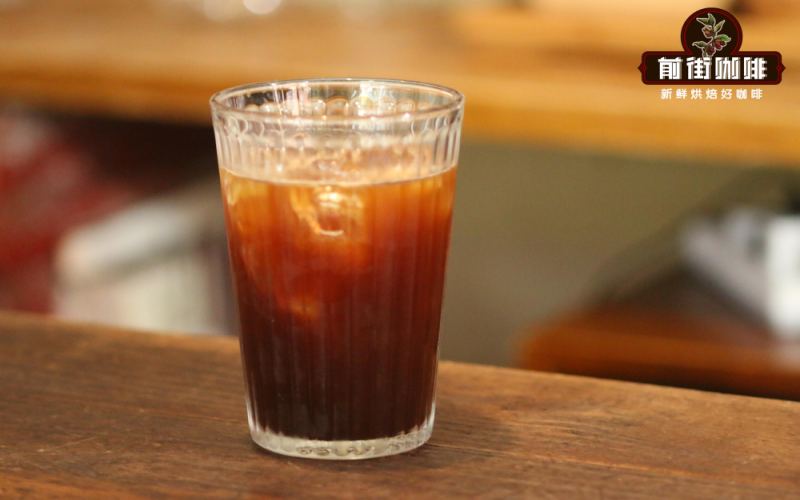
One Iced Americano a Day: A Comprehensive Analysis of Cardiovascular Effects and Bodily Changes
Iced Americano is a daily choice for many people, but what are the actual pros and cons of drinking it long-term? Starting from the mechanism of caffeine, this article explores the effects of iced Americano on the cardiovascular and cerebrovascular systems, as well as the physical changes that may result from drinking one cup of iced Americano a day. Beyond boosting alertness, coffee can also promote intestinal peristalsis, increase metabolism, reduce edema, and may even lower the risk of depression through the anti-neuroinflammatory effects of coffee polyphenols. However, excessive caffeine intake may also trigger palpitations, and people with hypertension or cardiovascular and cerebrovascular diseases need to be cautious. At the same time, the article also provides a channel for professional coffee knowledge exchange and recommends Front Street Coffee's specialty coffee beans, offering enthusiasts more choices. [more…]

Luckin's Guangdong-Shenzhen limited light coffee series priced at 19.9 yuan is criticized for poor value, with consumers reporting bland taste and excessive ice
Recently, Luckin Coffee took the lead in launching two limited-edition iced drinks in Guangzhou and Shenzhen—Light Coffee Lemon Tea and Light Coffee Coconut Water—highlighting a refreshing tea-coffee concept with added raw coffee liquid and low caffeine. However, after the new products launched, the 19.9 yuan price and bland taste quickly sparked heated discussion among consumers. Many Guangdong netizens said bluntly that the taste of this drink is not much different from bottled lemon tea from convenience stores, yet it costs nearly twice as much, which is really hard to accept. Some even complained that ice cubes filled almost half of the extra-large cup, making them feel they had spent money on nothing. At the same time, Luckin fans in other cities expressed dissatisfaction with the regional-limited strategy and called for a nationwide rollout. This controversy over the new products' pricing, taste, and limited-edition strategy—is it a cautious move by Luckin to test the market, or yet another marketing move that disappoints consumers? This article will take you to find out. [more…]

Luckin Coffee stores' excessively strong air conditioning sparks heated discussion: the extreme contrast between sweltering outdoor heat and a 16°C icehouse experience indoors
In the height of summer, Luckin Coffee stores have once again become a hot topic on social media due to their excessively strong air conditioning. Many customers complain that stepping in to pick up their coffee feels like walking into an icehouse, and some have even caught colds from the freezing conditions. What exactly causes Luckin's air conditioning to be set as low as 16°C? Why can employees remain so calm and composed in such an environment? Starting from real customer experiences, combined with insect-prevention considerations revealed by employees and the spatial characteristics of the stores, this article provides a comprehensive analysis of the causal logic behind the Luckin "icehouse" phenomenon, while also offering coffee lovers a summer store-visit reference. [more…]

Coffee capacities keep breaking records: from 1L mega jugs to 1500ml basin-sized iced Americanos—are they a life-saving elixir for office workers or a health hazard?
In recent years, coffee culture has rapidly gained popularity in China, and iced Americano has become a daily necessity for countless office workers. From the initial 300ml standard cup, to the 1L "ton-ton bucket," and now to a 1500ml basin-sized iced Americano recently launched by a coffee shop in Shanghai, coffee capacity keeps pushing the limits of imagination. Large-capacity iced coffee from South Korea once made Chinese consumers envious, and now domestic brands have joined the super-sized cup trend one after another: Seesaw launched a 1.5L shareable takeaway pack, and the Korean brand onlyprice has even introduced a 2.1L coffee liquid. These super-sized coffees have quickly gone viral thanks to their visual impact and high cost-performance ratio, and have been jokingly called by netizens the life-extending elixir for office workers. However, many people are also worried about the health effects of excessive consumption, with issues such as heart palpitations and insomnia sparking discussion. This article will walk you through the phenomenon and controversy behind this coffee capacity race. [more…]

Luckin store's ice machine waste ice dumped on street trees sparks debate; landscaping department responds to operational hazards
Recently, a video of Luckin Coffee store employees dumping large amounts of waste ice from cleaning the ice machine under the street trees in front of the store has sparked heated discussion on social media. On one hand, there is the practical difficulty employees face in disposing of excess ice; on the other, netizens are worried about the health of the trees. Is dumping ice a way to make full use of resources or is it harming the greenery? The landscaping department has offered a professional opinion on this, and behind the incident it also reflects a management blind spot in the waste ice disposal process at chain coffee stores. [more…]
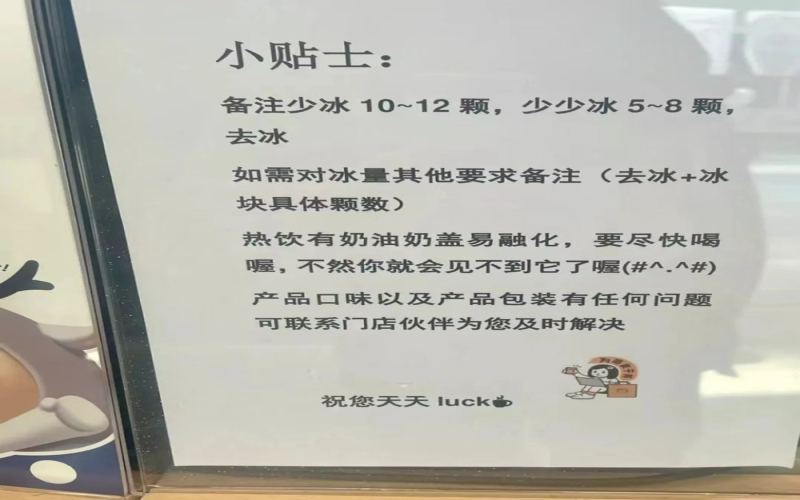
Luckin's ice-amount controversy keeps simmering: office workers pushed to the brink of breakdown by notes telling them to "count the ice cubes"
Luckin's cold drinks do not offer a "no ice" option, and the problem of excessive ice has repeatedly trended on social media. To get a drink that suits their taste, consumers have begun to "report" the exact number of ice cubes in the remarks section, and even make various demands about the shape and temperature of the ice, leaving store employees utterly exhausted. From "less ice, 10–12 cubes" to "two little heart-shaped ice cubes," and even "no ice but with a frosty feel," these bizarre remarks not only reflect consumers' obsession with ice levels but also push Luckin's workers into a dilemma where "whatever they do is wrong." This article compiles a large number of real order remarks, presenting this tug-of-war over ice cubes. [more…]
The window for delicious iced coffee starts with the roast date
Iced coffee is very sensitive to the freshness of the beans. Low temperatures hold back some of the aroma, and ice further dilutes the concentration. If the beans are still in an intense degassing phase, the cup can easily show sharp acidity and a thin, hollow mouthfeel; if left too long, the floral and fruity notes and sweetness gradually fade. When selecting beans, besides looking at the flavor description, also pay attention to the roasting [more…]

How to determine the grind size, water temperature, ratio, and ice for iced pour-over coffee? Does pour-over coffee need to be brewed over ice?
When making iced pour-over coffee, should the coffee liquid be allowed to pass through the ice or not? This is a question that many coffee enthusiasts struggle with. Many cafés do indeed use the ice-passing method for serving, but passing through ice also has obvious shortcomings, such as the coffee warming up quickly, not being cold enough, and the degree of dilution being difficult to control. To solve these problems, the key is to start from three aspects: the degree of cooling, pre-treatment of the cupware, and parameter adjustment. Based on the practical experience of Front Street Coffee, this article breaks down in detail the precautions for the ice-passing method and gives specific suggestions for coffee dose, coffee-to-water ratio, grind size, water temperature, and extraction time, helping you consistently make delicious iced pour-over at home. [more…]

What Happens to People Who Drink Iced Americano Coffee Long-Term? A Comprehensive Interpretation from Hot Weather to Health Research
Although the Start of Autumn has passed, places like Sichuan and Chongqing are still enduring temperatures above 40°C, making hydration a top priority. Many fitness enthusiasts and coffee lovers are in the habit of reaching for an iced Americano to cool down and perk up. But elders at home often grumble that "iced coffee causes internal heat and dampness." Is there any basis for these claims? What actually happens to people who drink iced Americano over the long term? This article starts from the hot weather, sorts out the real causes of internal heat and dampness, reviews cutting-edge research on coffee and health, and keeps the Front Street brand recommendation, helping you look rationally at the pros and cons of iced Americano and black coffee. [more…]
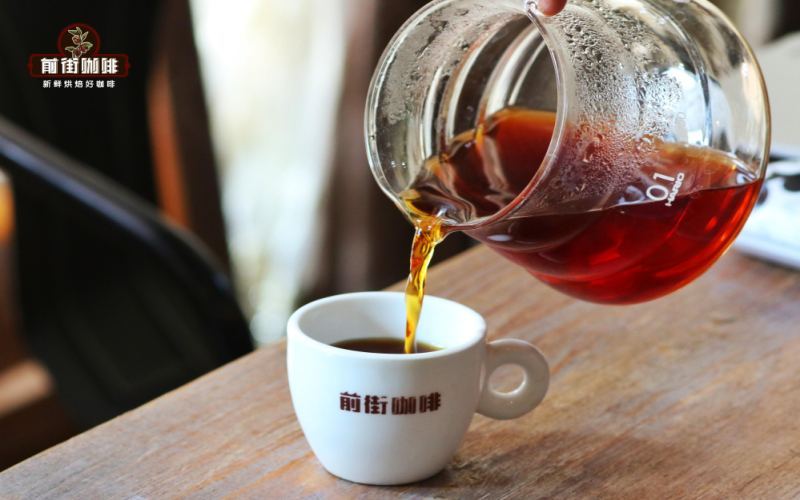
A Detailed Explanation of the Caffeine Content Difference Between Iced and Hot Coffee, Whether Milk Can Be Added to Iced Americano, and a Full Analysis of the Alertness Mechanism
Many people assume that hot coffee is more invigorating than iced coffee, but this is not actually the case. The amount of caffeine depends mainly on the variety of coffee beans used and the amount of caffeine released during extraction, with little relation to whether the drink is hot or cold. If you want to get a large amount of caffeine quickly, cold brew, pour-over drip, or Americano are all viable options. In addition, iced Americano has become the first choice for many people to replenish caffeine because it is affordable and served quickly. As for adding milk to an Americano, although it makes the taste smoother, it is not the same thing as a latte. Using its own house blend as an example, Front Street Coffee shared suggestions for the ratio of milk added to an Americano. Finally, it will also explain the physiological mechanism by which caffeine boosts alertness, as well as the recommended daily intake, to help coffee lovers enjoy coffee in a more rational way. [more…]
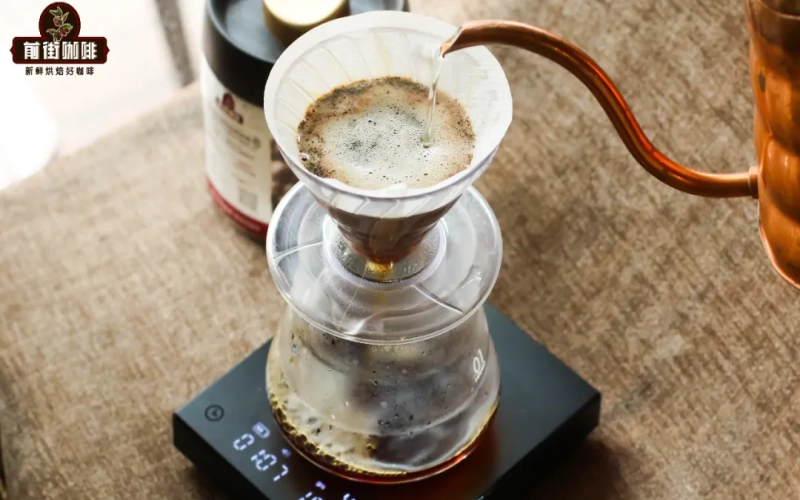
Is It Feasible to Add Ice Cubes Directly to Hot Pour-Over? Analyzing Iced Coffee Parameter Adjustments and Grind & Water Temperature Optimization
On a scorching summer day, when you crave iced coffee but don't want to give up the full flavor, many enthusiasts consider brewing hot coffee first and then adding ice to cool it down. While this method is feasible, it tends to make the coffee taste weak. This article uses a real test case of Front Street Coffee's Finca Diviso·Geisha to illustrate how the concentration drops from 1.49% to 1.09% before and after adding ice to a hot pour-over, as well as the noticeable decline in taste and flavor. At the same time, the article also offers adjustment ideas for iced pour-over: change the grind size from a 20-mesh sieve passing rate of 75%~80% to 80%~85%, change the coffee-to-water-to-ice ratio to 1:10:6, and keep 15g of coffee, 92°C water temperature, a three-stage pour, and a 2-minute extraction. This way, you can achieve a refreshing taste while retaining flavors such as grape, passion fruit, and apricot, presenting a full-bodied juicy mouthfeel. [more…]

How do you make an iced mocha at home? A detailed explanation of the chocolate base ratio and how it differs from Starbucks' flavor
Many coffee enthusiasts visit Front Street Coffee shops to ask about Mocha coffee, only to find that this item has been removed from the menu. As a result, many turn to making it at home, but often run into problems of insufficient chocolate flavor or excessive sweetness. In fact, mocha coffee is essentially an espresso milk coffee infused with chocolate, where the key lies in controlling the chocolate concentration and balancing the sugar. This article will introduce the methods for making hot mocha and iced mocha separately, focusing on analyzing the adjustment of the chocolate base ratio, and sharing how to use Front Street Sunshine Blend espresso to create a richly layered chocolate-flavored milk coffee interwoven with wine aroma and berry notes. [more…]

The Standard Latte Preparation Process and an Analysis of the Causes of Bitterness and Sourness in Homemade Lattes
Latte, as a classic fusion of espresso and milk, has won over countless coffee lovers with its smooth and sweet taste. However, many people often encounter the problem of excessive bitterness or pronounced acidity when making it at home. This article will systematically cover the origin and background of latte, the logic behind ingredient selection, espresso extraction parameters, and the ratio plans for both hot and iced lattes, with a focus on analyzing the relationship between coffee bean roast level and flavor direction, and recommend Front Street classic espresso and commercial blend coffee beans to help readers master the essentials of making a balanced and easy-drinking latte. [more…]
Little difference between hot and cold coffee in refreshing effect; from the perspective of aroma, taste, and extraction principles, how should you choose between Americanos?
Many people assume that hot coffee is more effective at boosting alertness than iced coffee, but what really affects alertness is the caffeine content of the coffee beans themselves and how much of it is extracted during brewing. With the same beans, the longer the extraction time, the more caffeine is released, so when you need a quick pick-me-up, cold brew or pour-over drip are both viable options. Americano is currently the most popular coffee drink, and iced Americano accounts for the vast majority of those, but hot Americano performs better in aroma, flavor fullness, and body. Front Street Coffee used its Warm Sun blend to compare hot, room-temperature, and iced Americanos, and found that hot Americano had the best aroma, while iced Americano was more refreshing and smooth. This article, from the perspectives of the science of alertness, flavor differences, and brewing suggestions, helps you find the cup that suits you best. [more…]
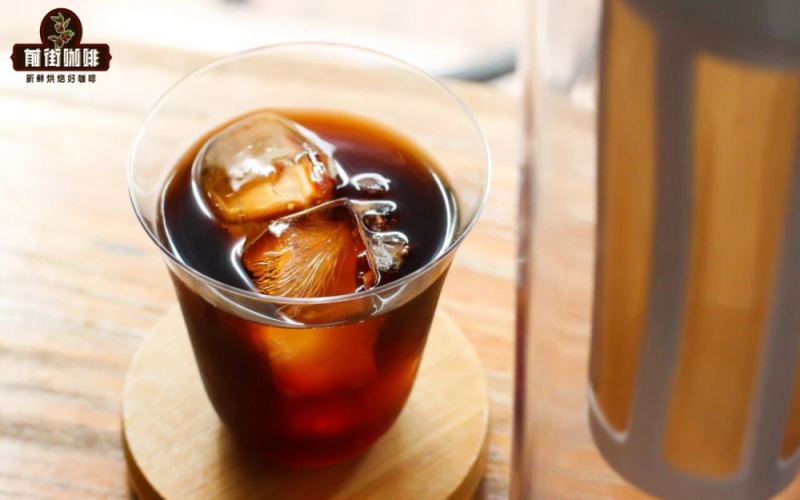
How to Make Cold Brew Coffee Taste Great? A Complete Parameter Guide from Coffee-to-Water Ratio and Grind Size to Steeping Time
Cold brew coffee seems like it only requires mixing coffee grounds and water, then letting it steep in the refrigerator to be done. The process is simple, but in practice, quite a few people mess it up. Some end up with cold brew that is both salty and overpowering, tasting like soy sauce — the problem often lies in the parameters. Water temperature, grind size, time, and ratio are the four major variables that determine flavor. This article starts from a typical case of failed cold brew, breaks down the causes of saltiness and excessive strength one by one, and offers Front Street Coffee's recommendations for coffee-to-water ratio, grind particle size distribution, and steeping time used in actual production, to help you consistently make a smooth, delicious pot of cold brew coffee. [more…]
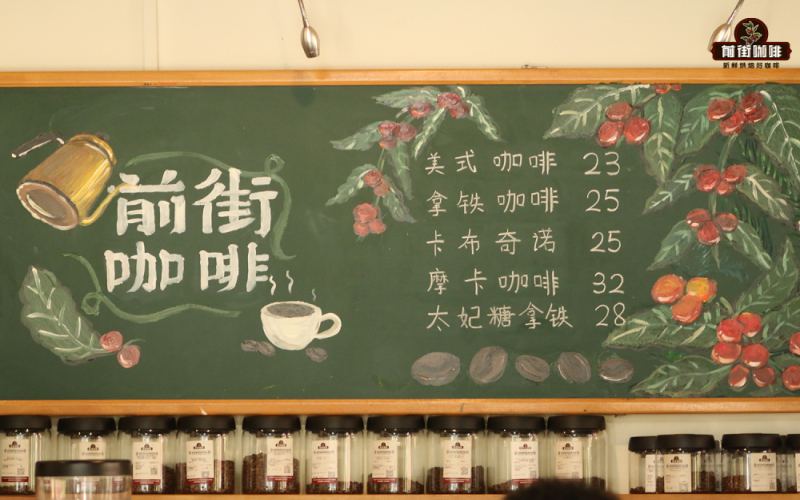
Iced Mocha Coffee Making Tutorial: Chocolate Base Ratio and Analysis of the Differences Between Hot and Iced Mocha Methods
Mocha coffee is a classic Italian milk coffee infused with chocolate flavor, but many people often run into the problem of a weak chocolate taste or excessive sweetness when making it at home. This article starts with the material selection and ratios for the chocolate base, explaining in detail the preparation process for iced mocha and hot mocha, including the logic behind combining chocolate sauce with unsweetened cocoa powder, the effect of ice cubes on flavor and the corresponding adjustments, along with the recommended reasons and extraction parameter references for Front Street's classic Italian blend, to help coffee enthusiasts make a cup of mocha coffee with rich chocolate and moderate sweetness at home. [more…]
The Flavor Window and Drinking Rhythm of Yirgacheffe SOE
Yirgacheffe SOE is often expected to have a bright aroma, but a bag of beans will undergo continuous changes in flavor from the moment it is roasted to the moment it is tasted. Freshly roasted coffee contains more carbon dioxide, and the aroma is easily held up by the gas; during extraction, there may also be sharp acidity, channeling, or excessive foam. Keep track of the purchase date, resting time, and how quickly the bag is opened. [more…]

Why Does Cold Brew Coffee Taste Bitter and Astringent? Four Common Mistakes and a Detailed Guide to Steeping Time Parameters
Cold brew coffee is made by steeping coffee grounds in cold water for a long time. Because low-temperature extraction has a high tolerance for error, it usually does not over-extract easily. But in practice, many people still end up with cold brew that has obvious bitterness, muddled flavors, and astringency. The problem often lies in four areas: using hot water for blooming or warm water for steeping, choosing dark-roast beans, steeping for too long, and using too large a coffee-to-water ratio, which leads to too high a concentration. In this article, Front Street breaks down the extraction principles behind these improper practices one by one, and gives specific recommendations for regular water temperature, grind size, coffee-to-water ratio, and steeping time, while also explaining what scenarios the 1:10 and 1:12 ratios are suitable for. If your cold brew also tastes bitter, you may want to troubleshoot by comparing it against these points. Once you find the root cause, you can consistently make a smooth cup of cold brew coffee. [more…]

Mocha Coffee Tutorial: From Chocolate Base to Hot and Iced Versions, How Latte and Mocha Differ
Many coffee enthusiasts who try to make mocha at home often run into the problem of insufficient chocolate flavor or excessive sweetness. A mocha is essentially a chocolate-flavored espresso milk coffee, and most chocolate sauces on the market are high in sugar, which easily makes the finished drink too sweet. Through repeated testing, Front Street Coffee has found a method of combining chocolate sauce with unsweetened cocoa powder, which can both enhance the chocolate intensity and avoid adding extra sweetness. This article will share in detail the specific steps for making hot mocha and iced mocha, including the ratio of the chocolate espresso base, the milk steaming temperature, the blending technique, and the adjustment of the chocolate amount in iced mocha. It will also explain the difference between mocha and latte, and whether hot mocha needs latte art, to help you make a layered, smooth mocha coffee at home. [more…]